
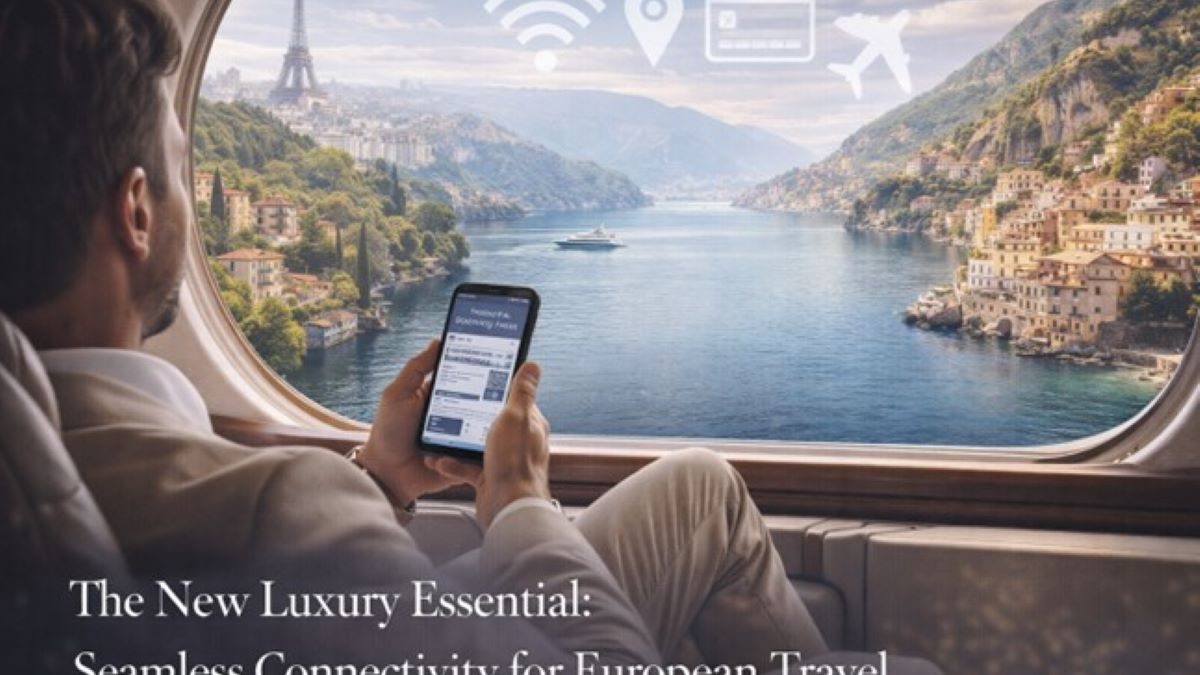
Luxury travel has evolved. It is no longer defined solely by five-star suites, private transfers, or Michelin-starred dining—though those elements still matter. Today, true luxury is measured by seamlessness. It is the absence of friction, the ability to move effortlessly from one curated experience to the next without interruption.
For American travelers exploring Europe—whether splitting time between Paris and Lake Como, chartering a yacht along the Amalfi Coast, or enjoying a private wine tour in Bordeaux—one increasingly essential component underpins that seamless experience: reliable, borderless connectivity.
Europe: A Multi-Destination Playground
Unlike many destinations where travelers remain in a single country, European itineraries often span multiple borders. A summer journey might begin with couture appointments in Milan, continue with art viewings in Florence, and conclude with a seaside retreat in the South of France. High-speed rail and short regional flights make such transitions effortless—at least geographically.
Digitally, however, crossing borders can introduce complications. Different mobile carriers, shifting roaming policies, and inconsistent network coverage can disrupt what is otherwise a meticulously planned experience.
For the luxury traveler, time is the most valuable currency. Waiting in line at an airport kiosk to purchase a local SIM card, troubleshooting roaming charges, or relying on unsecured hotel Wi-Fi networks detracts from the experience.
In a world where convenience is paramount, connectivity must match the sophistication of the itinerary.
Connectivity as the Invisible Concierge
The modern luxury traveler relies heavily on real-time digital access. Private concierges coordinate reservations via messaging apps. Chauffeurs confirm arrival times through mobile platforms. Exclusive restaurant tables are often secured at the last minute through online portals. Invitations to private gallery previews or fashion events arrive digitally.
Seamless connectivity allows travelers to:
- Confirm helicopter transfers or yacht charters
- Adjust dinner reservations while en route
- Access digital boarding passes and rail tickets
- Manage secure financial transactions abroad
- Stay in touch with family offices or business teams back home
In this context, mobile data becomes less about scrolling social feeds and more about maintaining control over a dynamic, multi-layered itinerary.
Luxury today is not only about comfort—it is about command.
Privacy and Security at a Premium Level
Affluent travelers often carry sensitive information on their devices: financial accounts, corporate communications, confidential documents, and secure messaging platforms. Public Wi-Fi networks in airports, cafés, or hotels—no matter how refined the setting—present inherent cybersecurity risks.
For high-net-worth individuals and executives, privacy is not negotiable. Relying on unknown public networks can expose personal data to interception or unauthorized access.
Having a secure, private mobile data connection reduces dependence on shared networks and enhances digital discretion. In the luxury ecosystem, privacy and security are integral to the experience.
The Rise of Digital-First Travel Preparation
Preparation is a hallmark of sophisticated travel. Travelers arrange private airport lounges, curated tours, and bespoke culinary experiences well before departure. Increasingly, connectivity is part of that preparation.
Embedded SIM (eSIM) technology allows travelers to activate mobile data plans digitally before arriving at their destination. There is no need to swap physical SIM cards, visit retail stores, or navigate unfamiliar telecom providers.
For American travelers moving fluidly between multiple European countries, solutions such as Holafly’s esim for Europe offer a discreet and efficient way to remain connected across borders without interrupting the journey.
The appeal lies in its invisibility. Connectivity becomes part of the infrastructure—present, reliable, and unobtrusive.
Effortless Transitions Across Borders
Consider a typical luxury itinerary: arriving in Rome for a private Vatican tour, continuing to Florence for a fashion atelier visit, then heading north to the Italian Lakes before flying to Monaco. Each location brings its own pace, ambiance, and set of experiences.
With seamless data access, transitions remain smooth. Navigation apps guide chauffeurs through historic city centers. Translation tools assist with nuanced conversations. Digital confirmations keep schedules precise.
Without connectivity, even the most refined itinerary can encounter friction—delayed confirmations, miscommunication, or logistical inefficiencies.
Luxury travel is designed to feel fluid. Connectivity ensures that it stays that way.
The Value of Time and Control
High-end travel is ultimately about optimizing time. Eliminating unnecessary steps—whether at airport security, hotel check-in, or telecommunications counters—preserves the rhythm of the experience.
The ability to step off a transatlantic flight and be immediately connected reflects a new standard. There is no pause, no adjustment period. The journey continues uninterrupted.
For many luxury travelers, this sense of control defines the experience more than any particular amenity.
The Future of Luxury Travel Infrastructure
As travel continues to globalize and itineraries grow increasingly complex, digital infrastructure will play a larger role in defining premium experiences. Private aviation, boutique hospitality, and bespoke travel planning already rely heavily on digital systems.
Connectivity, therefore, is no longer a secondary consideration. It is foundational.
From curated vineyard tours in Tuscany to art fairs in Basel, from Monaco’s Grand Prix to Paris Fashion Week, Europe remains a premier destination for American luxury travelers. Ensuring seamless digital access across these destinations is part of delivering the elevated experience modern travelers expect.
Luxury as the Elimination of Friction
In the end, luxury is about removing obstacles. It is about allowing the traveler to remain immersed in experience rather than logistics.
Reliable connectivity may not be as visible as a penthouse suite overlooking the Mediterranean, but its absence is immediately felt. In contrast, when it functions flawlessly, it fades into the background—supporting each moment without demanding attention.
For the contemporary luxury traveler, seamless connectivity is not an upgrade. It is an expectation.
And in the evolving landscape of European travel, it has quietly become one of the most essential amenities of all.