It feels entirely fitting that Charlie and the Chocolate Factory should unfold within the chocolate-box surroundings of Richmond Theatre, a building that is itself a confection of Victorian charm. Opened in 1899 and designed by the celebrated theatre architect Frank Matcham, the auditorium remains a jewel of late-Victorian design. Intimate yet ornate, its sweeping balconies and decorative flourishes seem made for storytelling. Watching a tale of imagination, morality, and wonder inside a theatre that has, for more than a century, invited audiences to suspend disbelief beneath its gilded curves is a delight in itself. The theatre’s heritage quietly deepens the magic before the curtain even rises.
This production honours that sense of tradition while offering something quietly progressive. I attended the BSL-translated performance, a first for BROS Theatre Company, generously supported by Savills Richmond Hill. The inclusion felt genuinely celebratory rather than performative. The signing added an extra layer to the storytelling, expressive and rhythmic, echoing the musicality and emotional cadence of the performance, widening access in a way that enriched the experience for all present.
From the opening moments, director Paul Madeley’s vision is clear: this is a story rooted as much in moral choice as in spectacle. As he notes in the programme, Charlie and the Chocolate Factory reminds us of childhood wonder, of a time when curiosity was rewarded and the impossible felt within reach. Beneath the colour and invention lies a narrative about consequence, integrity, and generosity—themes that resonate as strongly with adults as with younger audience members.
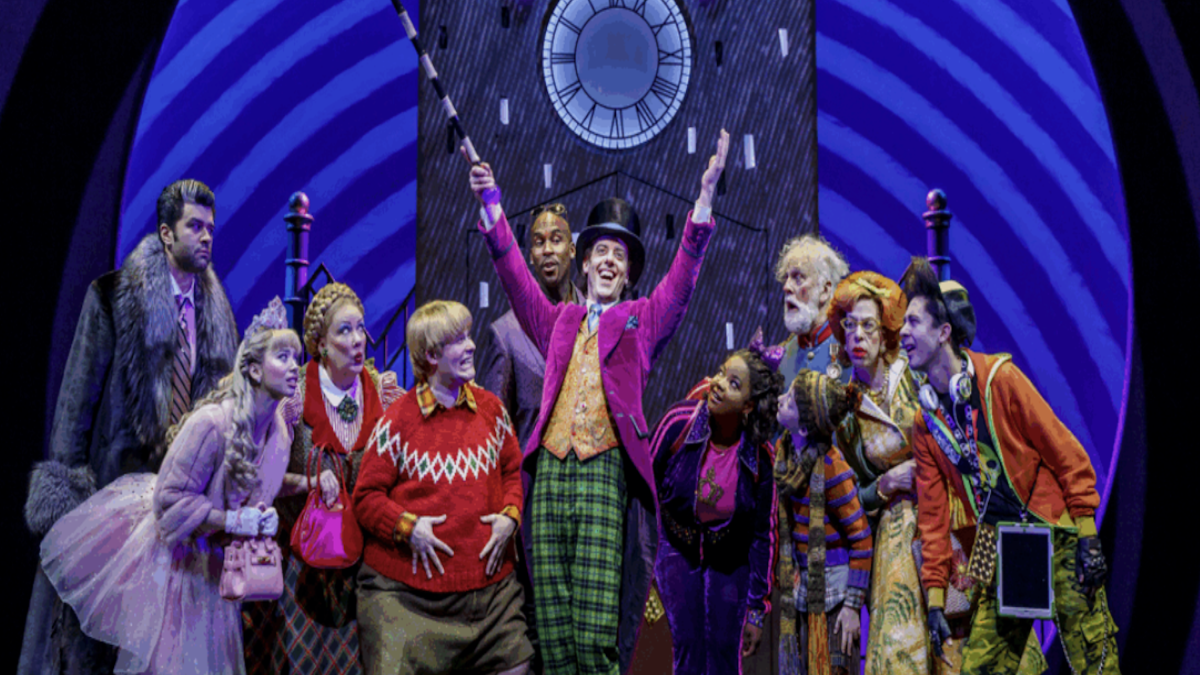
The factory reveals itself gradually, each Golden Ticket winner embodying a familiar human flaw, heightened for theatrical effect. Augustus Gloop’s appetite arrives first, his excess played broadly yet affectionately, culminating in the inevitable plunge into the chocolate river. His mother’s insistence that he was merely “a little peckish” drew knowing laughter, while Willy Wonka’s dry observation that the boy had at least been doing what he loved best captured the production’s gently irreverent humour.
After the interval, the audience is drawn deeper into Wonka’s fantastical domain, quite literally stepping inside the factory itself. The world grows stranger and more mischievous, each set-piece unfolding with cinematic momentum yet unmistakably theatrical charm. A dirndl-clad Mrs Gloop fusses anxiously as Wonka confiscates Augustus’s hidden sausages, while gleefully exaggerated references to dyspepsia and angina underline the show’s playful moral satire.
Choreography by Sian Bowles-Bevan proves one of the evening’s greatest pleasures. Drawing on a wide vocabulary of dance styles, each child’s downfall is expressed physically as much as dramatically. Movement becomes character: playful, precise, and frequently balletic. The carrot-haired Oompa Loompas, greeted with spontaneous applause, appear not only on stage but throughout the theatre boxes, dissolving the boundary between performer and audience and filling the Victorian space with joyful unpredictability.
Violet Beauregarde’s defining mantra, “What is it that you do? Chew!”, becomes both comic refrain and cautionary tale. Her impatient snatching of Wonka’s experimental gum triggers the infamous fructose-extraction incident, executed with exuberant theatricality as her confidence inflates before spectacularly collapsing. The moment balances absurdity with moral clarity, perfectly aligned with the production’s underlying themes.
Equally memorable is Veruca Salt, presented with glorious entitlement. Imperious, demanding, and faintly Russian in theatrical flavour, her performance recalls the unapologetic excess of Roald Dahl’s most indulged child at her most magnificently self-assured. Her downfall in the Nut Room, presided over by the quietly judgemental squirrel Jeremy, unfolds with comic precision, the audience relishing every inevitable second.
The Chocolate Television sequence feels particularly contemporary. Mrs Teavee’s futile attempts to prevent her son from filming other people’s misfortune drew appreciative murmurs, while Wonka’s wry observation that nobody returns to normal after appearing on television landed with unexpected poignancy. The Imagining Room then closes the journey on a note of gentle wonder, returning the story to its central belief: imagination, when guided by kindness, remains transformative.
Throughout, design and performance lean into fantasy without overwhelming the human heart of the story. Spectacle is abundant yet purposeful. The show is undeniably extravagant, the word feeling entirely earned, yet never hollow. Humour softens moral instruction; nostalgia sits comfortably beside contemporary relevance; moments of flippancy reveal surprising emotional depth.
Watching this story unfold within Richmond Theatre’s Victorian embrace heightens its resonance still further. The building itself becomes part of the narrative, a reminder that live performance, like Wonka’s factory, depends on shared imagination between stage and audience.
By the final curtain, what remains is not merely visual delight but a sense of shared warmth: a gentle invitation to rediscover curiosity, generosity, and joy. In a world often short of wonder, this production offers something quietly rare; an evening that feels both nostalgically familiar and freshly magical, sending audiences home with imagination rekindled and spirits unmistakably lifted.
BROS Theatre Company Presents Charlie and the Chocolate Factory was peformed at Richmond Theatre during February 2026
BROS Theatre Company – Upcoming Shows: