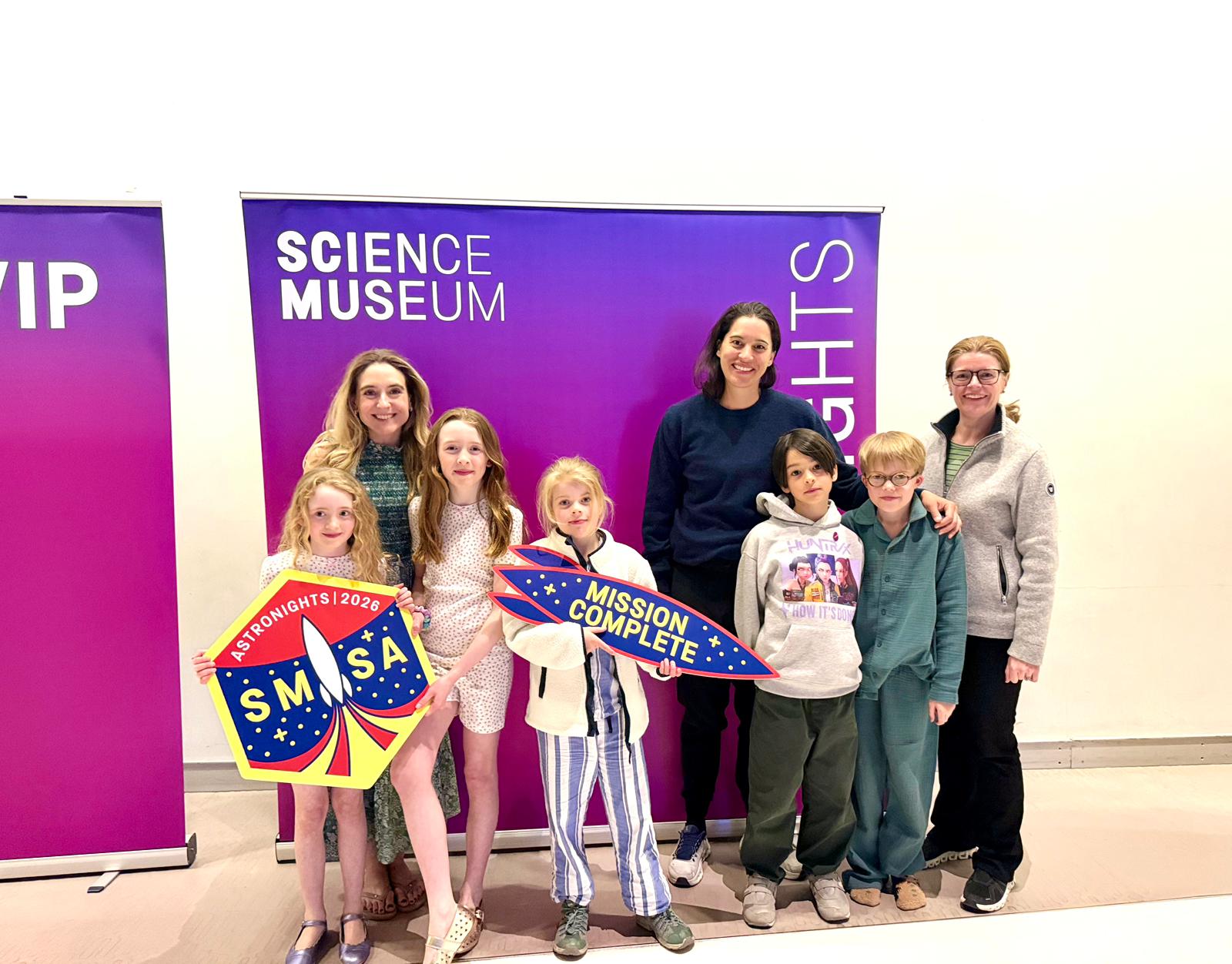
On a warm evening at the end of April, our small convoy arrived outside the Science Museum looking like we were preparing for an intrepid expedition rather than a night in South Kensington. Sleeping bags, snack bags, children orbiting at varying speeds. Arabella, six, and Ophelia, nine, were joined by their friends Orlando, Sebastian and
Maddy, all fizzing with the kind of energy usually reserved for Christmas morning. The adults, by contrast, wore the quietly steeled expressions of people who had read the museum’s survival guide for grown-ups, done the sums, and decided to proceed anyway.
For me, there was a thread of déjà vu running through it all. Long before Astronights acquired its polish, there was SciNights, launched in 1991, back when children’s sleepovers had not yet been rebranded to sound faintly like fintech start-ups. I went as a child when my best friend, now my younger daughter’s godmother, chose it for her eighth birthday in 1993. It remains one of my most vivid childhood memories, and returning decades later with my own children felt like the closing of an intergenerational loop. The format has evolved, but the idea behind it is still substantially the same.
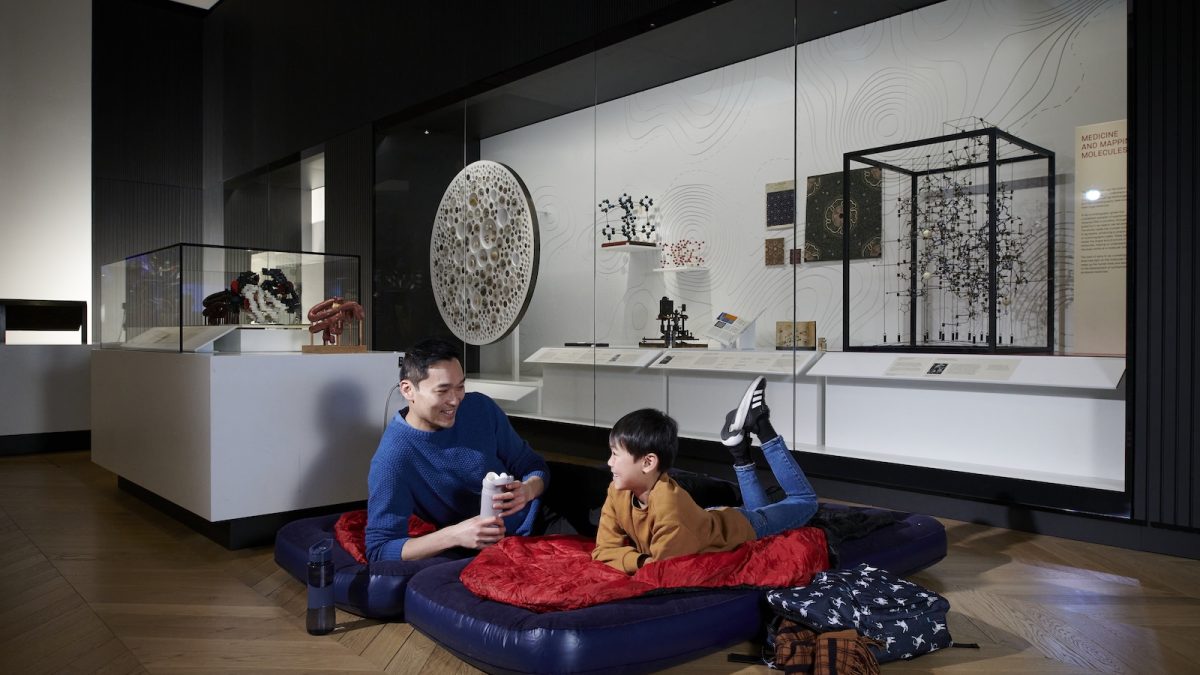
Any notion that this might be a calm, starlit experience was quickly revised on arrival. The pavement was full of families and school groups; children buzzing with irrepressible excitement. The check-in process was, however, swift: within minutes of badges were issued, groups formed, and we were ushered inside with impressive efficiency. We had booked the Mission Kosmos tier, Astronights’ VIP option, which came with Tempur air mattresses, sleep masks and a quieter gallery. None of it made the children any more likely to sleep, but it did make the adults feel slightly optimistic about the possibility of getting slightly more rest.
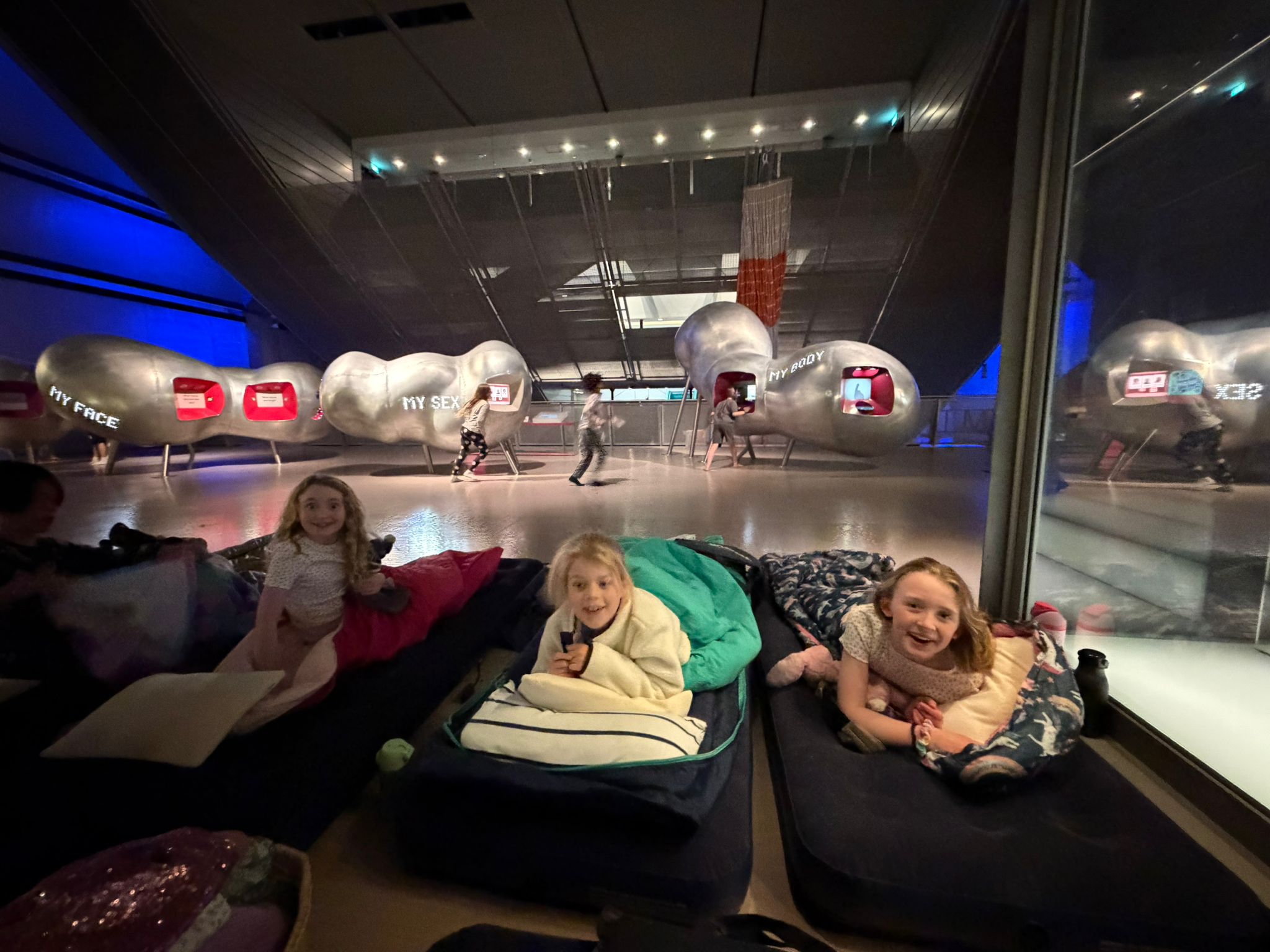
We arrived in our designated sleeping area – the Who Am I? gallery, normally devoted to exploring identity, intelligence, language and what makes humans a successful species, but for this evening mostly used for sleeping bags and quiet negotiations overtorch use. We had enough time to unroll sleeping bags and decide who was sleeping where before we were shuttled to the first part of the evening’s programme.
The evening began with a constellation activity. The children mapped out star patterns with the museum’s Explainers, who kept everything moving with unending patience and enthusiasm. Arabella and Maddy were chosen as volunteers; roles they accepted with relish. Their rewards – astronaut Neapolitan ice cream and hand grabbers – were rapturously received.
From there, we moved into the Technicians: The David Sainsbury Gallery. Without daytime crowds, the children
moved quickly between exhibits, pressing buttons, testing displays and making full use of the exclusive access.
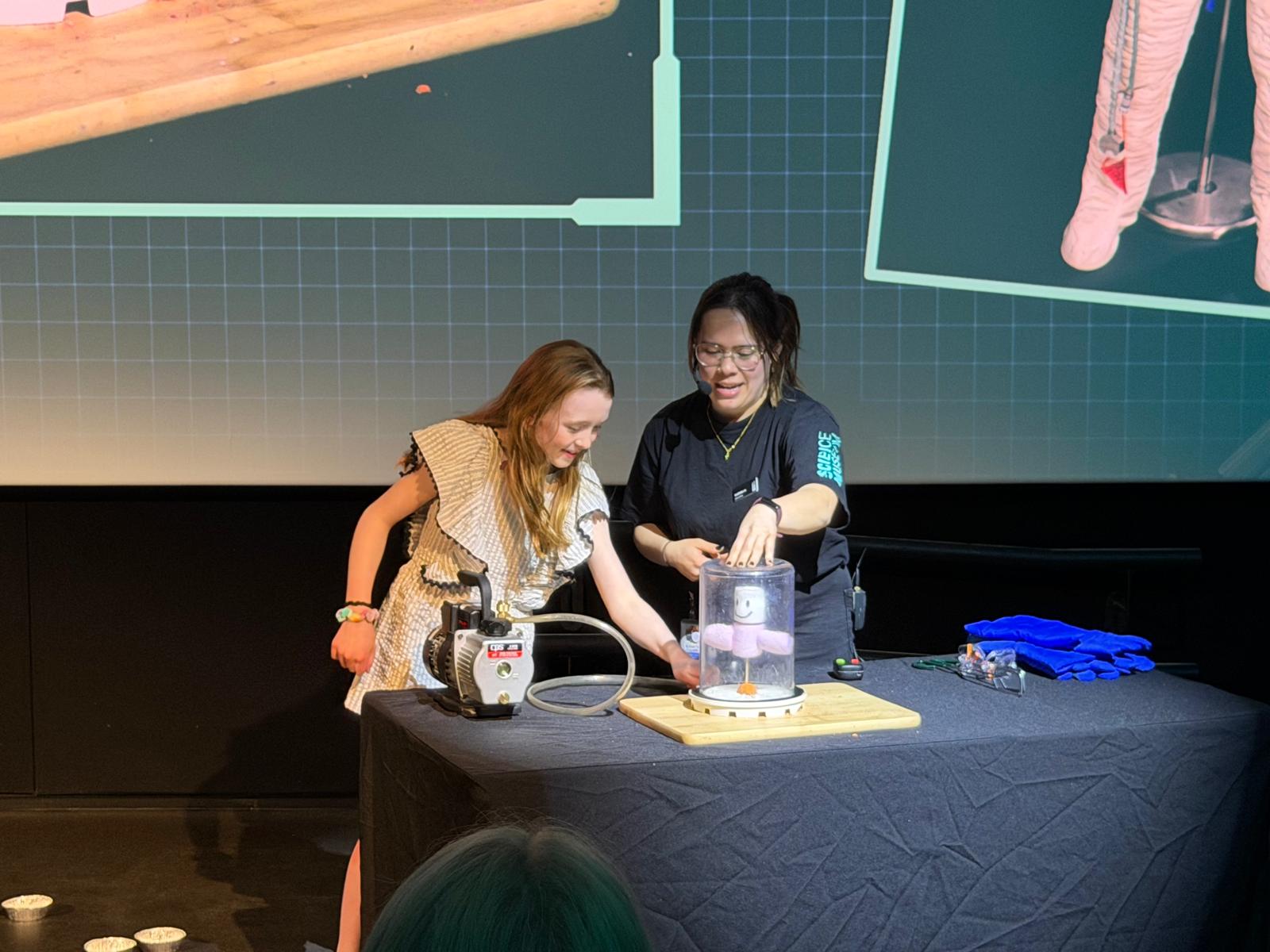
After a snack break, Mission to Mars followed, delivered as a talk with theatrical chemical reactions, flashes and small controlled explosions that did an excellent job of holding attention. It was loud, energetic and pitched exactly right, with lots of opportunities for the children to volunteer.
Build a Base training came next, shifting things towards teamwork and problem-solving, with everyone fully engaged on constructing a Mars-proof model.
By 11.30, the wind-down for sleep began. This felt sensible to the adults and more optional to the children. Sleep descended gradually, accompanied by the usual rustling and whispered conversations that tend to fill a room full of excited children.
Morning came early. After packing up, we were taken to the Space Café for breakfast, part of the Mission Kosmos package. At that point, the main requirement was coffee – and plenty of it. I had managed three hours and seven minutes of sleep and, according to my watch, my lowest sleep score ever at 36. Orlando and Sebby’s mum, by contrast,
had managed a more respectable five and a half hours. Nevertheless, we both agreed afterwards that the experience had been worth every single lost second of sleep: the experience is inimitable.
This was followed by Space on a Sphere, delivered in dim lighting. The Earth rotated slowly while a calm voice explained planetary systems. The children followed closely; the adults did their best.
Next came early-morning, pre-crowd access to Wonderlab, where everything is hands-on. The children dispersed immediately. Arabella, Ophelia and Maddy made a beeline for the queue-free friction slides; Sebby and Orlando headed straight for the live demonstrations.
The final part of the programme was the IMAX screening of A Beautiful Planet. There was a collective pause as the 3D glasses went on, followed by sweeping views of Earth from orbit. It is hard not to be struck by it. The view of life aboard the International Space Station was genuinely fascinating, and at times moving.
What Astronights does particularly well is keep the focus on participation rather than formal teaching; getting children involved and curious, with learning happening osmotically alongside the activity rather than sitting above it. The Explainers and educators are central to that, moving through everything with an easy, unflustered warmth and a calm efficiency that never feels forced, even with large groups of excitable children.
For me, there was something else as well. Watching my daughters move through the same building, completely absorbed, it was impossible not to think back to that SciNights party in 1993. The name has changed, and the structure has become more refined, but in the telling the magic has only grown.
By the time we stepped back out into the bright London morning, slightly rumpled and carrying an assortment of belongings and prizes, it felt like something genuinely out of the ordinary, in the best possible way, and the sort that might stay with them, just as it had with me.
Astronights at the Science Museum
Exhibition Road, South Kensington, London, SW7 2DD
Date: Dates vary
Price: £85 standard, £130 VIP
Age: 7-11