Tuscany & Umbria: A Study in Quiet Discovery
Central Italy reveals itself most beautifully not through its headline destinations, but through its quieter contours—where landscapes are still shaped by agriculture, where hill towns remain anchored in medieval rhythm, and where luxury is defined less by spectacle and more by stillness, space, and authenticity
This journey moves between Tuscany and Umbria, two regions that share a border yet offer distinct moods: Tuscany with its golden, cinematic horizons and sculpted vineyard hills; Umbria with its deeper greens, spiritual heritage, and more introspective pace. Rather than focusing on the well-trodden icons, this itinerary is defined by two places that feel like personal discoveries.
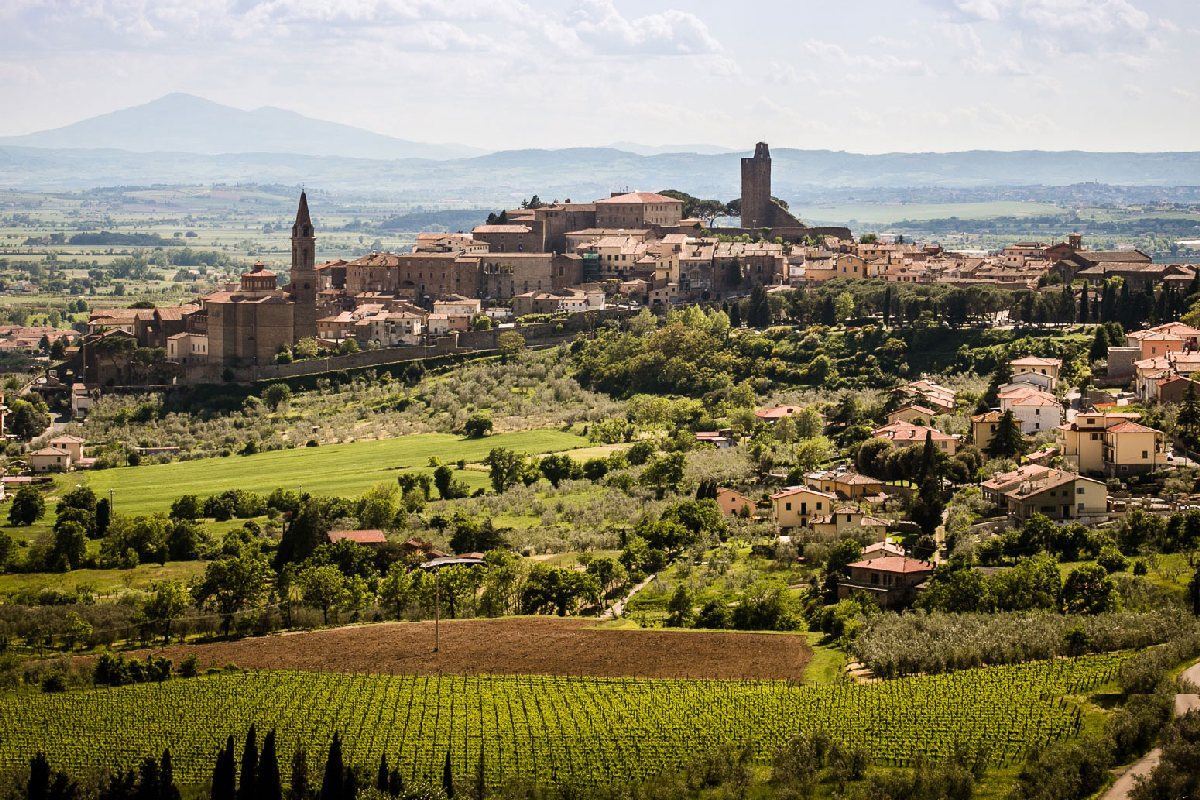
One is Cortona, Tuscany, Italy, a hilltop Tuscan town made internationally known by Frances Mayes’ memoir turned film Under the Tuscan Sun, where the idea of relocation, restoration, and romantic immersion in Italy was born.
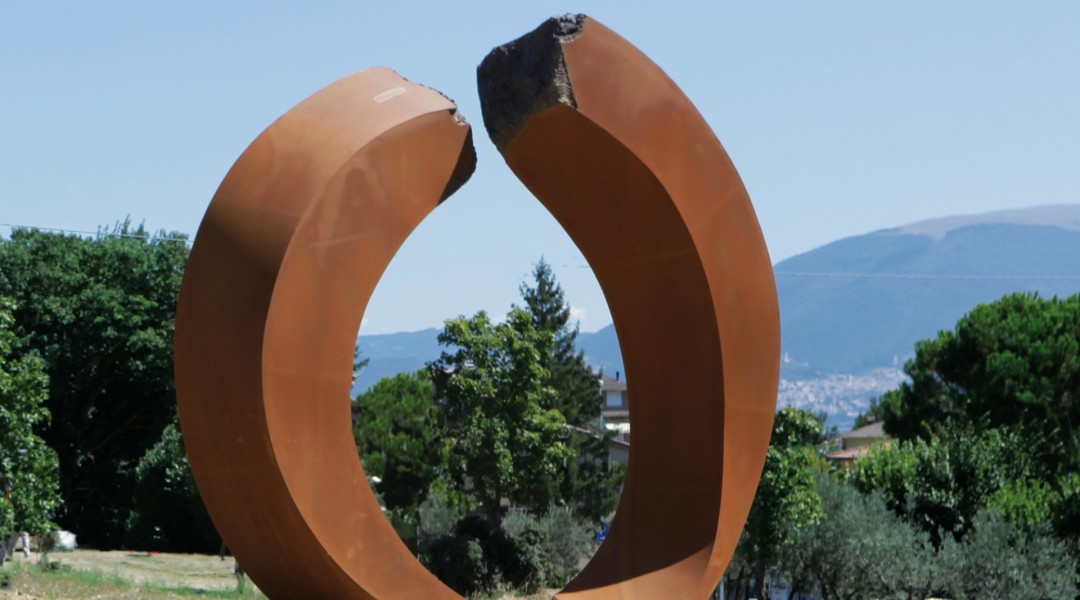
The other is Brufa, a near-invisible Umbrian village that reveals itself slowly, where contemporary sculpture is unexpectedly integrated into open landscapes, turning countryside walks into open-air galleries.
Together, they form a quieter interpretation of central Italy—one shaped by atmosphere, texture, and lived-in elegance.
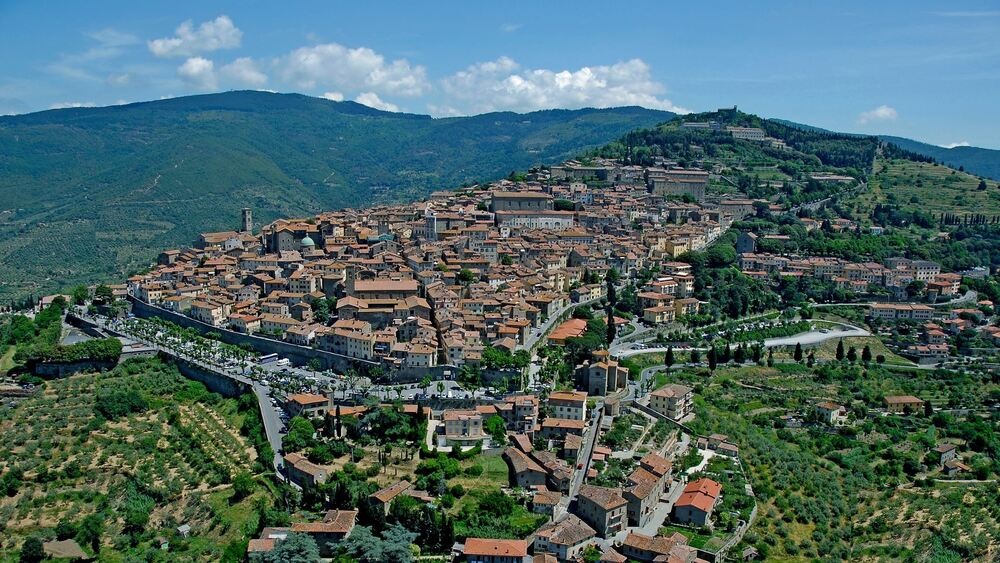
Cortona: Etruscan Heights and Timeless Views
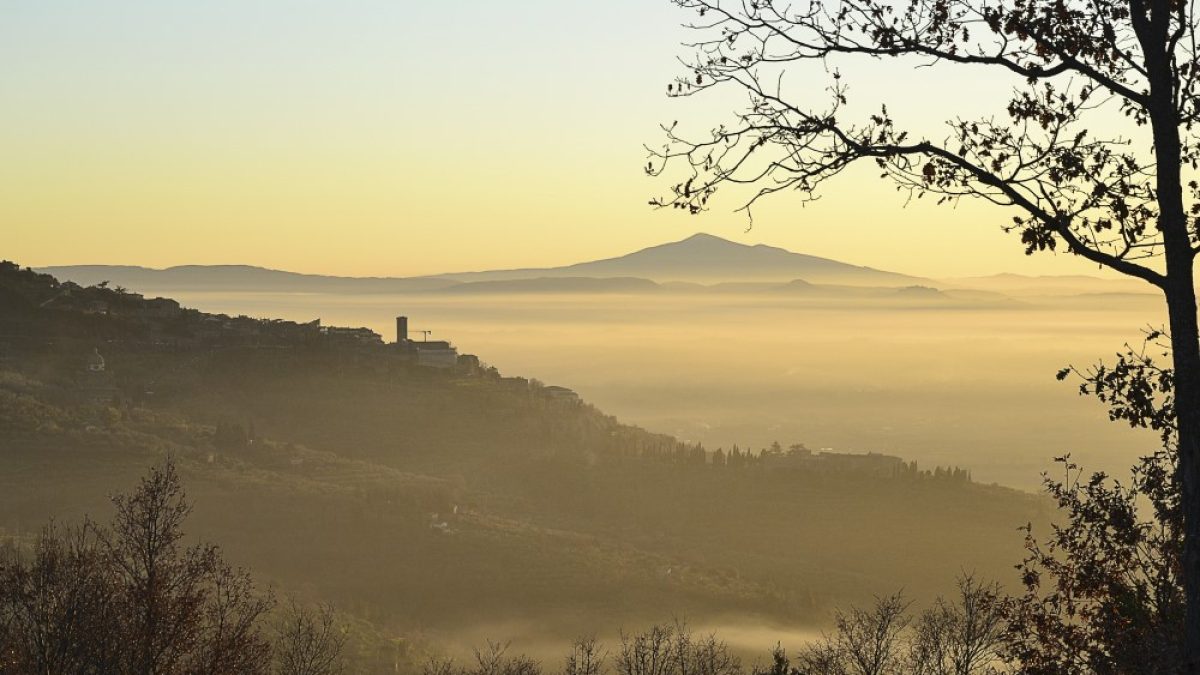
Cortona, Tuscany, Italy rises dramatically above the Val di Chiana, its steep medieval streets unfolding in layers of stone, light, and history. Founded by the Etruscans and later shaped by Roman and Renaissance influence, Cortona still carries the imprint of its ancient past while remaining vibrantly alive in the present.
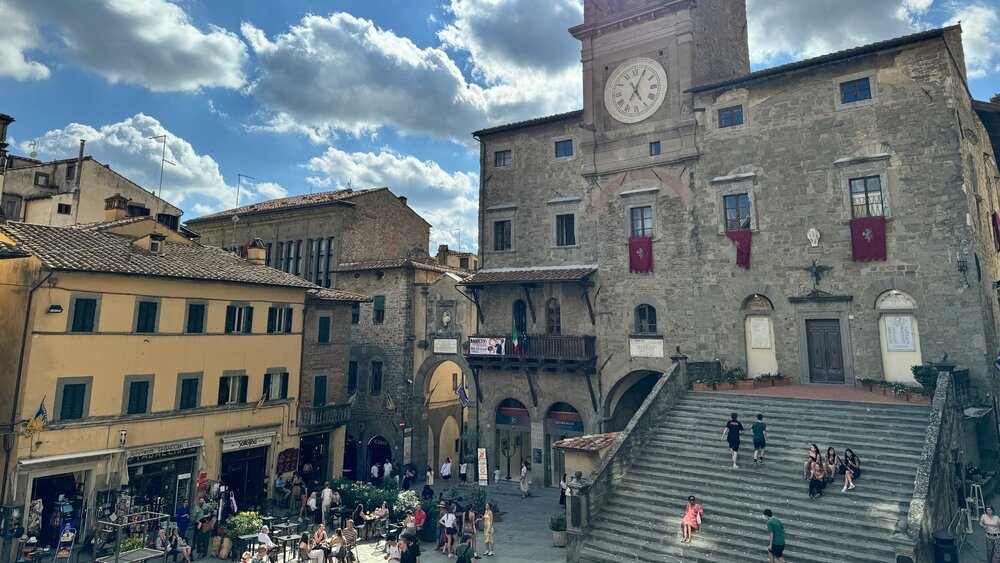
Its appeal lies not only in its architectural heritage, but in its setting. From almost any vantage point, the landscape stretches outward in long, rolling gestures—olive groves, vineyards, and distant lakes shifting in tone with the light. The town itself feels intimate; its narrow lanes and sloping piazzas are designed for wandering rather than destination.
Cortona’s cultural depth is equally compelling. The Museo dell’Accademia Etrusca di Cortona anchors its Etruscan legacy, while sacred works by Fra Angelico and Luca Signorelli remind visitors that this small town has long been a center of artistic significance. Yet beyond the museums and churches, Cortona’s true luxury lies in its atmosphere: cafés opening onto sun-warmed piazzas, stone stairways climbing toward silence, and views that seem to pause time itself while live music can often be heard reverberating from the town center’s stage.
It is also a place shaped by narrative. Frances Mayes’ Under the Tuscan Sun transformed Cortona into an international symbol of Tuscan living, yet the town retains its authenticity, especially in the quieter hours when the day-trippers leave and the streets return to local rhythm.
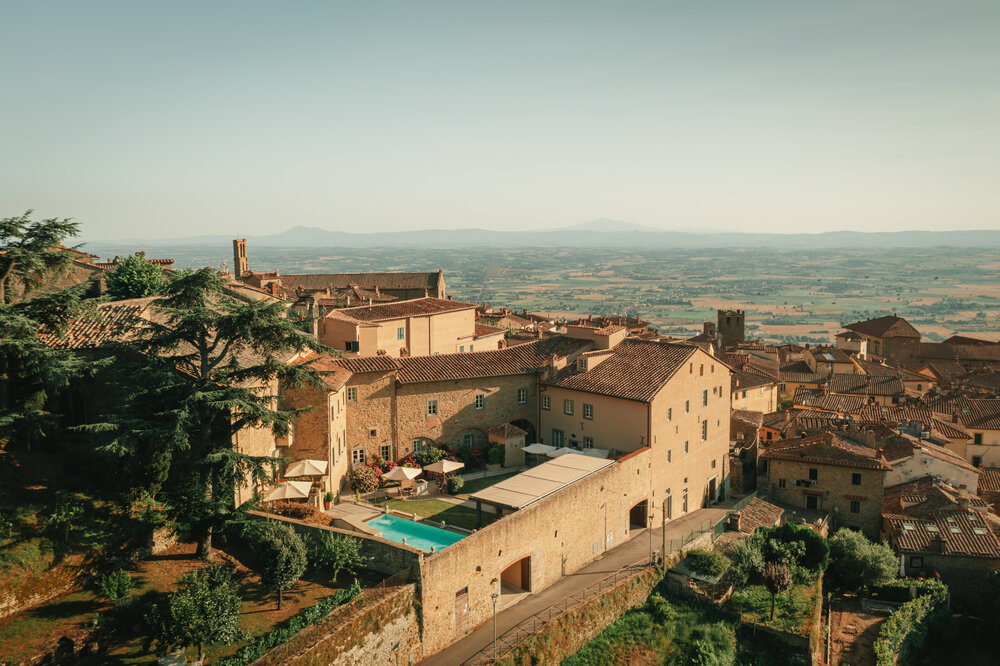
Monastero di Cortona Hotel & Spa: A Sanctuary Above the Valley
At the highest point of Cortona, the experience of staying at Monastero di Cortona Hotel & Spa feels less like checking into a hotel and more like entering a living piece of history. Once a 15th-century monastery, the building has evolved through centuries of religious life, from Dominican monks to Cistercian communities, before being transformed into a refined retreat that still preserves its spiritual architecture.
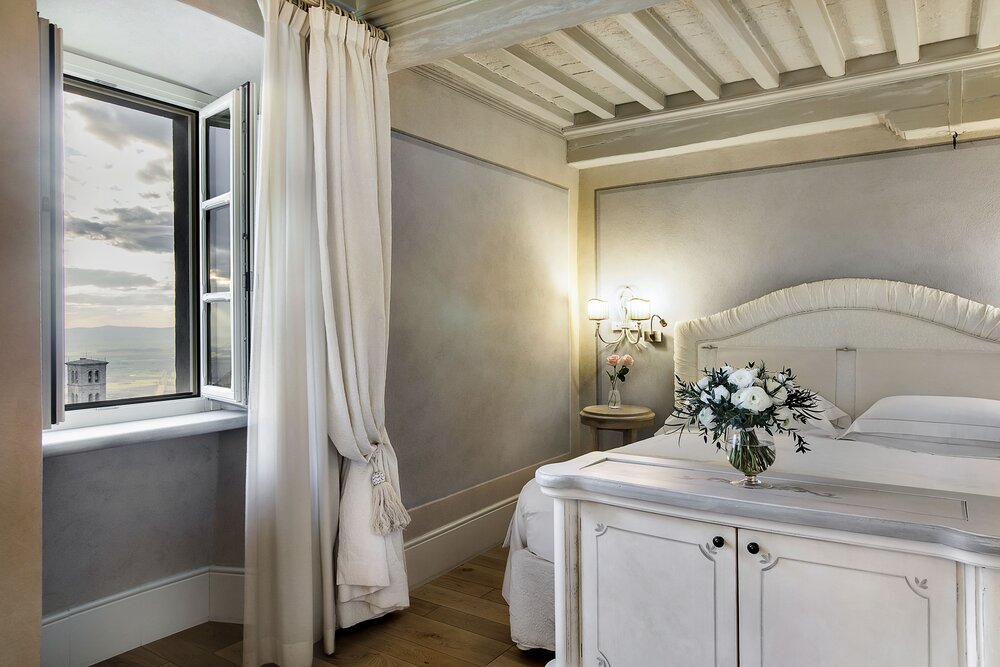
The structure itself is layered with memory. Cloisters, vaulted ceilings, and restored frescoes remain intact, while former monastic corridors now lead to softly lit suites. Each room carries a sense of continuity between past and present, where ancient stonework is balanced by understated contemporary design and expansive views over the Val di Chiana.
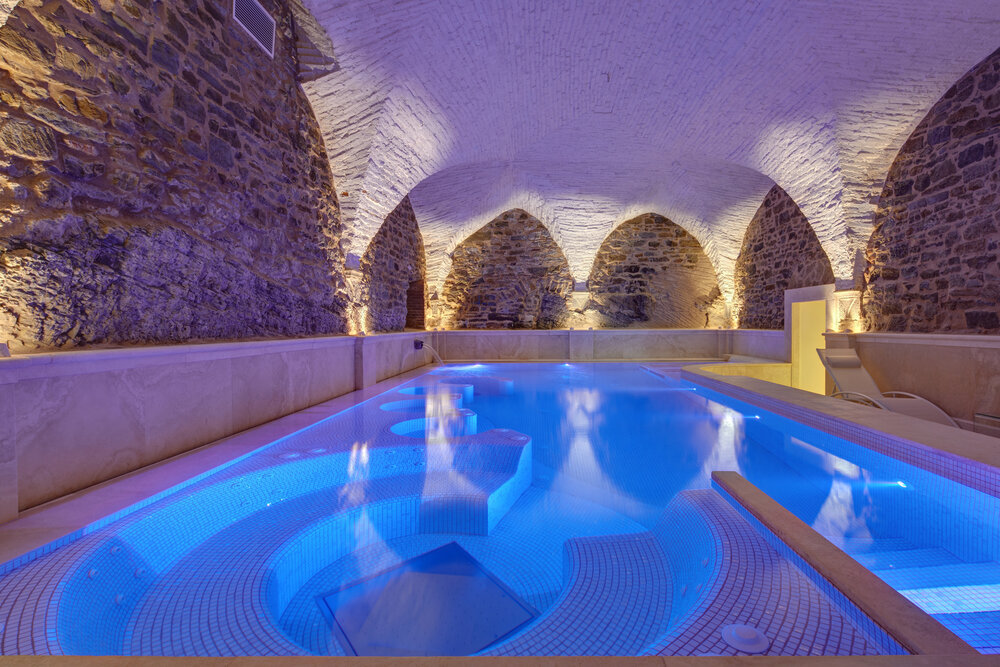
Wellness here is not an addition but a continuation of the site’s original purpose. The spa, known as Bagni di Bacco, is carved into an ancient Roman cistern once associated with ritual bathing. Today, it has been reimagined as a serene thermal space with pools, saunas, and sensory treatments that echo the site’s historic association with water and renewal.
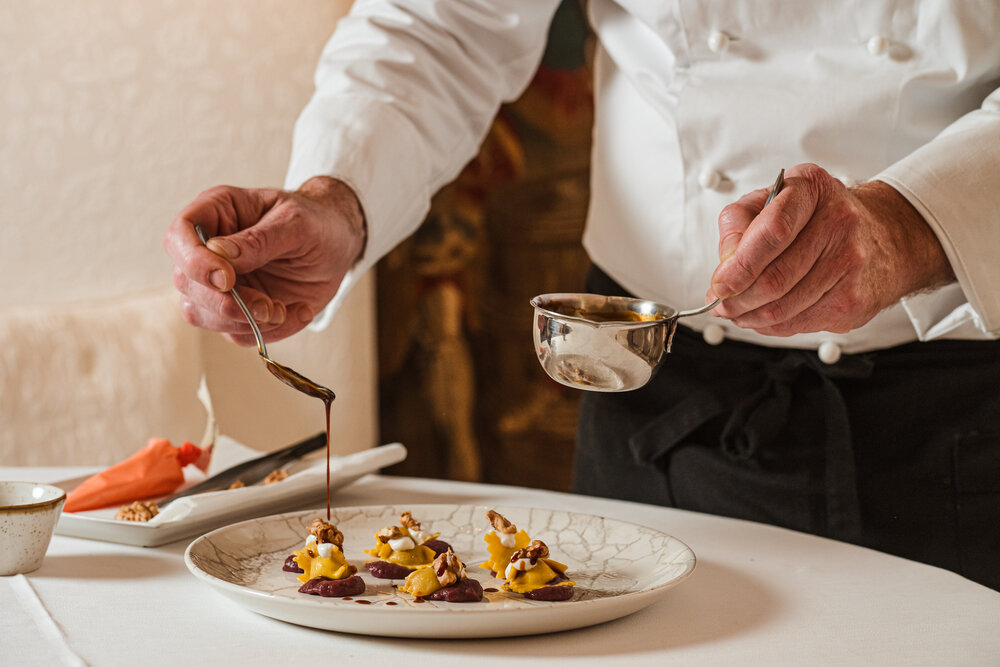
Dining is equally immersive. In the main restaurant, frescoed walls frame a refined interpretation of Tuscan cuisine, where traditional recipes are elevated with contemporary precision. A second, more intimate osteria offers a grounded expression of regional cooking, celebrating seasonal ingredients and local produce with quiet confidence. The wine cellar, with its extensive collection of Tuscan and Italian labels, reinforces the sense that this is a place where heritage is both preserved and experienced.
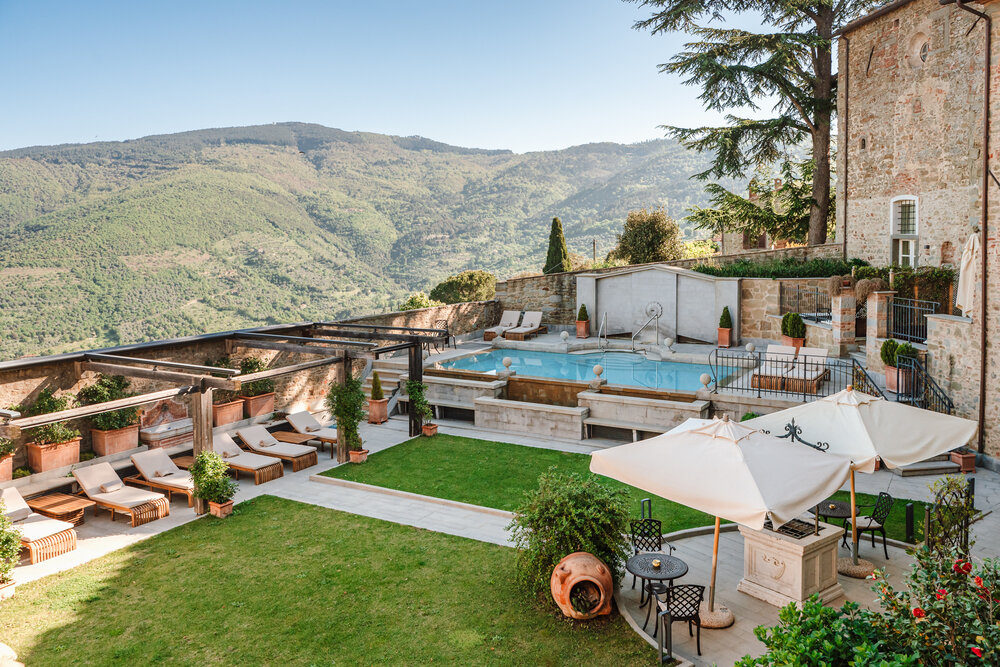
Perhaps the most defining element, however, is the terrace and pool deck. Set above the valley, it opens onto uninterrupted horizons where sunset becomes a daily ritual rather than a spectacle, an unhurried transition from day to night that reflects the spirit of the monastery itself.
Brufa: A Hidden Village in the Umbrian Landscape
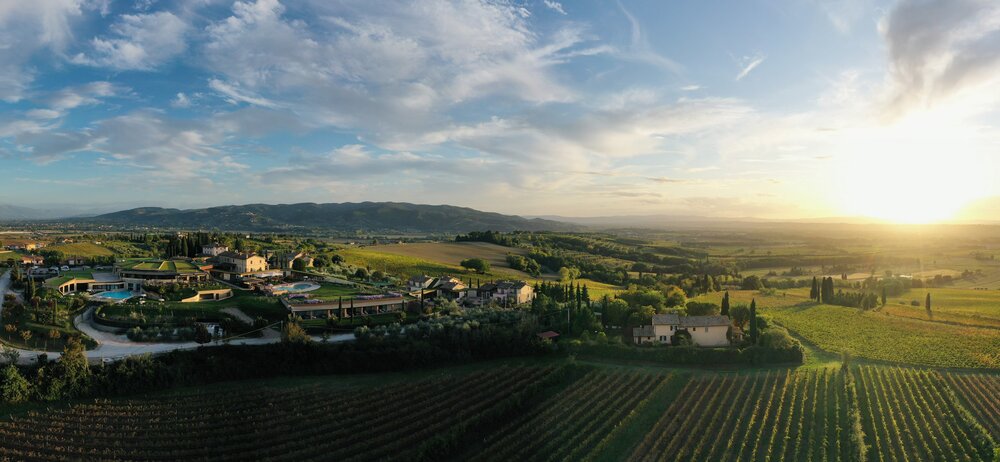
Brufa is not a place one arrives at intentionally so much as one discovers unexpectedly. A small village within the municipality of Torgiano in Umbria, it sits quietly among rolling hills between Perugia and Assisi. It is here that the landscape becomes softer, more subdued, and increasingly contemplative.
What distinguishes Brufa is its integration of art into the environment. The village is part of an ongoing open-air sculpture initiative where monumental contemporary works are placed throughout the countryside. These installations appear along roadsides, vineyards, and open fields, transforming everyday walks into a dialogue between nature and form.
Unlike more structured cultural destinations, Brufa offers no fixed itinerary. Its appeal lies in its openness, the sense that art and landscape coexist without hierarchy, and that discovery happens gradually, one sculpture at a time.
Borgobrufa Spa Resort: Umbrian Silence and Elevated Wellness
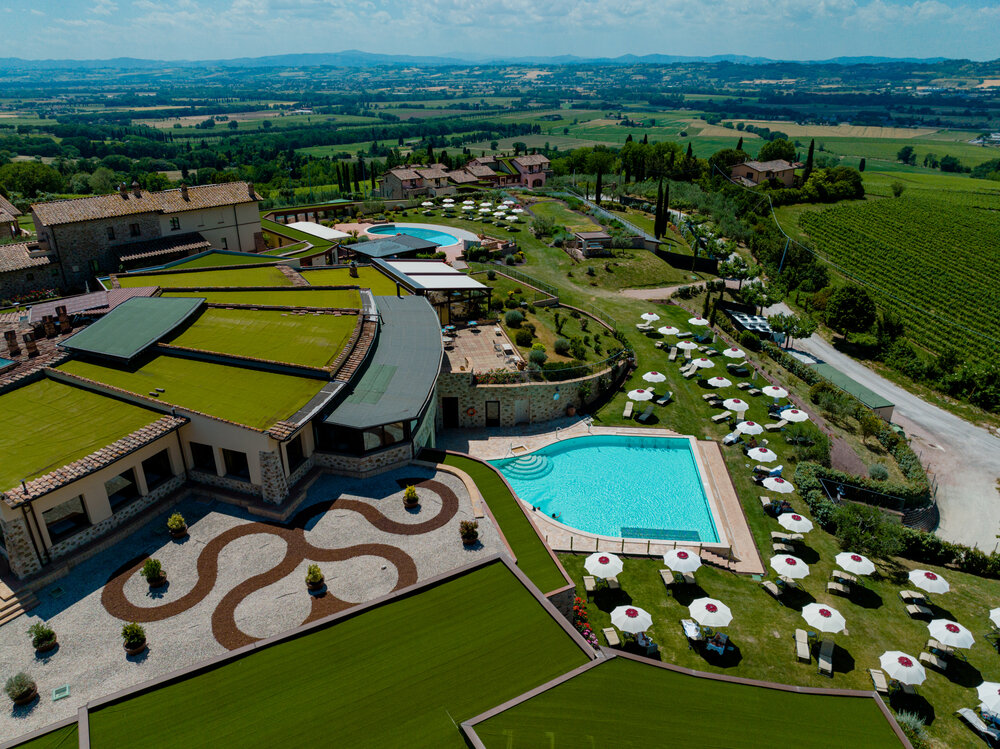
Set above Brufa on a gentle hillside, Borgobrufa Spa Resort is designed entirely around the concept of silence, space, and adult-only tranquillity. Surrounded by approximately nine acres of Umbrian countryside, the resort is deliberately secluded, allowing the landscape to become part of the experience.
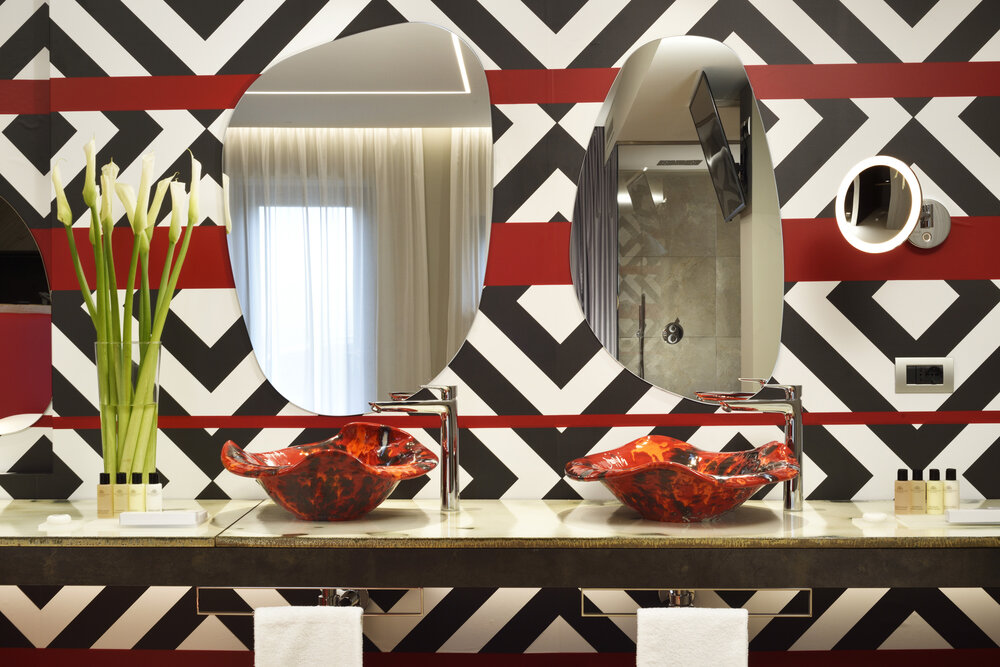
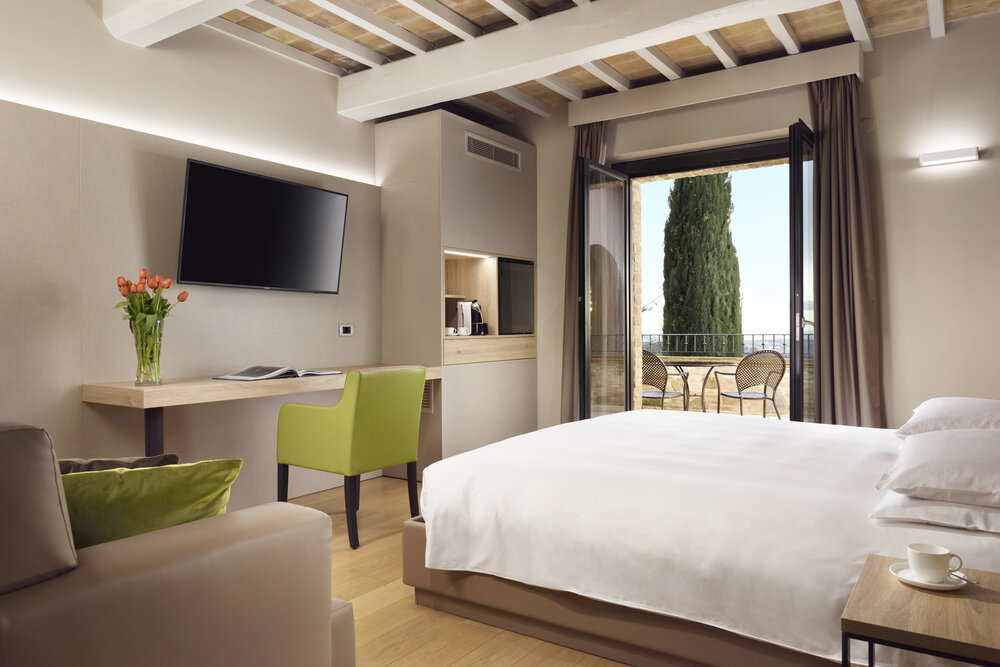
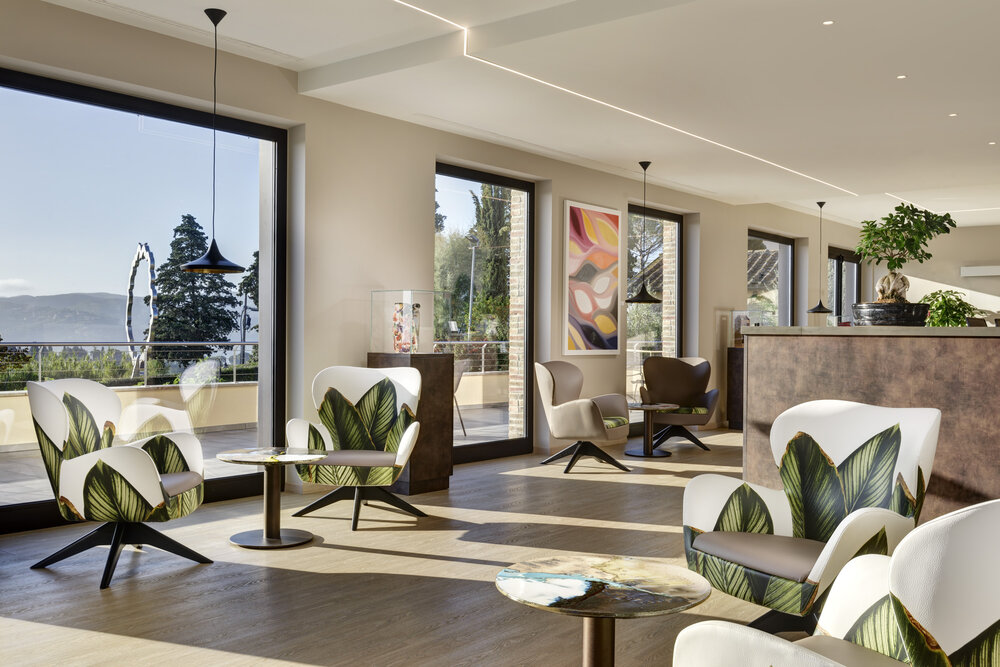
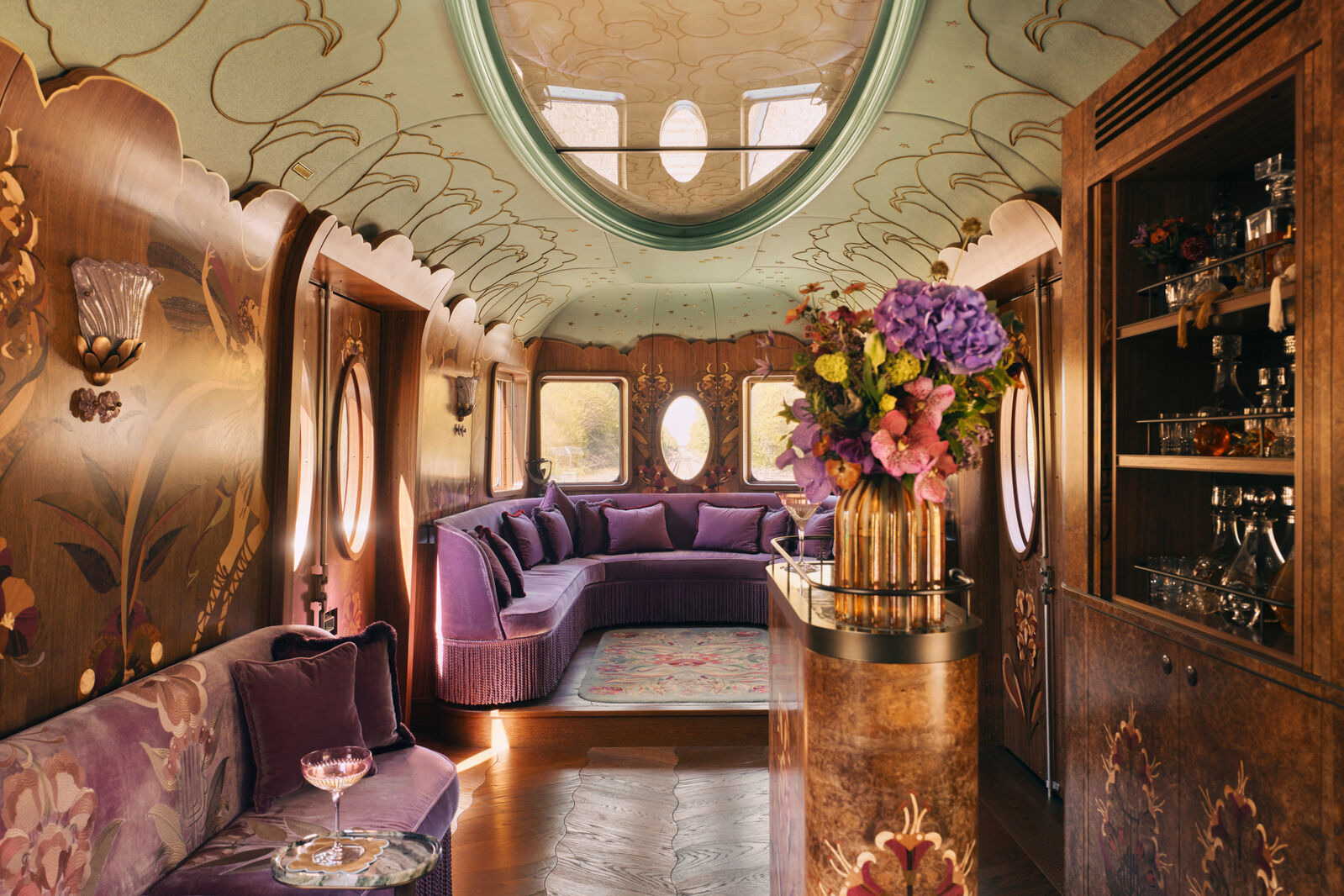
The property blends traditional Umbrian architecture with contemporary colorful interiors (think neon lime green or rich red suite sinks and massive circular tubs), creating a dialogue between rustic authenticity and modern refinement. Suites open onto panoramic views, with private terraces overlooking vineyards, olive groves, and distant hill towns. Curated selections of local artisans’ paintings, pottery and photography are choice décor in the lobby and long passageways.
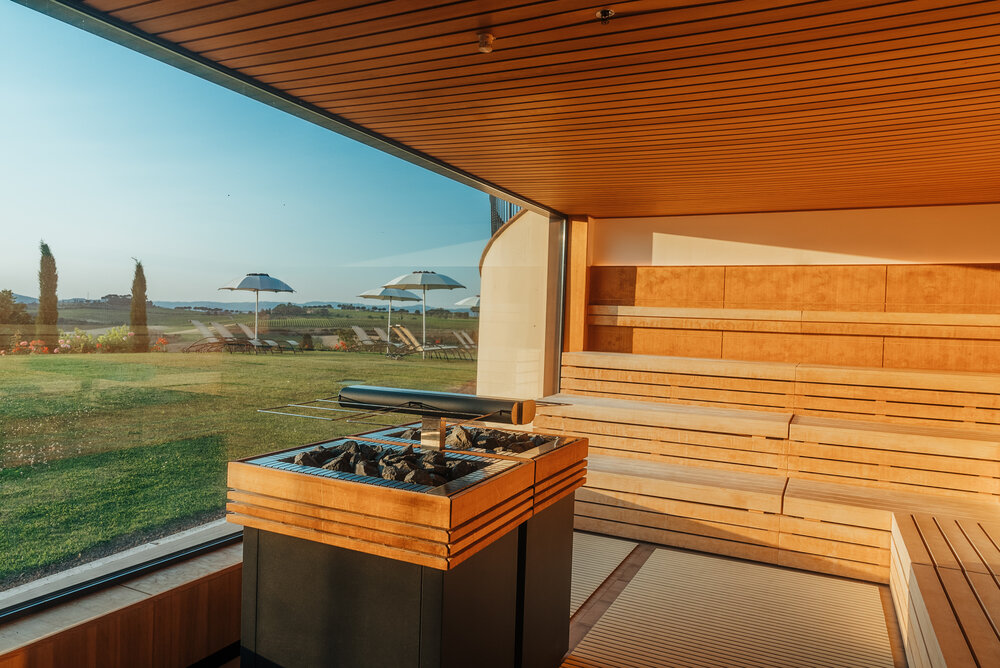
At the heart of the resort is its expansive spa, one of the largest in Umbria, dedicated entirely to wellness rituals. Indoor and outdoor pools heated to a constant therapeutic temperature create a sense of continuous immersion, while saunas, steam baths, salt rooms, and sensory relaxation spaces form a circuit of restorative experiences. Treatment rooms and private spa suites extend this sense of exclusivity, allowing for deeply personalized rituals.
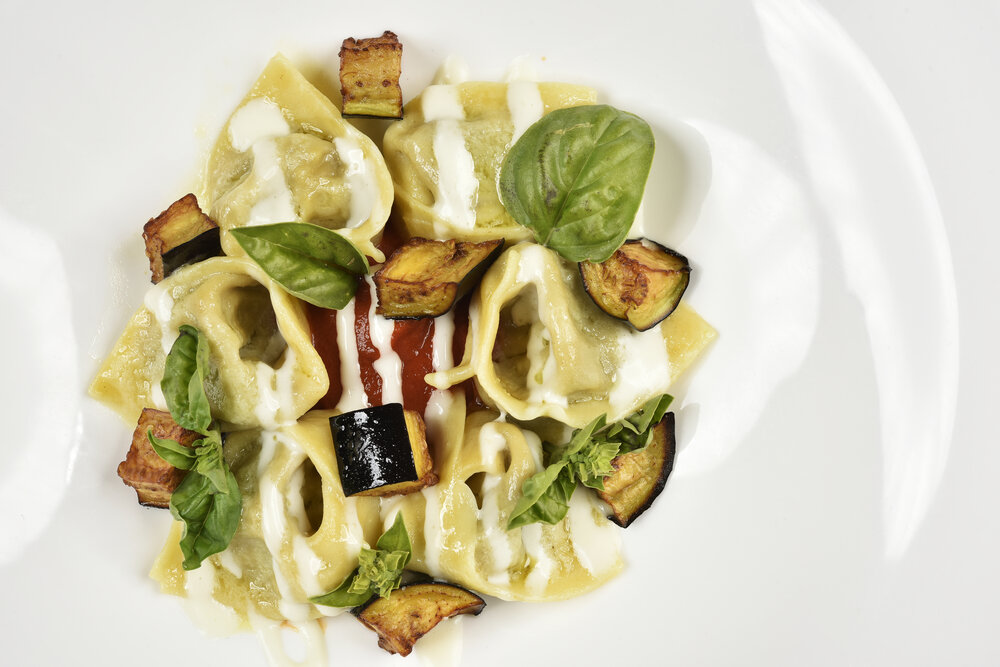
Dining is framed by landscape. The main restaurant emphasizes seasonal Umbrian cuisine, with ingredients sourced directly from local producers and prepared with a respect for traditional techniques. A more elevated fine dining experience offers a refined tasting journey, while the extensive wine cellar reflects the depth of regional viticulture.
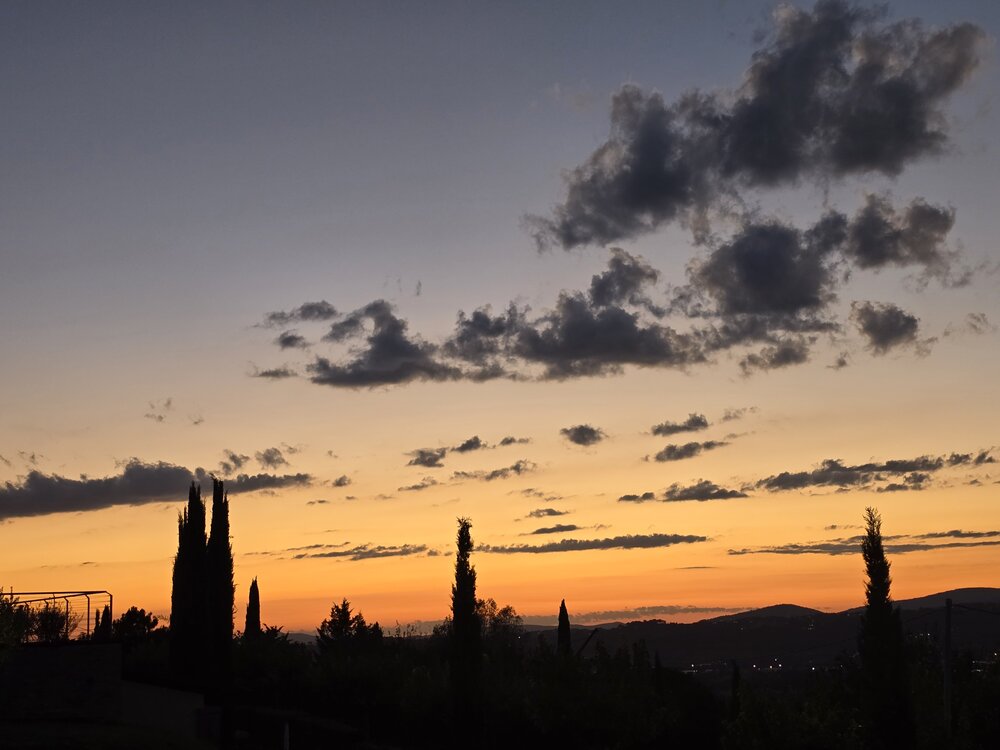
Borgobrufa’s defining quality is its stillness (no screaming kids at this adults-only oasis). It is a place where time is measured not in schedules, but in light across the hills, surreal sunsets and the slow rhythm of wellness, along with the occasional pitch of local singers performing poolside.
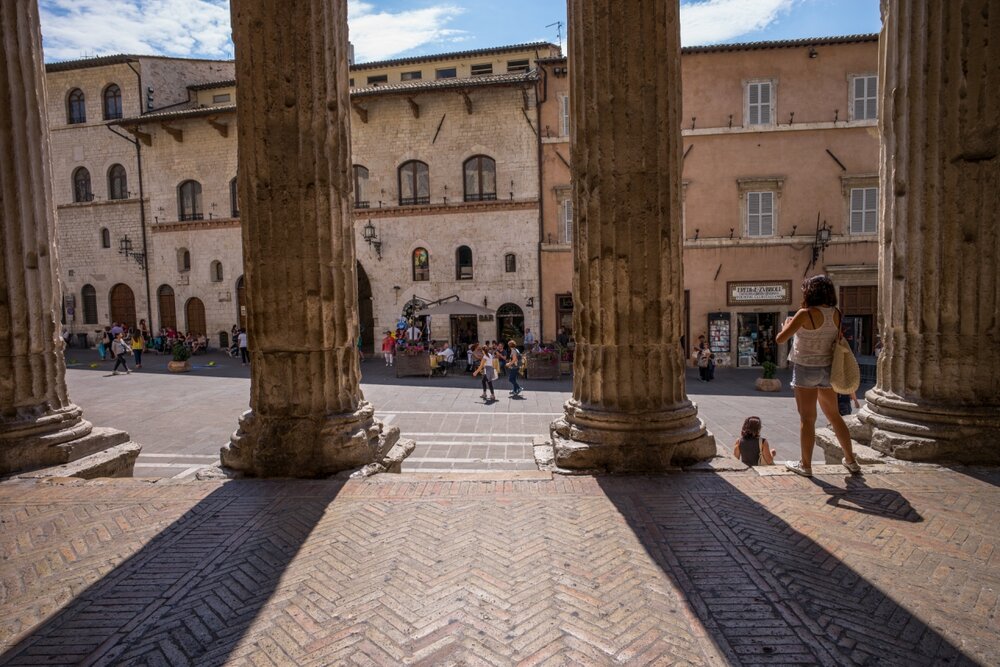
Assisi and Perugia: Two Essential Day Trips from Brufa in Umbria
From Brufa, two contrasting Umbrian cities are within easy reach, each offering a different interpretation of the region’s identity.
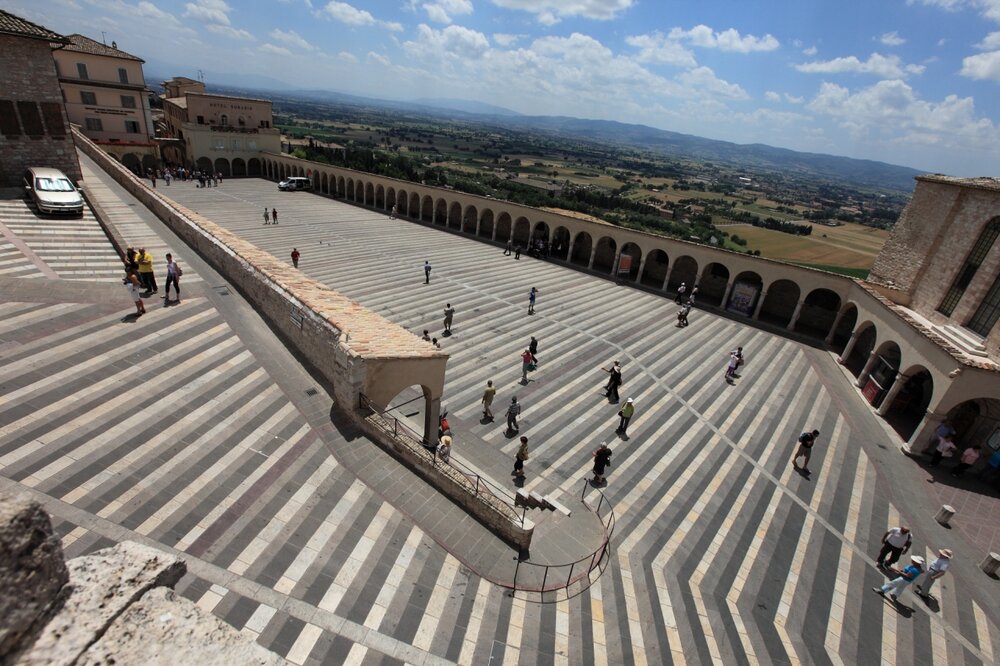
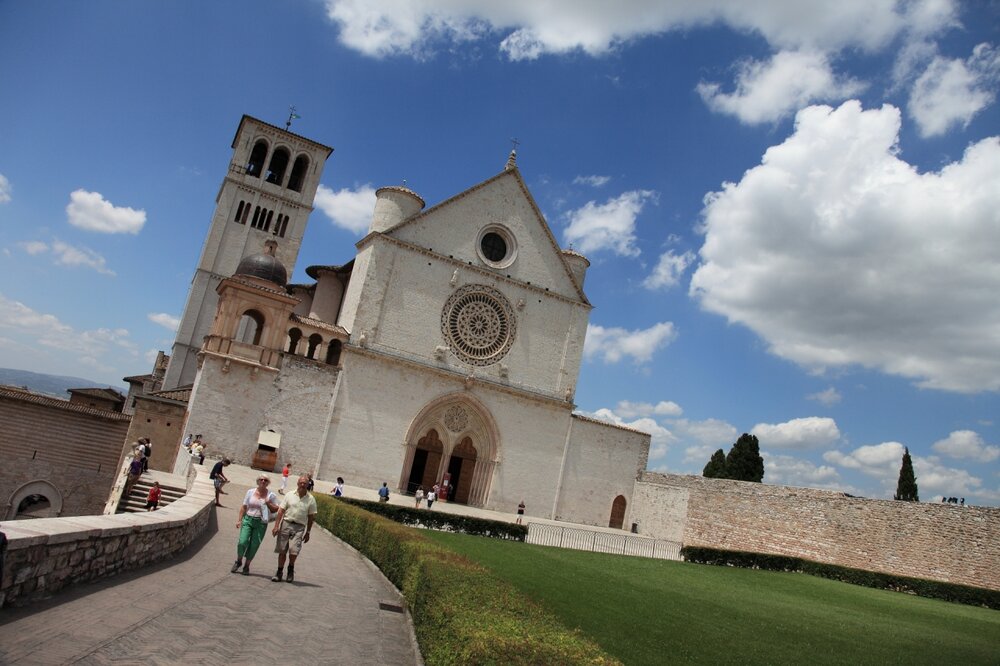
Assisi is a profoundly spiritual hill town, known globally as the birthplace of St. Francis. Its medieval streets, rose-toned stone architecture, and monumental basilica create an atmosphere of pilgrimage and reflection. Walking through Assisi feels like moving through layers of religious and artistic history, where frescoes, chapels, and cloisters define the urban fabric as much as the streets themselves.
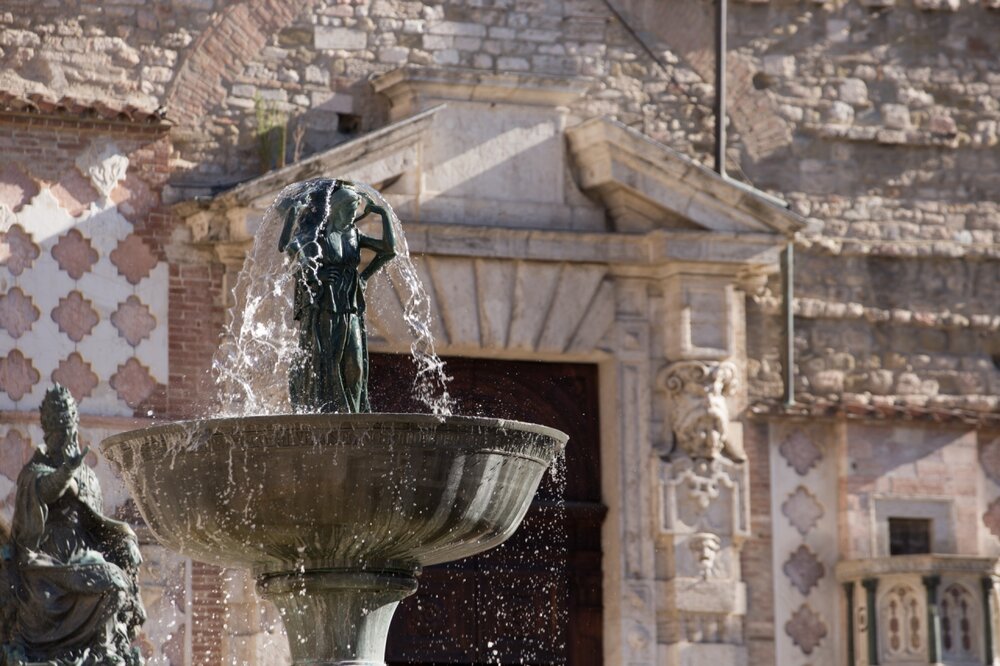
In contrast, Perugia presents a more urban and dynamic expression of Umbria. As the regional capital, it combines Etruscan origins with medieval fortifications and Renaissance palaces, layered over a modern cultural and academic life. Its streets are steep and atmospheric, opening unexpectedly into grand piazzas, underground archaeological passages, and sweeping viewpoints over the Umbrian valley. A must-see stop is the Galleria Nazionale dell’Umbria, housing one of the richest art collections in Italy. First opened in 1863, it showcases an 800-year journey through the history of Italian art with more than 3000 artworks.
Together, Assisi and Perugia offer a complementary duality: one contemplative and sacred, the other civic and cosmopolitan, both deeply rooted in history and architecture.
Parting Sentiments: The Luxury of Slowness
This journey through Cortona and Brufa, with extensions into Assisi and Perugia, reveals a different definition of luxury—one that is less about excess and more about experience. It is found in monastic silence above a Tuscan valley, in contemporary sculptures emerging from Umbrian fields, in spa rituals shaped by ancient water, and in cities where history is not preserved behind glass but lived in daily rhythm.
Here, luxury is not performed. It is absorbed slowly, in landscapes that ask for time, attention, and presence.