
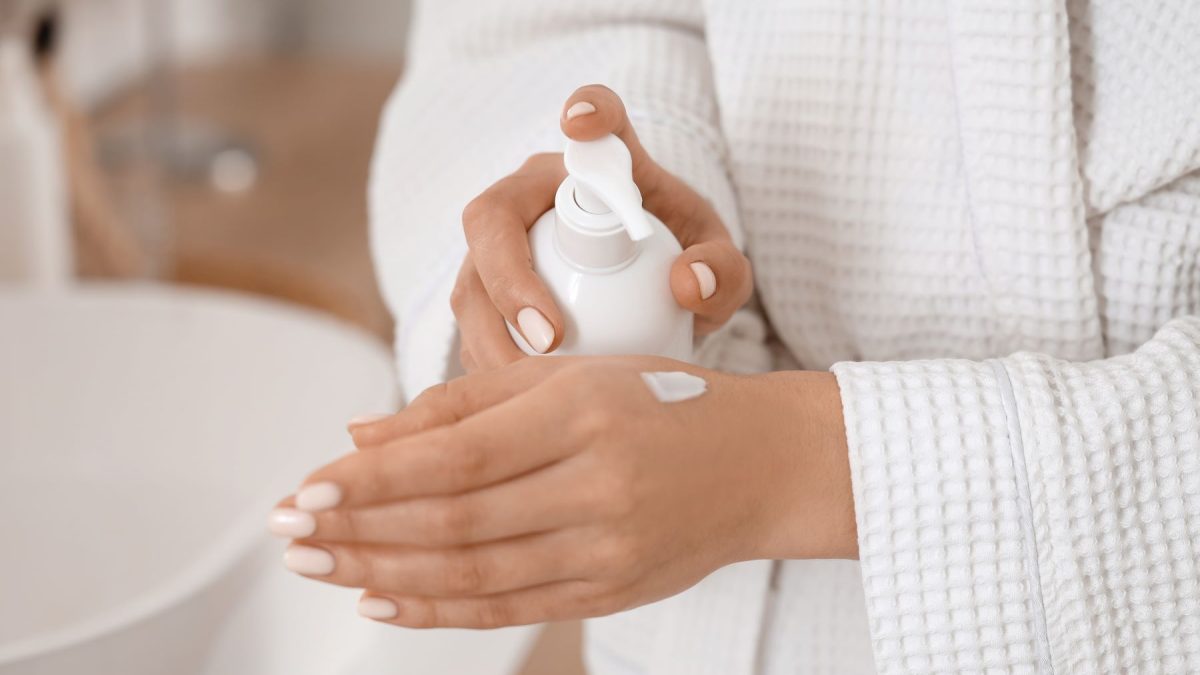
Travel is one of the fastest ways to throw a skincare routine completely off course. The recycled air on a long-haul flight pulls moisture from your skin for hours. Changing climates, different water, more sun exposure, and disrupted sleep all add up to a face that looks and feels considerably worse than it did when you left home. The fix is not a bag full of serums and face masks, it’s a short, repeatable routine built around a handful of products that genuinely earn their place. Starting in the shower before you even leave helps set the tone: a good shower oil cleanses without stripping the skin’s natural moisture barrier, which matters more than usual when you’re about to spend several hours in dry cabin air. From there, this guide covers everything you need – a morning prep routine, in-flight essentials, and an evening reset in a format that fits comfortably in a carry-on and takes less than five minutes to follow.
What Travel Actually Does to Your Skin
Understanding the problem makes it easier to solve. Airplane cabin air is pressurised and has very low humidity typically around ten to twenty percent, compared to the forty to sixty percent most people are used to at home. Your skin loses moisture continuously in that environment, and the longer the flight, the more noticeable it becomes. The result is tightness, dullness and an increased tendency toward sensitivity and breakouts in the days that follow.
Add to that the disruption of changing time zones, different food and water, higher UV exposure in warmer destinations, and the tendency to sleep less and touch your face more in transit, and it becomes clear why skin often looks its worst precisely when you most want it to look its best at a destination, freshly arrived, possibly photographed.
The good news is that most of this is preventable with a consistent routine rather than a complicated one. The three moments that matter are the morning before you travel, during the flight, and the evening when you arrive.
The Morning Routine: Prep and Protect
The morning before travel, or the morning of any day when you’ll be outdoors and in transit, is when you set your skin up for the hours ahead. Three steps cover it completely.
Cleanse gently
A mild gel or cream cleanser removes overnight oils and prepares skin for everything that follows without stripping it. Avoid anything foaming or astringent on a travel day – the last thing you want is to compromise your skin’s moisture barrier before spending hours in low-humidity air. If you’re tight for time, a gentle micellar water on a cotton pad does the job without water.
Hydrate and seal
A lightweight hyaluronic acid serum applied to slightly damp skin draws moisture in and holds it there. Follow it immediately with a moisturiser – something with a simple, effective formula that provides both hydration and a light barrier. Multi-tasking moisturisers that combine hydration with skin-barrier support are ideal for travel because they reduce the number of steps and products in your bag. A pea-sized amount is enough; more doesn’t mean better.
SPF non-negotiable
Sun protection is the single most impactful skincare step you can take, and travel makes it more important, not less. UV exposure is higher at altitude, near the equator, and over water or snow. A tinted SPF balm or an SPF stick is the most travel-friendly format: compact, easy to reapply, and functional as light coverage. Broad-spectrum SPF 30 or higher is the standard; SPF 50 is worth it in high-UV destinations or for anyone with fair skin or a history of sun damage.
If you want to simplify further, a tinted BB cream with built-in SPF combines moisturiser, colour correction, and sun protection in a single step. For short trips where you’re happy with a natural look, this is genuinely all you need from a morning routine.
The In-Flight Routine: Staying Hydrated in the Air
The in-flight routine is not about an elaborate application, it’s about consistently replacing the moisture the cabin air is pulling from your skin. The products you need fit in a small pouch that goes in the seat pocket in front of you.
The basics
A small facial mist with glycerin or hyaluronic acid in the formula, spritzed every two or three hours, makes a noticeable difference on longer flights. Reapply lip balm regularly; lips lose moisture faster than other parts of the body, and the effects are visible and uncomfortable. Drink water consistently rather than waiting until you’re thirsty, and limit alcohol and coffee, both of which accelerate dehydration.
For long-haul flights
On flights over six hours, a single sheet mask applied once you’re settled is one of the most effective things you can do for your skin in transit. It takes 10 to 15 minutes, requires no mirrors, and makes a visible difference in how you look and feel when you land. Cool eye patches address the puffiness that tends to build up overnight flights. Neither of these is essential, but both are inexpensive and lightweight enough to justify their place in the bag.
One thing to avoid: heavy cream moisturisers applied mid-flight. They can pill over time, sit uncomfortably in low humidity, and increase the likelihood of milia if you’re prone to congestion. A light mist and a lip balm are more effective and far less fuss.
The Evening Routine: Reset and Repair
Arriving at a destination is when most people want to collapse rather than follow a skincare routine. The evening routine needs to be fast enough that you’ll actually do it, and effective enough that you wake up the next morning with skin that feels recovered rather than depleted.
Cleanse properly
If you wear sunscreen or any makeup during the day, a double cleanse is the right move. As the first step, an oil-based cleanser or cleansing balm breaks down SPF and product residue in a way that a water-based cleanser alone doesn’t. Follow up with a gentle gel or cream cleanser to remove any remaining residue. If you kept it bare-faced on a travel day, a single gentle cleanse is sufficient.
A serum you already know
The evening is a good moment for a reparative serum niacinamide for calming and brightening, or a vitamin C antioxidant if your skin tolerates it. The critical caveat: only use products you’ve used before. Travel is not the time to experiment with new actives or higher concentrations. A reaction that would be manageable at home is considerably more stressful when you’re on the road and away from your usual pharmacy.
A richer moisturiser

Evening is when you can go slightly heavier than your morning formula. A richer moisturiser or a sleeping mask applied before bed gives skin several hours to absorb and recover. If you use eye cream at home, bring it to the under-eye area, which shows travel fatigue faster than anywhere else, and the difference between ignoring it and addressing it is visible by morning.
Packing the Routine Without the Stress
The practical constraint is the carry-on liquid rule: in Australia and on most international routes, each container must be 100 ml or less, and all containers must fit inside a single transparent, resealable bag with a capacity of 1 litre. This is not as limiting as it sounds for a skincare routine most serums and moisturisers are available in travel sizes, and decanting into labelled silicone travel bottles takes ten minutes before a trip.
What belongs in the carry-on: your SPF, any prescription medications, and the serums or products you genuinely can’t replace easily at the destination. What can go in checked luggage: full-size cleansers, backup products, anything heavy. For trips under a week, a properly edited carry-on kit means you never need to check a bag for skincare.
A note on leaks
The most common cause of travel skincare disasters is overfilled bottles. Leave a small air gap in any decanted container to allow for pressure changes. Wrap a small piece of plastic wrap under the cap before screwing it on for anything you’re particularly concerned about. Store liquids upright in a sealed bag inside the main compartment rather than in the exterior pockets, where temperature and pressure changes are more extreme.
The minimum kit for any trip
- A gentle cleanser in travel size or single-use wipes as backup
- One serum hyaluronic acid is the most universally useful
- A lightweight moisturiser that doubles as day and night
- An SPF stick or tinted balm with SPF 30+
- A facial mist for the flight
- Lip balm with SPF if possible
- Two sheet masks or eye patches for long-haul
This fits comfortably within the one-litre bag and covers every situation you’ll encounter on a typical trip.
For thoroughly independent reviews of travel-sized skincare products across every category and budget, Adore Beauty’s travel skincare guide compiles tested, real-world picks specifically suited to Australian travellers a useful reference when you’re comparing products or looking for options available at local retailers.
Adjusting for Your Skin Type
Dry or dehydrated skin
Swap the lightweight moisturiser for a richer cream with ceramides or shea butter. Use a hyaluronic serum with a higher concentration, and consider a sleeping mask on the first night at the destination. Sheet masks daily on long trips are a quick and effective rescue.
Oily or acne-prone skin
A lightweight gel moisturiser and an oil-free SPF prevent the heaviness that can trigger congestion. Keep a small salicylic acid spot treatment in the kit – only if you already use one at home and avoid heavy creams during the day. Blotting papers are useful in transit without stripping the skin’s moisture.
Sensitive or reactive skin
Fragrance-free and minimal-ingredient formulas are the priority. Soothing actives like centella asiatica or a low concentration of niacinamide are well tolerated. Avoid anything new, anything strong, and anything with a long ingredient list. The flight and a new environment are already a stress on sensitive skin; the routine should calm rather than challenge it.
Combination skin
Targeted application is the answer: a lighter gel formula on the T-zone, a slightly richer product on the cheeks and any dry areas. This keeps the routine compact while addressing the distinct needs of each zone without adding extra products.
What Not to Do
The most consistent skincare mistake when travelling is treating a trip as an opportunity to try something new. A new serum, a higher-concentration retinol, and an acid exfoliant you’ve heard good things about all of these become problematic when your skin is already under environmental stress, and you’re away from your usual products and pharmacy. Any reaction that’s manageable at home is considerably worse when you’re on the road.
Retinol should be avoided unless you’ve been using it consistently for months and your skin shows no sensitivity. It significantly increases photosensitivity, which is the last thing you want on a trip that involves more sun exposure than usual. Patch-test any new product at least two weeks before you travel.
Sun protection deserves more attention than most people give it on holiday. Reapply SPF every two hours when outdoors not just in the morning. Australia’s UV index is among the highest in the world, even on overcast days. A hat and sunglasses are not optional accessories in high-UV conditions; they’re a meaningful part of skin protection.
The Cancer Council Australia’s UV and sun protection guidance is the most authoritative Australian reference on sun safety – including UV index interpretation, SPF standards and how to apply sunscreen correctly for meaningful protection. Essential reading for anyone spending time outdoors in Australia or high-UV destinations.
Looking Refreshed When You Arrive
The five-minute arrival routine exists for those moments when you’ve been on a red-eye and you need to look like you haven’t. A chilled face mist applied generously and pressed gently into the skin reduces the flushed, tight appearance that comes from hours in dry air. A small amount of concealer on any redness or dark circles, a tinted lip balm, and a spritz of mist to set everything takes under five minutes and makes a visible difference.
Cool eye patches, or even a damp, cold cloth held over the eye area for a minute, reduce puffiness faster than anything in a bottle. Hydrating first and using minimal coverage second is the principle that heavy makeup on dehydrated skin always looks worse than light coverage on hydrated skin.
The Routine That Travels With You
A travel skincare routine is most effective when it’s simple enough to actually follow. Three moments: morning, in-flight, and evening and a handful of products that fit inside a one-litre bag. Consistency matters more than complexity: doing the same short routine on every trip keeps skin calm, hydrated, and resilient, regardless of where you’re going or how long the flight is.
Start with the basics and edit from there. A gentle cleanser, a hyaluronic serum, a moisturiser that works day and night, an SPF stick, a lip balm and a facial mist will handle the vast majority of travel situations. Add or adjust for your skin type and the specific demands of the destination, and you have a kit that takes you from a Sydney morning to wherever you’re headed looking and feeling exactly as you should.