The term “trophy property” gets used loosely in real estate marketing, often applied to any home with an eye-catching price tag. But a true trophy property is defined by more than a large number on the listing. It represents a rare combination of location, craftsmanship, privacy, and cultural significance that few homes, regardless of price, ever achieve. Understanding what actually separates these properties from the rest of the luxury market reveals why they command the attention and the price that they do.
Location That Cannot Be Replicated
Every trophy property begins with a setting that simply cannot be recreated elsewhere. Oceanfront parcels along Malibu’s coastline, penthouses overlooking Central Park, and centuries-old estates on the shores of Lake Como all share one trait: there is only so much of that specific location to go around. The scarcity of land drives much of its value, since no amount of money can manufacture a second version of an irreplaceable address. This is the foundation on which everything else about a trophy property is built.
Architectural Pedigree and Craftsmanship
Beyond location, trophy properties tend to have an architectural significance that sets them apart from typical luxury homes. Many were designed by architects whose names carry weight in design circles, or feature materials and craftsmanship that simply aren’t available at scale. Hand-carved woodwork, imported stone from specific quarries, and custom ironwork all reflect a level of detail that goes beyond function, toward something closer to artistry. Homes with genuine historical or architectural significance often command a premium that has little to do with square footage and everything to do with legacy.
Privacy, Security, and Exclusivity
Privacy plays a defining role at this tier of the market. Gated access, private roads, and substantial acreage all serve as buffers between a trophy property and the outside world. Advanced security systems have become close to standard for buyers who value discretion as much as design. For many high-profile owners, the ability to control who sees the property and who doesn’t is itself a luxury feature, one that ranks just as highly as any architectural detail.
Amenities That Go Beyond the Ordinary
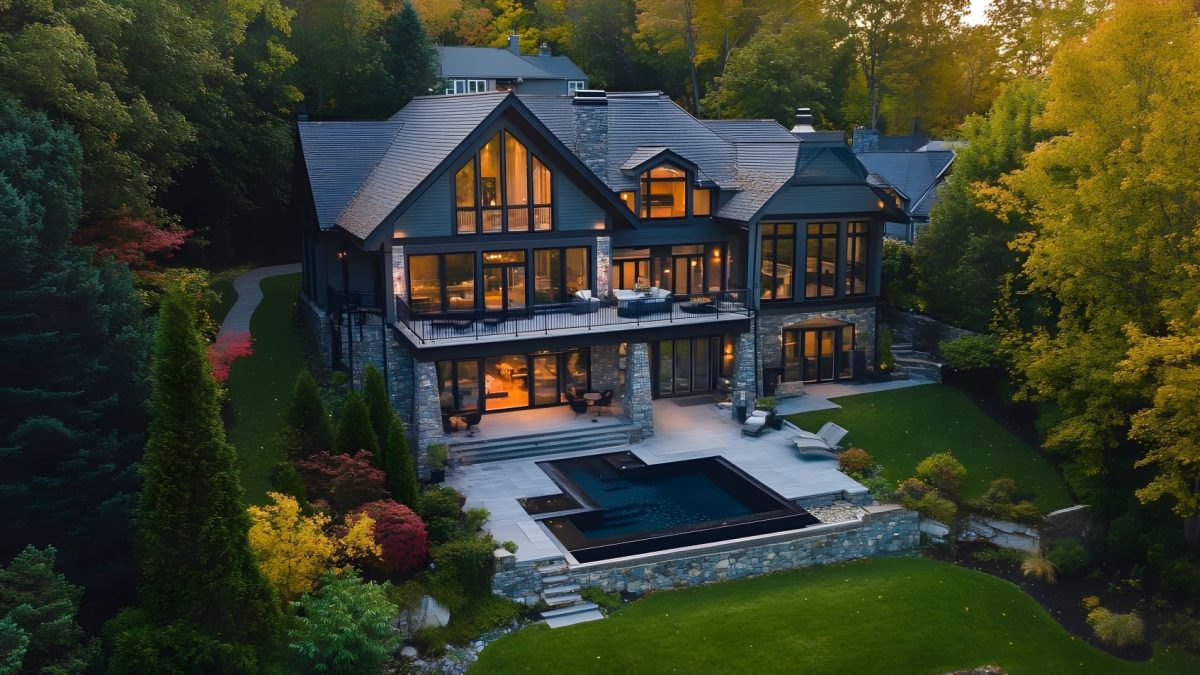
Trophy properties typically offer amenities that exceed those of even most luxury homes. Private theaters, temperature-controlled wine cellars, full-service spas, and indoor pools are increasingly common rather than rare additions. Sophisticated smart home systems now manage everything from lighting to climate control with a level of integration that feels seamless rather than gadget-heavy. Guest houses, staff quarters, and self-sufficient utilities such as backup generators and independent water systems round out a level of self-sufficiency that separates these estates from conventional high-end homes.
The Financial Realities of Buying at This Level
Financing a trophy property looks different from financing a typical home purchase. Larger down payments are standard, and many buyers work with jumbo loans or portfolio lending arrangements tailored to high-value properties. Even buyers with significant liquidity often run the numbers through a mortgage calculator early in the process, comparing different loan structures to see how financing terms affect overall cash flow and investment strategy. Paying entirely in cash isn’t always the preferred approach at this level, since many buyers finance strategically for liquidity and tax-planning reasons rather than necessity.
Resilience as an Investment Asset
Trophy properties often behave differently than typical luxury homes during market shifts. Because their value is tied so closely to scarcity and irreplaceability, they tend to hold up better during downturns than homes that are simply expensive without being genuinely unique. The buyer pool for these properties also extends well beyond local markets, drawing interest from international buyers who view trophy real estate as a stable, long-term asset regardless of where they purchase. That global demand adds a layer of resilience that most residential real estate lacks.
The Emotional and Status Component
For many buyers, a trophy property represents more than square footage and amenities. These homes are often purchased as much for what they represent as for their financial upside. The story attached to a property, whether it’s a storied architectural pedigree or a history of notable previous owners, can add a layer of value that doesn’t show up on any spreadsheet. In many cases, these homes function as personal statements as much as they do as places to live.
Defined by What Can’t Be Replicated
What ultimately sets trophy properties apart isn’t a single feature but a rare intersection of factors working together: a location that can’t be recreated, craftsmanship that reflects genuine artistry, privacy that feels earned rather than assumed, and a level of cultural significance that turns a house into something closer to a landmark. Price alone has never been enough to earn that distinction. It’s the combination of irreplaceable elements that truly defines a trophy property, and that’s exactly why so few homes ever reach that status.