For nearly three decades, Auberge Collection has built its name on a simple but exacting premise: that true luxury is inseparable from place. Napa Valley’s rolling vineyards, Costa Rica’s cloud forests, the fjords of Norway — each property has functioned as a translation of its surroundings. Now, for the first time, that philosophy is heading to Africa, and it’s arriving with nine properties at once.
The new division, called Auberge Safari, marks the brand’s entry into the continent through a partnership that unites two of East Africa’s most respected — and most conservation-minded — safari operators: Legendary Expeditions and Chem Chem Safari. Together, their camps and lodges span roughly 600,000 acres across Tanzania’s northern circuit, from the Serengeti’s storied plains to the shores of Lake Manyara, stitching together a route that follows the Great Migration at nearly every stage of its journey.
A Partnership Built on Shared Instinct
The pairing makes sense on paper and, more importantly, in practice. Legendary Expeditions is the safari arm of Friedkin— the Houston-based family company (also behind AS Roma and Everton Football Club, among other ventures) that has spent more than forty years working in Tanzanian conservation. Chem Chem, meanwhile, is often credited with originating the concept of Slow Safari: game drives and cultural encounters unhurried by itinerary and built instead around presence.
“What drew us to Auberge is a shared sensibility, a deep respect for place, and an understanding that true luxury lies in connection, not excess,” said Fabia Bausch, owner of Chem Chem. “Slow Safari was never about doing less. It was about feeling more.”
Christian Clerc, Auberge Collection’s president and CEO, framed the expansion as an alignment of values already in motion. Dan Friedkin, the company’s chairman, described it as a chance to deepen the stewardship his family has practiced in the region for decades — landscapes, in his words, where wildlife can still move freely and nature remains whole.
The Nine Properties
Two exclusive-use reserves anchor the portfolio, each home to a distinct pair or trio of camps.
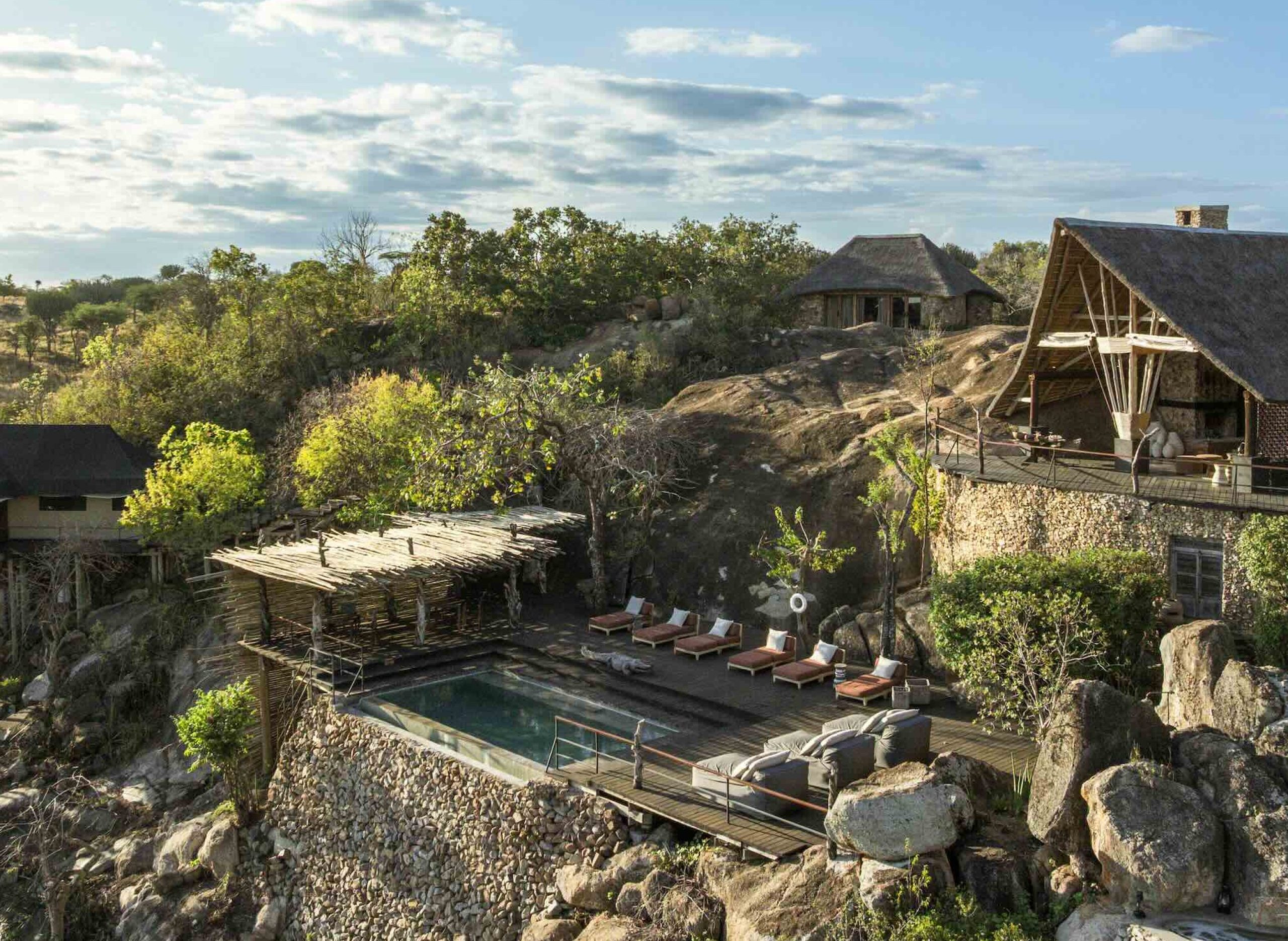
In the Greater Mwiba Protected Wildlife Area, Mwiba Lodge sits atop an ancient granite outcrop, its ten tented suites pairing bush dinners and game drives with foraging walks alongside the Hadzabe and visits with the Datoga. Nearby, Mwiba Plains opens onto the Great Migration’s calving grounds, where, improbably and wonderfully, newborn wildebeest calves take their first steps by the thousands each day, and predator calls carry through the night.
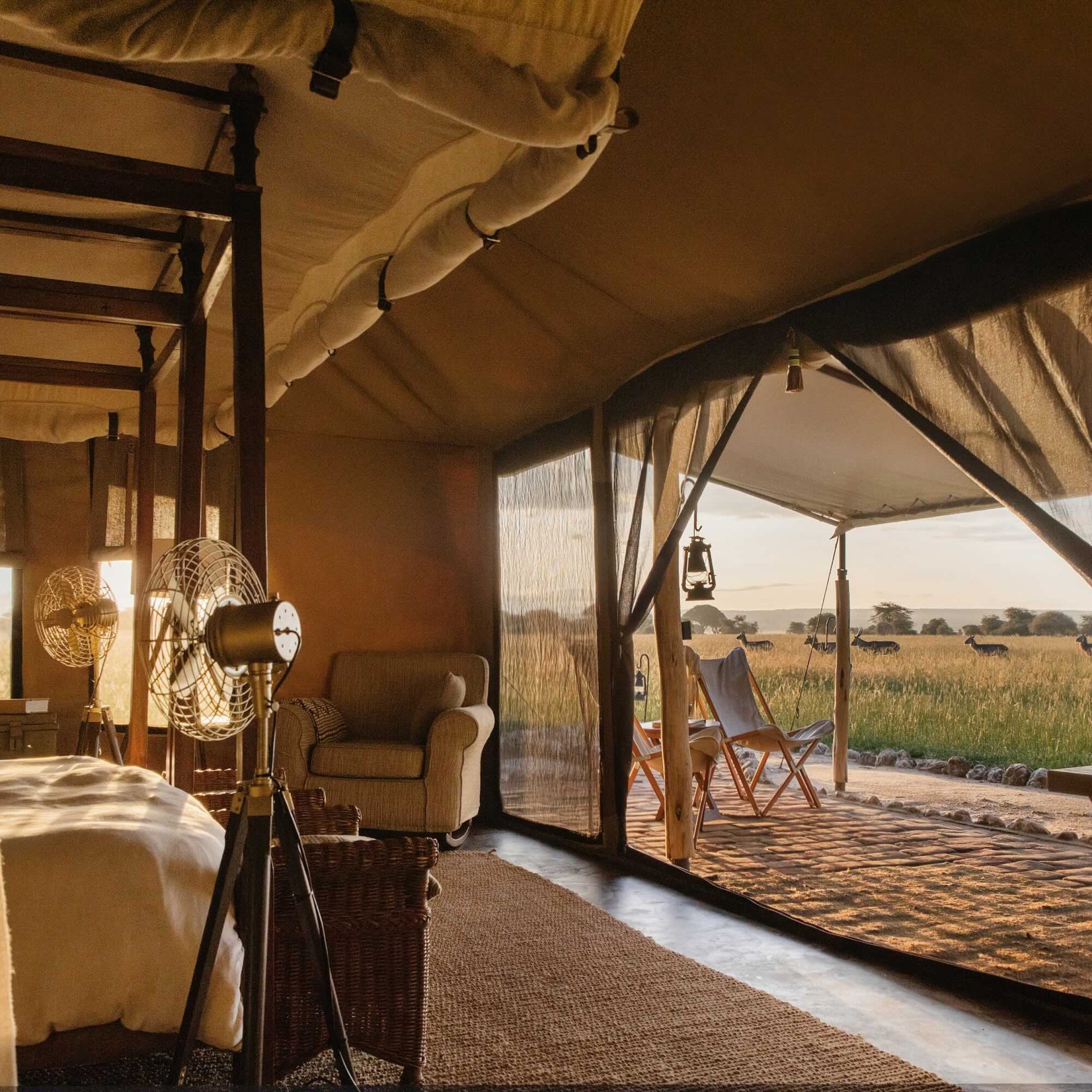
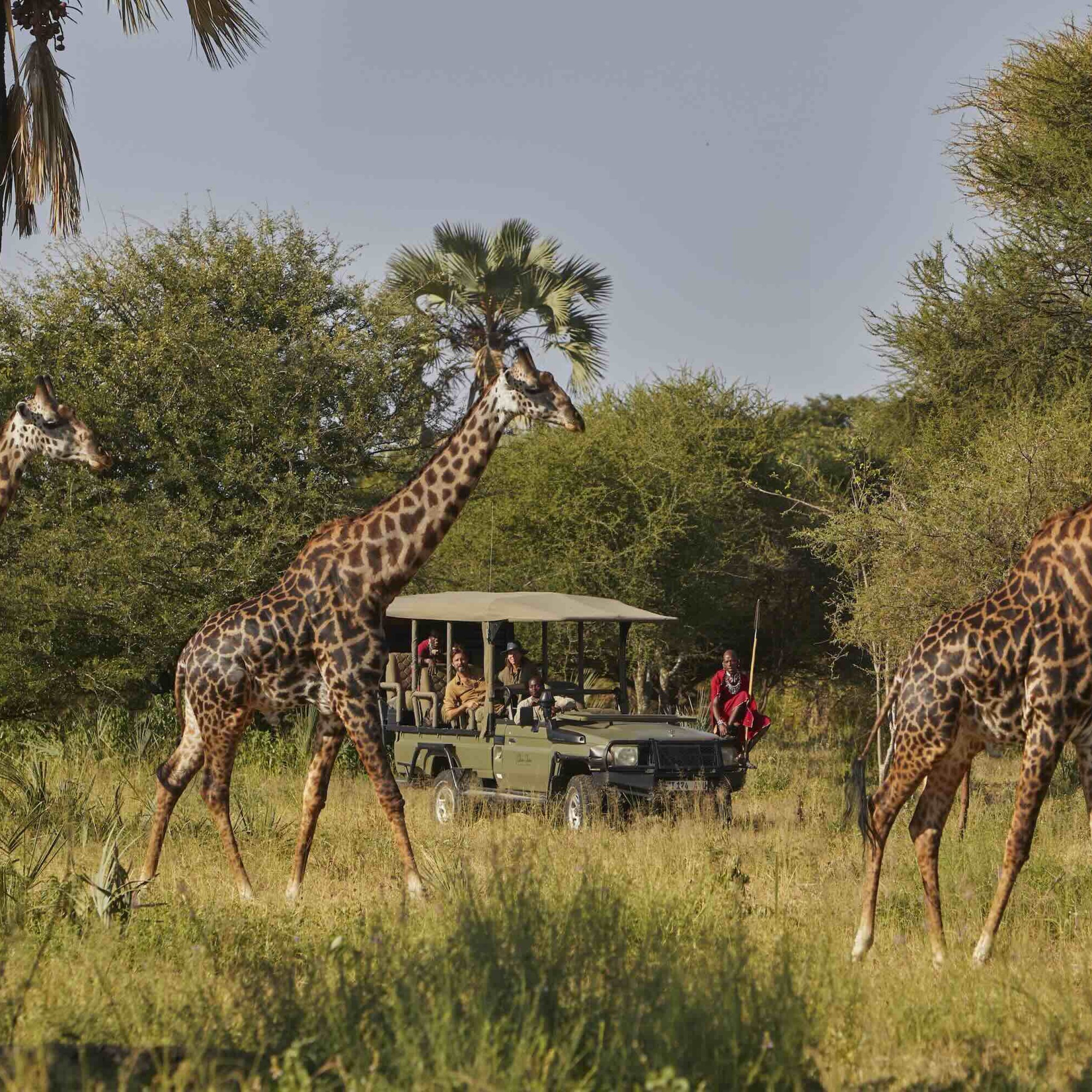
Further north, in the Serengeti itself, three camps track the migration’s most dramatic chapters. Mila overlooks the western corridor’s lion-thick plains from five tented rooms and a family suite. Nyasi, tucked into the secluded Lamai Wedge, balances the adrenaline of river crossings (wildebeest charging through crocodile-studded water) with calm evenings by the fire. Songa, positioned near one of the Mara River’s busiest crossing points, offers eight explorer-style rooms within easy reach of the action.
Book-ending the safari circuit is Legendary Lodge, set on a century-old working coffee estate on the edge of Arusha, the natural place to acclimate before, or decompress after, days in the bush, with twelve cottages, a spa, and gardens.
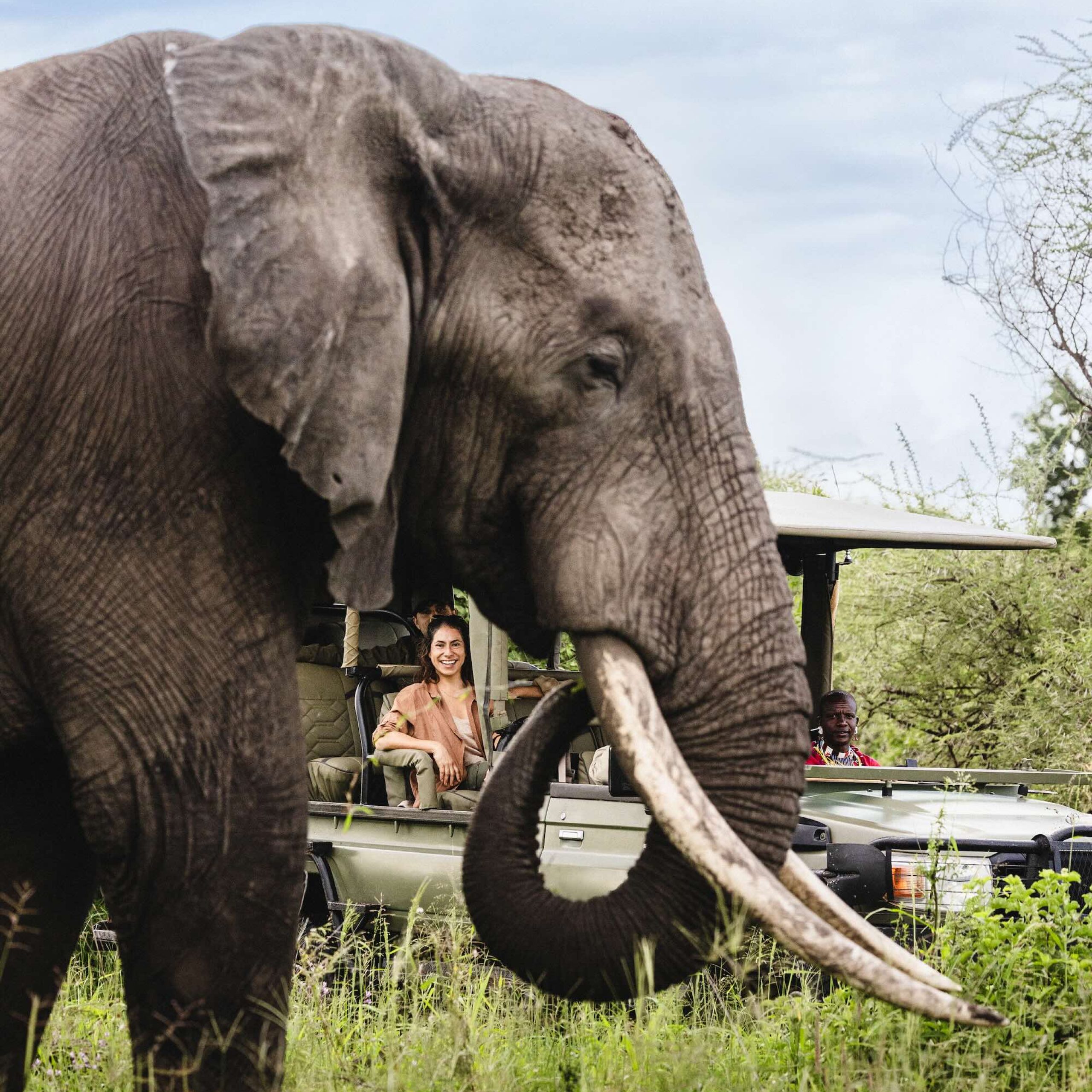
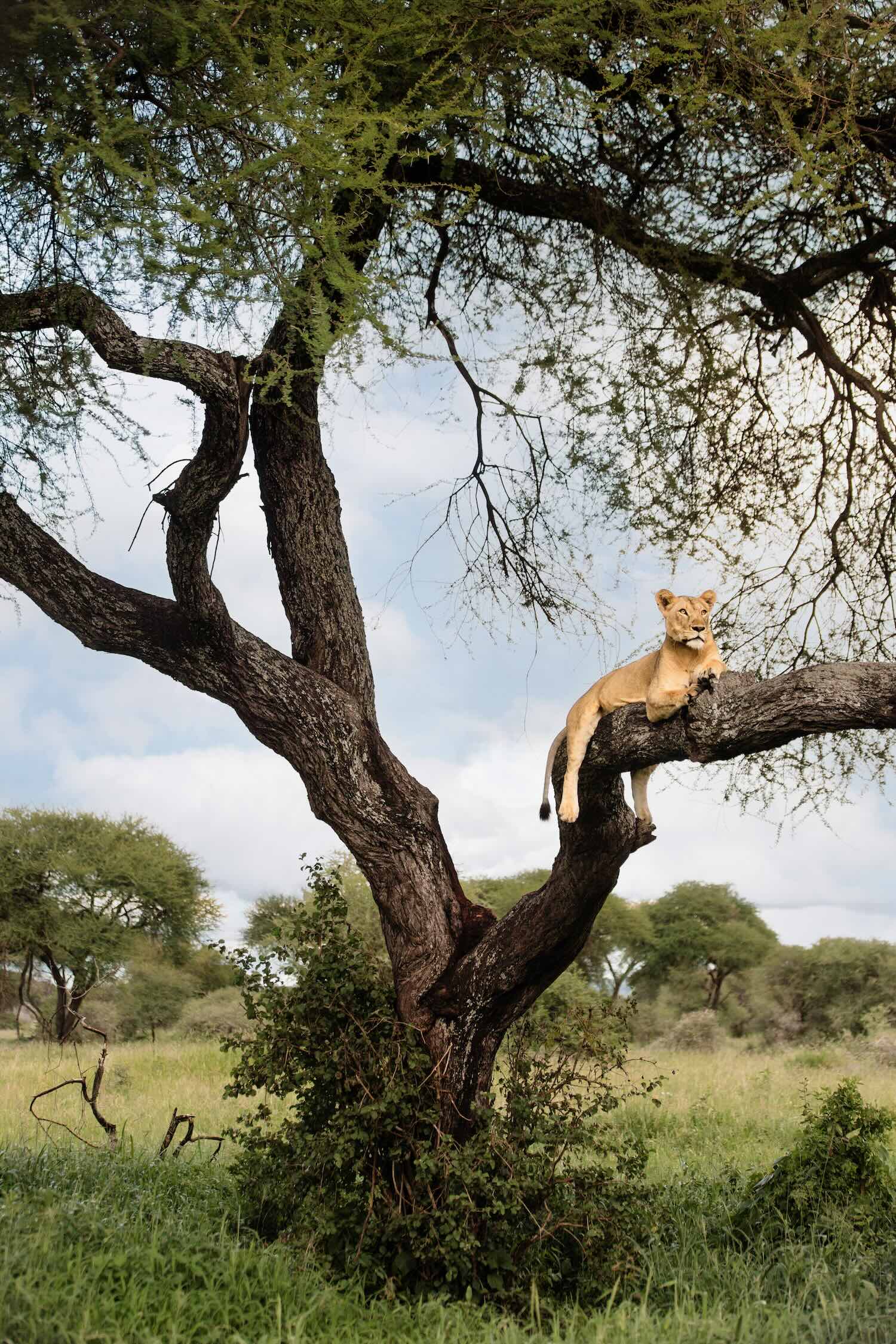
And in the Burunge Wildlife Management Area (a corridor linking Tarangire and Lake Manyara National Parks) three Chem Chem properties round out the collection. Chem Chem Lodge, the birthplace of Slow Safari itself, offers seven tented suites within a palm-dotted oasis. Little Chem Chem, known as the sunrise camp, opens onto plains roamed by Big Tuskers and the region’s rare tree-climbing lions. And Forest Chem Chem, the most secluded of the nine, tucks just three vintage-style tented rooms beneath a canopy alive with birdsong.
Conservation as the Point, Not Merely the Postscript
What distinguishes Auberge Safari from a simple hotel-brand expansion is the machinery running beneath it. Every stay funds one of two independent conservation organizations — the Friedkin Conservation Fund, which safeguards the Greater Mwiba reserve and the migration’s passage through it, and the Chem Chem Association, which protects the Burunge corridor. Both work directly with neighboring communities on sustainable livelihoods, treating conservation as the actual reason the camps can exist at all.
It’s ideal framing. Safari travel is increasingly built around restraint, and the sense that a place is being protected rather than simply visited. Auberge Safari, with its Friedkin-backed conservation muscle and Chem Chem’s founding philosophy of slowness, fits the moment.
Auberge Safari opens for bookings through Auberge Collection, with more information available at auberge.com/safari.
Photos courtesy of Auberge Collection