
Something shifts when you get behind the wheel, and the only plan is a general direction. It is hard to explain to someone who has not done it, but every woman who has taken a long drive alone or with a friend knows the feeling: the city falling away in the rearview, the to-do list losing its grip, the particular quiet that settles in when the road takes over. Traveling by car, Jeep, or motorcycle is its own category of experience. It is not flying somewhere. It is actually going.
And yet, for all the ink spilled on automotive culture, most of it has been written as though women were spectators. We were not. We have been logging the miles, building the rigs, and mapping the routes. The conversation just took a while to catch up.
Your Cabin, Your Rules
Walk into any luxury hotel room, and you can usually tell within thirty seconds whether someone thought about it or just furnished it to code. Cars are the same. The factory interior is designed to offend no one, which means it pleases no one either. It is a starting point, not a finish line.
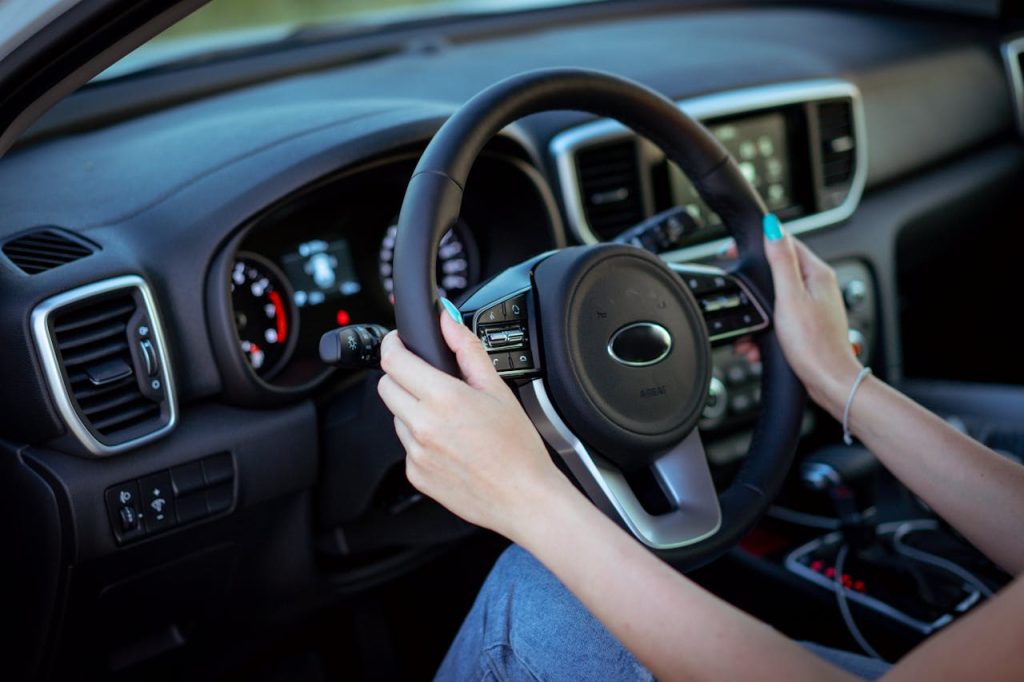
The steering wheel is worth paying attention to first, partly because it is the one thing your hands are on for the entire drive and partly because upgrading it changes the feel of a car more immediately than almost anything else. The material matters more than most people expect. Full-grain leather breaks in like a good bag, getting softer and more personal over time. Alcantara, which shows up frequently in high-end sports cars and fashion interiors, stays grippy in heat and has a texture that reads as genuinely premium without trying too hard. Carbon fiber accents work well on modern platforms but can look out of place in older or more classically styled vehicles. A useful primer on custom steering wheel materials and finishes lays out the trade-offs clearly for anyone making this decision for the first time.
Beyond the wheel, the cabin rewards the same eye you bring to any space you spend real time in. Seat covers in neoprene or leatherette protect the original upholstery without making the interior feel generic. A well-thought-out cargo system means you are not digging through a pile at 6 am trying to find your coffee thermos. These are small things that compound quickly over a long trip.
The Case for the Jeep
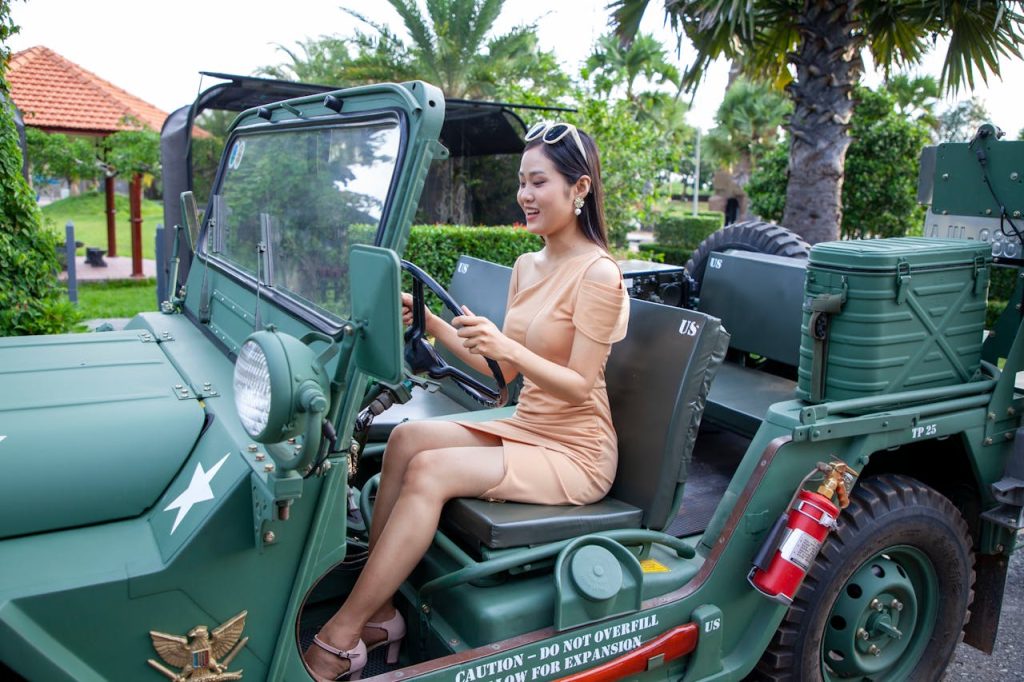
A Jeep Wrangler is a deeply impractical vehicle for daily life in most cities, and that is precisely why it works so well for travel. It is not trying to be a smooth, quiet, point-A-to-point-B machine. It wants to go sideways down a switchback, or across a riverbed, or along a coastal fire road where the pavement gives out around a bend and the view opens up. That kind of driving is its own reward, independent of where you end up.
The aftermarket for Jeeps is enormous, and the customization culture runs deep. Women who drive them have always been part of that culture, even when the industry’s marketing did not quite acknowledge it. The practical reality is that a Wrangler owner modifying for a long overland trip has the same priorities regardless of who she is: a roof setup that handles weather without killing the open-air feel, seat covers that survive trail days without looking beaten up, storage that works when the doors are off, and the tailgate becomes a workstation. The guide to must-have Jeep accessories for women who love the open road covers a lot of this ground well, pulling together the upgrades that actually get used versus the ones that look good in photos and mostly stay in the garage.
There is also something worth saying about the Jeep as a social object. Pull into a trailhead parking lot in a well-built Wrangler, then the conversation starts on its own. It is a community vehicle in a way that few others are, and that community tends to be generous with knowledge, genuinely interested in how you built your rig, and ready to help when things go sideways on a trail. For a solo traveler, that network matters.
Two Wheels, More Honest
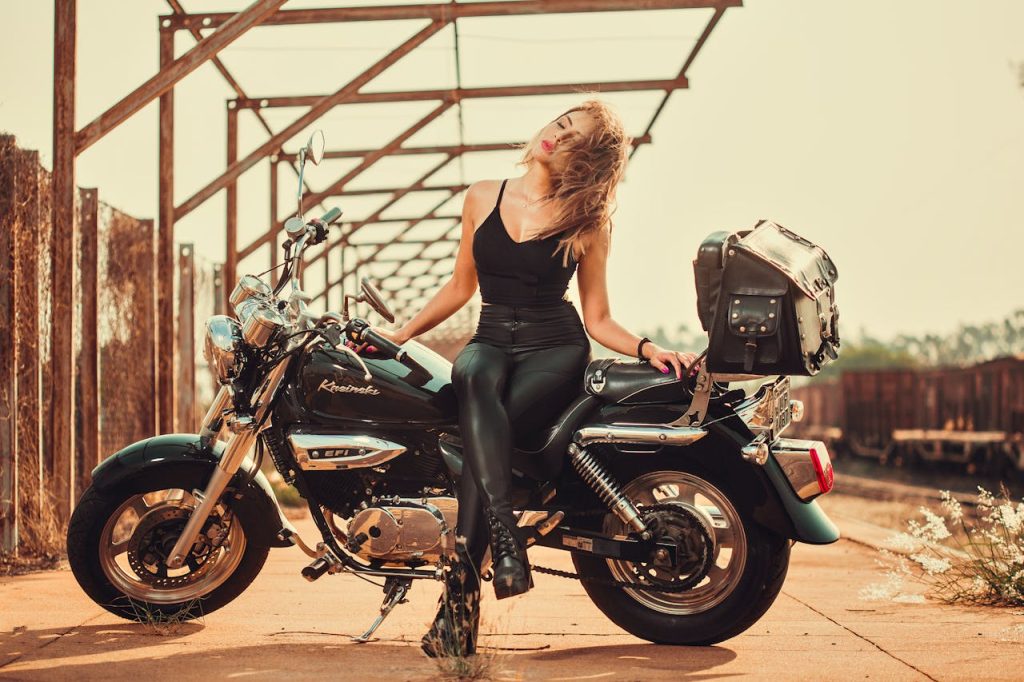
Motorcycle travel has a way of stripping the trip down to what it actually is. There is no cabin to retreat into, no ambient playlist to soften the edges, no temptation to check a phone at a red light. You are out in whatever the weather is doing, working with it or through it, and the landscape moves past at a scale that a car window just does not give you. Women who ride for distance tend to be emphatic about this. Once you have done a long solo route on a motorcycle, the four-wheeled version of the same road feels muffled by comparison.
ATV and UTV riding is its own variation, particularly popular among women who want access to terrain that is genuinely remote but do not want to do it on two wheels. These machines go places that no passenger vehicle follows, and they require a level of mechanical familiarity that road driving does not. When you are two hours from a paved road on a mountain trail, knowing your vehicle is in good working order is not optional. Keeping up with basics like ATV and motorcycle brake pads is the kind of thing experienced riders build into their routine before a trip, not something they think about after a problem develops on the trail.
An increasing number of women are combining both approaches on the same trip: driving a capable truck or SUV to a staging area, then unloading an ATV or dirt bike for the sections of terrain that only those vehicles can reach. It takes more planning and more equipment, but the payoff is access to places that most travelers never see. The logistics are learnable. The landscapes are worth it.
How to Pack When the Vehicle Is the Point
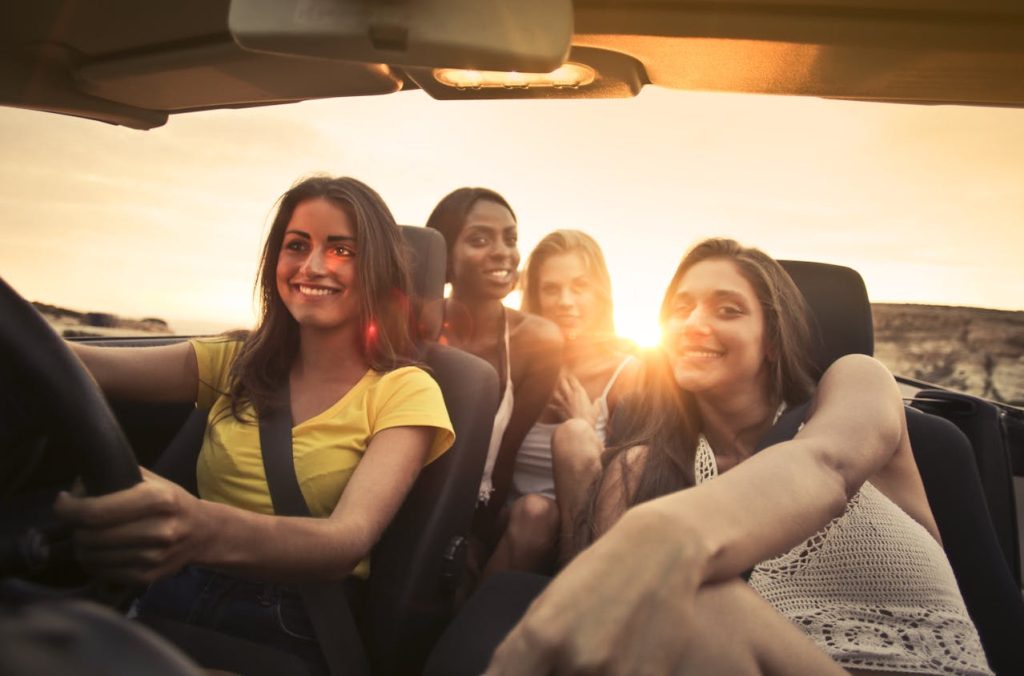
Road trip packing is a different skill set from flight packing, and it takes a few trips to get right. The temptation to overload the car is real because space feels less limited than an overhead bin. But clutter in a vehicle becomes oppressive quickly, especially on a multi-day drive where you are living out of it. The things you reach for constantly need to be reachable. The things you rarely use need to be out of the way without being buried.
Weather is the variable most people underestimate. A trip that starts in warm sunshine can move through three climate zones in a single day if you are crossing an elevation. Waterproof layers take up less space than you think and remove a significant source of misery if the weather turns. On a motorcycle or in an open Jeep, this is especially true. The rider who arrives somewhere cold and wet, unprepared, has a much harder time enjoying wherever she has arrived.
The broader principle is that gear should match the actual trip, not the trip as you hoped it would go. If you are doing serious trail driving, the vehicle needs recovery equipment. If you are camping out of the back of a Wrangler, your sleep setup needs to work in the space you actually have. If you are covering significant motorcycle miles, comfort gear for the ride itself is not a luxury; it is what allows you to keep riding. Staying organized with the right travel gear translates directly to the vehicle’s context.
On Taking the Long Way
The best drives are rarely the most efficient ones. The road that adds forty minutes but runs along a ridge with no guardrails. The town you pull into, because it looked interesting from the highway, turned out to have a genuinely excellent lunch spot and a bakery that has been in the same family since the 1950s. The view you stop for that has no Instagram coordinates attached to it, just you and whoever is with you, and the fact that you happened to be there.
This is where automotive travel separates itself from every other kind. Planes and trains arrive; cars explore. And the women who have built a practice around this kind of travel, who have chosen their vehicles carefully, set up their interiors to feel like something, and learned to maintain their machines so they can trust them in remote places, are among the most interesting travelers to talk to. They have stories that start with a wrong turn.
The vehicle does not need to be expensive to earn that status. It needs to be yours: set up the way you use it, maintained well enough to go where you want it to go, and carrying the particular comb