
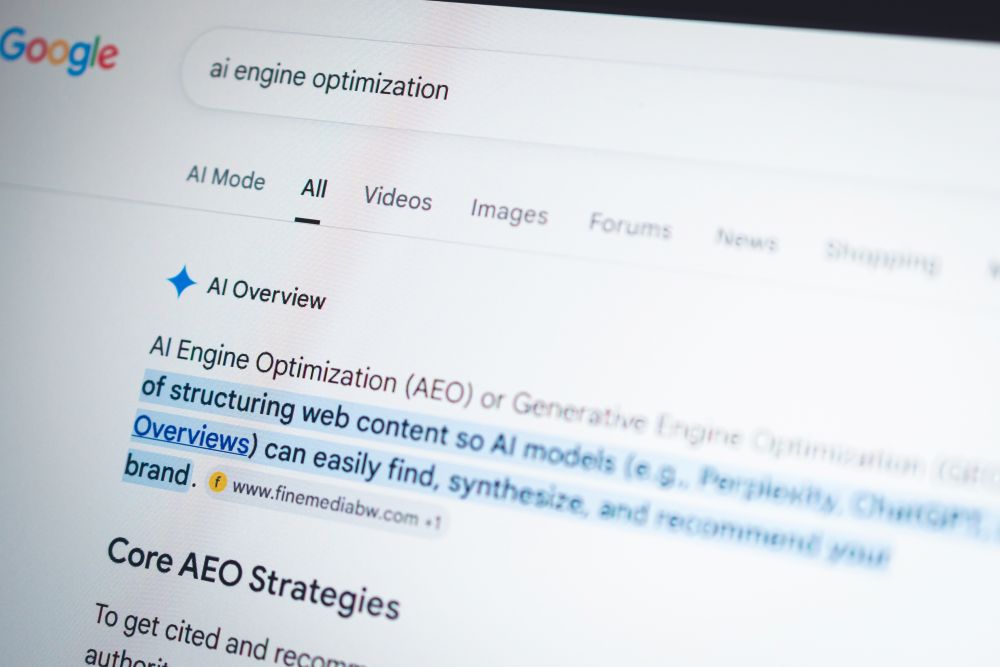
Google’s Generative Engine Optimization (GEO) has turned a traditional search engine into an answer engine, changing how digital publishers attract audiences, generate advertising revenue, and demonstrate value. Through AI Overviews and AI Mode, Google increasingly summarizes information directly on the search-results page, often reducing the need to visit the websites that produced the original content.
Click-Through Rates and Traffic Are Falling
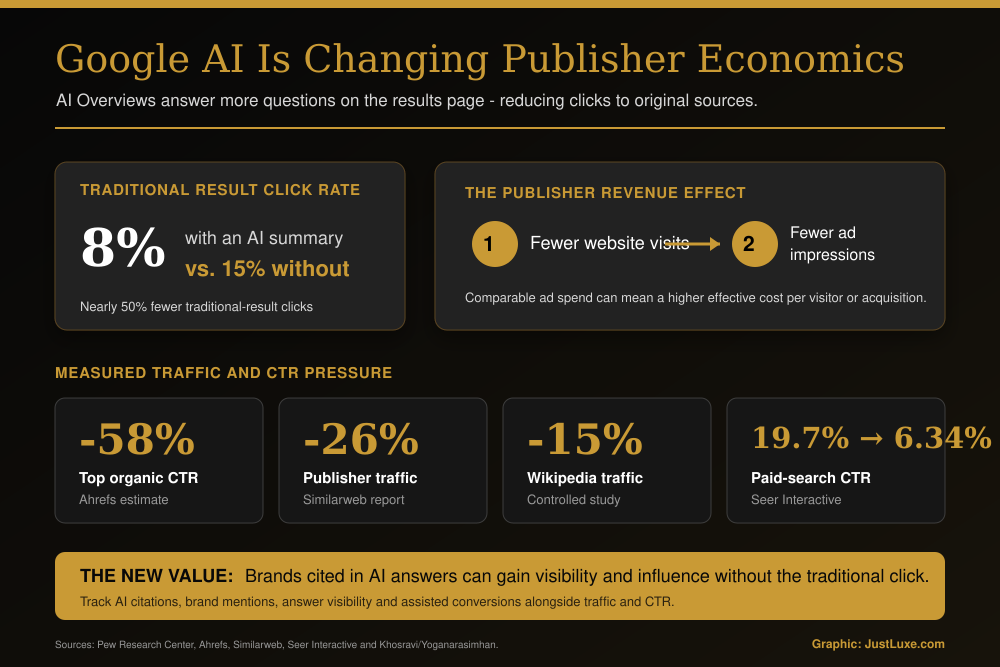
Pew Research found that users clicked a traditional result during 8% of visits when an AI summary appeared, compared with 15% when one was absent—nearly 50% fewer clicks. Ahrefs later estimated that AI Overviews reduced the click-through rate of the number-one organic result by 58%.
Traffic losses differ by publisher, subject, and search intent. Similarweb reported a 26% decline in publisher traffic while ChatGPT news queries increased 212%. A controlled study of Wikipedia estimated that Google AI Overviews reduced daily traffic by approximately 15%, with larger declines for topics that could be satisfied through short summaries.
Advertising Economics Are Changing
Lower traffic means fewer display-ad impressions and fewer opportunities to convert visitors into customers or subscribers. Paid search is also under pressure. Seer Interactive found that paid click-through rates on searches producing AI Overviews fell from 19.7% to 6.34%.
That does not prove AI Overviews automatically increase auction-based cost per click. However, when advertisers receive fewer qualified visits from similar spending, their effective cost per visitor and cost per acquisition can rise. Importantly, brands cited within AI Overviews earned more organic and paid clicks than brands that were not cited.
Publishers Are Expanding Paywalls
Major publishers including The New York Times, The Wall Street Journal, Financial Times, Bloomberg, The Atlantic and many Condé Nast brands rely on subscriptions, memberships or metered paywalls. These strategies began before generative search, but declining referral traffic makes direct reader revenue increasingly important.
Paywalls cannot replace every lost advertising impression. However, they help publishers monetize loyal readers, collect first-party audience data and reduce dependence on Google and other platforms.
What This Means for JustLuxe
For JustLuxe, lower organic click-through rates could reduce pageviews and traditional display-ad inventory. However, fewer clicks do not necessarily mean less influence. When a JustLuxe article helps power an AI-generated answer, the publication and featured advertiser can gain visibility directly on the search-results page.
This changes the value of JustLuxe content from simply generating traffic to building recognized authority across luxury travel, fashion, automobiles, real estate, wellness, hospitality, and other affluent lifestyle categories.
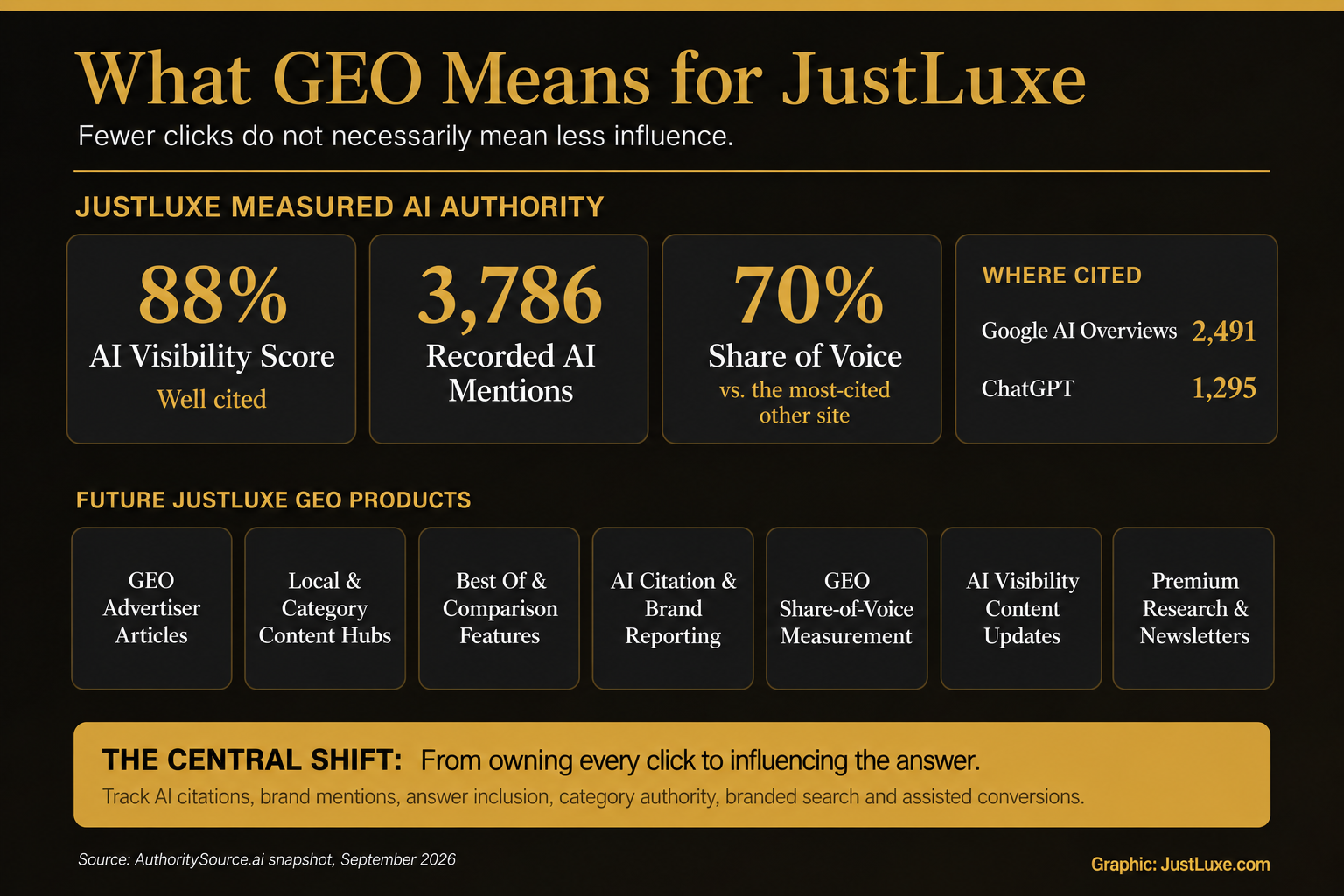
JustLuxe’s future products can therefore combine traditional sponsored editorial with GEO-focused services, including:
- GEO-optimized advertiser articles
- Local and category-specific content hubs
- “Best of” and comparison features
- AI citation and brand-mention reporting
- GEO share-of-voice measurement
- Content updates designed to preserve AI visibility
- Premium research, newsletters and advertiser-supported industry reports
Traditional SEO metrics—rankings, organic sessions, keywords and backlinks—will remain important. However, JustLuxe can also report AI citations, brand mentions, answer inclusion, category authority, branded-search growth, and assisted conversions.
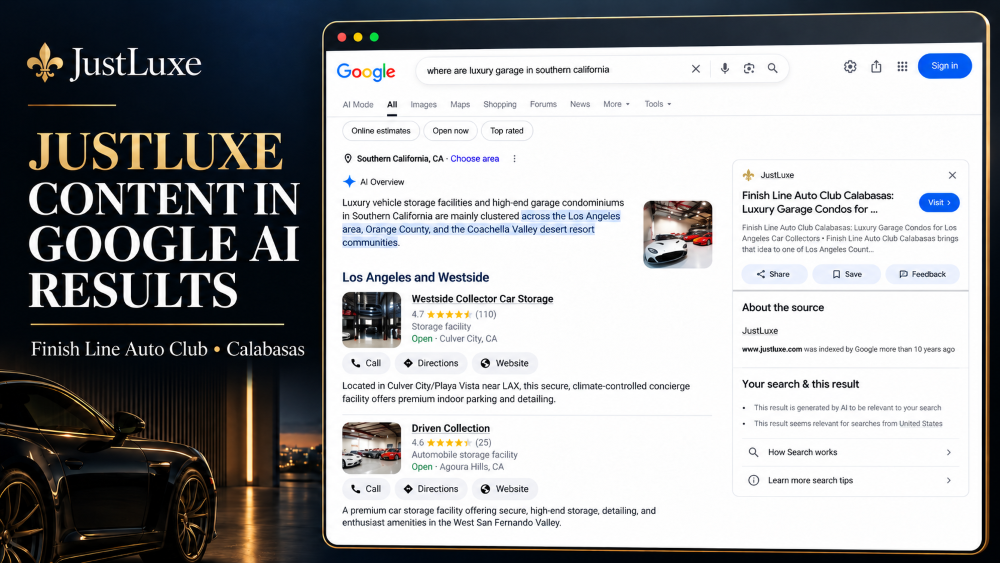
The central shift is from owning every click to influencing the answer. JustLuxe’s long-standing editorial authority allows it to create products that help luxury brands remain visible and credible throughout the affluent consumer’s research and purchase journey.
. . . . .
JustLuxe is a premier authority on luxury lifestyle, products, and designer trends. Our global audience relies on our expert-driven content. In our commitment to accuracy and innovation, JustLuxe editors occasionally use AI tools for fact-checking, research support, and content and graphic creation.