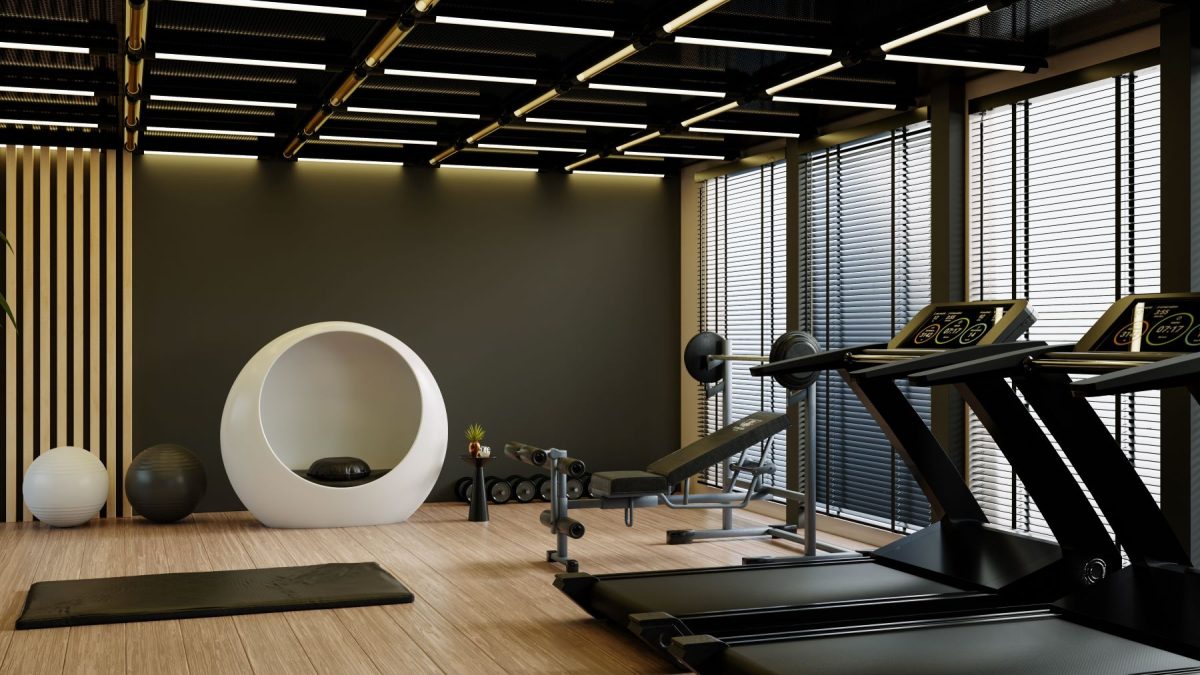
Most home gyms die a slow death in the corner of a garage, buried under holiday decorations by February. The owners did not lack discipline. They bought a cheap bench, a set of adjustable dumbbells, and a rubber mat, then discovered that a sad room with bad lighting does not invite anyone back for a second session.
The difference between a home gym you use three times and one you use for twenty years comes down to a short list of equipment decisions you make in the first month. Get those right and the room starts pulling you toward it, the way a good hotel fitness suite does, with gear that feels solid, light that flatters, and a layout that never wastes a step.
There is one piece of equipment that separates a casual setup from a professional one more than any other: a vibration plate. It takes up roughly the footprint of a small side table, and unlike almost everything else in the room, it works while you stand still. That makes it the smartest first purchase for anyone building a space with limited square footage and high expectations.
Why Flooring and Ceiling Height Decide Everything
Before you buy a single rack, measure your ceiling. A standard power rack for overhead pressing needs close to eight feet of clearance, and a garage with a low beam or a duct running across the middle will quietly rule out half the equipment you had your eye on. Measure twice, then measure the door width too, because a commercial-grade treadmill that will not fit through the doorway is a very expensive hallway ornament.
Flooring matters just as much, and I would pick rubber over foam every time. Interlocking rubber tiles around eight millimeters thick handle dropped dumbbells without cracking, and they do not compress into permanent dents the way cheap foam puzzles do after a few months of squats. If you plan to do any Olympic lifting, add a plywood platform under the bar area. Your neighbors will thank you, and so will your foundation.
Cardio Equipment: One Machine, Chosen Carefully
Here is a stance I will defend: you do not need a treadmill, a bike, and a rower. You need one machine you genuinely enjoy, because the second and third will become clothing racks. I would choose a rower for a small space and a treadmill for anyone who likes to walk while taking calls, and I would skip the budget elliptical that wobbles at speed.
Whichever you pick, put it near a window or under good lighting. Position matters more than the brand. The machine you can see from the doorway gets used, and the one tucked behind a water heater does not.
What Makes the Strength Area Worth the Money
Skip the all-in-one home gym with cables running through a dozen pulleys. Buy a solid power rack, a quality barbell, and a bench that adjusts, and you have covered nearly every lift worth doing. Rubber-coated plates cost more than iron but protect both your floor and your ears at six in the morning.
Storage is the unglamorous hero of a serious setup. A wall-mounted bar holder, a plate tree, and a small cart for bands, collars, and chalk keep the floor clear. A clear floor is a safe floor, and the numbers back up taking that seriously. According to the Centers for Disease Control and Prevention, regular physical activity is one of the most effective ways to protect long-term health, and an injury from a cluttered room is the fastest way to derail that habit.
Is a Vibration Plate Worth It in a Home Gym?
Yes, and it earns its place for a specific reason: it lets you train balance, circulation, and recovery in the ten minutes you would otherwise spend scrolling your phone between sets. Whole body vibration platforms send rapid oscillations through your muscles, which forces them to make constant micro-adjustments. That is why standing on one for a few minutes feels far more demanding than standing on the floor.
Use it as a warmup before lifting, a cooldown after, or a standalone session on days when you only have fifteen minutes. The mistake people make is treating it as a replacement for resistance training. It is not. It is a supplement that fits into the gaps, and those gaps are where most home gyms lose momentum.
Placement matters here too. Put it near your stretching area rather than against a wall, so you can step off and flow straight into a mobility routine without crossing the room twice.
The Details That Make It Feel Like a Private Club
Equipment is only half the job. The other half is atmosphere, and a few inexpensive upgrades do more than a thousand dollars of extra iron.
- Lighting: replace a single harsh overhead bulb with dimmable fixtures and one warm accent light. Shadows make a room feel tired.
- Mirrors: one large mirror on the longest wall checks your form and doubles the visual space.
- Air: a quiet ceiling fan or a small portable unit keeps the room usable in summer.
- Sound: a wall-mounted speaker beats a phone propped against a dumbbell.
Track your training in one place, whether that is a paper notebook or an app, and keep a small towel and water station by the door. These are the touches hotel fitness suites get right, and they cost almost nothing to copy.
A Five-Step Setup You Can Follow This Weekend
- Measure ceiling height, door width, and available floor area, and write the numbers down.
- Lay rubber flooring first, covering the entire training zone, not just the rack area.
- Place the power rack, bench, and barbell, then position cardio equipment near natural light.
- Add the vibration plate and set up a small mobility corner beside it.
- Finish with lighting, mirror, ventilation, and audio before you buy another weight.
Resist the urge to fill every square foot at once. Empty space is a feature, not a failure, and it gives you room to add equipment once you know what you actually reach for. It also keeps resale value in play, which matters if you ever move. The Bureau of Labor Statistics tracks fitness industry employment and consumer spending patterns, and the steady demand for home equipment over the past several years tells you these purchases hold their appeal far longer than a passing trend.
Buying Once Versus Buying Often
The cheapest path in home fitness is almost never the cheapest equipment. A rack that flexes under load, a bench that wobbles during pressing, and a platform that dents after a month all cost you twice: once at purchase and again when you replace them. Commercial-grade gear from a manufacturer that supplies hotels and professional teams tends to last a decade or more, which spreads the cost down to something reasonable per year.
Check warranties and service terms before you commit, especially on anything with electronics or moving parts. A machine with a strong service network is worth a small premium over one that saves you a few hundred dollars and leaves you hunting for parts. Government procurement standards offer a useful signal here. The U.S. General Services Administration evaluates fitness equipment for durability and safety before agencies buy it, and that same durability logic applies to anything you plan to use several times a week for years.
Build the Room You Will Actually Use
A serious home gym is not defined by how much equipment you own. It is defined by whether you walk into it on a Tuesday evening without negotiating with yourself. Rubber flooring, one cardio machine, a solid rack and bench, a vibration plate for warmups and recovery, and decent lighting will get you further than a room full of impulse buys.
Start with the measurement list and the five steps above, buy the best version of each item you can afford once, and leave a little space empty. Your future self, the one standing in the doorway at six in the morning, will appreciate the restraint. What is the one piece of gear you would keep if you had to give back everything else?