Outdoor lighting defines how an estate performs after dark. It affects movement, privacy, and visual order across the entire property. When treated as a long-term system, lighting protects design intent while allowing controlled change over time.
Lighting Designed for Time
Landscapes change every year. Trees grow, shadows shift, and surfaces reflect light differently with rain, heat, or frost. Lighting planned for one season often loses balance as these conditions change. A long-term approach anticipates growth and weather, keeping paths readable and spaces calm throughout the year.
Seasonal adjustment supports this stability. Light temperature can soften during colder months, while cooler tones suit open summer layouts. These changes remain measured, supporting visibility without altering the landscape’s structure.
Layered Illumination Across the Estate
Large properties rely on layered light rather than single focal points. Driveways use evenly spaced ground lighting to establish rhythm and distance. This spacing helps visitors understand scale before reaching the residence.
Water features introduce another layer. Underwater lights define pool edges and pond depth without glare. Fountain lighting gives shape to moving water, making it legible at night while remaining visually quiet. Infinity pools depend on precise edge lighting to preserve the water line and horizon relationship.
Hidden Light Preserves Visual Order
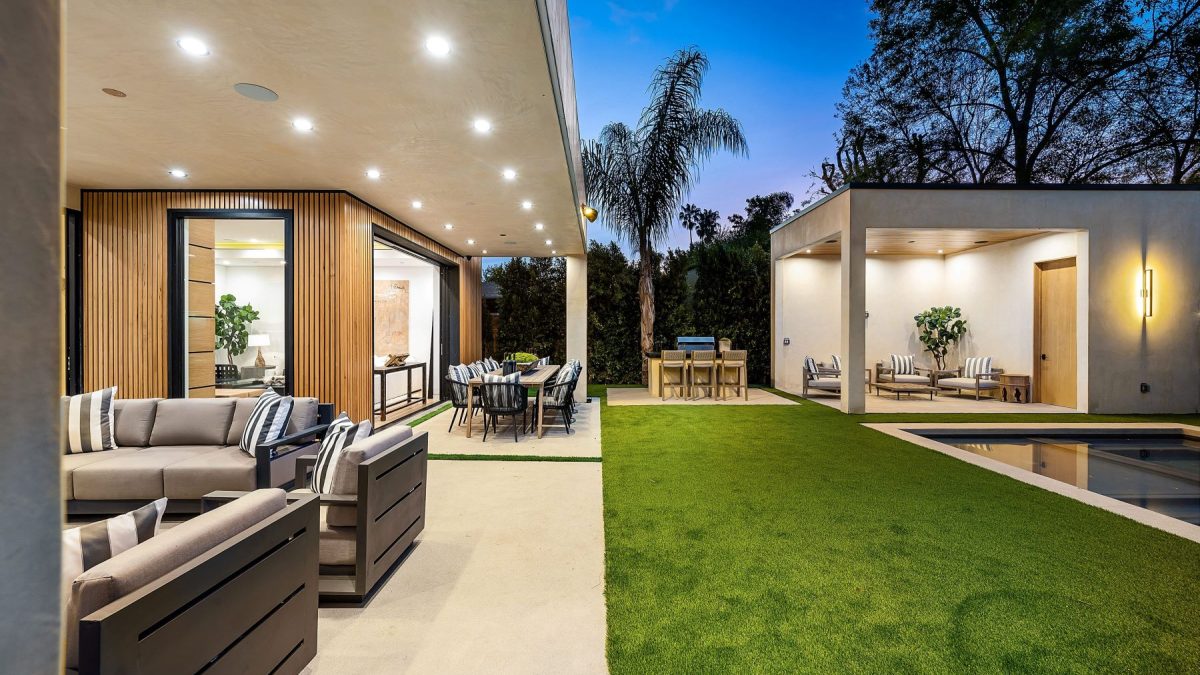
Visible fixtures interrupt material quality. For this reason, lighting often sits beneath steps, seating, stone edges, and planted borders. These concealed sources reveal form while keeping attention on the landscape itself.
This restraint supports clarity. Surfaces read cleanly, transitions feel intentional, and decorative excess stays absent. Light works as guidance, not display.
Systems Built for Adjustment
Permanent landscapes require lighting systems that change without physical work. Modular layouts allow adjustments in tone, output, and emphasis as planting matures or usage patterns shift. This avoids repeated excavation and visual disruption.
Such flexibility reflects current thinking around landscape lighting as part of spatial planning rather than surface decoration. Light adapts while the underlying design remains stable.
Long-Term Value Through Consistency
Consistency signals control. When lighting performs reliably across seasons, the estate feels settled and deliberate. Guests move comfortably, features remain legible, and no area feels revised or improvised.
This approach protects the landscape’s future. Lighting evolves alongside the property, supporting growth, regulation changes, and long-term use without sacrificing visual discipline or spatial clarity.
Long-term spatial authority is preserved when outdoor lighting is specified as an adaptive system rather than a fixed installation. This method allows estates to adapt to new activities, expanding landscapes, and new regulations without their visual disproportion or physical interference. The property has a feeling of control and purpose through time as opposed to changing with changing seasons or design fashions.