
Well-fitted suits are one of those rare wardrobe investments that repay you for years in confidence, versatility, and the way a room responds when you walk into it. But the path between walking into a shop and walking out with the right suit is full of expensive wrong turns. Most of them come down to the same few mistakes: buying for price rather than fit, ignoring fabric for the climate, or skipping the tailor entirely. This guide is written for Australian men who want to buy smarter – whether you’re after your first suit, upgrading a tired one, or dressing for a wedding. It covers the rules that actually matter, the questions worth asking, and how to find suits worth buying without second-guessing every decision.
Fit Is the Only Rule That Truly Matters
Every tailor, every stylist and every well-dressed man will tell you the same thing: fit comes first. A beautifully made suit in the wrong size looks worse than a cheap suit that fits correctly. And no amount of clever accessories will fix a jacket that pulls across the shoulders or trousers that pool at the ankle.
The shoulders are where to start. The jacket’s shoulder seam should sit precisely at the edge of your natural shoulder, with no overhang or upward pull. This is the one fit issue that’s genuinely difficult and expensive to correct after the fact, so if the shoulders are off, you need a different size. Everything else, the waist, the chest, the sleeve length, the trouser break, can be adjusted by a good tailor for a fraction of what it costs to go up a size and hope for the best.
The quick in-store fit check
- Shoulder seam sits exactly at the shoulder’s edge, not riding up or drooping.
- The jacket collar lies flat against your shirt collar, with no gap at the back.
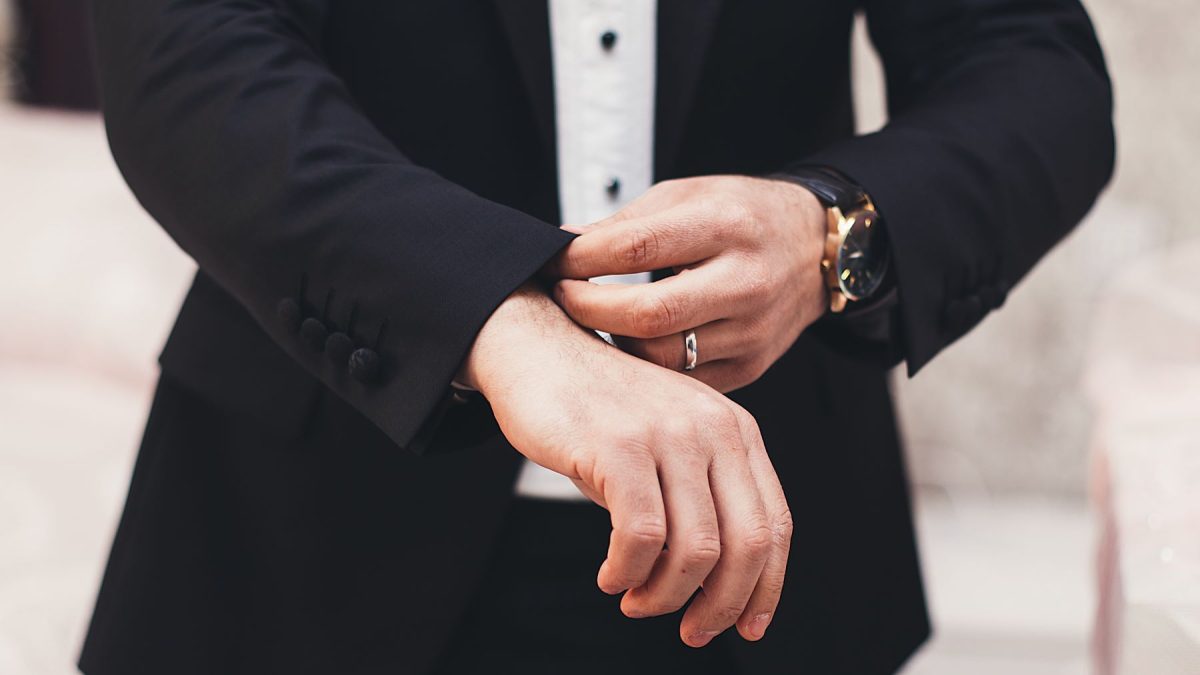
- About 1 to 1.5 cm of the shirt cuff is visible beyond the jacket sleeve.
- The trousers waist sits comfortably without a belt pulling it closed.
- The trouser hem shows a slight break at the shoe, enough to touch but not enough to bunch.
When you try on a jacket, button it, stand naturally, then sit down and reach forward. It should move with you without straining across the back. If it doesn’t, the chest or shoulders are too small, and you need to size up.
Fabric: What to Choose for the Australian Climate
Australia’s climate makes fabric choice more consequential than it might be in cooler countries. A heavy flannel suit that looks extraordinary in a Melbourne winter will be unwearable in Brisbane in February. Wool is still the default for good reason; it breathes, it drapes, it holds its shape, and it works across a surprisingly wide temperature range, but the weight matters considerably.
For year-round versatility
A medium-weight wool in the Super 100 to Super 120 range is the most practical starting point. It’s formal enough for the office and resilient enough for regular wear without being oppressively heavy in summer. This is the fabric for a first suit and the anchor of any Australian wardrobe.
For warm climates and summer
Tropical wool; weaves lighter around 200 to 250 grams per metre, and linen or linen-blend suits are worth considering if you’re in Queensland, the Northern Territory or anywhere that experiences sustained heat. Linen wrinkles more readily and has a deliberately relaxed character, which suits certain occasions beautifully but won’t do for a formal boardroom. A lightweight wool-linen blend often splits the difference well.
Understanding construction
The interior of the jacket matters more than most buyers realise. Fused construction, where the front lining is glued to the fabric, is common in cheaper suits. It holds its shape initially but can bubble or delaminate with dry-cleaning over time. Half-canvas construction uses a floating layer of canvas across the chest, allowing the jacket to drape naturally and improving considerably with wear. Full-canvas is the gold standard, common in higher-end bespoke and ready-to-wear, and built to last decades with proper care. If you’re buying a suit you intend to wear regularly for years, half-canvas is the minimum you should look for.
Color and Pattern: Start Boring, Build From There
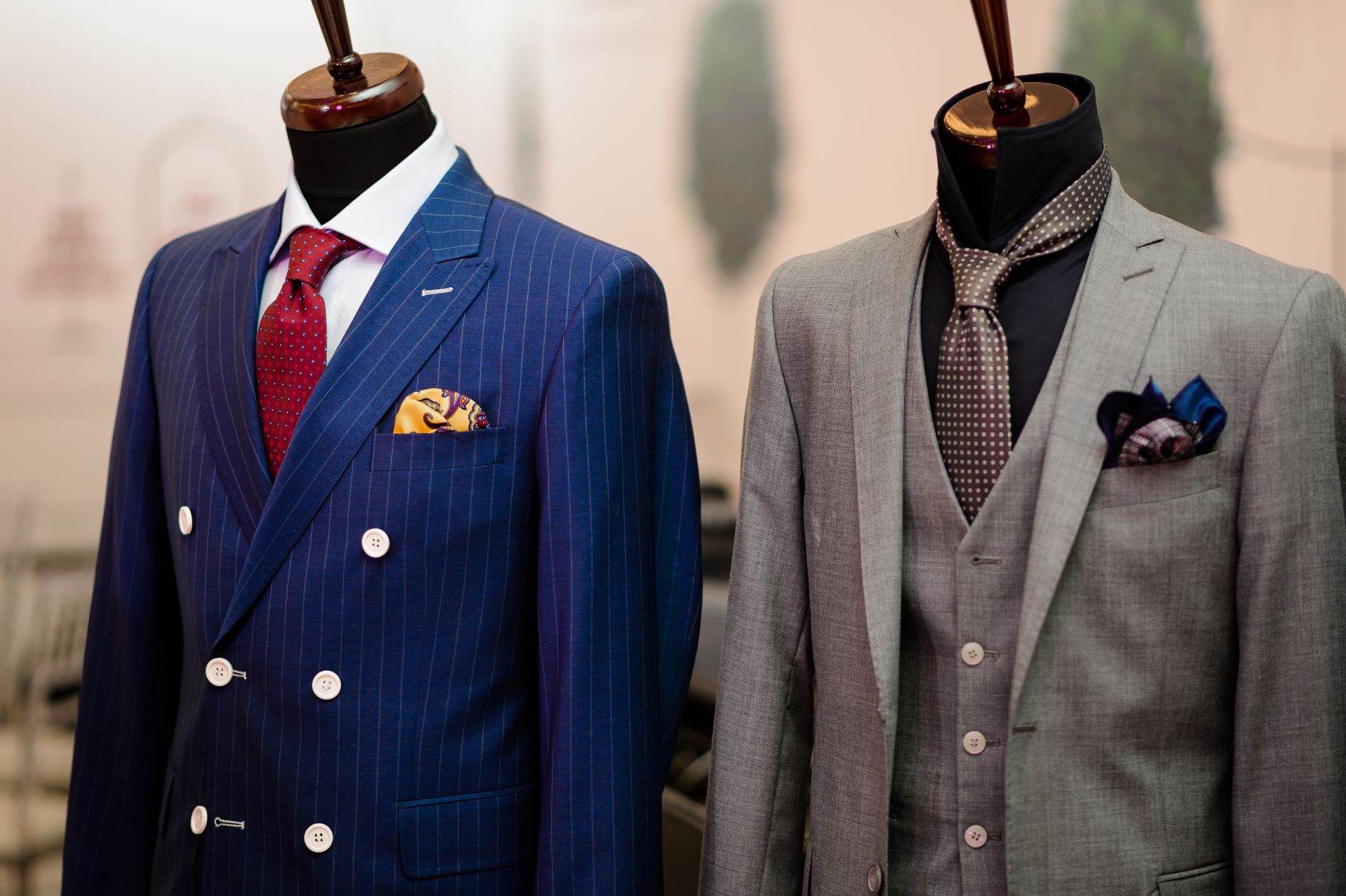
The advice to start with navy or charcoal is repeated so often that it’s easy to dismiss as a conservative habit. It isn’t. Navy and charcoal wool suits are genuinely the most versatile garments in menswear. They work with almost every shirt-and-tie combination, read as appropriately formal in almost every context, and don’t date. If you own one navy and one charcoal suit, you’re equipped for virtually anything.
Patterns; checks, pinstripes, and windowpanes are a pleasure to own once you have the basics covered. A subtle mid-grey check suit adds personality without sacrificing flexibility. A strong chalk stripe is a bolder statement and works brilliantly in the right context. Just be honest about how many occasions you have for a statement suit before committing to one.
Off-the-Rack, Made-to-Measure or Bespoke?
Most Australian men should start with off-the-rack and a tailor. A quality ready-to-wear suit in the A$500 to A$1,200 range, combined with A$100 to A$250 in targeted alterations, will fit better than a cheap made-to-measure suit and costs less than a mid-range bespoke commission. The key is knowing what to alter.
Off-the-rack
Fast, accessible and perfectly adequate for most occasions. The limitation is that ready-to-wear suits are built around average body proportions, so the more your shape diverges from the standard block, the more alterations you’ll need. For men with unusual proportions – notably short torsos, very broad shoulders, or significant size differences between chest and waist – MTM or bespoke may ultimately be cheaper once alterations are factored in.
Made-to-measure
A standard block is adjusted to your measurements before cutting, giving a meaningfully better fit without the wait or cost of true bespoke. Lead times in Australia typically run two to six weeks. Most quality retailers and tailors offer MTM in the A$900 to A$2,500 range, and it’s worth the premium if you’re buying a suit you’ll wear regularly.
Bespoke
Handcrafted from scratch to a pattern made specifically for your body. The result, when done well, is simply better than anything else available: a jacket that moves with you in a way that’s difficult to describe until you’ve experienced it. Expect A$3,000 and up, with lead times of 8 to 12 weeks or more. It’s an investment that makes sense for men who wear suits frequently and care deeply about the result.
Alterations: The Work That Makes a Suit
A good tailor can take an off-the-rack suit from passable to excellent. The key is knowing which alterations are worth making, which are expensive and complex, and which signal a need to walk away from a suit entirely.
Trouser hemming is quick and inexpensive, costing A$20 to A$50 and a turnaround of a day or two. Taking in the waist or suppressing the chest for a cleaner silhouette runs A$60 to A$150 and takes three to seven days. Sleeve shortening on a jacket is straightforward at A$40 to A$120, though it costs more if the lining needs reworking. Shoulder alterations, raising, dropping or narrowing are the expensive, time-consuming exception, running A$150 to A$400 with lead times of one to two weeks. If the shoulders need significant work, you’re usually better off with a different size or a different suit.
When you go to the tailor, wear the shoes and shirt you’ll actually wear with the suit. The hem length, sleeve length, and proportion of the whole look depend on it. Ask for a baste fitting if the tailor offers one, a temporary stitch-up that lets you check the fit before anything is cut permanently.
The Details That Finish the Look
Once the suit fits, the details carry the rest. Lapel shape – notch, peak or shawl – influences formality and proportion. Notch lapels are universal and appropriate for almost everything. Peak lapels are more formal and visually widen the chest, which works beautifully on slimmer builds. Shawl lapels belong on evening wear.
Vents are a practical choice as much as a stylistic one. Double vents allow better movement and are more forgiving when you sit or reach into a pocket. They’re the practical default for anyone who wears a suit to work. A single centre vent is common on Italian-influenced cuts and suits a slimmer silhouette. No vent is a deliberate choice that reads as slightly more formal but noticeably restricts movement.
How to wear a suit correctly
- On a two-button jacket, fasten only the top button when standing. Always unbutton when sitting.
- The tip of your tie should reach the top of your belt buckle, no shorter, no longer.
- Show roughly 1 cm of shirt cuff beyond the jacket sleeve.
- Keep trouser break small to medium, enough to touch the shoe, not pile up against it.
- Match your belt leather to your shoe leather, or choose one and commit to it.
Caring for a Suit So It Lasts
A well-made suit, properly cared for, should last a decade or more. Most of what kills suits prematurely is unnecessary dry-cleaning. Dry-cleaning strips the natural oils from wool fibres and stresses the jacket’s construction; do it only when you have a stain that can’t be spot-cleaned, or when the suit genuinely needs a refresh after heavy use. Between wears, brush the suit with a soft clothes brush to remove dust and surface debris, and hang it on a properly shaped wooden hanger that supports the shoulders.
Rotation makes a significant difference. If you wear the same suit every day, it never fully recovers between wears. Fibres need time to breathe and relax. Two or three suits rotated through the week will each last considerably longer than a single suit worn daily. Off-season, store suits in breathable garment bags with cedar blocks rather than sealed plastic.
Buying Well Is the Most Sustainable Choice
The environmental case for buying a well-made suit and keeping it for a decade is considerably stronger than cycling through cheap suits every few seasons. A quality wool suit that lasts 10 years has a dramatically lower cost per wear and environmental footprint than three or four budget replacements over the same period.
When comparing suits, it’s worth asking where the wool comes from and whether it carries any certification. The Responsible Wool Standard (RWS) is a credible third-party certification covering animal welfare and land management practices – a meaningful signal of supply chain accountability. Some Australian brands offer traceability from farm to finished cloth, which is worth asking about if provenance matters to you.
Where to Start
The simplest version of the advice in this piece is this: buy navy or charcoal wool, make sure the shoulders fit, and find a tailor you trust. Everything else is refinement. A suit that fits correctly in a classic colour will serve you at a job interview, a wedding, a funeral and a client dinner, often in the same year. Start there, wear it confidently, and build from a foundation that’s genuinely hard to get wrong.