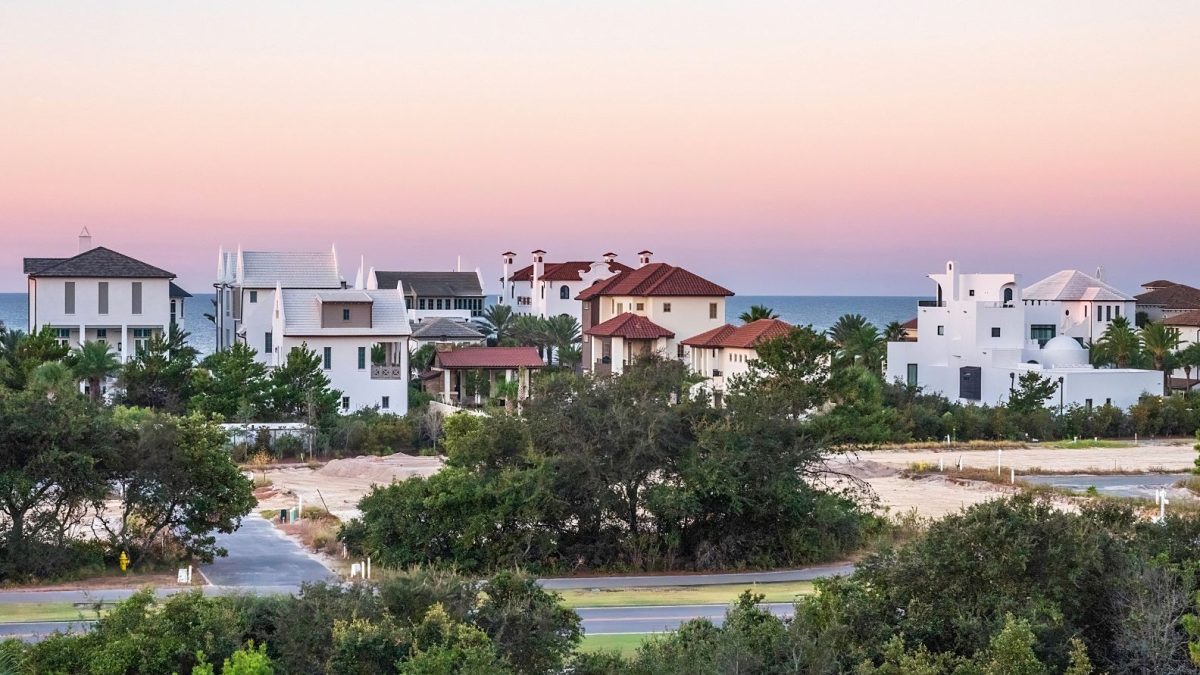
The short-term rental market along Scenic Highway 30A is unlike almost anywhere else in the country. From WaterColor to Rosemary Beach, Alys Beach to Seaside, the vacation homes lining this stretch of the Florida Panhandle are not your average beach rentals. They are design-forward, photographed professionally, marketed aggressively, and expected to perform — both aesthetically and financially — from the moment they hit the rental market.
For interior designers working in this space, that creates a specific and demanding set of challenges. Furnishing and staging a 30A vacation rental isn’t simply a residential project with a beach view. It’s a commercial undertaking with tight timelines, absent clients, high-end product requirements, and logistical complexity that catches a lot of designers off guard the first time they take one on.
Here’s what experienced designers in the 30A market have learned the hard way — and how to get ahead of it.
Understand That the Client Is Almost Never Local
This is the foundational reality of 30A vacation rental design work, and it shapes everything else. The vast majority of owners purchasing and developing vacation rental properties along 30A are not based in the Panhandle. They’re coming from Atlanta, Nashville, Dallas, Birmingham, and beyond — buying into the 30A market as an investment and a lifestyle asset simultaneously.
What that means practically is that you are the eyes, ears, and quality control on the ground. There is no client available to receive a damaged sofa, flag a missing hardware package, or sign off on a placement decision during install.
Every decision about receiving, inspection, storage, and final positioning falls on you and your delivery team. Building a process that accounts for this from the start — rather than assuming you can loop the client in as needed — is what separates designers who deliver smooth projects from those who spend install week managing crises over the phone.
Treat the Reveal Like a Product Launch
30A vacation rentals live and die by their photography. The listing photos are the product, and everything in the property needs to be ready for the camera on the day the photographer walks through — not almost ready, not mostly there. Staging a vacation rental for this market is less like finishing a residential project and more like dressing a set.
That means your install day needs to result in a fully complete space, not a space that needs three more follow-up visits to finish. Every piece of furniture, every piece of art, every accessory and soft furnishing needs to arrive on the same day, in confirmed condition, and be positioned and styled before you leave. Anything short of that delays photography, delays the listing going live, and delays the client generating rental income — which is a conversation no designer wants to have.
The way to make that happen consistently is to hold everything at a receiving warehouse until the full order is confirmed and ready. Releasing pieces piecemeal to the property creates exactly the kind of half-finished install day that forces follow-up visits and pushes photography.
Plan for Durability Without Sacrificing the Aesthetic
The design brief for a 30A vacation rental is essentially this: make it look like a luxury primary residence that can survive hundreds of guests per year. Those two things are in tension, and navigating that tension is one of the core skills of designing in this market.
Fabrics need to be performance-grade. Rugs need to handle sand, moisture, and heavy foot traffic. Outdoor furniture needs to withstand salt air and direct Gulf Coast sun without deteriorating in a single season. Pieces that would be perfectly appropriate in a primary residence — delicate upholstery, light-finish wood, fragile decorative objects — often need to be reconsidered entirely in this context.
The logistics side of this matters too. Pieces that arrive damaged and get installed anyway because the timeline is tight tend to show up in guest reviews within the first rental season. Build damage inspection into your receiving process so that replacements can be sourced and delivered before the property goes live, not after the first guest complains.
Work With Logistics Partners Who Know the 30A Market
The access constraints, seasonal timing pressures, and community-specific delivery rules along 30A are not intuitive to teams unfamiliar with the area. Working with Interior Designer movers in Florida who operate natively in this market — who know which communities have restricted delivery windows, which roads won’t accommodate large vehicles, and what white-glove handling actually looks like for high-end vacation rental installs — removes a significant layer of risk from every project.
30A is one of the most rewarding markets in the Southeast for designers who build the right process around it. The clients are motivated, the budgets are real, and the properties are genuinely beautiful to work on. Get the logistics right, and the creative work gets to speak for itself.