
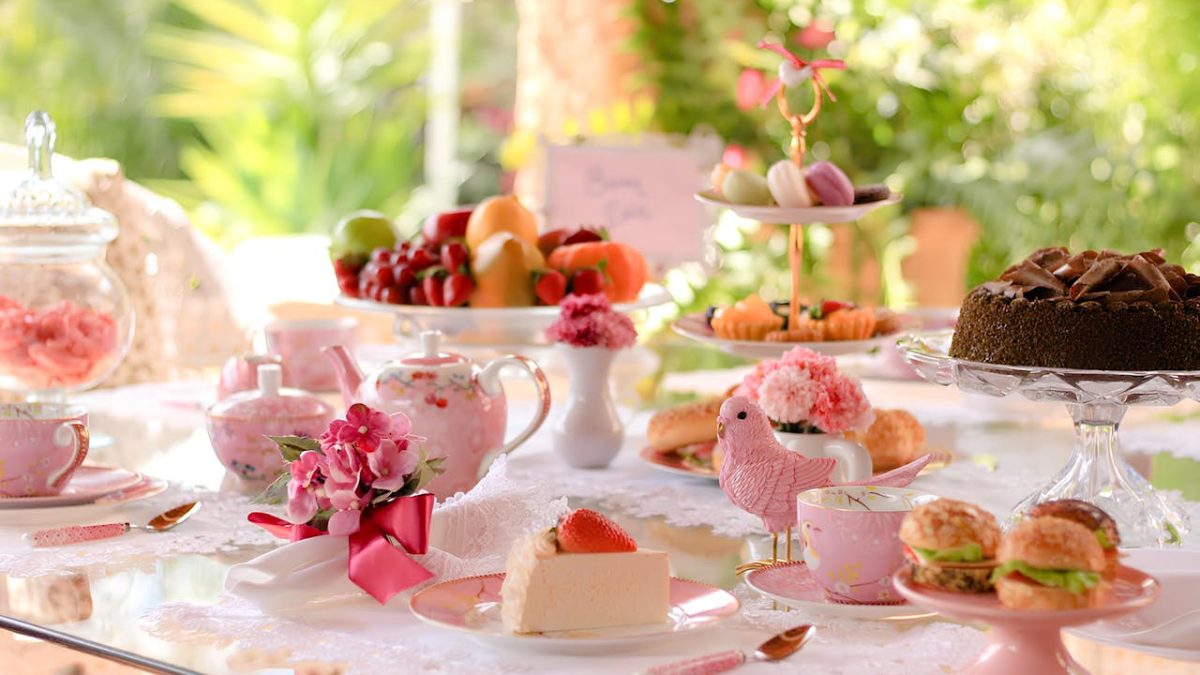
There is a particular kind of afternoon that only April can produce. The light sits low and golden. The air carries the faint sweetness of something in bloom. And if you are paying attention, every one of those details is an invitation to open the back doors, carry the good china outside, and host the sort of gathering that people talk about long after the plates are cleared.
The spring garden party is one of the most rewarding forms of hospitality precisely because the season does so much of the heavy lifting. Color, fragrance, warmth, and a general sense of renewal are already present. The host’s job is simply to honor them with intention. That begins at the table, extends to the space, and ends with the kind of detail that tells every guest they were worth the effort.
Start With the Table
The table is where the mood is set before a single dish arrives. For a spring gathering, the instinct to reach for pastels is sound, but the execution matters. Rather than a single color repeated everywhere, consider layering. A linen tablecloth in warm white or soft sage reads as fresh without feeling clinical. Over it, a runner in a richer tone, a deeper green or dusty rose, adds the kind of depth that photographs beautifully and feels even better in person.
JustLuxe has explored how to set a contemporary table for any occasion, and the advice holds especially well for spring: seasonal details do not need to overwhelm the setting. A few well-chosen elements, placed with some intentionality, do more than a table buried under decoration. The centerpiece, the linen, and the glassware should speak to each other, not compete.
For formal spring dinners, proper table placement remains the quiet backbone of a polished experience. Name cards, geometrically spaced settings, and a centerpiece at the true center are small acts of care that guests notice even when they cannot name what feels considered about the table.
The Centerpiece as the Conversation Starter
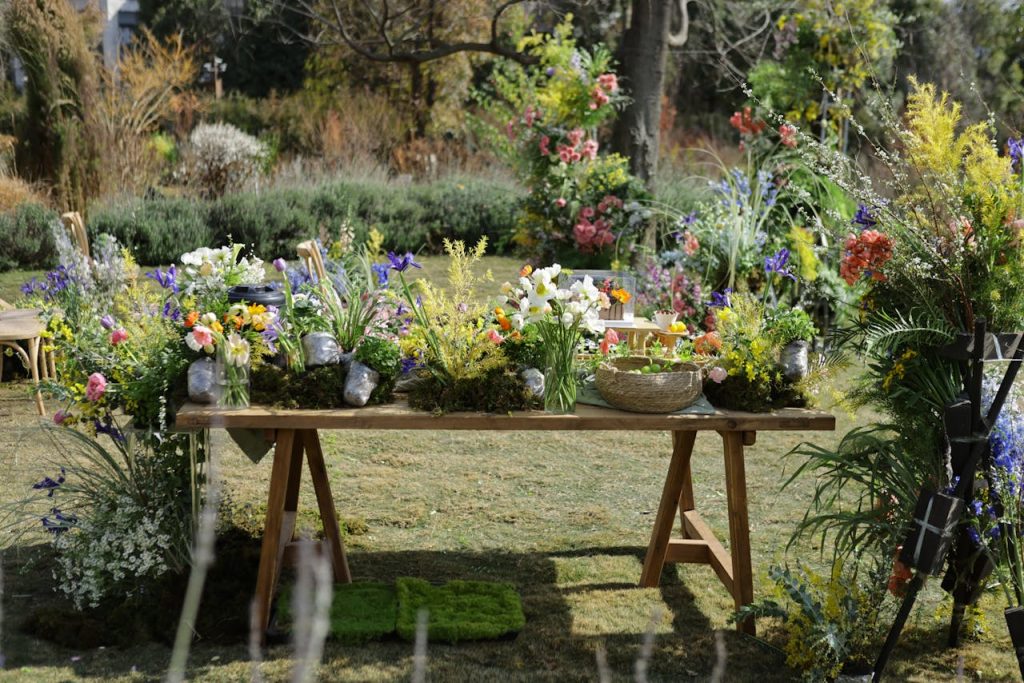
A spring centerpiece deserves more thought than a grocery store bouquet dropped into a vase. The most memorable ones work from an anchor outward: a footed urn, a shallow wooden tray, or a vintage crock provides structure, and everything built around it creates layers of height, texture, and color. This spring centerpiece DIY approach is worth studying for its emphasis on building up in stages rather than filling space all at once.
Begin with a taller anchor piece, a papier-mache bunny for an Easter brunch, a cluster of ranunculus stems, or a sculptural branch for a more architectural look. Then layer in medium-height picks and faux spring florals before finishing with smaller accents tucked toward the edges: a glitter ball pick, a ceramic bird, and a looped ribbon bow. Wired ribbon is particularly useful for adding movement, since it holds its shape but bends to fill gaps organically. Stand back after every addition and rotate the arrangement to check all angles. The guests sitting at the far end of the table deserve the same view as the ones nearest the kitchen.
Where possible, keep centerpieces at a height that does not interrupt eye contact across the table. A garden party should feel like a conversation, not an obstacle course.
Dressing the Outdoor Space
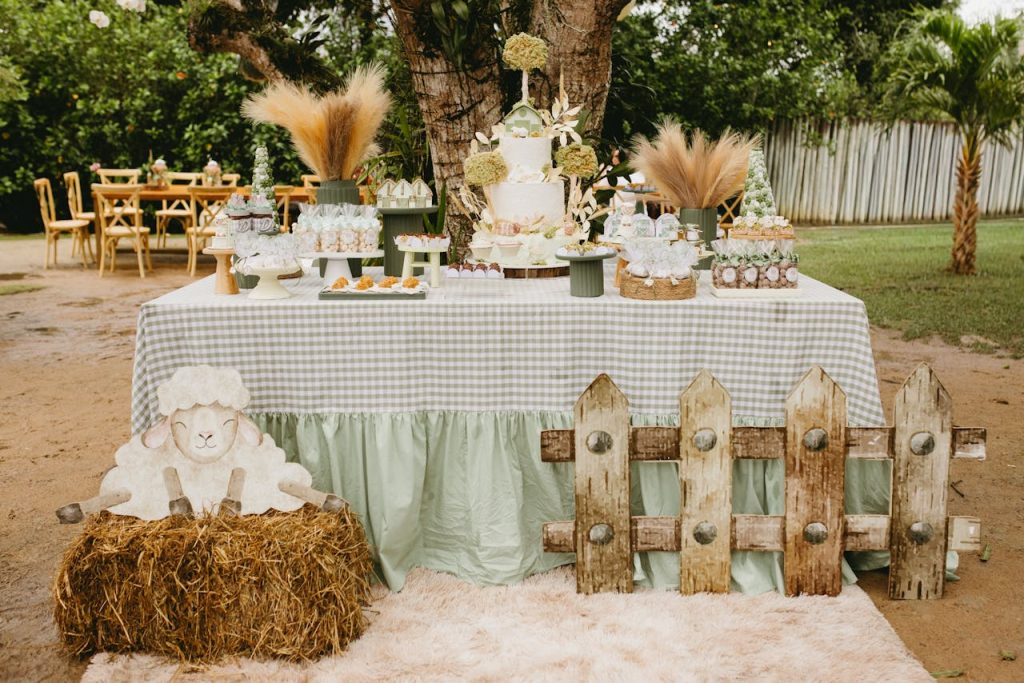
Choosing the right outdoor setting takes the same curatorial eye as choosing any room. A private garden or walled terrace offers intimacy and control. A vineyard or open field rewards you with drama and natural grandeur but requires more planning. Whatever the backdrop, the structure of the space matters as much as the decoration within it.
For a gathering of any real size, outdoor dinner party infrastructure deserves as much planning as the menu. Round tables invite conversation in a way that long banquet tables do not always manage, which is worth considering for dinner parties where guests may not know one another well. Rectangular tables create a sense of occasion and work beautifully for a single long communal feast. For both, the choice of linen, china, and chair shapes the experience as much as the food itself, so resist the temptation to treat rentals as an afterthought.
A canopy or tent changes everything, particularly in spring when the weather is genuinely unpredictable. Tent structures for outdoor entertaining define the dining zone, protect against unexpected afternoon showers, and, when dressed with trailing greenery and soft lighting, become a destination in their own right rather than merely a shelter. String lights threaded through the frame, low candles on the table, and a few lanterns at the perimeter are enough to carry the space from afternoon into evening without losing warmth.
The Garden Itself as Decoration
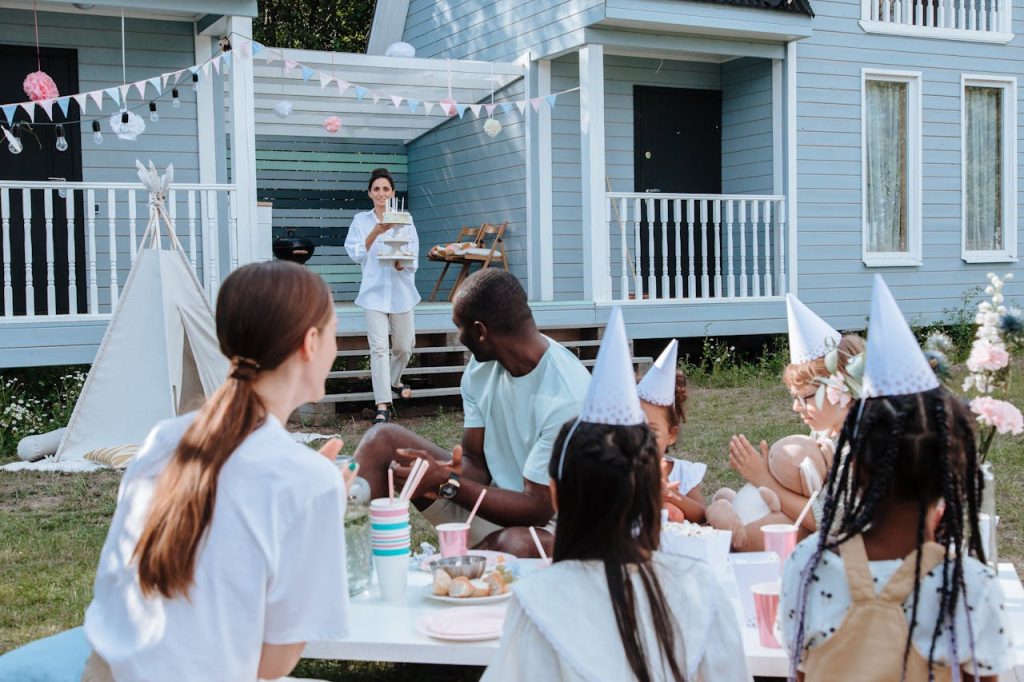
The backdrop of a well-tended garden is one of the most powerful decorating tools available to a spring host. Even a modest garden benefits from a little pre-party editing: clearing pathways, cutting back anything overgrown, and placing a few potted specimens where they will be noticed.
Flowering herbs in galvanized pots, potted topiaries at the entrance, and simple bundles of cut lilacs or peonies in glass bottles alongside tables make the outdoor environment feel intentional rather than incidental. The goal is not perfection but coherence, a sense that every element, from the tablecloth to the far hedge, belongs to the same story.
The Menu and the Mood
Spring calls for menus that feel light without being sparse. Seasonal produce does the work: asparagus, peas, radishes, young lettuces, and strawberries at their early-season peak. A grilled salmon with a lemon and herb dressing, a caprese platter stacked with heirloom tomatoes, or a vegetable paella that brings color to the center of the table all suit the outdoor setting without demanding a fully staffed kitchen operation.
For drinks, a signature cocktail or mocktail tied to the season signals effort and sets a tone from the first sip. Fresh fruit sangria, a cucumber and elderflower spritz, or a citrus-spiked iced herbal tea all work beautifully in the warmth and translate well to the visual language of a styled table.
A Note on the Details That Stay With Guests
The principles that apply to luxury interior design translate naturally to event hosting. The finest spaces, indoors or out, are the ones where thought is invisible and only pleasure is felt. A setting where the candles are lit before guests arrive, the ribbon tails are trimmed to different lengths so they move naturally in the breeze, and the centerpiece has been rotated so it looks considered from every seat is a setting that communicates without explaining itself.
Spring is the most generous of seasons for a host. The flowers are already blooming. The evenings are already lengthening. All that remains is to bring the table outside, pour something cold and beautiful into the glasses, and let the season do what it was always going to do: make everything feel possible.