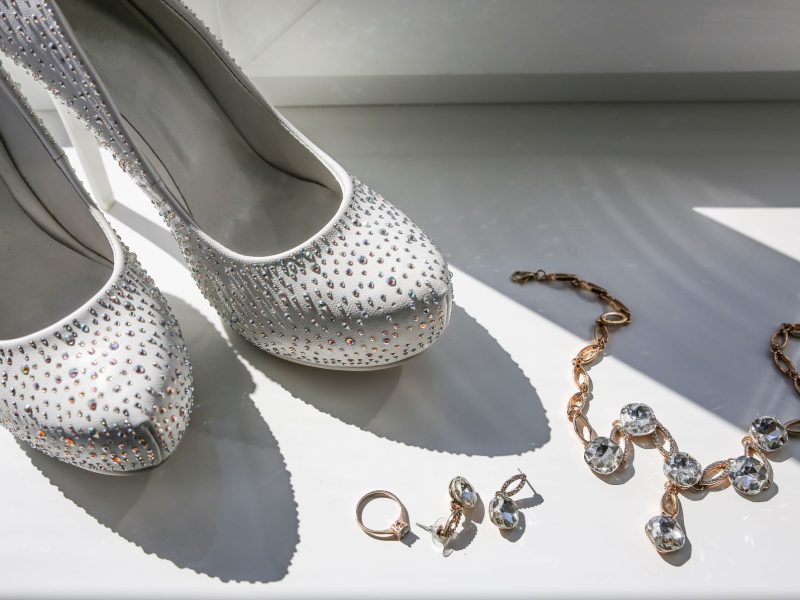
Luxury used to announce itself. The monogram did the talking, or the lacquered box, or the corner table that took three phone calls and one favor to book. None of that has disappeared. What’s shifted is the center of gravity: people who can buy nearly anything have started running short of something no boutique stocks. Hours. And more specifically, hours in which one other person is completely, provably paying attention.
Researchers have been measuring the shift for a while. A study of 6,271 people across four countries, published in the Proceedings of the National Academy of Sciences, found that money spent buying back time — a cleaner, a driver, anything that returns an hour to its owner — lifts life satisfaction more reliably than the same sum spent on objects. The same literature keeps turning up an odder detail: the sense of “time famine” grows as income does. Own a finer watch, feel more robbed by what it measures.
Attention, Undivided, Is the New Private Table
Think about what the genuinely expensive services have in common. A private banker who lets his phone buzz itself out, face-down, while you finish a sentence. The atelier fitting where a tailor spends ninety minutes on one hem and one human being. Fifteen unhurried minutes of a sommelier’s evening at your table and nobody else’s. Take away the marble and the orchids, and the bill itemizes a single thing: another person’s exclusive focus. Nobody has worked out how to warehouse that, or fake it convincingly at scale, which is precisely why it holds its price.
Meanwhile the rest of digital life slices attention thin. A group chat is eleven conversations conducted at once, none of them ever finished. The feed pays its bills with your gaze and sells it on by the half-second. Even the video meeting, the respectable kind with an agenda, splits everyone across nine tiles, one shared slide deck, and at least one attendee visibly answering email. A full hour of one person’s whole attention has become hard to come by even for people who can expense almost anything.
A Short History of Paying for Presence
None of this is new, strictly speaking. The eighteenth-century salon ran on the undivided listener; so did the analyst’s couch, fifty minutes at a time, and the barber’s chair, and — going back far enough — the confessional. Every era has sold some version of a person who is entirely there while you talk. Ours simply stopped listing it on any menu, then acted surprised when the shortage arrived.
The Quiet Rise of the One-on-One
Hence a counter-trend among people who guard their calendars the way they guard their cellars: conversation, scheduled deliberately, one partner at a time. Two people and no audience. Off the record, off the feed. Some of it still happens across white tablecloths. A growing share happens on screen, where a scheduled 1v1 chat puts you across from someone chosen for the conversation itself — the collector in Singapore who shares your weakness for pre-war Bordeaux, the language partner in Milan correcting your subjunctive at seven in the morning her time, the old friend whose diary is every bit as merciless as your own. The format shows one face and nothing else. That turns out to be the entire appeal, and it is oddly difficult to find anywhere else on a screen.
The Salon, Miniaturized
Call it what it is: a fireside conversation that happens to travel by fiber. The eighteenth century would recognize everything about it except the screen.
The Arithmetic of Presence
The luxury industry has always sold time in one disguise or another.
| What it sells | The time story underneath |
| The watch | Dramatizes time |
| The private jet | Claws a little of it back |
| The resort week | Pretends, for six days, that it isn’t passing |
| The undistracted hour | Hands it over, whole, to one person |
The next product is quieter than any of those: an hour during which somebody’s phone stays dark on your account. People register receiving it the way they register cashmere — immediately, and without needing the price explained.
Ask anyone whose diary is committed through next spring what they’d actually like to be given. Few name an object. Most describe, in one wording or another, the same appointment: a stretch of time where nothing blinks, nothing scrolls, and the only thing paying attention to the clock is the clock.