
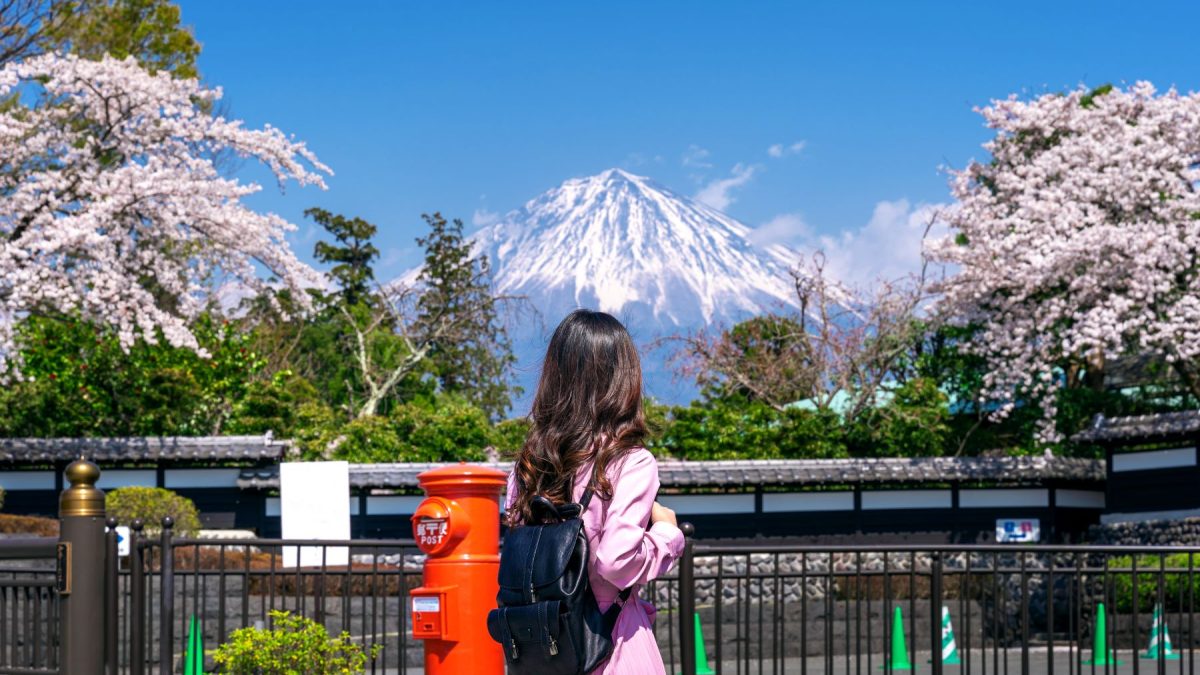
Japan drew 42.7 million international visitors in 2025, a record that surprised even the country’s own tourism officials. It is crowded, efficient, beautiful, and occasionally baffling. This guide covers the decisions that actually shape a trip, so you spend less time figuring things out and more time enjoying them.
When to Visit Japan and the Best Seasons for Smart Travel
Spring and autumn are the sweet spots. Cherry blossom season runs from late March to mid-April, moving north across the country over several weeks. The trees peak for about a week, which means timing matters more than most travelers expect. Autumn foliage follows a similar wave from October through November, with maple and ginkgo trees holding color into early December in Tokyo and Kyoto.
Both windows are also the busiest and most expensive. May and early October offer most of the beauty with noticeably fewer crowds. A few dates worth avoiding:
- Golden Week (April 29 to May 6): a national holiday cluster that sends domestic travelers flooding across the country
- Obon (mid-August): another major domestic travel period, with summer heat to match
- New Year (late December to early January): atmospheric, but hotels disappear fast and prices spike
Winter in January and February is the smart traveler’s off-peak secret: quieter attractions, lower prices, and excellent skiing in Hokkaido and the Japan Alps.
How Long to Stay and Suggested Itineraries
Ten to fourteen days covers the classic circuit without feeling rushed. Seven days works if the focus stays tight. The most common mistake is over-scheduling; Japan’s transit is so efficient that people pack in too many destinations and end up spending half the trip on platforms.
A solid ten-day structure looks roughly like this:
- Days 1 to 3: Tokyo, with day trips to Nikko or Kamakura if energy allows
- Days 4 to 5: Hakone for Mount Fuji views and an overnight ryokan stay
- Days 6 to 8: Kyoto, with a half-day in Nara
- Days 9 to 10: Osaka for food, then departure from Kansai International Airport
Travelers with more time can extend to Hiroshima, the Kiso Valley, or Kyushu — the shinkansen makes all of it genuinely easy to add.
Getting Around: Trains, IC Cards, and Airport Transfers
Japan’s shinkansen connects Tokyo to Osaka in under three hours, running with the kind of punctuality that makes a five-minute delay worth a formal apology announcement. For daily navigation, an IC card handles everything from subway rides to convenience store purchases.
The Suica card is the most recognized. It works across all regional IC card networks in Japan, so a card bought in Tokyo functions on Osaka’s metro without any adjustment. The Welcome Suica, available at Narita and Haneda airports, requires no deposit and is valid for 28 days. For long-distance travel, a Japan Rail Pass covers most shinkansen routes for a fixed period — worth buying when the itinerary involves three or more intercity legs.
Getting from the airport into the city rewards a little advance planning:
- Tokyo (Narita): Narita Express (N’EX) is the most direct option to central Tokyo
- Tokyo (Haneda): Multiple rail and monorail options, all under 40 minutes to most neighborhoods
- Osaka (Kansai): Haruka Express connects directly to Kyoto and Osaka stations with a tourist discount via the ICOCA and Haruka pack
Where to Stay: Hotels, Ryokans, and Tips for Smart Booking
Tokyo and Osaka offer the full range of global hotel brands alongside solid domestic options. Business hotels like Dormy Inn or APA deliver clean, well-located rooms at reasonable prices when luxury isn’t the priority.
Ryokans are a different category entirely. A traditional Japanese inn typically includes tatami rooms, futon bedding, multi-course kaiseki dinners, and access to onsen baths. The experience is genuinely transportive. It also comes with house rules around meal times and check-out, so read the details before booking. Budget around $300 to $400 per person per night at mid-tier properties, meals included.
The practical approach most seasoned visitors land on: hotels in the cities, one or two ryokan nights in Hakone or Kinosaki Onsen. Peak-season ryokans in popular areas book out months in advance — Rakuten Travel and Booking.com both carry solid inventory, but the property’s own website sometimes shows options that don’t appear elsewhere.
Staying Connected in Japan: eSIMs, SIM Cards, and Pocket WiFi
Reliable internet access in Japan is not a luxury; it is a navigational requirement. Google Maps, translation apps, and real-time train updates are the difference between a smooth day and a confusing one.
Three options cover most travelers:
- eSIM: Activates before arrival, no hardware needed — the right call for solo travelers who sort everything from home
- Data SIM card: Physical card picked up at the airport or a convenience store; solid backup for devices that don’t support eSIM
- Pocket wifi Japan: A portable router for groups or anyone traveling with a laptop. Many savvy travelers rent a pocket Wi-Fi device with unlimited data and easy airport pickup to get reliable internet access throughout Japan
Cultural Etiquette and Practical Tips for Smart Travel
Japan has a reputation for strict etiquette, but most of what travelers actually need comes down to a handful of habits. The rules that matter most are the ones that affect other people directly.
Public behavior that repays attention:
- Trains are quiet spaces. Phone calls are not done, music stays in earphones, and speaking loudly is unusual
- Remove shoes when entering ryokans, many traditional restaurants, and homes — the genkan entrance hall makes this obvious
- Cash is still king in many smaller restaurants, rural shops, and temples; ATMs at 7-Eleven and Japan Post reliably accept foreign cards
- Tipping is not practiced and can cause genuine confusion; excellent service is the standard, not an extra
Queuing is taken seriously and eating while walking is generally frowned upon outside festival settings. One underrated tip: carry a small bag for trash. Public bins are genuinely scarce outside convenience stores. The country remains spotlessly clean anyway, which tells you something about how the social contract works here.