
Luxury has a way of announcing itself these days. Logos, monograms, unmistakable silhouettes designed to be recognized from across a room. There is a place for all of that, but there is also a quieter kind of luxury that has always mattered more to people who actually understand quality, and it rarely gets discussed with the same enthusiasm as a new handbag or a limited release trainer. The belt is a perfect example.
It sounds like a modest claim, but the belt is one of the few accessories worn almost daily by anyone who wears tailoring at all, and yet it is frequently the last thing upgraded when someone starts investing in better pieces. A watch gets the attention. Shoes get the attention. The belt holding everything together gets whatever was already in the wardrobe, often for years past its best.
Why craftsmanship shows up first in leather
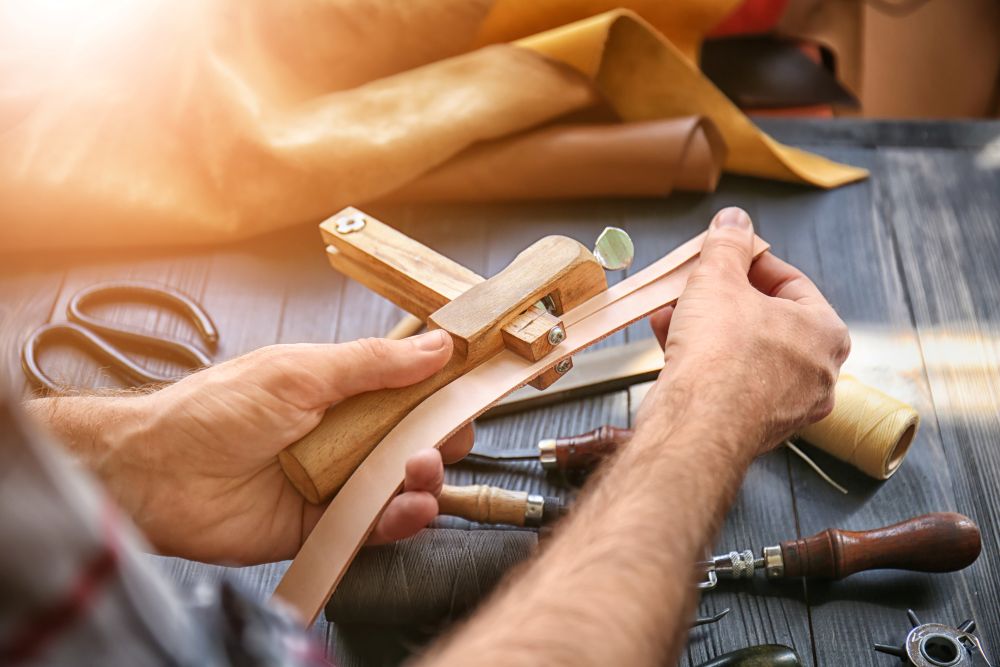
Leather is an honest material. It shows exactly how it was made within the first few months of wear, whether that means the seams splitting because they were rushed, or the surface developing a rich patina because it was properly tanned and finished. This is part of why a well sourced pair of leather belts tends to be one of the more revealing indicators of a brand’s actual standards, rather than simply its marketing. Cheaper leather is often treated to hide its flaws upfront and then degrades quickly, while good leather looks better with age rather than worse.
There is a reason connoisseurs of quality goods, from watch collectors to tailoring enthusiasts, tend to talk about leather goods in similar terms to fine timepieces. Both reward attention to small details that most people never notice: the evenness of the stitching, the way a buckle sits flush against the strap, whether the edges have been properly finished or simply cut and left raw. None of it shows up in a product photograph, but all of it shows up after a year of actual wear.
An accessory that travels well
For anyone who splits their time between cities, climates and dress codes, versatility matters more than novelty. A single, excellent belt in a rich tan or deep chestnut will move convincingly from a boardroom in one city to a dinner reservation in another, without needing to be swapped out for something more formal or more casual. That kind of quiet flexibility is arguably a more useful form of luxury than a piece that only works in one specific context.
It also travels well in the literal sense. Belts survive packing far better than almost anything else in a suitcase, provided they are rolled rather than folded sharply, and a good one will not crack or lose its shape after repeated trips through airport security trays and hotel wardrobes.
Provenance and process matter
Increasingly, discerning buyers want to know where a leather good was actually made, and by whom. Hand finished pieces produced by skilled artisans, using leather that has been properly tanned rather than mass processed, tend to carry a different kind of value than something stamped out at scale. It is not simply about exclusivity for its own sake. Handwork genuinely produces a more durable, better fitting product, and buyers who have compared the two rarely go back.
This is where a lot of the newer leather goods brands are making an interesting case for themselves, drawing on traditions of craftsmanship from regions with a long history of working with leather, and translating that heritage into pieces that suit a modern wardrobe rather than looking like a costume reference to the past.
A modest investment with an outsized return
Compared with almost anything else in a luxury wardrobe, a good belt is a relatively modest outlay, yet the return on that investment shows up daily rather than occasionally. It is worn far more often than most jewelry, most bags, and certainly most formalwear, which makes the cost per wear extraordinarily favourable once you actually do the arithmetic.
For readers who already understand the value of buying fewer, better things, the belt is one of the easiest places to apply that philosophy without much risk. It is a small enough purchase to feel low stakes, yet significant enough in daily use to be genuinely worth getting right. The next time an upgrade to the wardrobe feels overdue, it might be worth starting somewhere quieter than the obvious choices, and working outward from there.
What to look for before buying
A few practical checks separate a genuinely well made belt from one that only looks the part in a photograph. Run a thumb along the edge of the strap and feel for a clean, sealed finish rather than a raw, fraying edge. Check that the stitching is even and tight along both sides, not just visible from the front. Flex the leather gently near the buckle, which is the point under the most repeated stress, and make sure it moves smoothly rather than creasing sharply in one spot.
It is also worth asking where and how a piece was made, not out of snobbery, but because the answer usually correlates closely with how it will hold up. A brand willing to talk in detail about its tanning process, its artisans and its materials is generally more confident in what it is selling than one that leans on branding alone. That confidence tends to be justified.