Ask anyone to recall the best restaurant they’ve ever been to and they’ll almost certainly describe the room before they describe the food. The way the light sat on the table. The sound of the space — not too loud, not so quiet that conversation felt exposed. How the evening felt complete from the moment they walked in, before anything had been ordered or poured.
This isn’t nostalgia distorting the memory. It’s the room doing what the best rooms do: shaping an experience that the food will then either confirm or undermine. Great cuisine is the point of a restaurant, but atmosphere is what a guest decides about before they’ve seen a menu.
Why the Design Decision Comes First
A luxury restaurant concept lives or dies in its spatial logic. The most celebrated chefs understand this instinctively — which is why so many of them are as involved in the design of their dining rooms as they are in the development of their menus. The two things are inseparable. The room sets the register. It tells a guest whether they are somewhere hushed and intimate or somewhere with theatrical energy. It prepares them for the kind of evening ahead.
Communicating that to the people building it — contractors, furniture makers, lighting designers, investors — requires more than sketches and mood boards. Before a high-end concept reaches construction, restaurant rendering services can help owners and designers evaluate whether the space feels intimate, theatrical, or quietly luxurious. What looks right as separate elements — a palette, a seating plan, a proposed lighting scheme — doesn’t always feel right when those elements exist together in a room. Seeing the combination before anything is fabricated changes the quality of the decisions that follow.
Light Is Never Just Light
In hospitality design, there’s a saying that a room is only as good as its lighting. This is almost literally true. The same interior, lit differently, will produce two completely different experiences — and of all the decisions a luxury restaurant designer makes, the quality of the light is the one that works most invisibly and most profoundly on the guests in the room.
Good restaurant lighting doesn’t announce itself. It creates depth without darkness. It makes a face look better across a table. It catches the edge of a polished surface without reducing it to glare. It makes the room feel inhabited and warm at 9pm on a Tuesday rather than cavernous and indifferent.
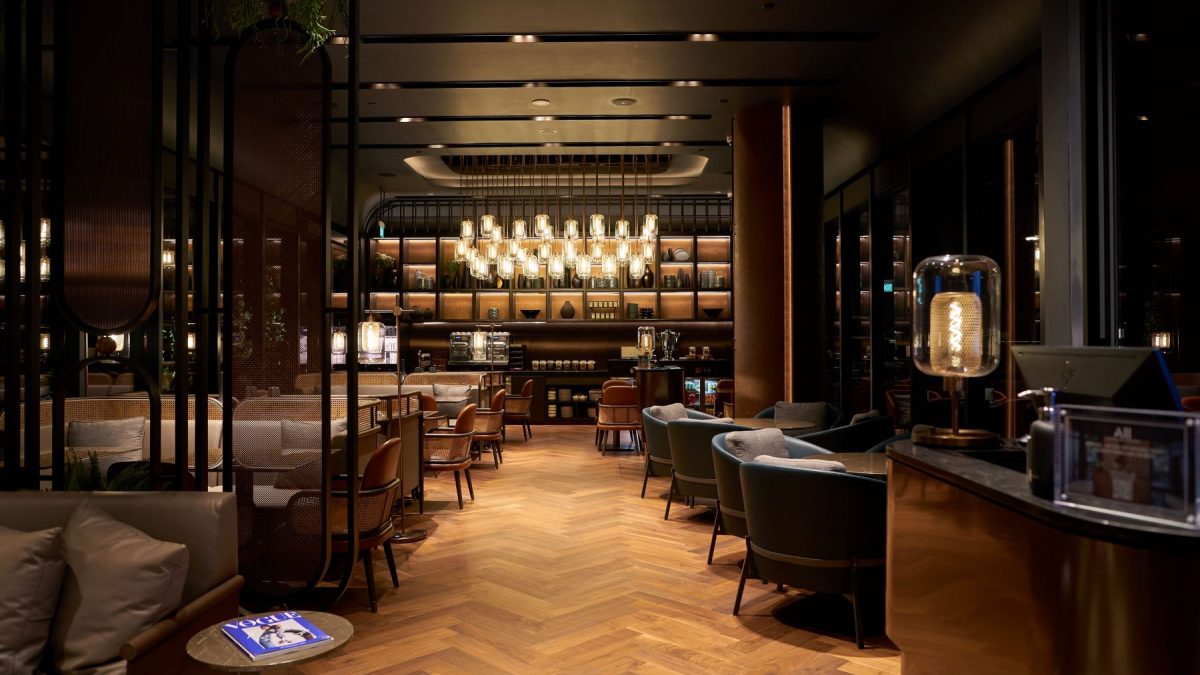
The layering is where the craft lives. Ambient light sets the temperature of the room — whether it reads as warm or cool, low and moody or bright and social. Then accent lighting adds dimension: a pendant above a corner banquette that makes that particular table feel like the best seat in the house, a wash of light across a textured stone wall that would read as flat without it, the gentle illumination of a floral arrangement that makes it glow from within. Task lighting serves the practical requirements of dining — guests need to read menus and see their plates — but it should do this without flattening everything else. When these layers are in proper relationship, the room feels alive in a way that guests register as comfort even when they can’t name the source.
The Conversation Between Materials
There’s a version of luxury restaurant design that confuses expense with refinement — that treats the presence of marble or brass as sufficient evidence of quality. The most memorable rooms have moved well past this. What matters is not the materials in isolation but the conversation between them.
Marble is irreducible. Its weight, its coolness, the way it holds pattern without repeating it exactly — these qualities are genuinely luxurious and genuinely communicative. But marble beside walnut, or beside velvet, or beside aged brass does different things in each case. The combination is what creates character.
Leather and velvet on seating do work that harder surfaces cannot. They absorb sound at a frequency that prevents the particular quality of din that undermines expensive restaurants. They invite contact rather than resisting it. They tell a guest, through the simple act of sitting down, that someone thought about what it would feel like to spend several hours here.
3D visualization for restaurant interiors can help test how lighting, finishes, seating, and circulation contribute to the overall dining experience — not as separate elements but as a system, seen together in something close to the real conditions of an occupied room. This is where mismatches become visible: the palette that fights itself at room scale, the fixture that overwhelms the space it was designed to anchor, the seating arrangement that looks generous on plan but creates awkward circulation in practice.
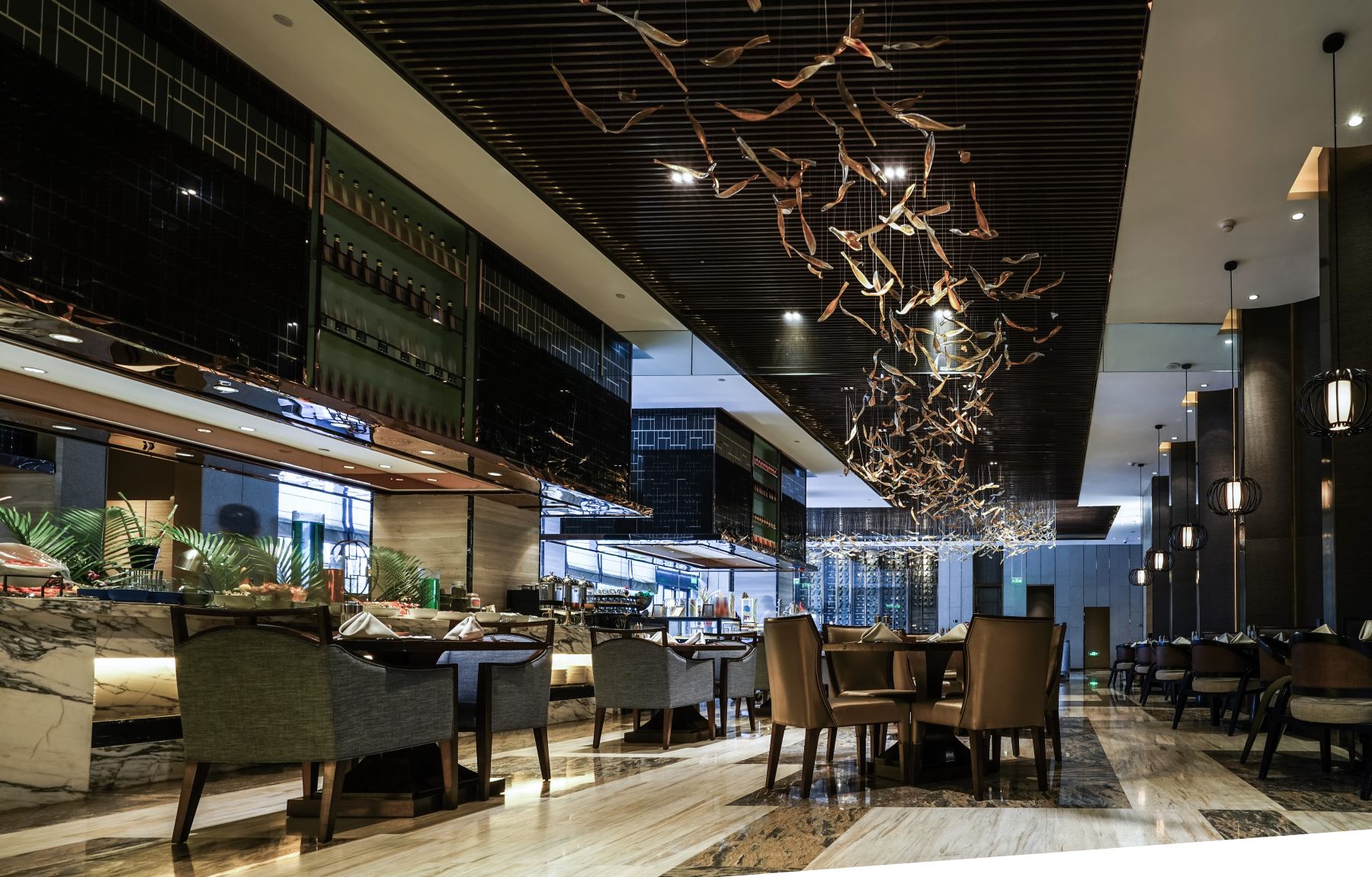
Table Spacing as a Statement
The distance between tables in a luxury restaurant is not a logistical question. It’s a position on what kind of experience is being offered.
A room that crowds its tables together — even with expensive furniture, even with beautiful lighting — signals that occupancy rate matters more than the guest’s experience. The message lands without being spoken. Guests feel watched, feel that their conversation is shared with the tables around them, feel a pressure to finish and leave that works against everything a fine dining experience is meant to create.
The generous table spacing of the best rooms says something different. It says: this evening is yours. It says: there is no urgency here. It creates a condition of ease that everything else — the food, the service, the wine — then has the chance to reward. Ease is the most difficult quality to design for in hospitality and the one guests respond to most deeply.
The Bar, the Entry, the Focal Point
Every great restaurant has a moment. A visual anchor that guests carry away with them when they try to describe the room to someone who wasn’t there. For some restaurants that’s a bar — a properly dramatic bar that commands presence from the entrance, that has scale and depth and the kind of visual density that makes it something rather than just a place to order drinks. For others it’s a particular seating arrangement, or a view, or a chandelier that makes a room feel like an event.
The arrival sequence matters enormously for how that moment lands. Walking into a dining room is an experience that most restaurants under-design. The transition from the street — its noise, its light, its pace — to the particular atmosphere inside should feel considered. Where the eye travels first, what draws a guest deeper into the room, the quality of attention at the threshold: these are elements that the finest hospitality designers treat with the same seriousness as the table at which the meal will be eaten.
What Guests Feel Without Being Able to Name It
The single most important quality a luxury restaurant interior can possess is coherence — the sense that every element belongs, that the room has a single character rather than a collection of individually attractive decisions that happen to share a space.
Guests don’t analyse this. They simply feel it. A room that is genuinely resolved — where the light and the materials and the spacing and the acoustics are all in proper relationship — produces a particular quality of ease and pleasure that transcends any individual element. It is what guests mean when they say a restaurant has atmosphere. The word is vague because the experience is cumulative, the result of decisions that were each made with the whole in mind.
This is what distinguishes a luxury dining room that endures from one that looks expensive at launch and grows tired by the end of its first year. The former was designed for experience. The latter was designed for impression. The difference is felt in the room within thirty seconds, before the menu arrives.