What size fitness ball for pregnancy is right for you? Choosing the proper size may be big in terms of comfort, posture, and even labor preparation. Too small or too big a ball can cause back pain and pressure on the pelvic region wo;se, whereas the correct fit helps to support the hips, relieve the tension and promote the proper positioning of the baby. It has a concise size chart, height-specific tips and professional suggestions to assist you in selecting the ideal pregnancy ball so that you can sit, stretch and move freely during the pregnancy process and prepare to give birth without any complications.
What Size Fitness Ball for Pregnancy by Height
Finding the correct fit will go a long way in comfort, posture, and even in making your body ready for labor. The Momcozy BirthEase Maternity Exercise Ball Set is a very good product to use by moms willing to use a safe and beginner-friendly birth aid. The anti-burst material, ergonomic design and textured surface offer stability and comfort with optional guided exercises to assist in assisting gentle prenatal movement.
The changes in your center of gravity, weight distribution and joint flexibility are brought about by pregnancy, and thus when sitting, bouncing or stretching on a fitness ball, it is not the same as it used to be before pregnancy. An adequately oversized ball will hold your hips, pelvis and core muscles and assist you to remain active and avoid pain. Here we are going to guide you through choosing the right size depending on your height and the way to use it properly.
Why Fitness Ball Size Matters During Pregnancy
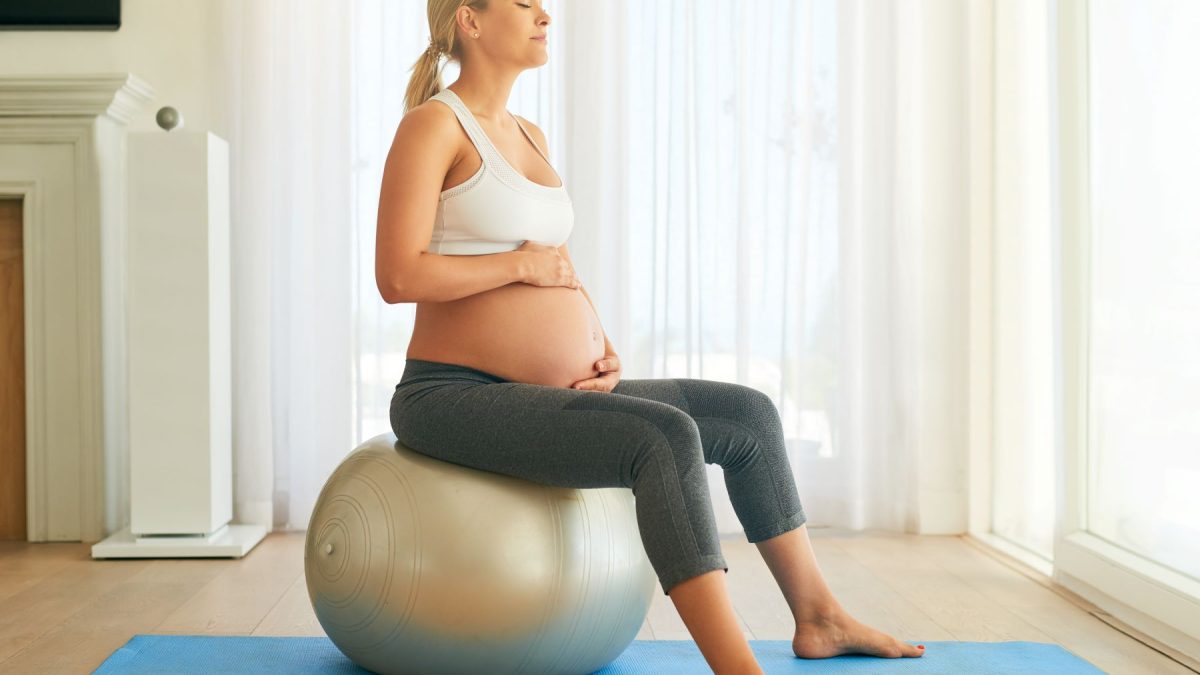
The incorrect size of the fitness ball used during pregnancy may cause more pain than good. With a ball that is too small, the distance between your knees and hips will be shorter than the distance between your hips and knees, putting a strain on your lower back. It could make you feel unbalanced, and you may fall or end up in an awkward posture if it is too big. When sitting, the ball should be raised to the right height to bring your hips and knees to approximately 90 degrees, which promotes good posture.
Proper size also enhances proper placement of the pelvis that would assist in preparation of labour, ease circulation and put low back and hips at ease. To put it briefly, the rightly-sized ball will help you to sit and stretch as well as perform some mild exercises and keep yourself and your baby safe.
Fitness Ball Size Chart for Pregnant Moms
The following is a basic size guide according to your height to help you select the appropriate fitness ball during pregnancy:
| Your Height | Ball Diameter |
| Under 5’0” (152 cm) | 45 cm (18 in) |
| 5’0”–5’5” (152–165 cm) | 55 cm (22 in) |
| 5’6”–6’0” (167–183 cm) | 65 cm (26 in) |
| Over 6’0” (183 cm+) | 75 cm (30 in) |
Tips:
- Sit on the ground with the feet on the ground and the knees at 90 degrees.
- A smaller ball should always be used when your knees are raised a lot higher than your hips, and a larger ball should be used when your hips feel high or unstable.
- Use an anti-burst ball to play safely and last longer during pregnancy exercises.
How to Sit Correctly on a Fitness Ball
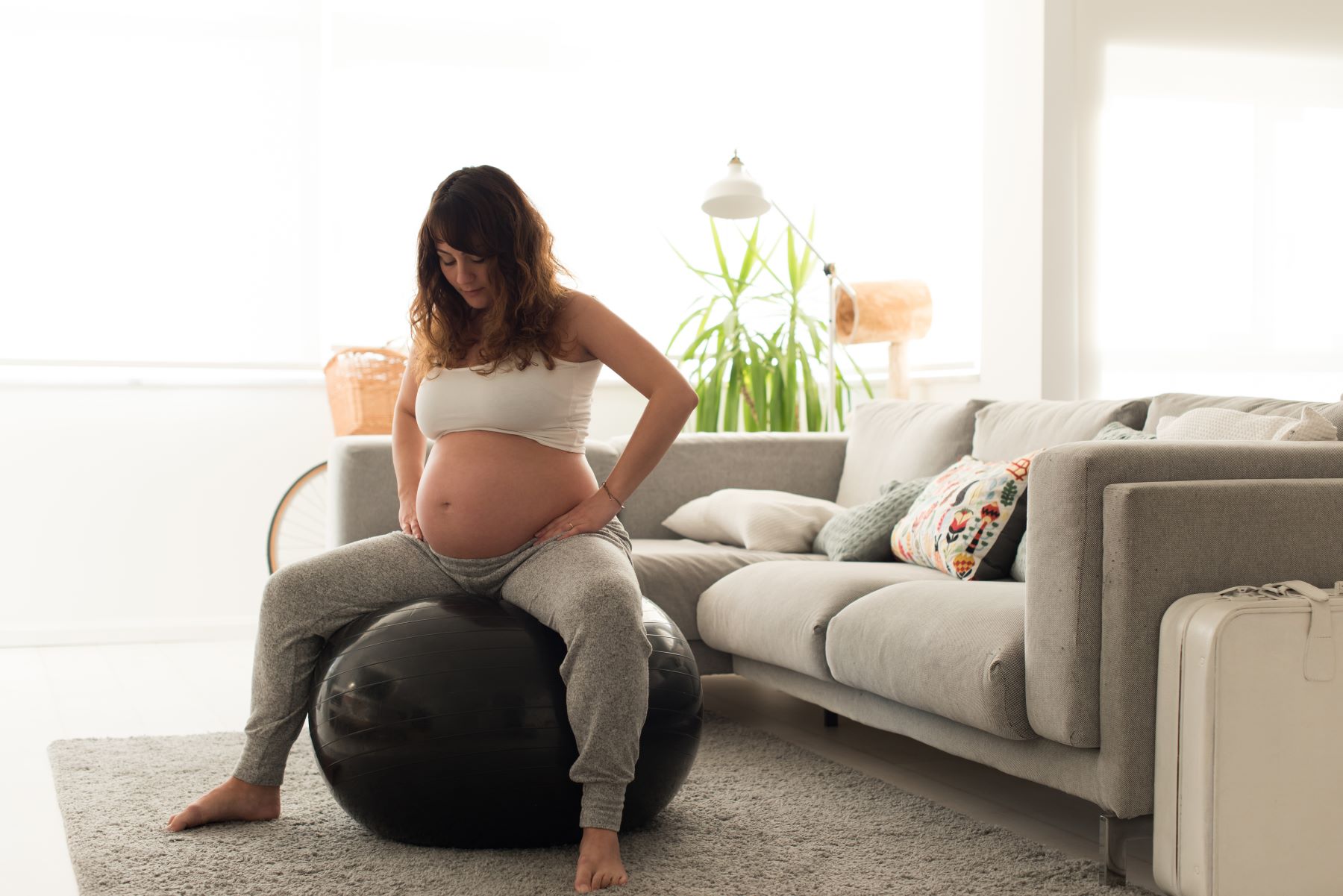
Due to the need to make pregnancy comfortable, stable and safe, proper posture would be required. The way to maximize your fitness ball is to:
- Feet flat on the floor: When the feet are flat on the floor, the feet should be at hip distance to create a level base and be in balance.
- Knees at 90 degrees: The thighs should be in right angle position with the floor or tilted a bit downwards to enable the hips to be in their correct position.
- Engage your core: Gently squeeze your abdominal muscles to take the lower back and pelvis off the load.
- Relax your shoulders: Relax your shoulders to avoid straining your neck and upper back.
- Move gently: Rocking, bouncing or swiveling your hips to prevent stiffness, boosting the blood flow and maintaining your joints.
Sitting correctly on your pregnancy ball will aid in alleviating back pain, correct the placement of the pelvis, and enable you to do some light prenatal exercises. This posture also helps you to increase balance, core stability, and comfort in daily activities in the long run.
Common Fitness Ball Size Mistakes in Pregnancy
Even experienced moms can make mistakes when choosing or using a pregnancy ball. Avoid these common pitfalls:
- Choosing based on age, not height: Balls that are considered standard (adult) may not suit your body in the way they should. The height and leg length are major considerations for proper posture.
- Ignoring stability: A ball that is too soft or wobbly might put falls or injury at risk.
- Skipping posture checks: Sitting on a ball without altering the sitting position may aggravate back pain rather than alleviate it.
- Not accounting for labor use: In case you are going to use the ball when you are in labor, then consider a slightly firmer or taller ball to ensure ease of mobility and support.
- Buying low-quality balls: Anti-burst balls are long-lasting and provide good support and safety during pregnancy.
By avoiding these mistakes, you will be confident that your fitness ball will be comfortable, stable and safe to move throughout the course of pregnancy. Properly executed in terms of size, posture, and quality, they all help your hips, core and pelvis, and prenatal exercises are safer, more effective and enjoyable.
Conclusion
The correct size of the fitness ball to use during pregnancy is not simply another shopping spree, but the comfort, good posture, and safe movement for you and your baby. It should be large enough to hold your hips, core and pelvis; make sure that you use the height-based chart, sit straight, and avoid common sizing mistakes. When you have the right ball, you can sit, stretch, and gently bounce and even prepare your body to labor without fear. The difference between a well-fitting pregnancy fitness ball and a poorly-fitting one can be noticed in terms of comfort in everyday life, pelvic support, and the overall wellness of the prenatal period.