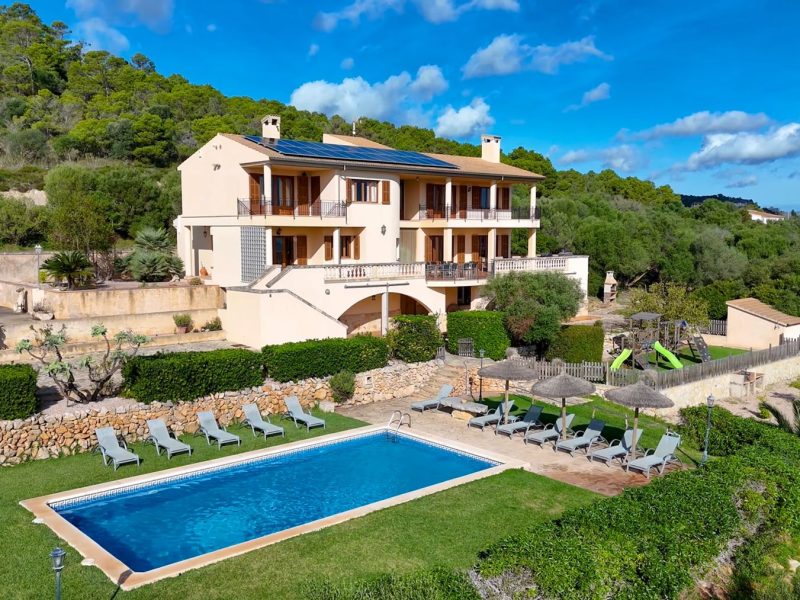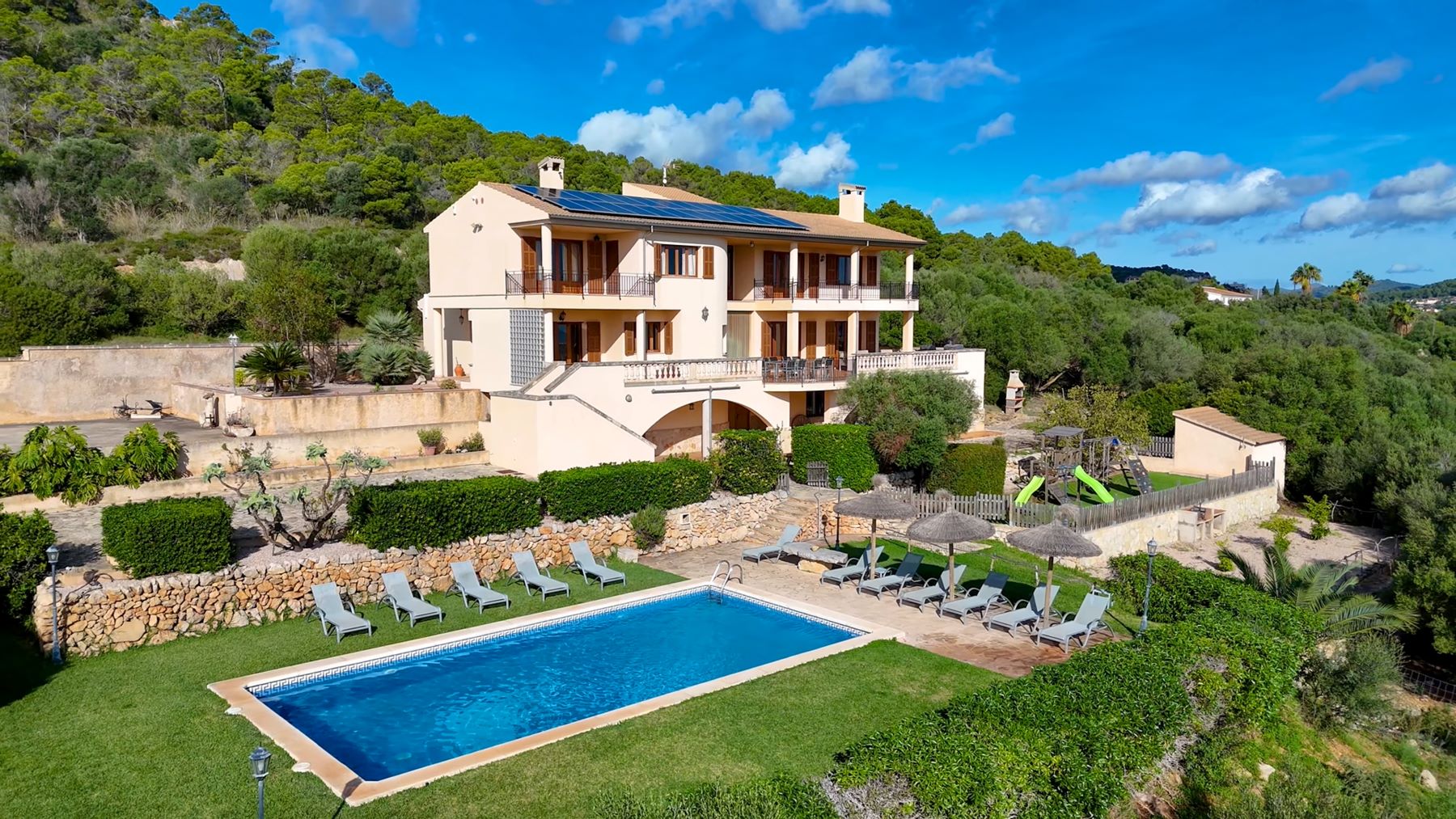
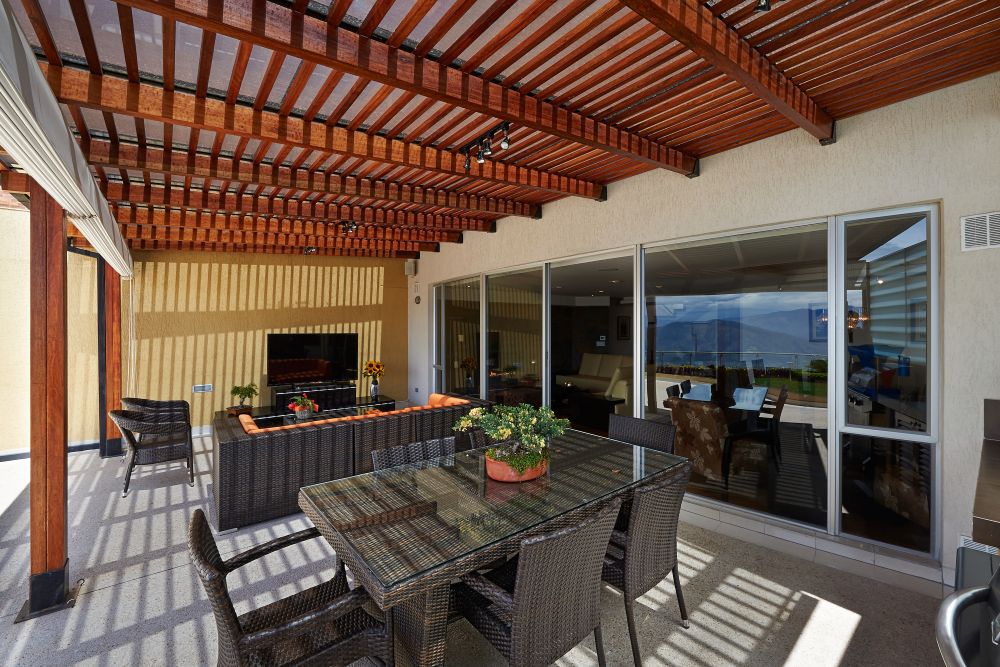
Forget the extra guest suite. The most talked-about space in today’s luxury homes doesn’t have any walls.
There was a time when a house proved its worth through sheer size, with the double-height foyer, the formal dining room that came to life once a year at Thanksgiving, and a garage that could comfortably double as a showroom. Those features still turn up, of course. They just don’t carry quite the same weight.
These days, the space that draws the most attention tends to sit just past the back doors, furnished like a living room, lit like a favorite neighborhood restaurant and sheltered by a roof that opens and closes on demand.
The outdoor room has quietly become the feature that says the most about a home and the people who live in it. So how did it earn that place, and what sets a truly great one apart?
Quiet Luxury Has Moved Outside
If recent years have taught us anything about taste, it’s that the most desirable things rarely shout. Think cashmere without the logo, a watch you only notice when someone leans in, or a kitchen where the appliances vanish behind the cabinetry.
That same thinking has found its way into the garden. A sprawling lawn or an oversized pool can still impress, but the homes we find ourselves lingering over, in design magazines and on our feeds, feel considered rather than showy, as if every choice was made slowly and on purpose.
The outdoor room suits that mood perfectly. Done well, it looks as though it has always been there.
Why It’s So Hard to Fake
Anyone can buy a patio set and an umbrella. What’s far harder to pull off is a space that feels finished, and that’s exactly where its status comes from.
The difference lives in the details. A great outdoor room is scaled to the house, so it feels anchored rather than dropped into place, and its lines echo the architecture instead of competing with it.
The flooring carries through from inside, or at least speaks the same language. Lighting is warm and layered, never floodlight-bright, and even the cushions and throws are chosen with the same care as those in the living room.
In short, an outdoor room deserves the same design thinking as any room inside the house, from scale and proportion to texture and contrast.
Think of it as the difference between a tailored blazer and one straight off the rack. From across the street you might not notice. Up close, you can’t miss it.
The Real Luxury? Control
A pretty terrace that empties at the first sign of rain is lovely to look at, but it isn’t really a room. What turns an outdoor space into somewhere you can actually live is the ability to adjust it as the day unfolds: more shade when the afternoon sun turns fierce, shelter when a summer shower rolls through, and a little warmth once the evenings begin to cool.
Much of that comes down to what’s overhead. The adjustable louvered roof has become the backbone of the modern outdoor room, its slats tilting open to let in dappled light and a breeze, then closing into a watertight cover the moment the weather changes.
Many can be operated from a remote or an app. Some even close by themselves when they sense rain.
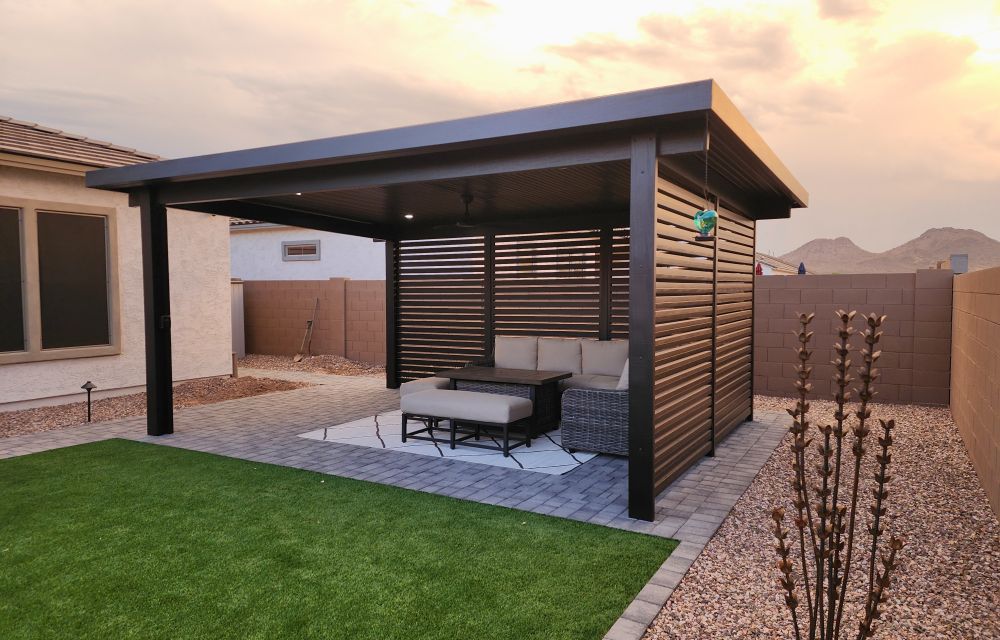
The look has come a long way, too, and the traditional timber pergola, romantic but famously high-maintenance, has steadily made room for sleek powder-coated aluminum designs that won’t rot, warp or need repainting every few summers.
Design-led brands such as Hansø have brought a pared-back, Scandinavian sensibility to the category, with clean lines and soft, natural colors that feel like part of the architecture rather than something added later.
The practical upshot is simple. A space that works in more kinds of weather gets used far more often, and that, ultimately, is the whole point.
How to Create an Outdoor Room That Feels Truly Luxurious
If you’re planning your own, these are the details that make the biggest difference.
- Start with the ceiling. A louvered roof or well-designed pergola defines the space and makes it usable in far more kinds of weather.
- Treat it like an interior. Choose a rug, a proper sofa and side tables, just as you would indoors. Performance fabrics make this easy.
- Layer the lighting. Combine integrated LED strips with lanterns and a few table lamps so the space glows softly after dark rather than glaring.
- Plan for the shoulder seasons. Infrared heaters, drop-down screens or glass side panels can add months of use to your year.
- Keep the palette calm. Natural materials and muted tones let the view and the planting take center stage.
Measured in Hours, Not Square Feet
Here’s the heart of it. The status home of the past was measured in square footage; today’s is measured in time.
A well-designed outdoor room simply gives you more of the year. It’s morning coffee outside in late October, a long Sunday lunch that carries on straight through a passing shower, and a dinner party that never has to retreat indoors because someone felt a chill.
For people who can buy almost anything, time well spent is one of the few luxuries still worth chasing.
The research backs this up. In the National Association of Realtors’ 2023 Remodeling Impact Report: Outdoor Features, 68% of homeowners said they had a greater desire to spend time at home after finishing an outdoor project, and 60% said they enjoyed their home more overall.
There’s a wellbeing benefit, too. Daylight, fresh air and a sense of openness have become part of how many of us think about rest, and an outdoor room makes them part of an ordinary weeknight rather than something saved for vacation.
What Buyers Are Noticing
The market has taken note. Real estate agents increasingly present finished outdoor rooms as true living space rather than landscaping, and buyers tend to see them the same way.
A covered, beautifully lit, all-weather space sends a clear message: the whole home has been thought through.
For most homeowners, though, resale value is a welcome bonus rather than the goal. These are rooms made for living in, not just for listing.
Outdoor Room Questions Homeowners Are Asking
What makes an outdoor room feel luxurious?
A luxury outdoor room typically feels like an extension of the home’s interior rather than a separate patio. Proportion, architectural continuity, comfortable furniture, layered lighting, high-quality materials and weather protection all help create a space that feels intentionally designed.
What is a louvered pergola?
A louvered pergola uses adjustable roof slats that can open to provide sunlight and ventilation or close to provide shade and protection from rain. Depending on the system, the louvers may be controlled manually, remotely or through an app, while some systems can also respond automatically to changing weather.
Are aluminum pergolas lower maintenance than wood pergolas?
Powder-coated aluminum pergolas generally require less routine maintenance than traditional timber structures because aluminum does not rot or warp and does not require the same cycle of staining or repainting. The material also lends itself to the clean architectural lines increasingly associated with contemporary outdoor rooms.
How can you make an outdoor living space usable for more of the year?
Weather protection is one of the most important considerations. An adjustable roof can provide sun and rain protection, while infrared heaters, integrated lighting, drop-down screens and glass side panels can make the space more comfortable during cooler evenings and shoulder seasons.
What should you consider before adding a luxury pergola or outdoor room?
Start with how the new structure relates to the home’s architecture and how the space will actually be used. Consider its scale, orientation to the sun, weather exposure, flooring, furniture, lighting, heating and whether adjustable shade or rain protection would meaningfully extend the number of days the space can be enjoyed.
The Bottom Line
The homes that once impressed us did it with more: more rooms, more marble, more of everything behind the front door. The ones we covet now impress in a gentler way, suggesting that their owners know how to live well, with light, air, good design and, perhaps most precious of all, the time to enjoy it.
More often than not, the proof is out back, in a room without walls that gets used every single day.