

The National Museum of Mathematics, or MoMath, is one of New York’s most unexpectedly delightful attractions. In a city overflowing with world-class museums, it would be easy to overlook a venue devoted entirely to mathematics. Yet this remarkable institution succeeds in transforming a subject that many associate with classrooms and textbooks into something playful, creative and genuinely captivating.
Following its move to a significantly larger Chelsea home, the museum now offers an even more immersive experience, with multiple floors of interactive exhibits designed to demonstrate how mathematics shapes the world around us. Rather than presenting mathematics as a series of equations to be memorised, MoMath reveals it as a language of patterns, movement, design and discovery.
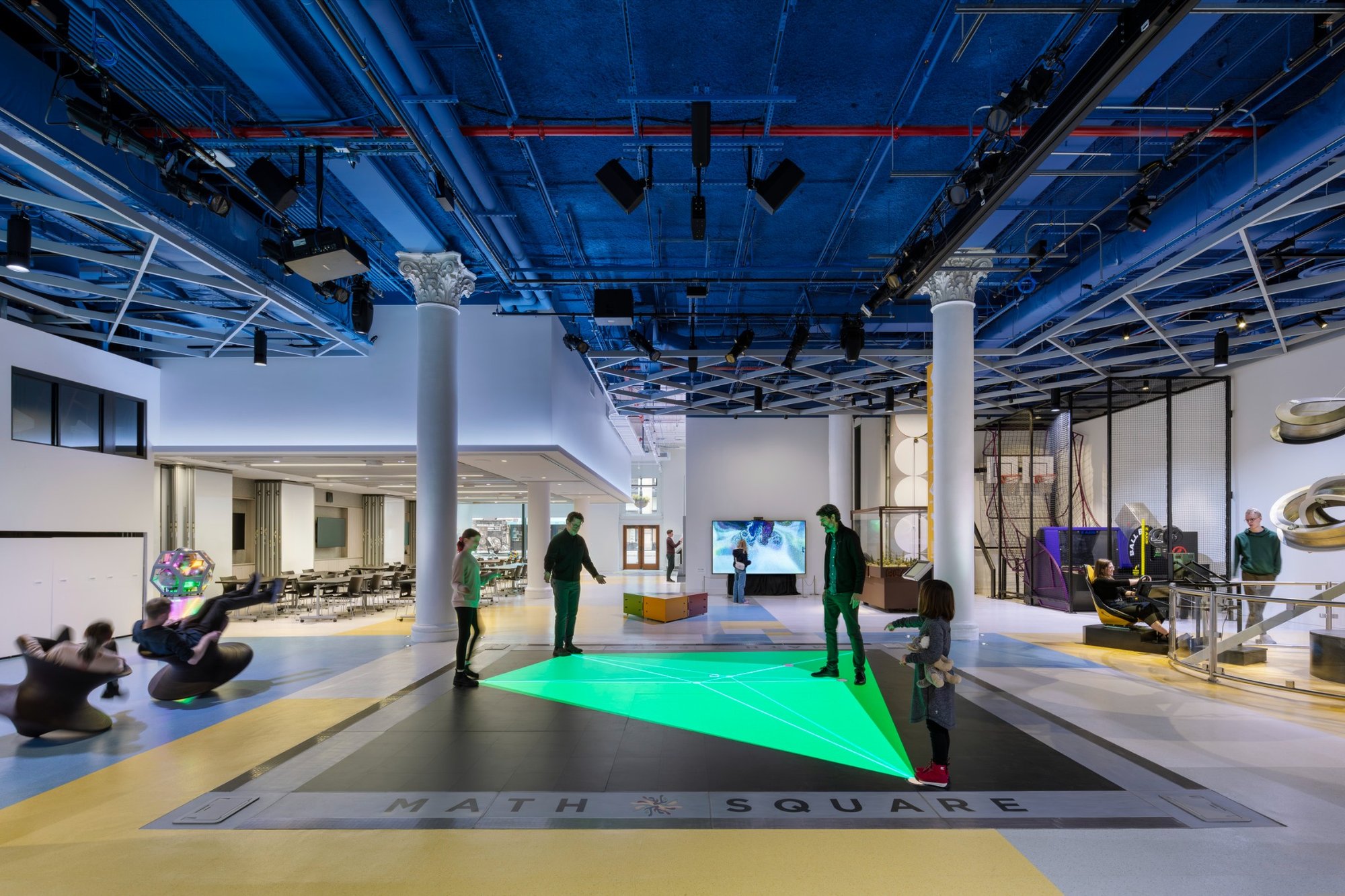
What makes MoMath so compelling is its insistence on participation. This is not a museum of glass cases and explanatory labels. Almost every exhibit invites visitors to touch, experiment, build, balance, spin or explore. Children race enthusiastically from one installation to the next, while adults frequently find themselves just as engrossed, often lingering longer than their younger companions.
Among the museum’s most celebrated attractions is the famous square-wheeled tricycle, which glides surprisingly smoothly over a specially designed track. Elsewhere, visitors can investigate geometric structures, experiment with symmetry, create intricate digital designs and explore the mathematical principles hidden within art, architecture and nature. One particularly engaging exhibit uses a traditional one-armed-bandit-style slot machine to demonstrate the concept of probability. What could easily have become a dry lesson in statistics instead becomes an irresistible hands-on challenge, with visitors eagerly pulling the lever and comparing outcomes while unconsciously absorbing the mathematical principles at work. It is a perfect example of MoMath‘s talent for transforming complex ideas into experiences that are both accessible and entertaining.
What truly elevates the experience, however, is the team of docents stationed throughout the museum. Far from simply supervising exhibits, these enthusiastic guides act as ambassadors for the subject itself, engaging visitors with infectious energy and genuine passion. During our visit, they were constantly on hand to demonstrate concepts, answer questions and encourage children to experiment further, often transforming what might initially appear to be a simple activity into a fascinating lesson in mathematical thinking. Their ability to make complex ideas accessible without ever feeling didactic is remarkable. Equally impressive is their evident delight in sharing their knowledge; their warmth, patience and enthusiasm create an atmosphere in which curiosity flourishes. In many ways, they embody the museum’s mission, proving that mathematics is not merely something to be studied, but something to be experienced, explored and enjoyed.
For families, the museum strikes a particularly successful balance between education and entertainment. Children are rarely conscious that they are learning, yet they leave having encountered ideas ranging from symmetry and geometry to engineering and spatial reasoning. Parents, meanwhile, often find themselves rediscovering mathematical concepts through a fresh and surprisingly elegant lens. The atmosphere is energetic and engaging without ever feeling overwhelming.
What elevates MoMath beyond a conventional science museum is its sense of wonder. Mathematics is presented not as a rigid academic discipline but as a creative force that underpins everything from music and architecture to movement and technology. Throughout the galleries, there is a palpable sense that mathematics is less about finding the right answer and more about asking interesting questions. Whether balancing on geometric structures, investigating patterns or testing the odds on the museum’s cleverly designed probability machine, visitors are continually encouraged to discover concepts for themselves. That philosophy gives the museum an intellectual warmth that appeals equally to budding mathematicians and those who may have previously claimed to dislike the subject altogether.
The museum also runs an impressive programme of lectures, workshops and special events, reinforcing its mission to make mathematics accessible to audiences of all ages. This broader educational ambition is evident throughout the visitor experience, where curiosity is consistently encouraged and celebrated.
During our visit, what impressed most was the sheer joyfulness of the experience. There is something wonderfully refreshing about a museum that invites visitors to play, experiment and occasionally fail in pursuit of understanding. Combined with the energy and expertise of the museum’s exceptional docents, the result is an attraction that feels both intellectually stimulating and genuinely fun.
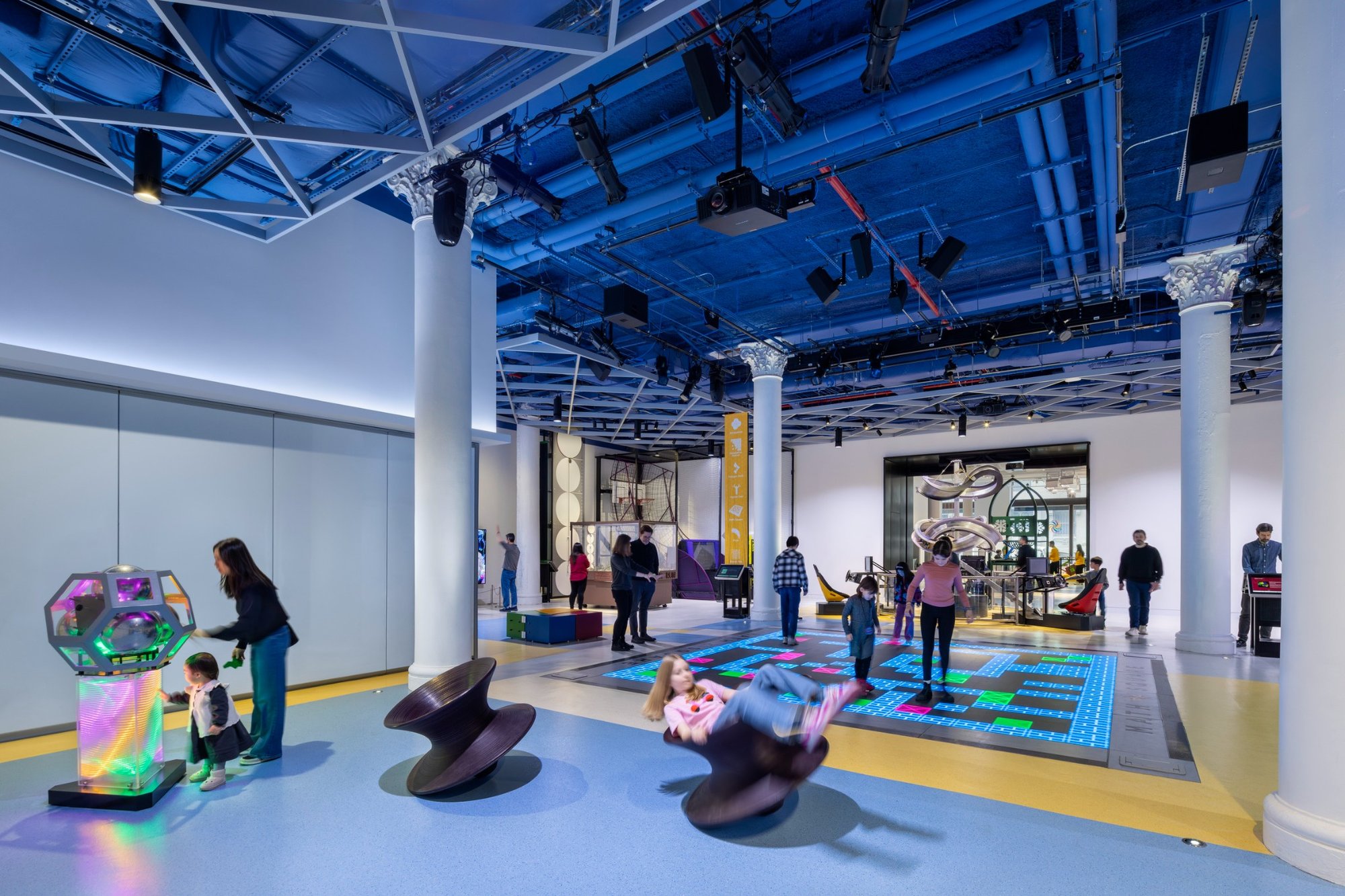
For families visiting New York, particularly those travelling with inquisitive children aged seven and above, MoMath offers a welcome alternative to the city’s more familiar tourist attractions. It may not possess the grandeur of the city’s great art museums, but it delivers something arguably more valuable: the opportunity to see the world differently.
In a city built upon innovation, ambition and imagination, the National Museum of Mathematics feels perfectly at home. It is a museum that proves numbers can tell extraordinary stories, and one that leaves visitors with a renewed appreciation for the hidden mathematics woven through everyday life.
Need to Know
Location: National Museum of Mathematics, 635 Sixth Avenue, New York, NY 10011
Opening Hours: Daily, 10am–5pm
Website: MoMath Official Website
Allow: 2–3 hours for a comprehensive visit, although curious children could happily spend much longer.
Best For: Families, budding mathematicians, STEM enthusiasts and anyone looking for one of New York’s most original museum experiences.
Nearest Subway: 23rd Street, with several lines within easy walking distance.
Top Tip: Don’t rush. The greatest rewards often come from spending a few extra minutes with each exhibit and taking advantage of the knowledgeable docents, whose enthusiasm transforms many of the museum’s most ingenious displays into memorable moments of discovery.