How to fly private for up to 75% off — without sacrificing an ounce of luxury.
Let’s get one thing straight: private jets are not exclusively for billionaires. They never really were. But the people who’ve figured that out tend to keep quiet about it—and honestly, that’s part of the appeal. What I’m about to share is the kind of thing that gets passed around at dinner tables in the Hamptons or whispered between colleagues at Davos. It’s called an empty leg, and once you understand it, you’ll never look at commercial aviation quite the same way.
Here’s how it works. When a private jet operator flies a client from New York to Miami, that aircraft has to get back somehow. If no one has booked the return leg, the plane flies back empty, still burning fuel, still requiring a crew, still generating overhead costs for the operator. Rather than absorb that loss entirely, operators release these repositioning flights at a steep discount, sometimes as much as 70 or 75 percent off the standard charter rate. The seat (or the entire cabin, to be precise) is yours. The plane is identical. The crew is the same. The FBO terminal is the same. The only thing that’s different is the price.
To put some real numbers to it: on that New York to Miami route, a light jet like the Citation CJ3 might normally run you somewhere between $8,000 and $12,000 for a full charter. As an empty leg, that same aircraft on the same route can go for $2,400 to $4,800, about the cost of two or three business-class tickets, except you’re boarding from a private terminal with no queue, no security theater, and a cabin to yourself. Step up to a midsize jet like the Hawker 900XP, and the full charter rate sits around $14,000 to $20,000; the empty leg equivalent comes in at $4,200 to $8,000. And for those occasions when only a heavy jet will do, a Gulfstream G650 running a transatlantic or coast-to-coast route—full charter prices climb anywhere from $40,000 to $80,000, while an empty leg on the same aircraft can be had for $12,000 to $32,000. Even at the top of that range, you’re splitting the cost roughly in half.

The same dynamic plays out across shorter international routes. London to Paris, for instance, carries a full charter price around $30,000. As an empty leg, that journey can cost $9,000 to $12,000, which, for a certain kind of spontaneous weekend, suddenly makes a great deal of sense.
Now, the trade-off is real and worth naming honestly. Empty legs run on the operator’s schedule, not yours. You don’t get to choose the departure time, and availability can shift, sometimes with short notice — if the original client’s plans change. These flights reward flexibility more than they reward rigidity. If you can move your Friday afternoon to a Thursday evening, if a 10 a.m. departure works just as well as a noon one, if you’re the kind of traveler who can make decisions quickly when a good opportunity surfaces, then you’re exactly the person this was designed for. Think of it less like booking a flight and more like scoring a last-minute reservation at a restaurant you’ve been trying to get into for months.
One question I hear often, particularly from people new to private aviation, is whether cutting the price also means cutting corners on safety. It doesn’t—full stop. The aircraft is the same. The maintenance record is the same. What changes with an empty leg is purely the economics of how the seat was sold, not the standards to which the operator is held. Reputable brokers work exclusively with operators that carry ARGUS or Wyvern safety ratings, independent third-party audits that scrutinize everything from pilot flight hours to maintenance protocols. When you’re booking through a vetted source, you’re accessing the exact same pool of aircraft as someone paying full charter rates.
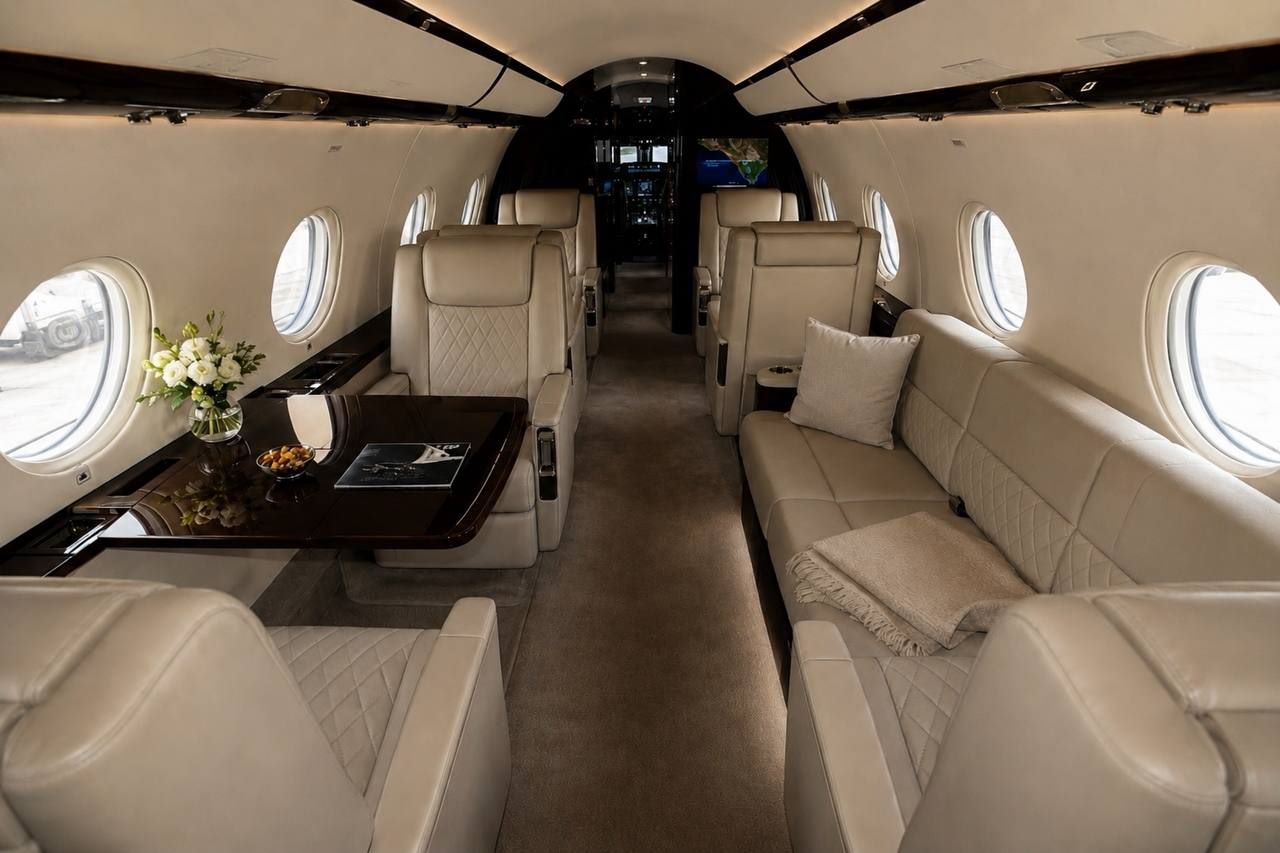
Which brings me to how you actually book one of these. You don’t need a membership. You don’t need a jet card or a fractional ownership stake. Specialist brokers, Arcanadel, for example, which focuses specifically on this market—maintain real-time access to empty leg inventory across hundreds of operators. The process is more straightforward than most people expect: you tell them your route preferences and travel windows, and they match you with available flights. There’s no long-term commitment, no retainer, no annual fee. You pay for the flight and that’s it.
What I find most interesting about empty legs isn’t the price, it’s what the price makes possible. It democratizes an experience that most people assume is walled off. The quiet of a private cabin. The unhurried pace of a dedicated terminal. The ability to land at smaller airports closer to your actual destination, bypassing the congested hubs entirely. These aren’t just perks; they’re a fundamentally different relationship with travel. And when you can access all of that for the price of a premium economy transatlantic ticket, the question stops being ‘Can I afford to fly private?’ and becomes ‘Why haven’t I been doing this all along?’
The secret has been out for a while, quietly, among people who pay attention. Now you’re one of them.