Walk through the lobby of a great New York hotel and you encounter something that commercial renovation rarely achieves.
Space that feels both immaculate and inhabited. The surfaces show craft without showing effort.
The lighting feels natural rather than designed. The proportions communicate quality without announcing it.
Luxury restaurant construction in New York City often gets romanticized through the lens of design, but the reality is far more exacting.
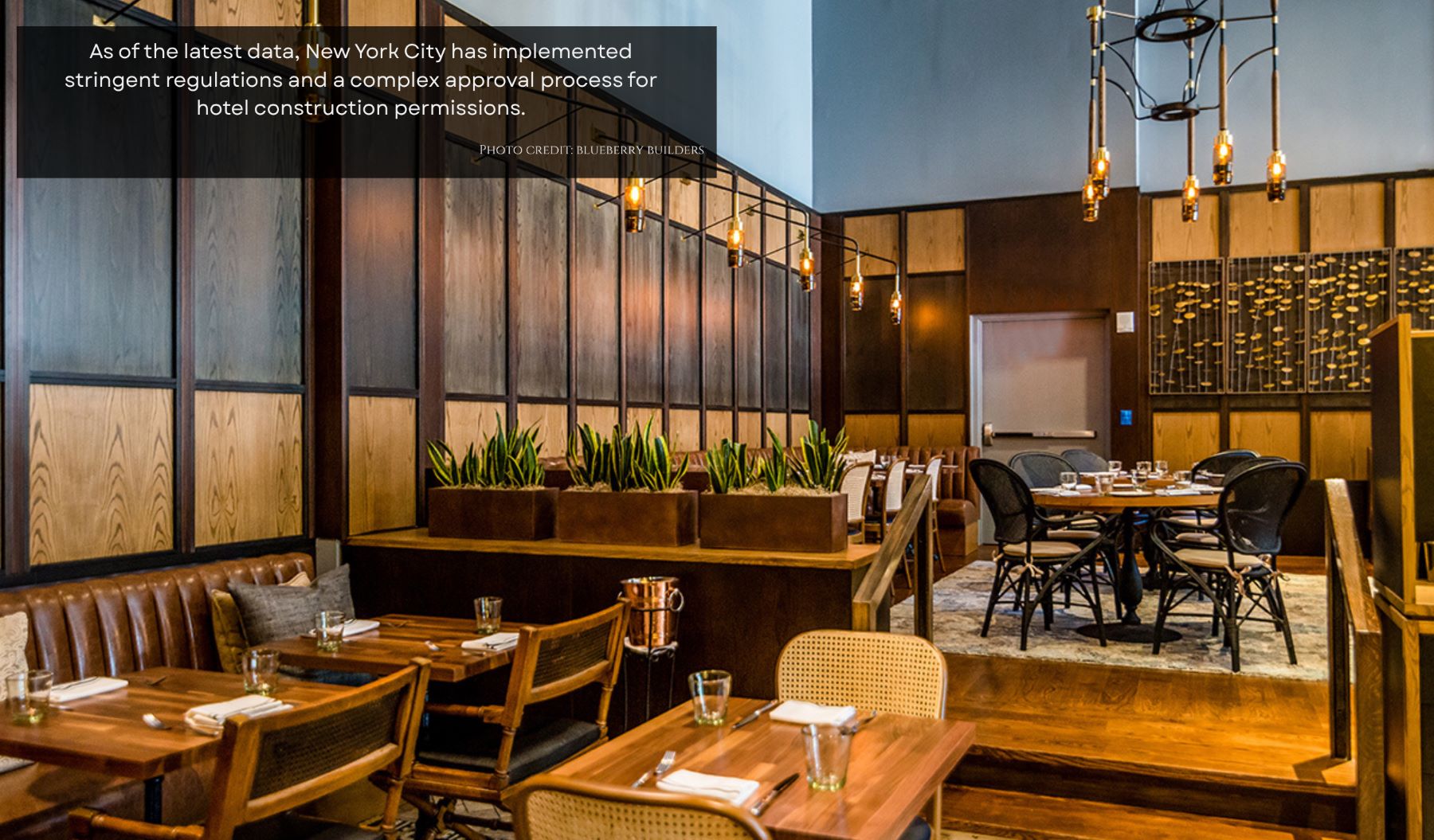
The velvet banquettes, statement lighting, stone bars, and dramatic dining rooms that define the city’s most refined openings are only the visible layer of a much more complex undertaking. What truly sets these spaces apart is the discipline behind them: the ability to navigate approvals, coordinate trades, manage dense urban constraints, and execute every detail to a standard that supports both beauty and performance.
In 2026, when guests expect immersion as much as cuisine, building a luxury restaurant in New York is as much about operational intelligence as aesthetic ambition. That is why luxury restaurant projects require early coordination between:
Architect
Interior designer
MEP engineers
Kitchen consultant
Lighting designer
General contractor
Expeditor or code consultant
Millwork and specialty fabricators
Ownership and operations teams
Without that coordination, the project may still look beautiful in renderings, but it will struggle in execution.
Luxury restaurant projects require early coordination not just because the design must look refined, but because restaurant standards increasingly sit alongside broader expectations across luxury hospitality in Manhattan, where design, comfort, and operational polish are expected to work together.
This is one of the biggest distinctions between a stylish restaurant and a truly high-end one. Luxury spaces are not just designed well. They are resolved well.
In reality, some of the best luxury restaurants in New York are not the loudest. They are the most considered. Their sense of quality comes from proportion, material integrity, craftsmanship, comfort, and flow.
That might mean:
custom banquettes that are elegant and genuinely comfortable
stone surfaces that are dramatic but durable
layered lighting that flatters both food and people
high-quality restroom detailing that feels as intentional as the dining room
entry moments that build anticipation without creating congestion
premium finishes used with restraint instead of overstatement
True luxury is also tactile. Guests may not know the exact millwork species, plaster technique, or stone finish, but they can feel when a room is thoughtfully built. They can sense when a table base does not wobble, when a chair supports a lingering dinner, when a door closes quietly, and when the room maintains intimacy even at full capacity.
Why layout and flow matter more
Some of the most important decisions in a luxury restaurant are nearly invisible to guests.
The width between tables. The path from the host stand to the main dining room. The relationship between the bar and the waiting area. The distance from kitchen pass to key dining zones. The placement of service stations. The separation between guest circulation and staff movement.
These are not small technical details. They shape the entire experience.
A restaurant can have exceptional design and still feel uncomfortable if circulation is awkward or service routes constantly interrupt the guest atmosphere. Likewise, a beautiful room can lose its sense of exclusivity if the entry sequence feels cramped, the hostess area backs up, or diners are repeatedly brushed by staff in high-traffic corridors.
Luxury is often the result of friction being removed.
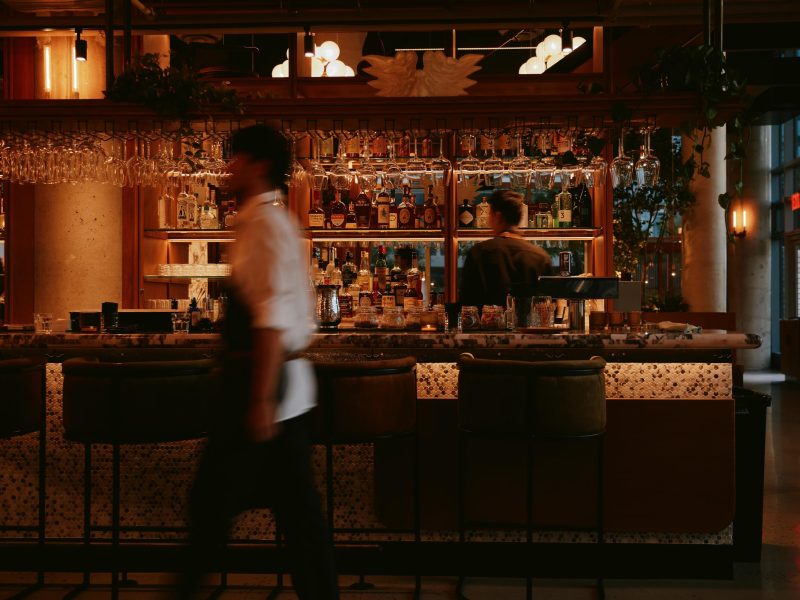
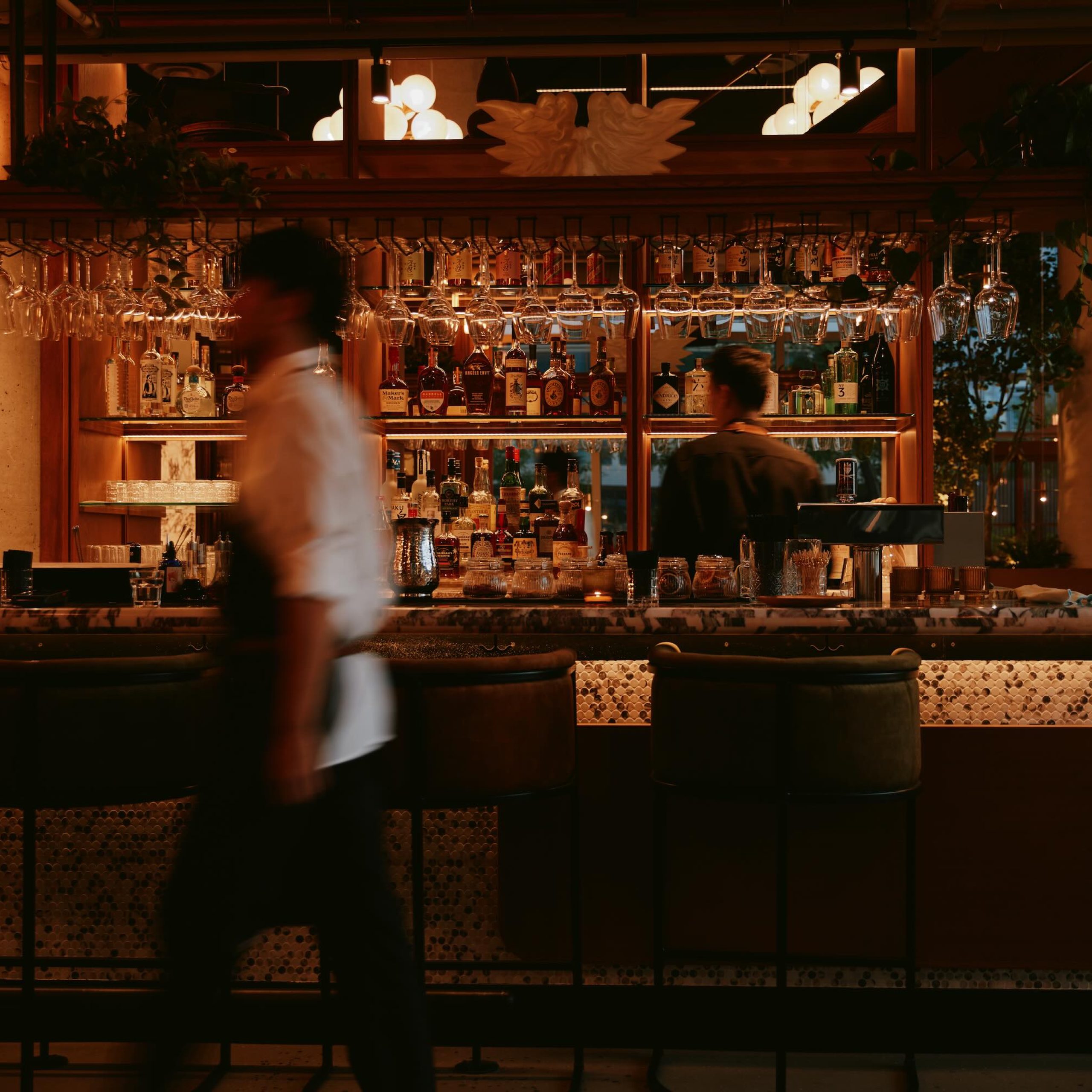
When NYC based Blueberry Builders delivered the Bowery Road restaurant and Library of Distilled Spirits at the Hyatt Union Square, the scope included 10,000 square feet of finished space, precision metalwork, custom millwork, a copper-topped bar designed to patinate naturally over time, and a multi-ton chandelier suspended from a 40-foot ceiling.
The work was completed in five weeks while the hotel remained fully operational above, with no room for disruption, no tolerance for compromised finish quality, and no flexibility in the opening timeline.
And the installation of a multi-ton chandelier suspended from a 40-foot ceiling, delivered in five weeks while the hotel remained fully operational above. The guest experience could not be disrupted. The quality standard could not be compromised. And the timeline was fixed.
This is where the hotel renovation sets its lesson most clearly.
The kitchen is hidden engine
For all the attention given to dining room aesthetics, the kitchen is often where the long-term success of a restaurant is decided.
The kitchen is often where the long-term success of a restaurant is decided. In high-end hospitality, guests may remember the room, but consistency is built behind the scenes, which is why the discipline seen in fine-dining kitchens is just as important as what happens in the dining room.
A luxury restaurant cannot rely on atmosphere alone. It has to deliver consistency. That means the kitchen must be designed for efficiency, safety, and performance at peak service levels.
A high-functioning restaurant kitchen in NYC needs careful planning around:
cooking line layout
prep and plating efficiency
refrigeration placement
dishwashing flow
dry and cold storage
ventilation and exhaust systems
staff circulation
delivery access and receiving logistics
If these systems are poorly coordinated, the consequences show up quickly in guest experience. Service slows down. Food quality becomes inconsistent. Staff fatigue increases. Small operational problems start becoming visible in the dining room.
For upscale hospitality, that is where the illusion breaks.
The guest may come for design, ambiance, or prestige, but they return for execution. That execution begins behind the scenes.
Acoustics are one of the most overlooked features
One of the most common failures in restaurant design is poor sound control.
A room can look stunning and still become unpleasant by evening if acoustics were treated as an afterthought. In New York, where restaurant energy is often part of the appeal, the goal is not silence. It is a controlled atmosphere.
Luxury restaurants need to consider:
ceiling height and sound reflection
softening elements within a hard-material palette
upholstery and drapery strategy
spacing and density of tables
bar noise spillover
kitchen noise transfer
private dining sound separation
A well-designed restaurant allows conversation without strain. It creates buzz without chaos. It feels lively, but never exhausting.
This is one of the clearest markers of whether a hospitality project was built with real sophistication or only surface appeal.
Materials have to be beautiful and durable
Luxury restaurant interiors must do something difficult: they have to feel refined while standing up to heavy daily use.
That is why material selection is not just a design conversation. It is also a maintenance and longevity conversation.
The most successful restaurant projects think carefully about:
stone porosity and stain resistance
wood finish durability
upholstery cleanability
brass and metal aging
slip resistance in guest and service areas
edge detailing on high-contact surfaces
bathroom finish performance under frequent turnover
A finish that looks stunning in a sample board but fails under hospitality conditions can quickly undermine the brand experience. In luxury environments, visible wear is read as a lack of control.
This is why value engineering has to be handled carefully in high-end projects. Cutting costs without understanding guest-facing consequences can damage the very qualities the restaurant is trying to project.
Permits, code, and compliance shape the build
In New York City, even the most aesthetically ambitious restaurant must work within a serious code and approval environment.
That includes building compliance, fire safety, kitchen exhaust systems, health requirements, accessibility, and occupancy-related issues. Depending on the venue, approvals and technical requirements can materially affect layout, schedule, and cost.
For restaurant owners, one of the smartest early moves is bringing in professionals who understand NYC restaurant construction, not just general interiors. Hospitality projects involve specialized systems and approvals, and mistakes made during planning often become expensive during construction.
This is especially important in luxury projects, where custom details and complex infrastructure tend to leave less room for improvisation later.
What owners often underestimate
Developers and first-time restaurateurs often focus heavily on concept, branding, and aesthetics, which is understandable. Those are the visible parts of the dream.
But there are several areas that tend to be underestimated in luxury restaurant build-outs:
The cost of coordination: Premium spaces involve more specialists, more custom fabrication, and more decision-making across trades.
Lead times for custom elements: Stone, specialty lighting, millwork, metalwork, furniture, and imported finishes can all affect schedule.
The importance of mockups and samples: In luxury settings, small finish decisions have outsized visual impact.
Operational input during design: A dining room that looks beautiful but frustrates service will not age well.
Wear over time: Luxury is not just an opening-night look. It is the ability of the space to remain polished through real use.
These are the areas where experienced hospitality contractors and restaurant build teams provide real value. They help preserve the concept while keeping the project grounded in constructability.
The best luxury restaurants feel effortless
There is a reason the most refined hospitality spaces feel calm, confident, and seamless. It is rare because the process was easy.
It is because the right team anticipated problems early, coordinated details carefully, and understood that the guest experience is built long before the first reservation is booked.
A luxury restaurant is a fully coordinated environment where design, operations, construction, and service all support the same standard.
That standard is what guests remember.
They may not notice the ceiling coordination, code strategy, ventilation planning, service station placement, or subfloor preparation. But they will notice how the room feels. They will notice whether the space invites them to stay. They will notice whether the energy remains composed even when the restaurant is full.
And in the end, that is what luxury hospitality is: not excess, but control. Not decoration, but intention. Not just beauty, but performance.
What transfers from hospitality to every other category of high-end commercial renovation
The hotel is the most visible testing ground for commercial renovation standards because its results face immediate and continuous public review. But the principles it embodies transfer without modification to every category of high-end commercial space.
A boutique wellness studio commissioning its first major fit-out faces the same fundamental challenge as a hotel operator renovating a restaurant: a brand standard that cannot be approximated, a timeline with commercial consequences, and a contractor brief that requires design fluency alongside technical execution.
The stakes may be expressed differently. The regulatory requirements will differ by category. But the operational infrastructure required to deliver the work, the pre-construction rigor, the subcontractor network, and the project management discipline are identical.
The lesson New York’s best hotels offer is not that commercial renovation requires an extraordinary contractor. It is what high-end renovation always has.
The hotel makes that requirement legible, because the results are seen by everyone and the standard is enforced by brand guidelines that permit no renegotiation. Other categories of commercial renovation benefit from the same standards.
They simply have fewer built-in mechanisms for enforcing them.
Which is why choosing the right contractor remains, as it always has been, the single most consequential decision in the process.
Stay ahead of the curve. Join our free newsletter for insider updates on fashion, travel, and lifestyle, along with special offers reserved just for our readers.
Sign up to our free newsletter and be the first to know about the latest fashion, travel and lifestyle happenings, as well as exclusive reader events and offers
Stay ahead of the curve. Join our free newsletter for insider updates on fashion, travel, and lifestyle, along with special offers reserved just for our readers.