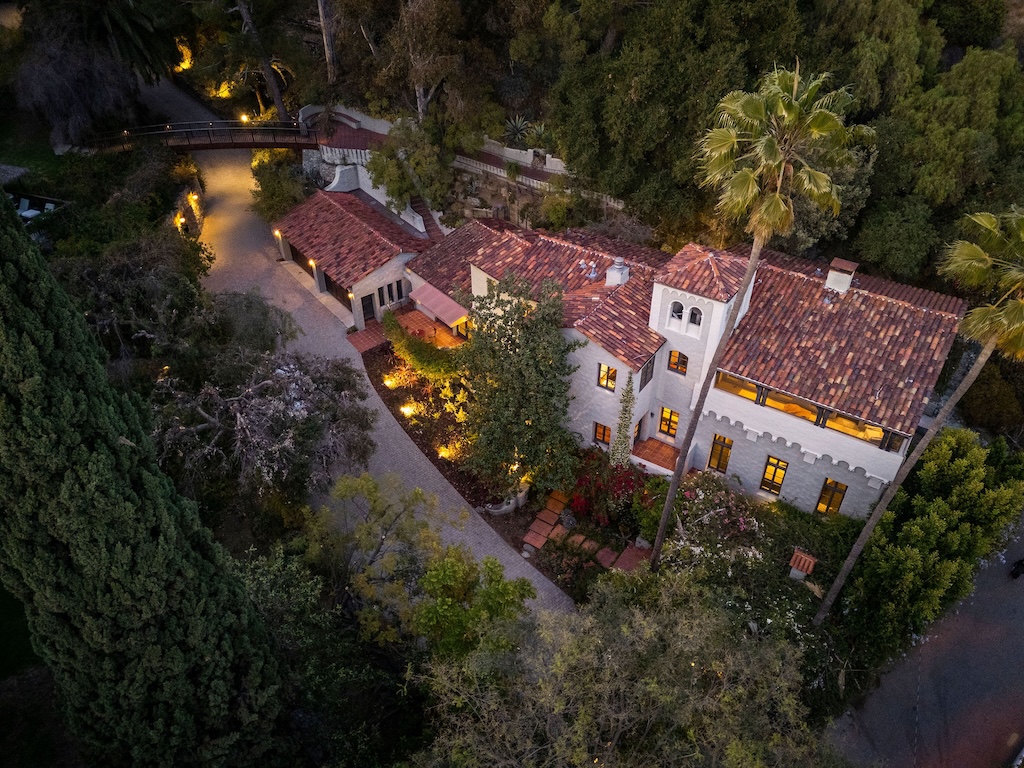
Los Angeles has no shortage of historic homes. What it almost never has is this — a compound where the history isn’t decorative, it’s structural. Where the architect who shaped the interiors also shaped the city. Where the creative figures who passed through weren’t just residents but participants in something larger than a real estate transaction. 1900 N Vista Street, the property known as The Anchor of the Canyon, more than ten acres behind private gates at the base of Runyon Canyon, is not a home that has been preserved. It is a home that has been lived in — deeply, creatively, and by people who understood exactly what they had.
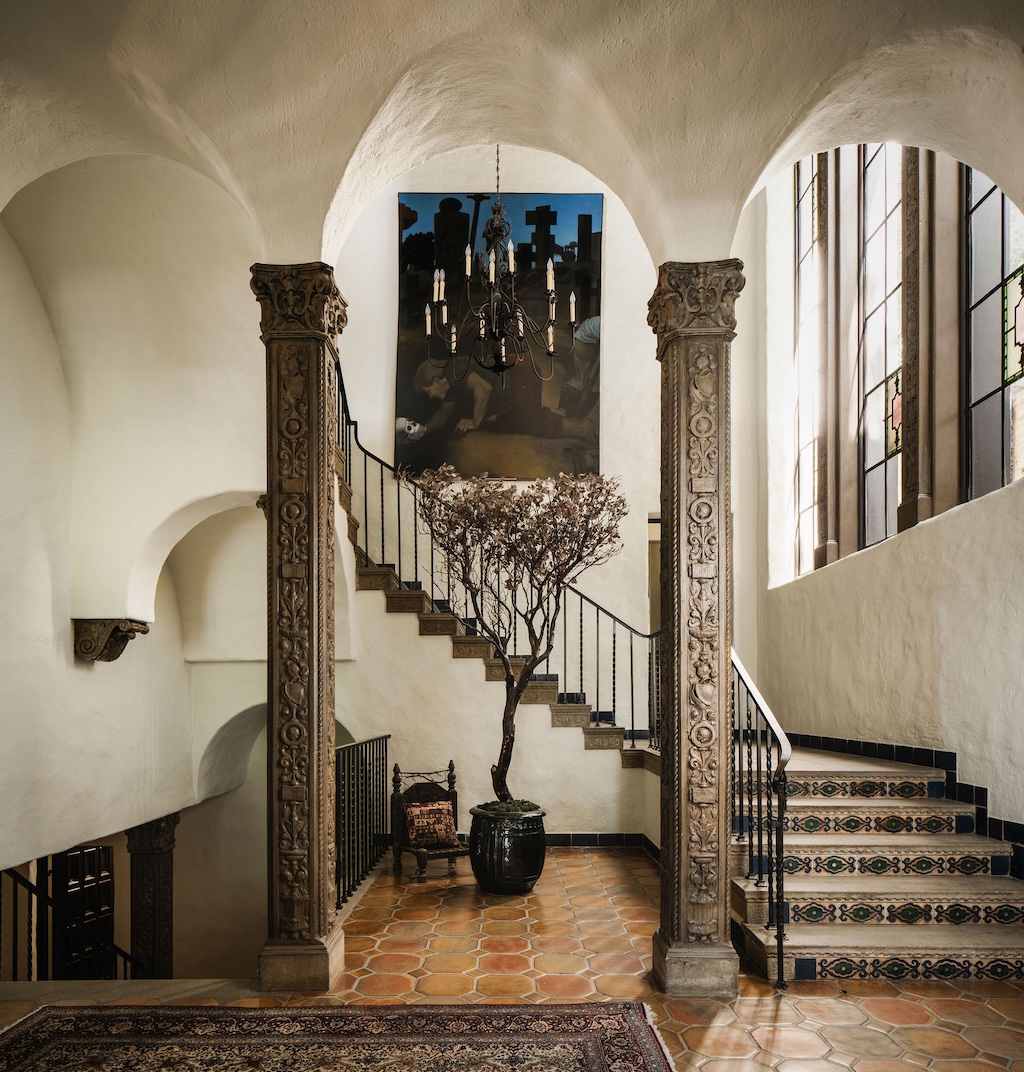
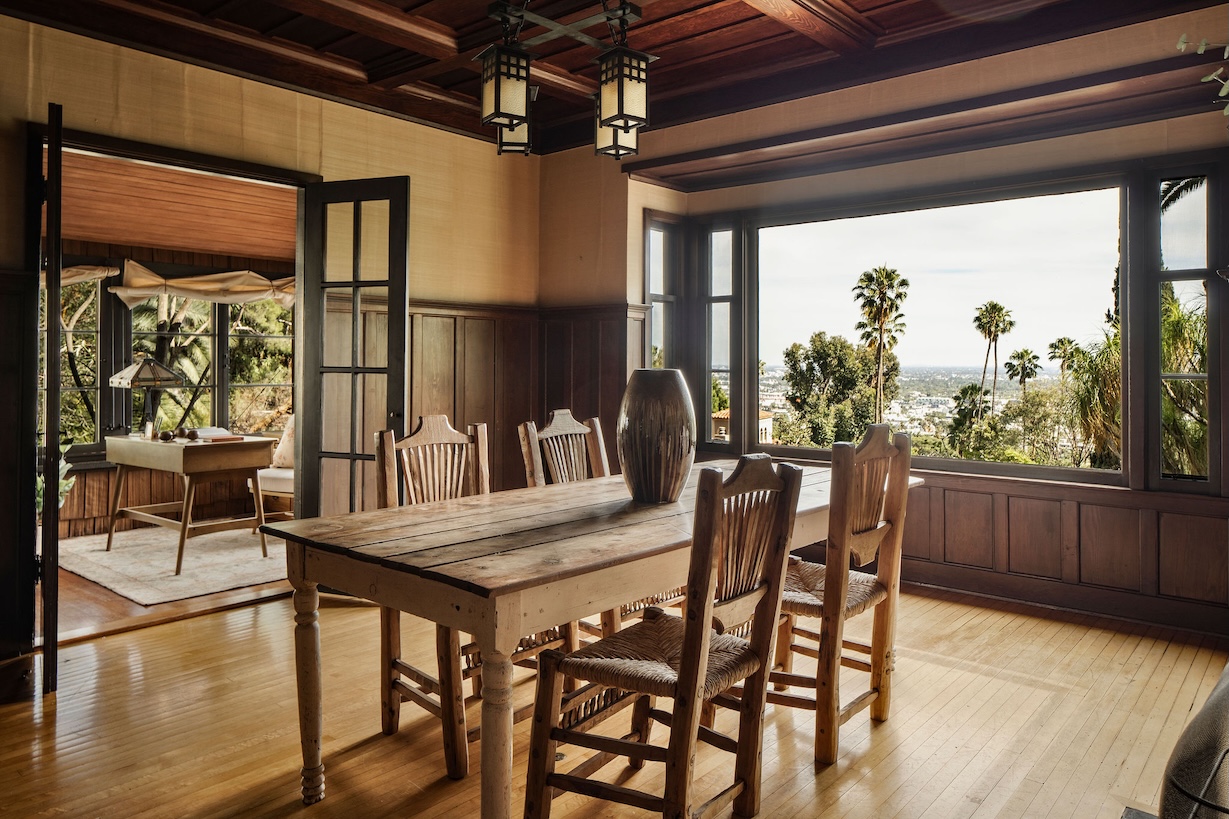
The main residence is a 1924 Spanish Revival estate, and the name Paul R. Williams needs no elaboration for anyone who knows Los Angeles architecture. His influence runs through every grand public space — the rotunda entry, the hand-carved beams, the period tile work — but it is the Music Room that announces itself most powerfully. Designed by Williams to capture sweeping canyon and city views through a mastery of scale and light that feels as intentional today as it did a century ago, it is the kind of room that changes how you think about what a room can be. You don’t admire it. You feel it.
The compound’s creative provenance is as layered as its architecture. Grammy-winning musicians. Oscar-winning writer-directors. Celebrated artists. Each brought their own chapter to a property that has always seemed to attract people who create things — who needed space not just to live but to think, to make, to disappear from the world for a while. That energy doesn’t leave a place. It accumulates. And at The Anchor of the Canyon, it has been accumulating for more than a hundred years.
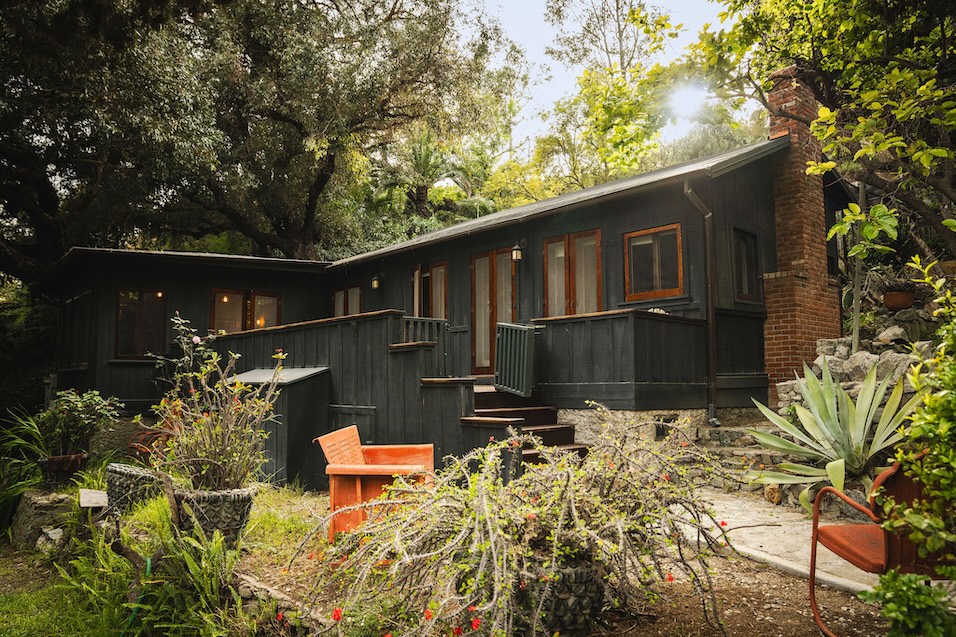
The 1924 estate is only the beginning. A 1909 Craftsman guest house and a circa-1885 two-bedroom writer’s cottage — one of the oldest standing residential structures in the Hollywood Hills — complete a compound that spans more than 150 years of architectural history across three distinct and fully realized structures. Each building has its own character, its own story, and its own sense of place within the larger whole. Together they form something that feels less like a residential property and more like a private village — connected by winding paths, united by a shared atmosphere of creative seclusion.
The landscape that holds all of this together is extraordinary in its own right. Aviaries, greenhouses, and an art studio are threaded through grounds so deeply planted and so carefully tended that the word “garden” feels inadequate. A Brazilian ironwood Viewpoint Bridge serves as both a functional connection between structures and an environmental gesture — a piece of design that belongs to the land as much as the buildings do. Private hiking trails climb to jetliner views of the city below, making it possible to stand above Los Angeles and feel, for a moment, entirely apart from it.
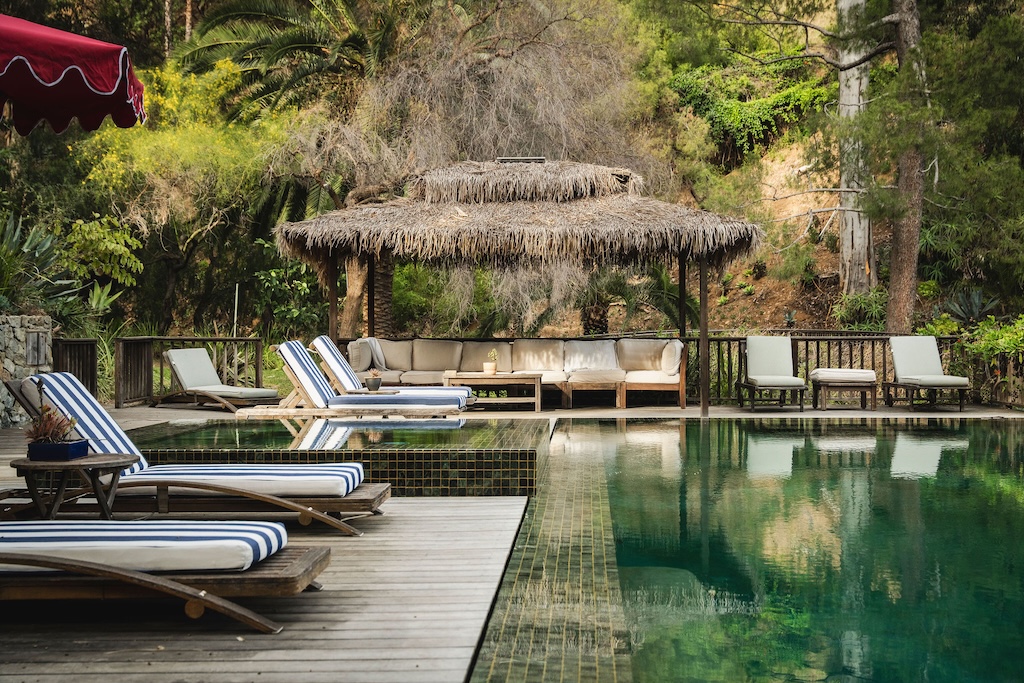
Resort amenities — an infinity pool and spa, a full gym, a stone fireplace pergola — are present but secondary. They exist in service of the experience rather than defining it, which is exactly as it should be on a property where the architecture, the history, and the landscape are doing most of the heavy lifting. This is a compound where the amenities don’t make the case. The ten-plus acres of park-like privacy in the heart of Hollywood make the case.
What makes The Anchor of the Canyon genuinely irreplaceable is the specificity of what it represents. The Paul R. Williams provenance. The 150-plus years of continuous architectural history. The creative lineage of its ownership. The depth of the landscape. The sheer improbability of ten secluded acres at the base of Runyon Canyon, minutes from the city and miles from its noise. These are not features that can be assembled or approximated. They exist here, together, because of a century of accumulated decisions made by people who cared about this place.
Opportunities like this don’t follow a market cycle. They don’t respond to interest rates or inventory trends or quarterly reports. They surface, quietly and without announcement, for buyers who have the vision to recognize what they are looking at — and the understanding that some things, once gone, do not come back. The Anchor of the Canyon is one of those things.
Listed at $21,000,000 by Zach Goldsmith of The Agency.