
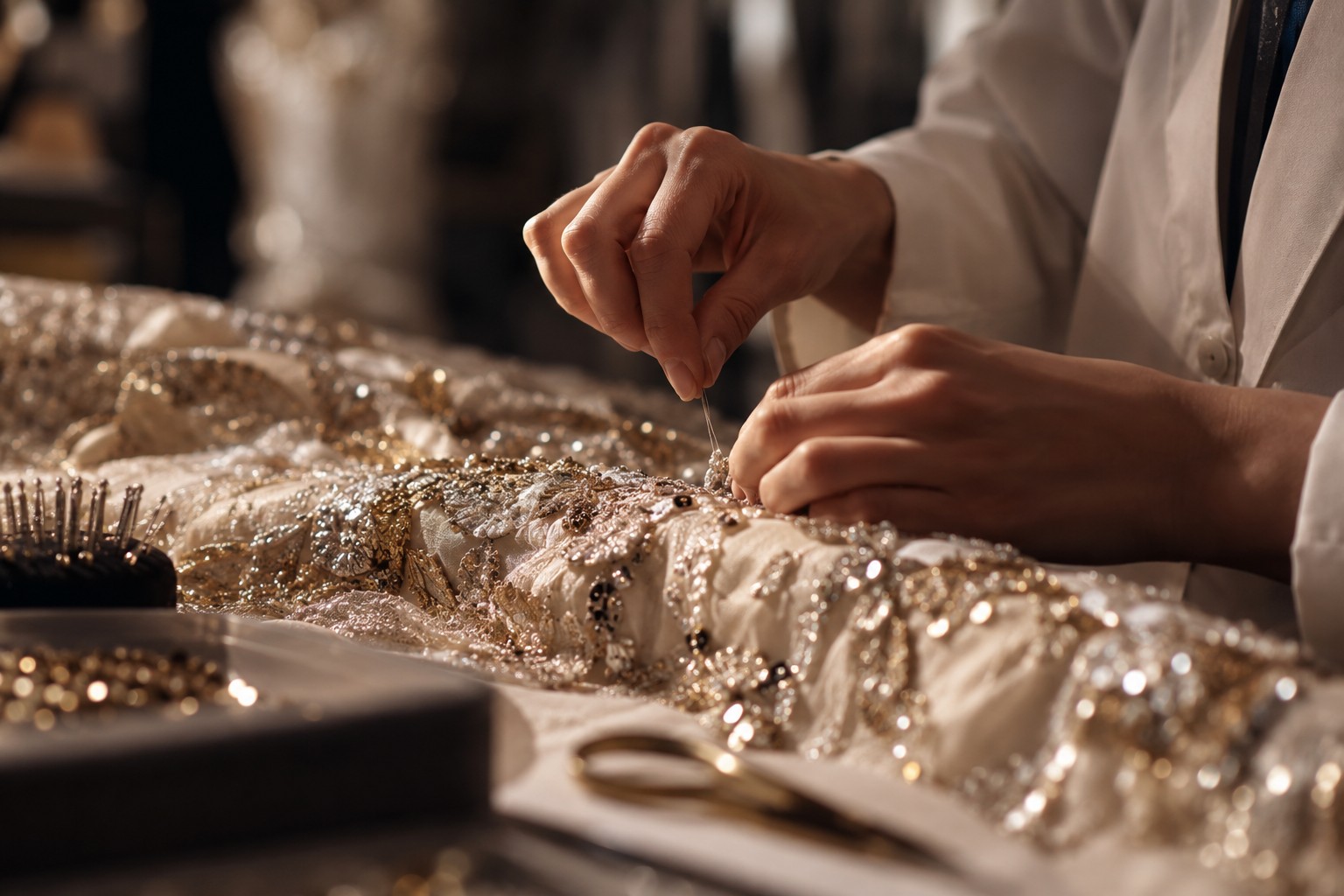
On 8 October, the global luxury community will celebrate World Luxury Day, an initiative established by the World Luxury Chamber of Commerce to recognise the people behind luxury and the excellence, craftsmanship, innovation and sustainability that define the industry.
Craftsmanship is central to that celebration. Yet the skills behind exceptional creations cannot be preserved by heritage alone. They depend on artisans passing their knowledge to new generations and on companies investing in the future of their métiers. From Chanel and Hermès to LVMH, Cartier and Rolls-Royce, some of the world’s leading luxury houses have developed dedicated programmes to ensure that exceptional savoir-faire continues.
Chanel: A Home for the Métiers d’Art
Since 2002, Chanel’s Métiers d’art collections have celebrated the specialist artisans who contribute to the house’s creations throughout the year.
Today, 11 Maisons d’art reside at le19M, the creative and transmission hub initiated by Chanel in Paris in 2021. They include Lesage, Massaro, Goossens, Lemarié, Atelier Montex and Maison Michel, bringing together expertise spanning embroidery, shoemaking, millinery, featherwork and goldsmithing.
Hermès: Training Leather Artisans from Within
In 2021, Hermès opened the École Hermès des savoir-faire, accredited by the French Ministry of Education and offering training leading to the national CAP qualification in leatherwork.
The school now operates alongside Hermès manufactures across nine regional hubs in France, placing training directly within the house’s production ecosystem and creating a direct route for new generations to learn its leatherworking skills.
LVMH: Savoir-Faire at Scale
Created in 2014, LVMH’s Institut des Métiers d’Excellence offers work-study training across creation, craftsmanship and client experience.
The scale sets it apart. The Institut is now present in six countries and has trained over 3,800 apprentices across 43 métiers. In 2025 alone, almost 500 students joined its 12th graduating class.
Cartier: Preserving Rare Artistic Crafts
In 2014, Cartier established the Maison des Métiers d’Art in La Chaux-de-Fonds, Switzerland, bringing specialist artistic crafts together with the precision of fine watchmaking.
Its work spans three principal areas: the art of fire, including techniques such as cloisonné, champlevé and grisaille enamelling; the art of metalwork, including granulation and filigree; and the art of composition, where materials including wood, straw, gold leaf and even flower petals are used to create watch dials.
At the heart of the Maison is a threefold commitment to preservation, innovation and transmission, ensuring that rare artistic crafts remain part of contemporary watchmaking.
https://www.instagram.com/p/DY-rsDNGj-E/?img_index=1
Rolls-Royce: Craftsmanship on Four Wheels
At Rolls-Royce Motor Cars, craftsmanship extends into leather, wood, paint, embroidery and highly personalised Bespoke work at Goodwood.
Its apprenticeship programme marked 20 years in 2026, with practical training offered in areas including industrial sewing, interior trim, wood, paint and vehicle production. Many former apprentices continue to work at the Home of Rolls-Royce, including in senior positions.
For the 2026 Ghost Savile Row commission, Rolls-Royce created its most demanding single-frame embroidery to date: 250,000 stitches, 1,830 metres of thread and nine hours of production.
Keeping Craftsmanship Alive
Different industries, different materials, but the principle is remarkably similar: craftsmanship survives when knowledge is transferred from one person to another.
That idea sits at the heart of World Luxury Day, celebrated globally on 8 October. The initiative recognises not only exceptional products, but the people, skills and dedication behind them, while celebrating excellence, craftsmanship, innovation and sustainability across the luxury industry.
“Craftsmanship is one of luxury’s greatest assets, but it cannot be taken for granted. What these initiatives demonstrate is that preserving savoir-faire requires continuous investment in people. When experienced artisans pass their knowledge to a new generation, they are not simply protecting the past. They are giving that knowledge a future,” says Alexander Chetchikov, President of the World Luxury Chamber of Commerce.
As technology continues to transform luxury, these programmes offer an important reminder: techniques can be documented and archives preserved, but craftsmanship remains alive only when there are people who know how to practise it.
Discover more about World Luxury Day 2026 at worldluxuryday.com.