Soft flame or torch, fixed flame or telescopic arm: how to choose for the setting, fuel and reach you need.
A cigar and a pipe ask different things about a lighter. A cigar has an exposed foot that needs even heating; pipe tobacco sits inside a bowl, where the angle of approach matters as much as the flame.
Start with two decisions: which flame suits your surroundings, and which design lets you position it comfortably. A soft flame and a torch describe different ways of producing flame. A telescopic arm changes its position. The distinctions matter because extra reach does not automatically mean more heat or better wind resistance.
The options at a glance
| Design | Useful for | Main benefit | Consideration |
|---|---|---|---|
| Soft flame | Cigars in calm air; pipes with a suitable angle | Visible flame without a concentrated jet | Wind sensitivity varies by design |
| Butane torch | Outdoor cigar lighting | Focused jet; usually more wind resistant | Needs distance and movement; avoid for pipes |
| Telescopic soft flame | Pipe lighting where reach matters | Raises the flame away from the body | Extra reach does not add wind resistance |
The telescopic option in the table is a soft-flame lighter with an extendable arm, not a separate flame category.
Soft flame for calm conditions
A soft-flame lighter produces a flame without the concentrated jet of a torch. It can be fueled by butane or by liquid lighter fluid feeding a wick. In still air, its visible shape can make it comfortable to position near a cigar foot or pipe bowl.
That does not make it incapable of scorching tobacco or marking a pipe rim. Distance and movement still matter. It is a useful choice for someone who prefers an unhurried light and usually smokes in sheltered surroundings.
Torch for outdoor cigar lighting
A butane torch produces a concentrated jet. It is generally more resistant to wind than an unshielded soft flame, making it practical for cigars outdoors. Performance varies by model and conditions; “wind resistant” should not be read as a guarantee in any weather.
The concentrated flame needs careful placement. Keep it away from the wrapper and move it around the foot rather than holding it on one point. More jets may cover a wider area, but they are not automatically the better choice.
Fuel matters as well as flame
For cigars, fuel choice deserves its own consideration. Cigar Aficionado notes that concern about flavor from liquid lighter fluid is one reason many smokers prefer butane. A butane soft-flame lighter offers that fuel choice without requiring a torch.
A wick-based fluid lighter may appeal for its mechanical character, but it involves refilling, flint replacement and wick care. Consider those requirements alongside the flame type.
Lighting a cigar evenly
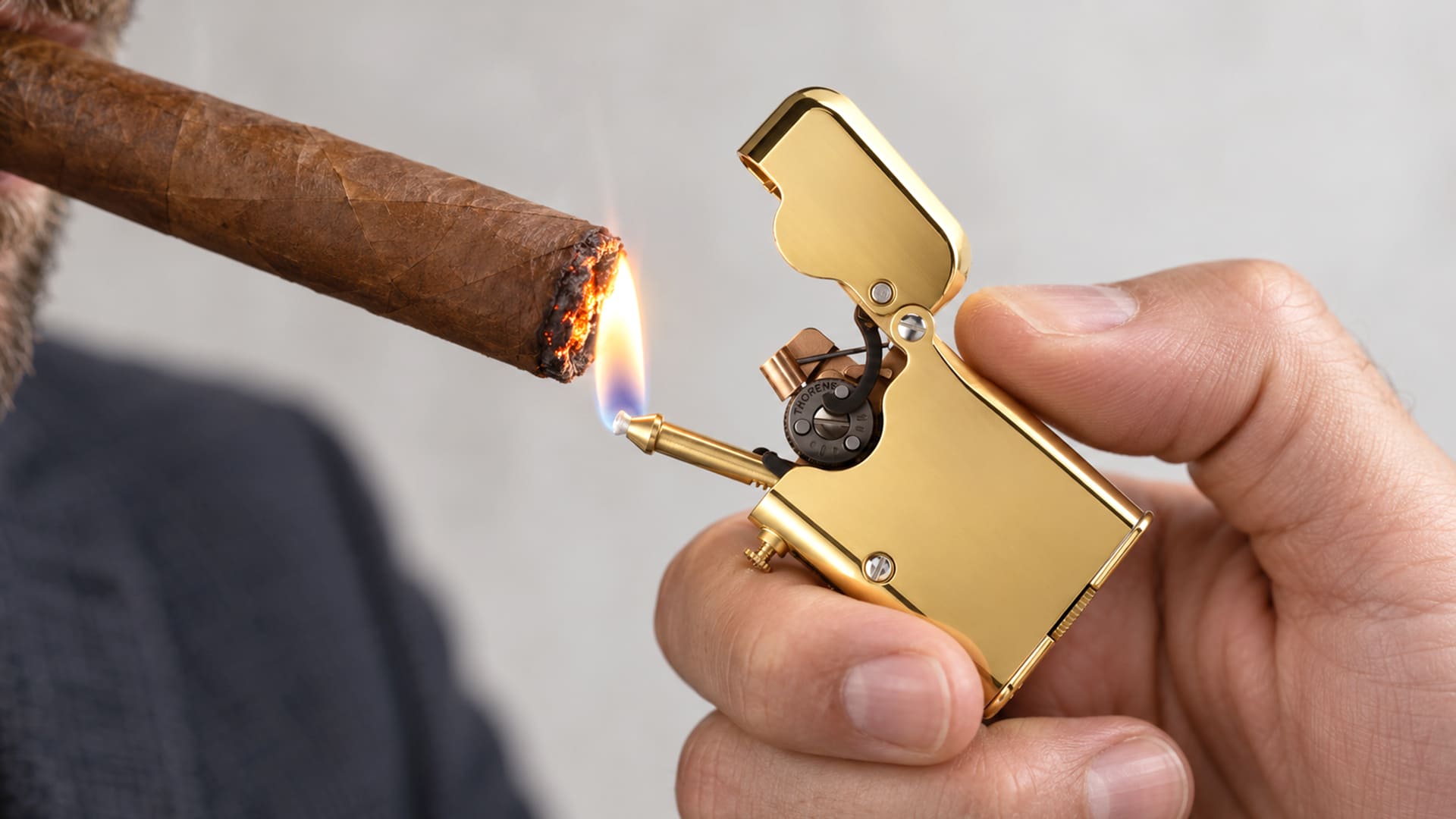
The aim is to heat the foot evenly without putting the cigar directly into the flame. Rotate it as you toast the perimeter, then puff gently to complete the light. Give any unlit area further attention rather than heating the entire foot again.
A soft flame works well in calm air; a torch can make the same task easier outdoors. With either, adjust the distance to the flame you are using. There is no single distance that suits every lighter, and a larger flame is not a substitute for an even light.
Why pipes need a different approach
Pipe tobacco sits below the rim, so look for a design that gives you a comfortable angle without bringing the flame against the bowl’s edge. A side-directed soft flame or an extendable arm may make that approach easier.
Pipe maker Savinelli recommends a soft, steady flame and advises against jet flames, which can overheat the tobacco. Move the flame across the surface while drawing gently, keeping heat away from the rim. A brief first light, light tamp and relight is a common approach; the lighter should make those small movements easy.
What a telescopic arm changes
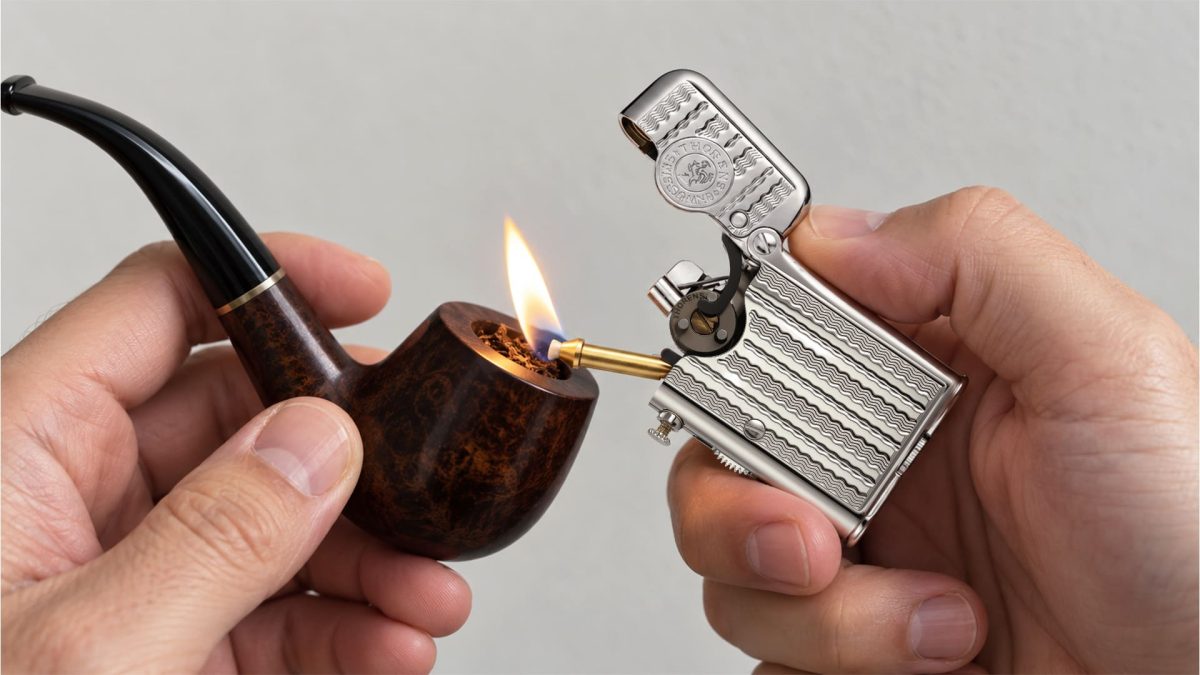
A telescopic arm raises the flame position away from the lighter body. Its value is extra reach: you may be able to approach the bowl with less awkward hand positioning. It does not turn a soft flame into a torch or establish wind resistance.
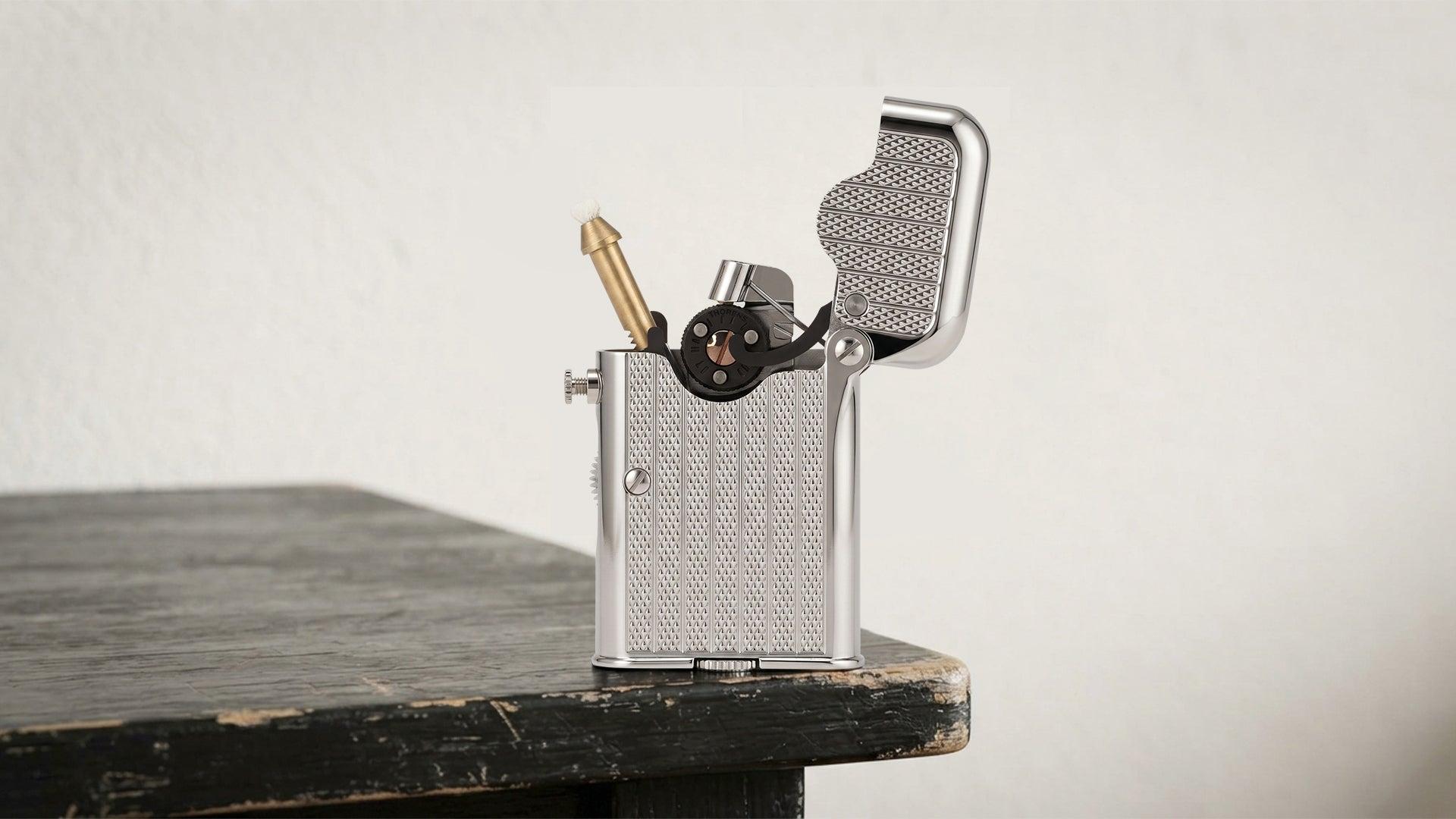
THORENS TELEFLAM as an example
THORENS TELEFLAM combines Single Claw automatic ignition with a telescopic arm. Opening the lid drives the flint wheel to ignite a wick-based soft flame. Operating the side control raises the arm approximately 2.5 cm, or one inch, according to the product specification.
The raised position can help with the approach to a pipe bowl while keeping the lighter body farther from it. It also gives buyers who enjoy mechanical design a visible, functional moving part.
TELEFLAM uses liquid lighter fluid, flints and a wick. It is an option for readers who want that combination of mechanical action and reach, rather than a butane torch. Check the TELEFLAM collection for individual model details, and follow the supplied instructions for fuel, arm operation and care.
Choosing for your routine
For cigars in calm surroundings, consider a soft flame and decide whether you prefer butane or a wick-based fluid system. For outdoor cigar use, a wind-resistant butane torch is often more practical. For pipes, prioritize a soft flame and an approach angle that keeps heat away from the rim.
If reach is the difficulty, a telescopic arm is worth considering. If wind is the difficulty, extending the arm alone will not solve it. The most useful lighter is the one whose flame, fuel and controls fit the way you actually use it.
Questions before buying
Does a soft flame mean the lighter uses liquid fuel?
No. Soft-flame lighters can use butane or liquid lighter fluid. Check the model’s refill instructions.
Will an extendable arm make a soft flame windproof?
Not by itself. Reach and wind resistance are different features; check the specific model’s wind-protection design.
What should I check when buying online?
Look for the fuel type, dimensions, weight and a demonstration of the flame and controls. For an extendable design, check how the arm operates and what maintenance the maker recommends.