Good hunting apparel has a job that goes well beyond camouflage. It needs to keep you comfortable when the temperature drops, stay quiet when you move, and handle the changing conditions that come with spending hours outdoors.
That does not mean choosing the heaviest jacket or putting on as many layers as possible. The better approach is to think about hunting clothing the same way you might approach any well-designed outdoor wardrobe: every piece should have a purpose, and the whole outfit should work together.
For men who spend serious time outdoors, here are the details worth considering when building a hunting wardrobe.
Start With How You Hunt
The right clothing depends heavily on the type of hunt.
A hunter sitting quietly in a tree stand has different needs from someone walking through thick woods. Likewise, early-season hunting calls for a very different approach from a cold November morning.
Before buying anything, consider how much movement your typical hunt involves, how long you stay outside, and what the weather usually looks like.
This simple assessment can prevent a common mistake: buying highly insulated clothing for conditions where mobility and breathability actually matter more.
Make Quietness Part of the Equation
Noise is easy to overlook when trying on hunting clothing at home.
A jacket can feel warm and comfortable, but if the fabric makes a noticeable sound every time you raise your arm, adjust your position, or reach into a pocket, it may become a distraction once you are in the field.
That is why a quiet hunting jacket can be a useful part of a serious outdoor wardrobe. Soft, low-noise fabrics can make ordinary movements less noticeable, which becomes particularly valuable during long periods of stillness.
It is also worth paying attention to smaller details such as pocket closures, zippers and snaps. A quiet outer layer is only helpful if the rest of the garment does not create unnecessary noise.
Build Around Layers, Not One Heavy Coat
Layering gives you more control than relying on one thick piece of clothing.
A lightweight base layer can manage moisture next to the skin. A middle layer adds insulation when temperatures fall. The outer layer then handles wind, light rain and other weather conditions.
This approach is especially useful during transitional seasons when temperatures can change considerably between sunrise and afternoon.
It also makes movement easier. Instead of wearing an extremely heavy coat from the moment you leave home, you can adjust your clothing as conditions change.
Pay Attention to Fabric
Fabric influences almost everything about a hunting garment, including warmth, sound, breathability and weather resistance.
For colder conditions, insulated materials can help retain body heat during long periods of limited movement. For milder weather, lighter and more breathable fabrics may be the better choice.
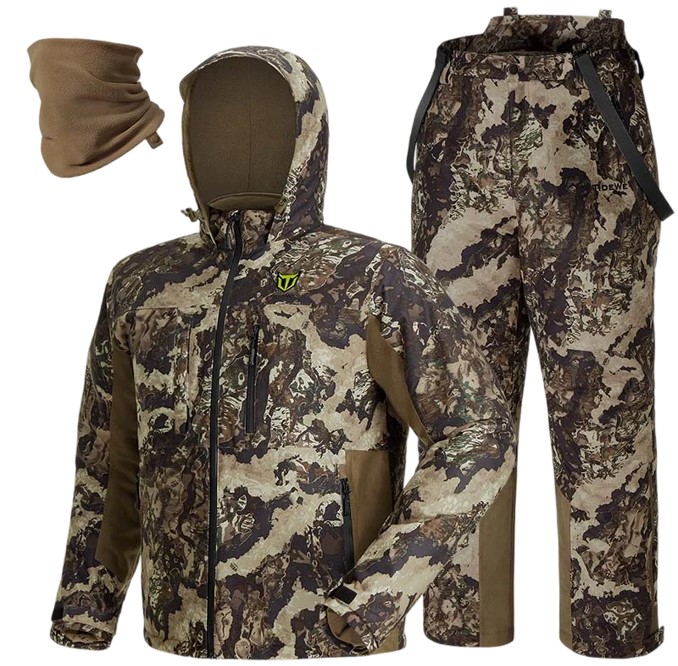
Some modern hunting apparel also combines soft brushed materials with weather-resistant finishes. For example, the TideWe Altus hunting suit uses a brushed mercerized velvet exterior, insulation and a weather-resistant membrane designed for mid-season through mid-to-late-season conditions.
The important point is not the technology itself. It is choosing materials that match the conditions you actually expect to face.
Think About Weather Protection
Cold temperatures are only one part of the outdoor equation.
Wind can make a moderate day feel considerably colder, while wet vegetation and light rain can quickly turn a comfortable outing into an uncomfortable one.
Look for outerwear that offers the level of protection appropriate for your normal hunting environment. Water resistance can be useful for light precipitation, while stronger waterproof protection becomes more important when you regularly hunt in wet conditions.
The best hunting apparel does not have to feel bulky to provide protection. Modern designs increasingly combine weather resistance with lighter construction and practical layering.
Do Not Ignore Fit
Fit is one of the easiest ways to improve both comfort and performance.
A hunting jacket should give you enough room to move your arms naturally without feeling oversized. Pants should allow you to walk, crouch and climb without restricting your movement.
There should also be enough room for the layers you normally wear underneath.
Sizing is particularly important with insulated clothing. A garment that fits perfectly over a T-shirt may become restrictive once you add a base layer and mid-layer.
Check the manufacturer’s measurements rather than relying only on your usual clothing size.
Choose Features That You Will Actually Use
Hunting apparel can come with a long list of features, but more features do not automatically mean better clothing.
Think about what you regularly need while hunting.
Useful details may include:
- Secure pockets for small essentials
- Adjustable cuffs and hems
- A hood that does not block your peripheral vision
- Easy-access pockets
- Quiet closures
- Harness-friendly construction
- Comfortable suspenders or adjustable waist systems
For example, the Altus hunting suit includes fleece-lined hand-warming pockets, adjustable cuffs and hems, an adjustable hood, waterproof YKK zippers and features designed to work with a safety harness.
Those details matter because they solve practical problems rather than simply adding visual complexity.
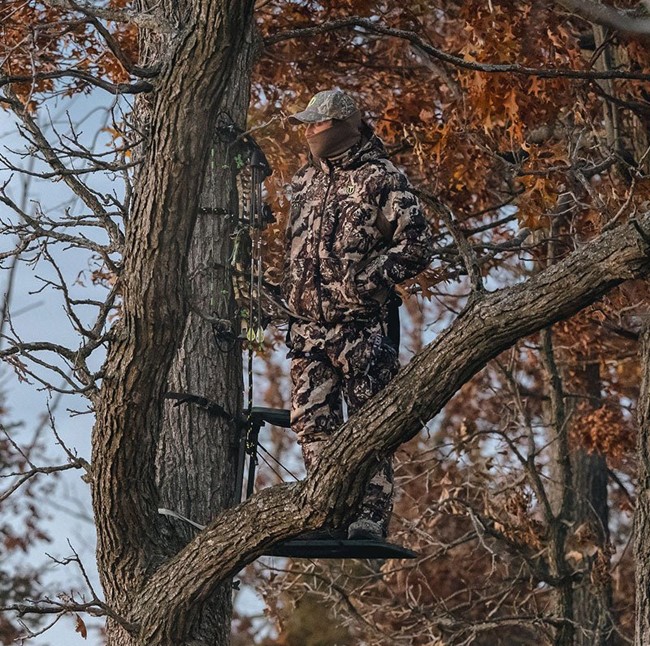
Image source: Tidewe
Keep Camouflage Practical
Camouflage is an important part of hunting clothing, but the best pattern is not necessarily the most complicated one.
Consider the environment where you normally hunt. Woodland, open fields and late-season landscapes can have very different colors and textures.
The goal is to choose something that works with your surroundings without allowing camouflage to become the only consideration.
A well-fitting, quiet and weather-appropriate garment will generally serve you better than an impressive-looking pattern on clothing that does not suit the conditions.
Consider a Complete System
Buying individual pieces one at a time can sometimes create an uneven wardrobe.
One jacket may be designed for cold weather while your pants are better suited to mild conditions. Another top may be comfortable but too noisy for close-range hunting.
This is where complete hunting suits for men can make sense. Matching jacket-and-pant systems are designed around the same conditions and performance goals, making it easier to create a balanced setup. TideWe’s current hunting-suit range includes options for different temperatures and conditions, including water-resistant, wind-resistant, insulated and quiet designs.
That does not mean every hunter needs a full matching suit. It simply gives you another option when you want your clothing system to work together from the start.
Think Beyond the Hunting Season
Good outdoor clothing can have value beyond a single type of hunt.
A well-made insulated jacket may also work for cold-weather hikes, camping trips or other outdoor activities. Comfortable base layers can become part of a winter wardrobe, while weather-resistant outerwear can be useful whenever you are spending extended time outside.
This is another reason to focus on quality, fit and function rather than buying clothing based solely on appearance.
A Practical Hunting Apparel Checklist
Before heading into the field, consider whether your clothing covers these basics:
- Base layer suited to the temperature
- Comfortable insulating layer when needed
- Quiet outer layer
- Weather protection
- Enough freedom of movement
- Secure and accessible pockets
- Appropriate camouflage
- Comfortable footwear
- Gloves suitable for the conditions
- Head and face protection when necessary
The goal is not to own the most complicated hunting wardrobe. It is to have clothing that allows you to concentrate on the experience instead of constantly adjusting what you are wearing.
Final Thoughts
The best hunting apparel often has more in common with well-designed performance clothing than traditional heavy outdoor gear. It should be comfortable, functional and appropriate for the environment without making you think about it every few minutes.
Start with the conditions you actually hunt in. Then consider movement, noise, layering, weather protection and fit. From there, choose the features that genuinely make a difference to your time outdoors.
When clothing performs quietly in the background, you can give your attention to what matters most: the hunt itself.