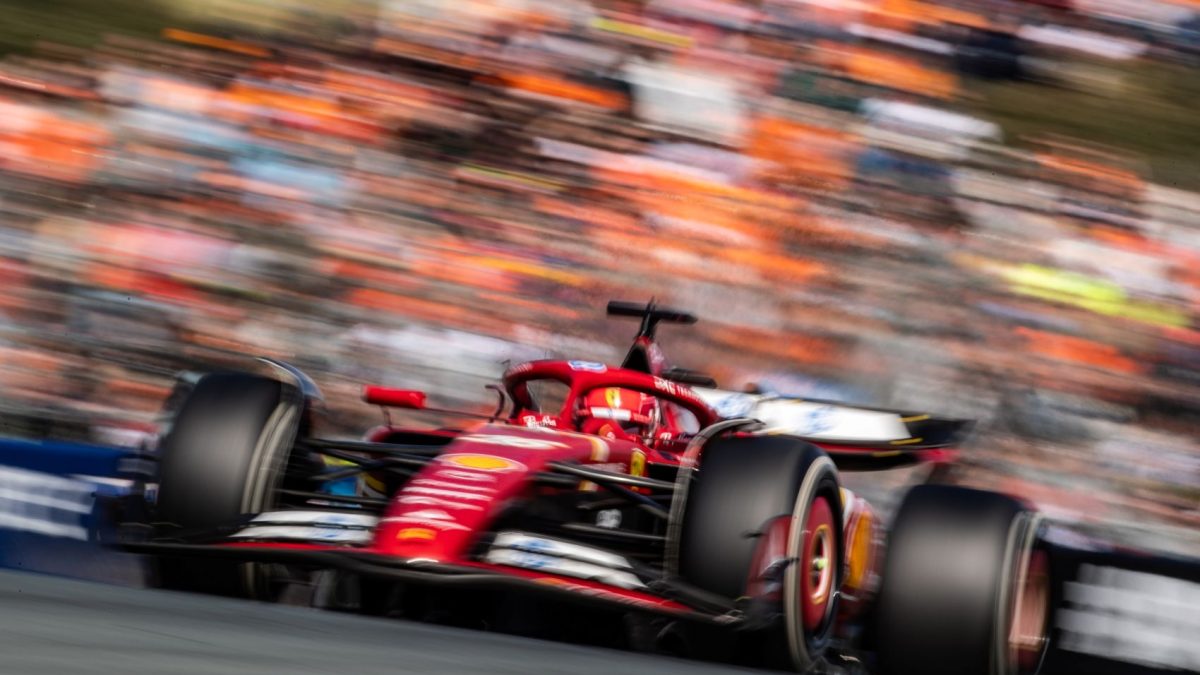
Formula 1 quietly made one of the most significant calendar changes in its modern history, and the implications for luxury travel in Europe this summer are considerable. For the first time, the championship’s European leg runs as a single uninterrupted block, from the Monaco Grand Prix in early June through to Madrid’s debut race in mid-September, with every race in between staying on the continent.
The change was made explicitly for logistical reasons, F1 cited “significant freight efficiencies” from keeping equipment moving between adjacent European venues rather than shipping it across oceans and back. But the side effect is a fourteen-week stretch during which a traveler based in Europe could, in theory, follow the championship from circuit to circuit without ever leaving the continent.
The headline event anchoring the back end of this run is Madrid’s return to Formula 1 after a 45-year absence, and it arrives with the kind of luxury infrastructure buildout that suggests F1 and its partners see this as more than a one-off.
Madrid’s Return Is the Centerpiece
The new Madring circuit, built around the IFEMA exhibition center near Madrid-Barajas Airport, hosts its first race on September 11 to 13. At 5.47 kilometers, it is a hybrid layout combining street sections with purpose-built track and what organizers describe as the longest banked turn on the current F1 calendar. IFEMA holds the contract through 2035, and the race replaces the Emilia-Romagna Grand Prix at Imola, which has been dropped from the calendar entirely.
The hospitality response has been immediate and significant. Lewis Hamilton has partnered with Soho House and F1’s Paddock Club on House 44, a dedicated hospitality suite positioned above the pit lane with views over the main straight, drawing on Hamilton’s decade-long relationship with Soho House and his personal design sensibility.
For accommodation, Madrid’s existing portfolio of ultra-luxury properties, the Four Seasons, the Mandarin Oriental Ritz, and Rosewood Villa Magna among them, puts guests within a twenty to thirty minute commute of the circuit, with Michelin-starred dining and the city’s tapas culture as the backdrop for race week evenings.
What makes Madrid’s debut different from a typical new venue is the scale of demand attached to it. Industry analysts covering the event have noted that an inaugural race on an entirely unproven circuit, with crowd flows that have never been tested, creates a level of uncertainty that makes VIP and hospitality access more valuable than usual, not less. For a luxury traveler, that translates into booking earlier than the typical “wait and see” approach a new circuit might otherwise invite.
The Rest of the European Run
Madrid is the capstone, but the European stretch leading up to it is, on its own, one of the most concentrated runs of prestige sporting events anywhere in the world. The Monaco Grand Prix opens the run on June 5 to 7, an event that has been overseen by three generations of Monaco’s royal family and remains the single most sought-after race on the calendar, with yacht-berth viewing in the harbor as its signature luxury format. F1 also confirmed a six-year contract extension for Monaco through 2031 as part of this broader restructuring, alongside the date shift from its traditional late-May slot to early June, a move F1’s leadership described as making the calendar more sustainable for all stakeholders involved.
Barcelona hosts what is, for now, the final Spanish Grand Prix under its current contract on June 12 to 14, before Madrid takes over as Spain’s primary Grand Prix entirely from 2026 onward, a transition that itself adds a layer of historical interest for anyone attending both. It is a rare situation in which a host city’s final year and a new venue’s debut year fall within the same season, within the same country, three months apart.
From there the calendar moves through Austria, Britain’s Silverstone on July 3 to 5, Belgium’s Spa-Francorchamps, Hungary, and the Netherlands’ Zandvoort on August 21 to 23, which will be the final appearance of the Dutch Grand Prix on the current calendar. Each of these carries its own character and its own luxury ecosystem, from Silverstone’s paddock clubs to the historic atmosphere of Spa, before the run concludes in Madrid in September.
For a traveler with the means and the inclination, this is effectively a European Grand Slam: roughly fourteen weeks, eight races, all reachable by short-haul flights or, for those so inclined, a private jet circuit that never requires a transatlantic or transcontinental leg. It is the kind of itinerary that luxury travel advisors have not been able to offer in this form before, because the calendar itself has never sat this way.
The New Engine Rules Add Another Layer
This calendar restructuring coincides with F1’s most significant technical overhaul in years. The 2026 season introduced revised power unit regulations built around 100 percent sustainable fuels, alongside the arrival of Cadillac as the championship’s eleventh team, the first new constructor entry in over a decade. For long-time followers of the sport, this combination, new technical era, new constructor, and a historic new venue all converging in the same season, gives 2026 a sense of occasion that goes beyond the usual calendar churn. It is the kind of season that gets referenced for years afterward, and attending part of it in person carries a different weight than attending a routine mid-season race in an established slot.
What This Means for Planning a Trip
The practical challenge of a multi-race European circuit is one that luxury travel coverage rarely addresses directly: how do you dress and pack for an itinerary that moves from a Monaco harbor in early June, to British weather at Silverstone in July, to the Dutch coast in August, to Madrid in September, while also covering hospitality suite dress codes that range from resort casual to formal evening events, across several weeks, ideally without checking a bag at every stop.
This is where the appeal of a single, well-built carry-on becomes more than a convenience. A traveler moving between four or five of these events over a compressed European summer is dealing with climate variation that spans Mediterranean heat and North Sea drizzle, dress code variation that spans yacht-deck casual and black-tie hospitality dinners, and a travel cadence, often short-haul flights or transfers booked close together, that makes checked luggage and baggage claim a genuine liability rather than a minor inconvenience. NOBL Travel builds carry-on luggage around exactly this kind of demand: a single bag, built to airline carry-on specifications, with internal compression that allows a full week of varied clothing, casual daywear, a packable layer for cooler venues, and at least one outfit suitable for evening hospitality, to travel as one unit between cities without the delays of checked baggage at every leg.
For travelers planning to attend even two or three of these European races as part of a single trip, this guide to packing a week into a carry-on addresses the specific challenge of fitting both the casual and the formal into one bag without it becoming either an overstuffed mess or a wardrobe so minimal it cannot adapt across venues.
Booking Now Matters More Than Usual
Every signal from the industry points toward early booking being more important for this stretch than for a typical F1 season. Madrid’s inaugural race is drawing demand on the scale of a major one-off event rather than a routine calendar slot, given the 45-year absence of F1 from the Spanish capital and the uncertainty around how an unproven circuit will handle its first race weekend. Monaco, as always, operates on its own scarcity logic, with the most desirable viewing positions, particularly anything connected to the harbor, committed months in advance. And Barcelona’s status as the final Spanish Grand Prix under its current arrangement has added a layer of historical interest to what might otherwise have been treated as a routine stop.
For a luxury traveler weighing whether 2026 is the year to build a trip around this European stretch, the calendar itself has answered part of the question. F1 will not run an uninterrupted European season like this again in the immediate future, the sport’s broader calendar pressures, intercontinental freight logistics chief among them, make this kind of concentration the exception rather than the new normal. Combined with Madrid’s historic return and the most significant technical reset the sport has seen in years, 2026 is shaping up to be the European F1 season that gets talked about for a long time afterward. The only real question for anyone considering it is how many of these eight races to build into a single trip, and how to pack for all of them without checking a bag.