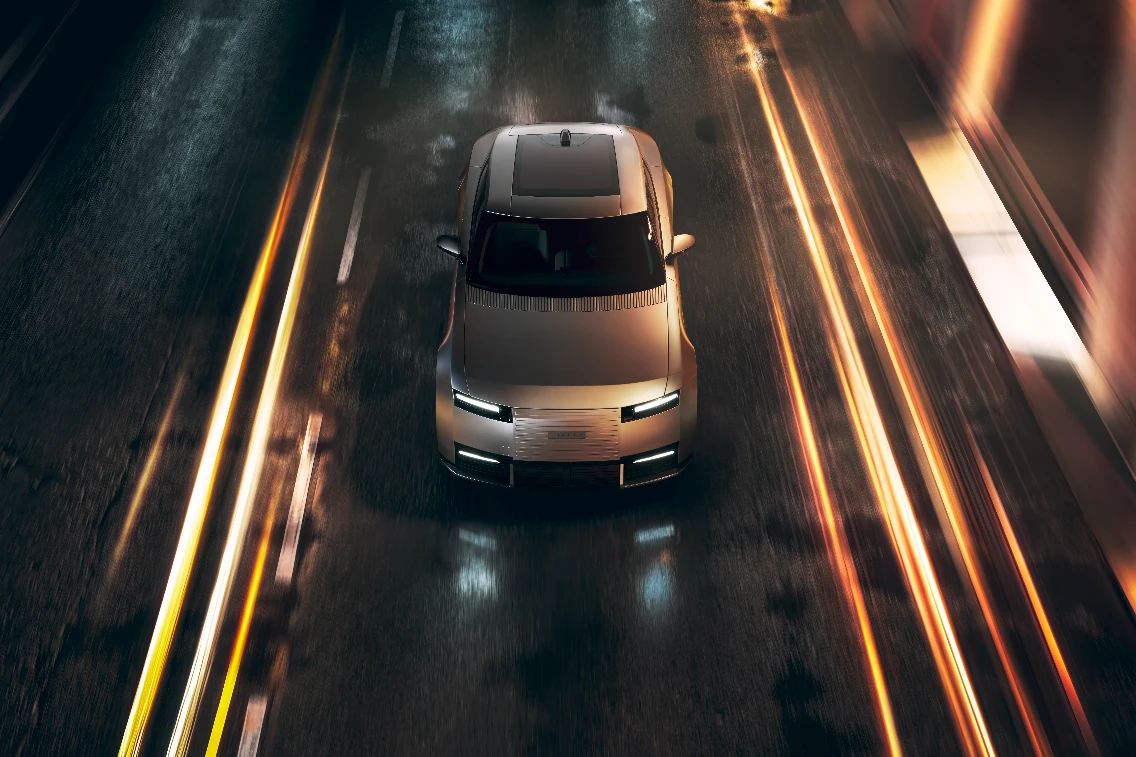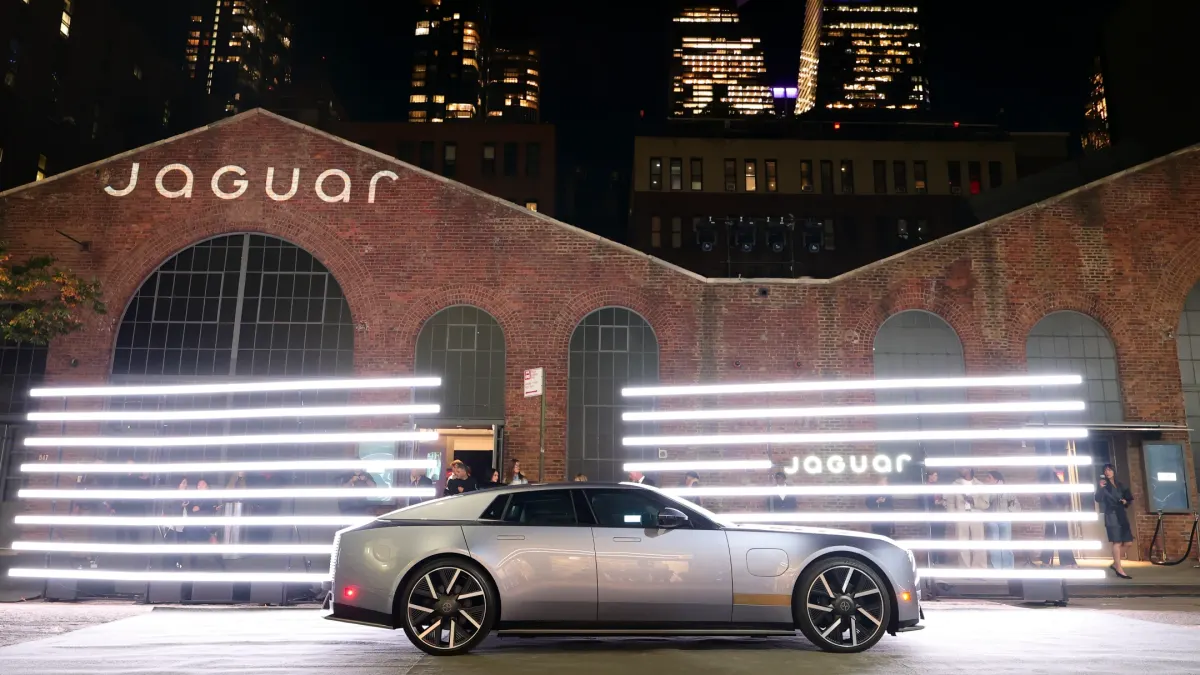
Two years ago, Jaguar unveiled a hot-pink concept car that looked like Barbie’s Batmobile. Huge, theatrical and unlike anything the marque had shown before, the Type 00 instantly became a lightning rod. In New York this week, Jaguar finally revealed the production car behind all that noise at Storied NYC—a suitably evocative setting that was once photographer Annie Leibovitz’s home and studio, and before that, one of the city’s first taxi garages.
The guest list brought plenty of star appeal: Jaguar’s newly named first global ambassador Florence Pugh, New York Knicks star Karl-Anthony Towns, and a performance by British singer-songwriter Sienna Spiro. By then, Type 01 had already lit up screens across Manhattan before heading to Chelsea. For a company intent on becoming culturally relevant again, subtlety was never the brief.
Breaking Convention
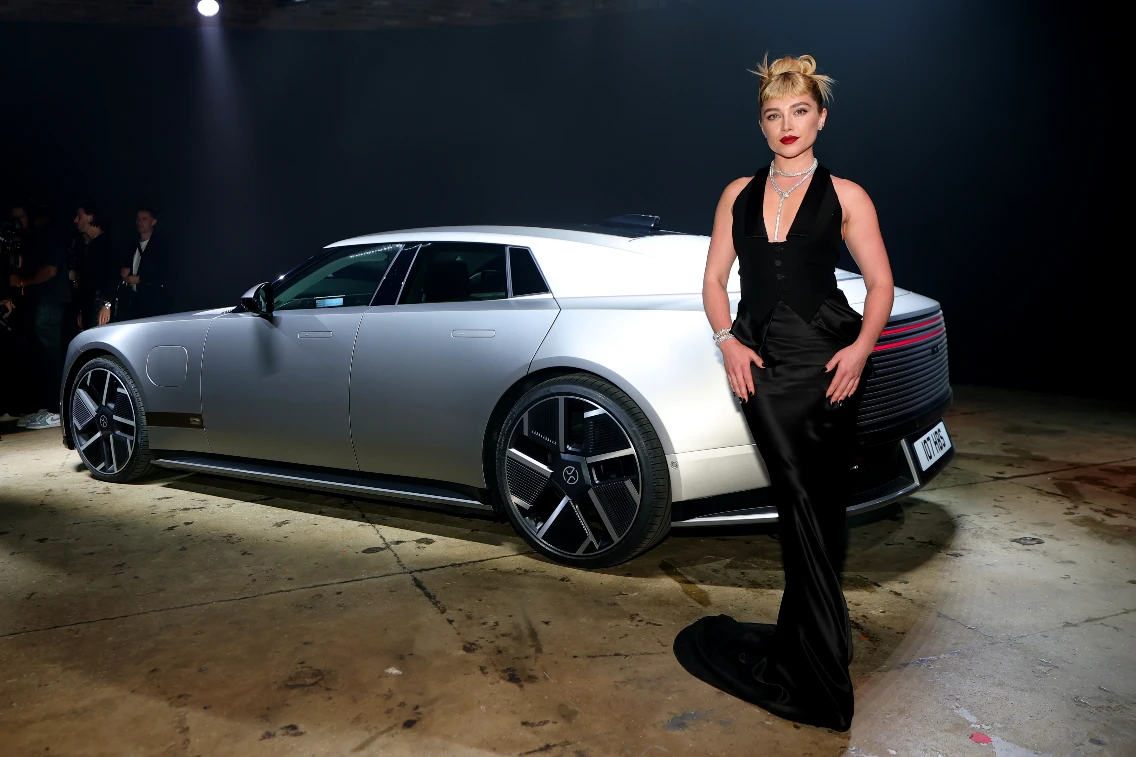
Jaguar began with a single line and built the car around it. From there came the proportions, which exterior design lead Alexey Andreev sees as one of the strongest links to past Jaguars. He says the goal was to recapture that same sense of surprise without simply revisiting old shapes.
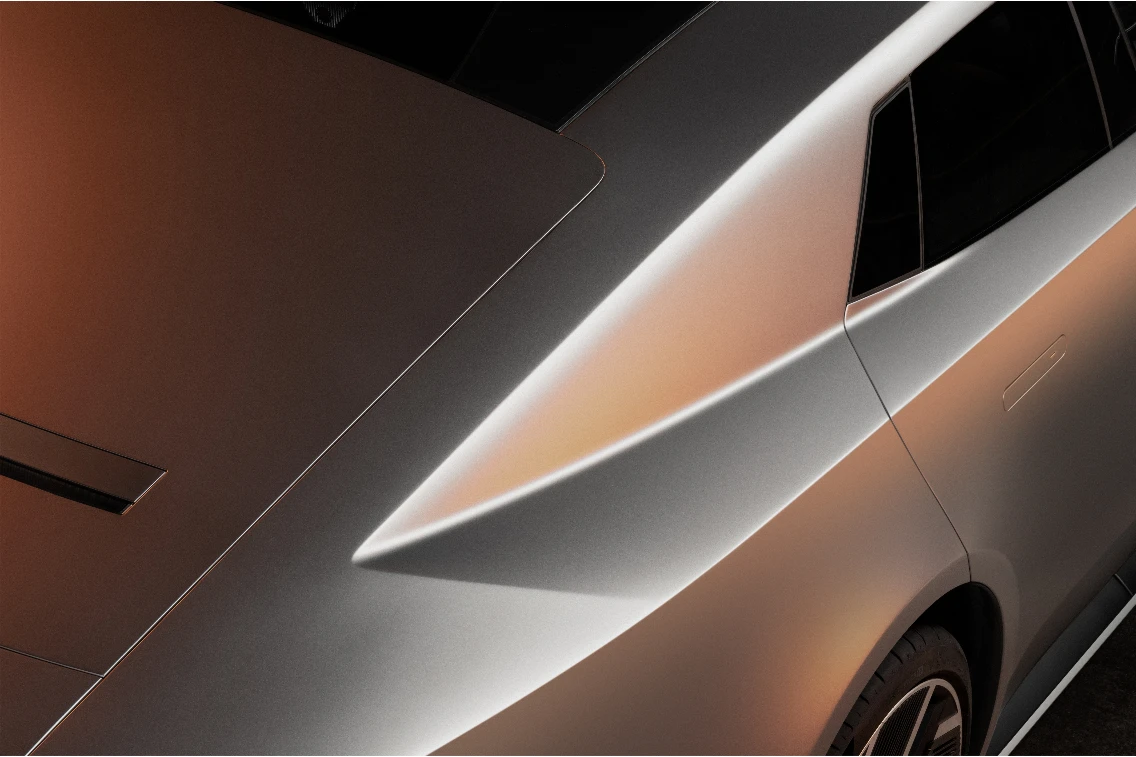
At the rear, there is no conventional window. Cameras handle visibility instead, allowing the body to flow uninterrupted into a solid tailgate framed by horizontal “strikethrough” elements and ultra-thin taillights. Type 01 also retains a classic Jaguar proportion in the long stretch between the front axle and door—what the company calls its “luxury gap,” a proportion also seen on the E-Type. Set into that stretch is one of the car’s few overt nods to heritage: the leaper logo, laser-etched into a brass-effect finisher on the front fender. And then there is the aptly named “Impossible Panel,” a vast piece of aluminum at the rear quarter where several planes converge. Computer modeling said it couldn’t be made as drawn, so Jaguar set about proving it wrong.
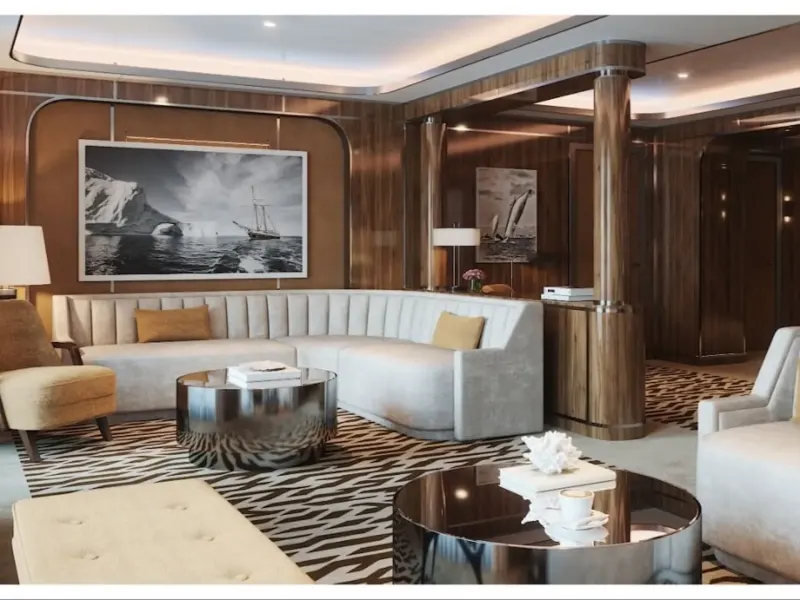
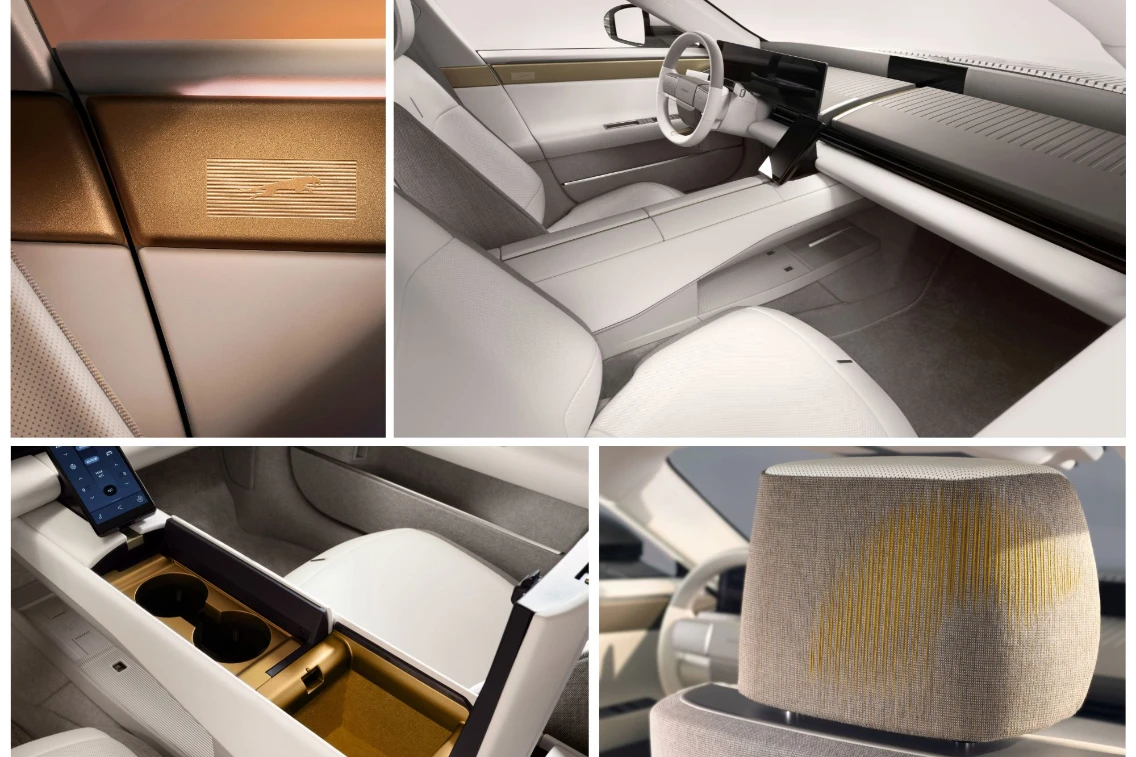
Inside, the focus moves from form to feel. A long central spine divides the cabin into four individual spaces, with brass-inspired metal running front to rear and furniture-like seats wrapped in wool-blend Kvadrat textiles and Ultrafabrics. Chief Materiality Designer Mary Crisp looked beyond the automotive world for inspiration, drawing on fashion, art and craft. “Luxury is not always about more,” she says. That thinking shows up in the details: flashes of color hidden inside storage spaces, tactile textiles, sculptural metalwork and technology designed to recede rather than dominate. London-based jewelry designer Meron Wold contributed brass detailing inspired by the colors the metal takes on when heated, while a perfumer created six bespoke fragrances for the cabin.
Can Jaguar Make a Future Classic?
Jaguar’s managing director Rawdon Glover is blunt about the commercial challenge. In the EV space, being electric is no longer enough. Nearly everything is quick, quiet and technically accomplished. “At this price point, you have to have character, you have to have the soul,” he told me at the launch. Type 01 certainly has power. Jaguar quotes up to 1,015 horsepower, but the more interesting figure is what happens once the car is already moving. From 62 mph, Type 01 can hit 112 mph in just four seconds—an astonishing demonstration of what Jaguar calls “power in reserve.”
Its EV credentials are strong too, with up to 400 miles of range and rapid charging. But Jaguar’s bigger pitch is desirability: fewer cars, higher prices and more personalization. Pricing starts at $130,500 in the U.S., putting the brand in a very different part of the market although Glover is equally clear that Jaguar doesn’t intend to simply slot in beneath Bentley or Rolls-Royce. When I asked what he considered the competitive set, he answered: “You try and create your own space.”
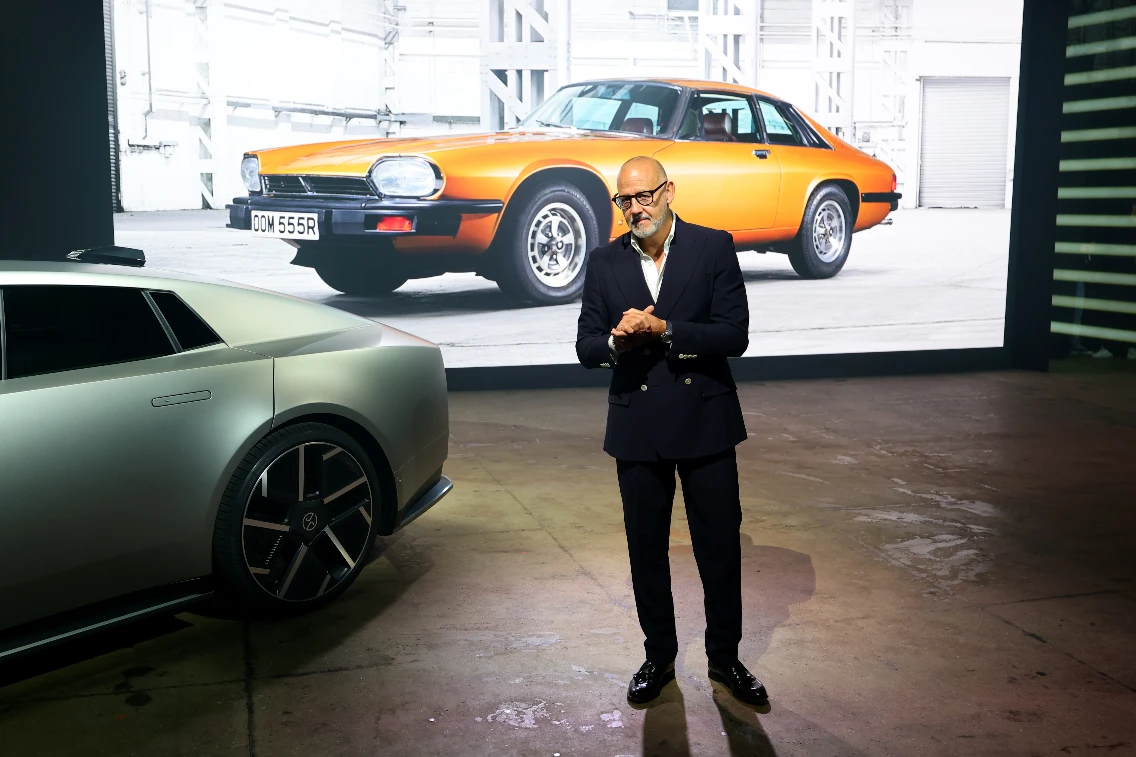
That philosophy shows up in the first Chromatic Moments collection, limited to 60 cars worldwide, hand-painted in French Ultramarine or London Red. The cars shown in New York wore the more restrained Visionary Silver Satin and Compelling Blue. Regardless of exterior paint color, the Type 01 isn’t shy about making a statement—or being noticed. It’s distinctive and impossible to mistake for anything else. The shooting-brake-like rear alone will probably inspire arguments at every valet stand it encounters. But across generations, Jaguar’s best-known cars have always had presence. Glover’s ambition is that Type 01 might one day earn the same kind of longevity—that in 20, 30 or 40 years someone could wheel one onto a concours lawn and it would still feel worthy of the badge.
A bold standard for a company many had already written off. But after two years of debate over logos, the colorful “Copy Nothing” teaser and that Barbie pink concept from Miami, Jaguar can finally be judged on something more important: the car. Naysayers may have to look twice, and those convinced by Jaguar’s new direction won’t have to wait long: orders are expected to open in early 2027, with first deliveries slated for the second half of the year.
All photos courtesy of Jaguar