As the Sussex Downs glowed in the late afternoon sunshine and guests gathered on the lawns for Glyndebourne’s famously elegant interval picnics, it felt entirely fitting that Monteverdi’s L’Orfeo should finally make its long-awaited debut at the festival. More than four centuries after its creation, this seminal work remains one of opera’s most profound explorations of love, grief and human expression. In the hands of the internationally acclaimed South African artist and filmmaker William Kentridge, it becomes a richly imaginative meditation on memory, creativity and the enduring power of music itself.
Written in 1607 and often described as the first great opera, L’Orfeo tells the story of the musician Orpheus, whose devotion to his beloved Euridice leads him on a perilous journey to the Underworld following her death. Yet Kentridge’s production reaches beyond mythological storytelling. Drawing inspiration from the poetry of Rainer Maria Rilke, he explores the relationship between loss, remembrance and artistic transformation, revealing the remarkable contemporary resonance of Monteverdi’s masterpiece.
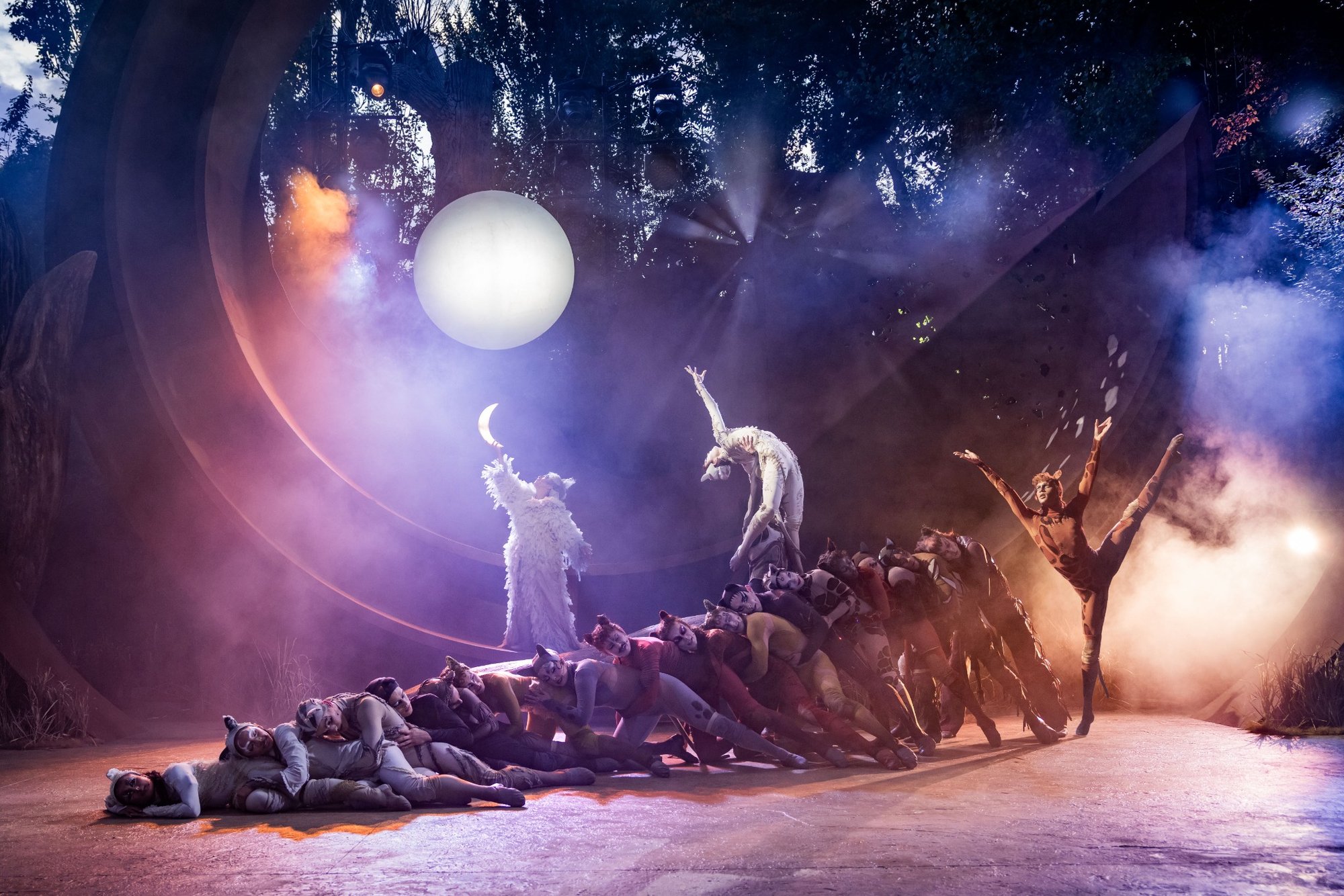
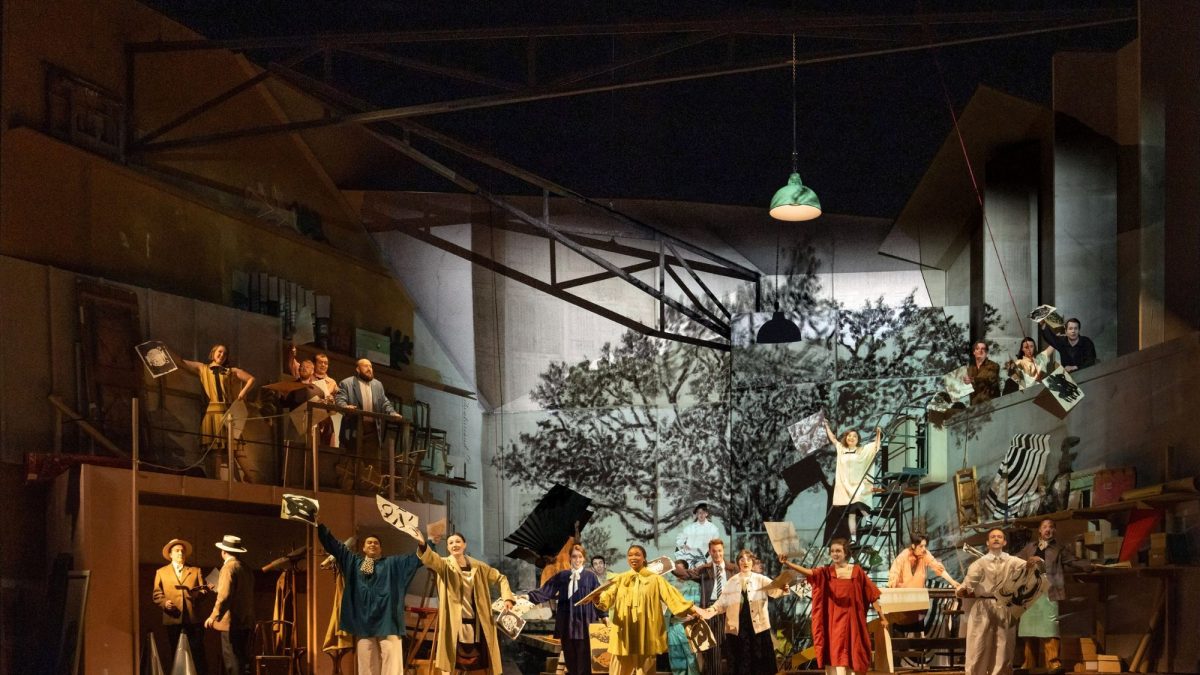
Rather than presenting a conventional pastoral Arcadia, Kentridge situates the action within an artist’s studio. Sketches, maps, handwritten notes and animated charcoal drawings appear and disappear across the stage, creating a world that seems to evolve before our eyes. The visual language is unmistakably Kentridge’s, yet it feels perfectly suited to Monteverdi’s opera, lending the production both intellectual depth and extraordinary theatrical vitality.
Central to the concept is Francesca Aspromonte’s radiant La Musica. Far more than a ceremonial narrator, she becomes a creative force whose sketchbook appears to give life to the opera’s universe. Aspromonte sings with luminous beauty and effortless poise, bringing warmth, elegance and authority to every phrase. Her dual portrayal of La Musica and Euridice creates a fascinating connection between creator and muse, drawing the audience ever deeper into Kentridge’s vision.
As Orfeo, Krystian Adam delivers a performance of remarkable sensitivity and emotional truth. His bright, expressive tenor captures both the exhilaration of youthful love and the anguish of devastating loss. Throughout the evening he inhabits the role completely, making Orfeo’s journey feel intensely personal while never losing sight of the character’s dignity and resilience. His great appeals to the powers of the Underworld are among the production’s most moving moments.
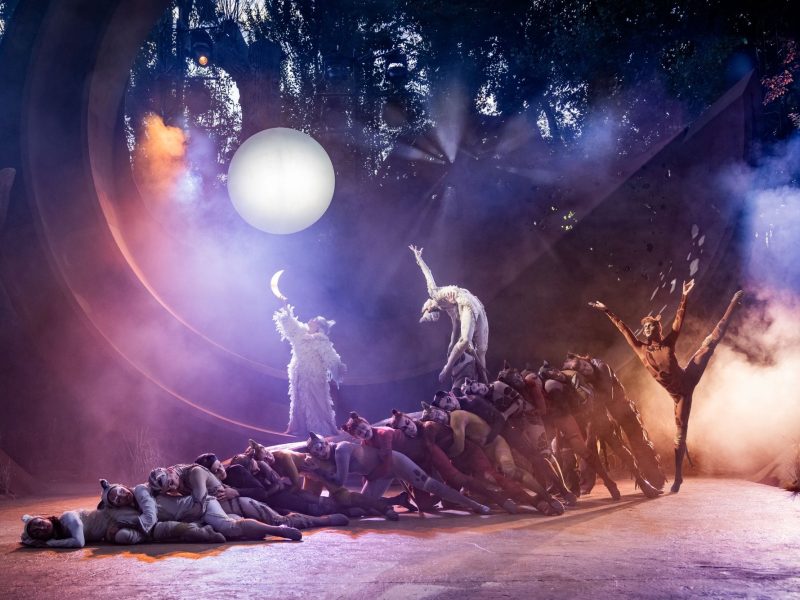
One of the production’s most inspired touches is the inclusion of dancer Roseline Wilkens as an embodied Euridice. Moving gracefully between memory, imagination and reality, she becomes a constant presence within Orfeo’s consciousness. Her choreography adds another dimension to the storytelling and contributes some of the evening’s most striking and poignant images.
The supporting cast is uniformly strong. Xenia Puskarz Thomas brings tremendous emotional impact to the Messenger, delivering the devastating news of Euridice’s death with profound conviction. Across the cast there is a palpable sense of ensemble, each performer contributing to a production that feels both meticulously crafted and deeply human.
Musically, the evening is exceptional. Conductor Jonathan Cohen leads the Orchestra of the Age of Enlightenment with energy, precision and remarkable stylistic assurance. From the ceremonial splendour of the opening Toccata to the intimate delicacy of the continuo passages, the score unfolds with freshness and vitality. The period instruments bring warmth, colour and transparency to Monteverdi’s revolutionary writing, while the interplay between strings, organ, harp and theorbo continually reveals new details within the music. The result is a performance that feels both historically informed and vividly alive.
The Glyndebourne chorus performs with clarity, warmth and expressive refinement, whether portraying joyful shepherds celebrating young love or the sombre spirits of the Underworld. Their contribution adds richness and atmosphere throughout the evening.
What makes this production so successful is its ability to honour both the historical significance of L’Orfeo and its enduring emotional power. Kentridge never treats the opera as a museum piece. Instead, he reminds us that Monteverdi’s work was once radically innovative and that its themes remain as relevant today as they were more than four hundred years ago.
That Glyndebourne has never before staged L’Orfeo is remarkable. As one of the foundational works of the operatic repertoire, its arrival at the festival feels less like a revival than a long-overdue homecoming. Kentridge’s production honours Monteverdi’s extraordinary achievement while offering a fresh and compelling perspective for contemporary audiences.
As the final images faded and the audience emerged into the Sussex evening, there was a palpable sense of having witnessed something special. Visually arresting, musically superb and emotionally resonant, L’Orfeo marks a significant milestone in Glyndebourne’s history and a triumphant introduction to Monteverdi’s world. For a festival premiere more than ninety years in the making, it could scarcely have been more rewarding.
Performances on various dates until 25 July 2026
Glyndebourne, Lewes, East Sussex BN8 5UU