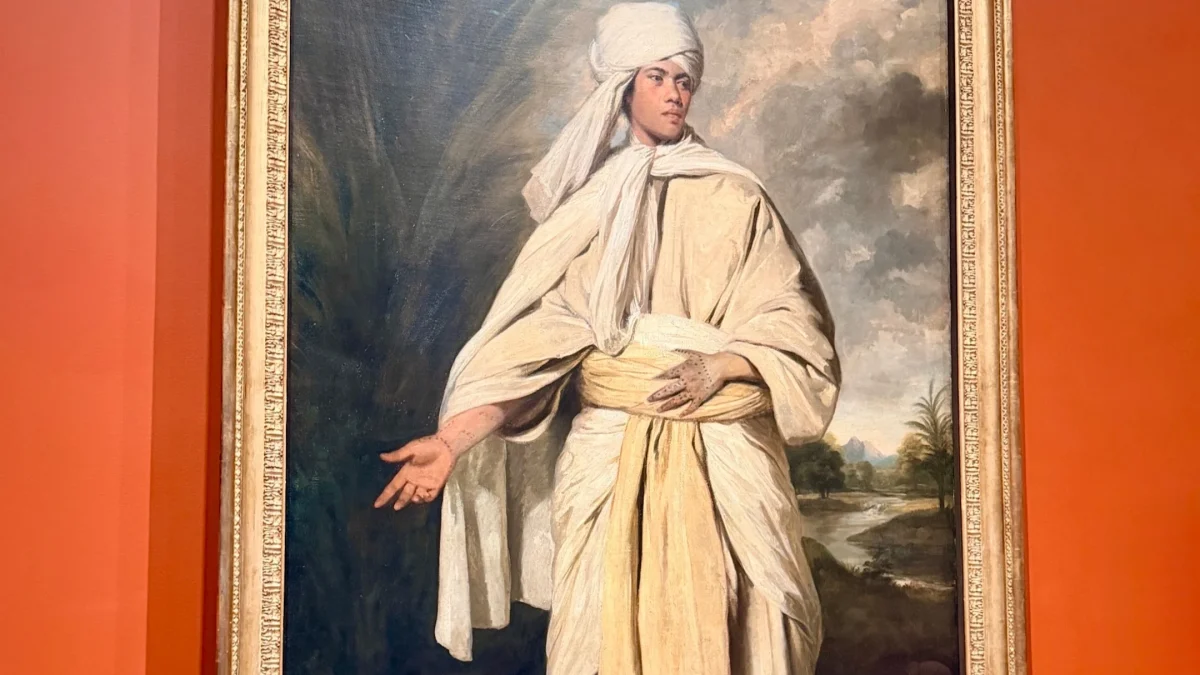
The Getty Museum in Los Angeles welcomes a remarkable masterpiece of 18th-century British art by Sir Joshua Reynolds. His monumental Portrait of Mai (Ōmai), painted around 1776, is widely regarded as one of Reynolds’s most important works. It’s a compelling and rare representation of a Polynesian figure within Western art.
At the center of the painting is Mai (Ōmai), a Polynesian voyager whose extraordinary journey carried him from the Pacific to London. His presence captivated British society, transforming him into a celebrated figure and ultimately a remarkable cultural intermediary between Polynesia, Europe, and a rapidly expanding world. Reynolds presents Mai at nearly life-size scale, drawing upon the grandeur traditionally reserved for European aristocracy.
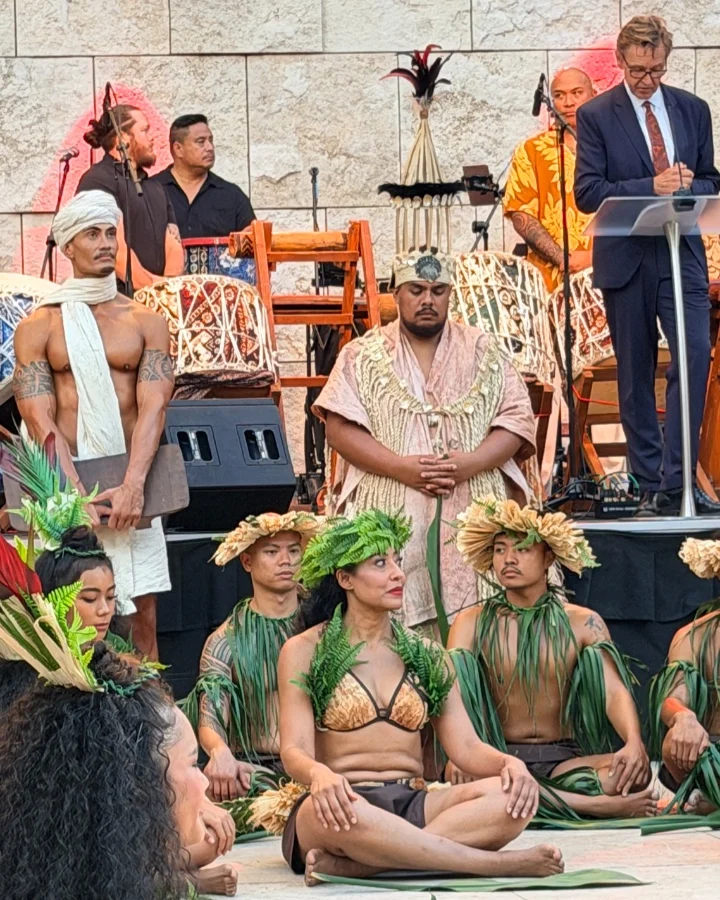
Getty Museum Director Timothy Potts unveiled the remarkable story behind the painting’s acquisition before more than 200 VIP guests during a spirited evening celebration. “The J. Paul Getty Museum and London’s National Portrait Gallery jointly acquired Portrait of Mai for approximately $62 million in 2023,” said Potts.
The extraordinary partnership between the two institutions allows this monumental Reynolds portrait to be shared between Los Angeles and London, giving audiences on both sides of the Atlantic an opportunity to experience the masterpiece, while preserving its place in the public realm.
Standing nearly eight feet tall, the portrait of an extraordinary life begins around 1753 on the island of Ra‘iatea. As a young man Mai traveled from Tahiti with the Royal Navy to Britain in 1774, becoming the first Polynesian known to visit the country. His extraordinary journey aboard the HMS Adventure was with the goal of finding allies in Britain to help him regain his ancestral lands and avenge the death of his father.
Once in London, Mai became an unexpected sensation. During his two years in England, London’s high society embraced him for his noble demeanor, charisma, intelligence, and command of English. Mai captivated members of fashionable society and was introduced to royalty.
Unlike a commissioned portrait, Reynolds painted Portrait of Mai on his own initiative, likely to capitalize on Mai’s extraordinary popularity. The artist presented him on a monumental scale traditionally associated with portraits of royalty, aristocracy and other figures of high status. He stands barefoot and dignified, dressed in Polynesian tapa cloth and a headdress, with his tattoos prominently visible. His pose draws upon the visual language of classical sculpture, giving the portrait a sense of grandeur and authority.
Mai returned to Polynesia in 1777 with Captain Cook, yet died there only a few years later due to illness. Reynolds’s portrait of Mai continued to captivate audiences. It remained in the artist’s possession during his lifetime and upon the artist’s death, his portrait of Mai remained in private collections for over 250 years.
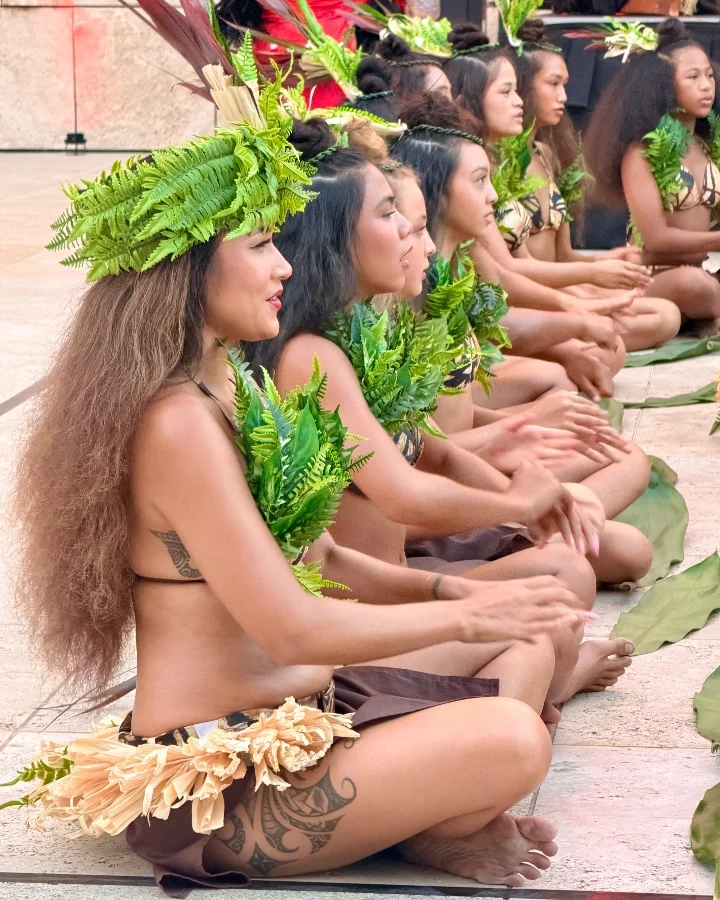
Now that Reynolds’s portrait was acquired by the Getty Museum and London’s National Portrait Gallery, the painting will travel periodically between his two new homes. The portrait will share equal time between the United States and Britain while supporting public engagement, education, research and conservation. The partnership also opens opportunities for Mai’s story to be explored in French Polynesia, reconnecting the portrait with the Pacific heritage of the man at its center.
Enjoy a day away at the Getty Museum. There is something for everyone: art, modern design, unique gardens, and spectacular city views of Los Angeles and the Pacific Ocean.
Portrait of Mai is in the West Pavilion on the Plaza Level through March 14, 2027. Admission into The Getty Museum is free with a timed-entry reservation.