Crete is a land shaped by millennia of civilisation, where Bronze Age palaces, Venetian fortifications, and working fishing villages coexist with a vibrant contemporary culture. As the largest of the Greek islands, its geography spans over 8,000 square kilometres of rugged mountain ranges and fertile plains.
Fly Me To The Moon is a destination management company operates as a cultural architect, leveraging a vetted network of historians, maritime experts, and hospitality veterans to provide access to the island’s most guarded secrets. This is part 2 of our series on discovering Crete with Fly Me to the Moon Travel, read our first part here.
History of Crete | Exploring Millennia of Minoan, Venetian, and Ottoman Heritage
Greece, and Crete in particular, is the ideal destination for the intellectuals and culturally curious travellers. This is the cradle of Europe’s earliest advanced civilisation, which flourished around 2000 BCE. Its past remains visible in palaces, harbours, and stone villages. Venetian fortresses line the coast. Ottoman influences linger in architecture and language. Each era has left a clear, legible mark.
The island’s DNA and what it is, and who its people are, has been shaped by endurance and a history of resistance to those who sought to conquer it. It has weathered the Arab conquest around 824 AD, centuries of Venetian rule from 1205 to 1669, long Ottoman control from 1669 to 1898, and the brief but brutal German occupation during the Second World War from 1941 to 1945. Yet the prevailing impression is not of defeat but of a fighter that never quit. Stories tell of farmers who became resistance fighters, striking the Nazis and other would-be conquerors before retreating to the hills, only to ambush any force that dared pursue them. Many Cretans still see themselves as Cretans first, far before they see themselves as Greeks, bound tightly to land and sea, with traditions that have outlasted every foreign power.
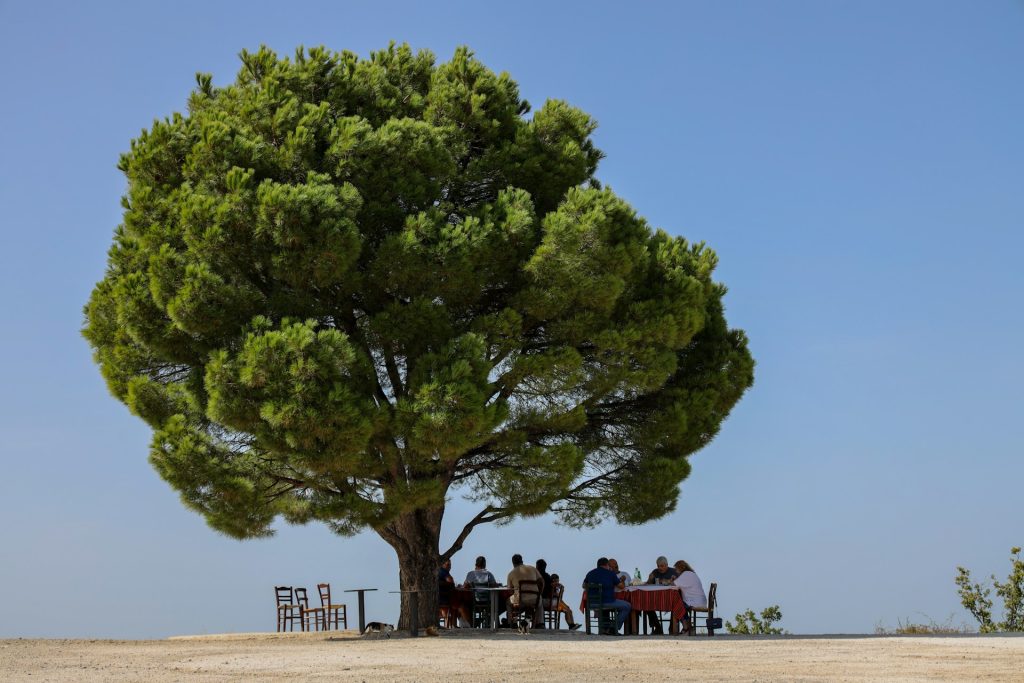
Even today there are parts of Crete, high in the mountains, that no one, not even government officials or police, dares to enter. These lands are run and ruled by the sheep herders who have maintained them since time immemorial. The laws of right and wrong, and the consequences, sometimes to the death, are what govern here, not a policeman with a shiny badge. In these remote places, the island’s fierce independence and enduring sense of justice remain visible as tangible as the ridges and valleys themselves.
Exploring Knossos | Discovering the Minoan Civilization and Europe’s First Advanced City
A visit to Crete is more like a museum with an island around it. Everywhere you look is the patina of history from thousands of years. So much has happened here over the eons. Travelling with Fly Me To The Moon allowed us to experience this history in a much more meaningful way, as a traveller and not a tourist. Local guides led us beyond the obvious stops and timed each visit carefully. We avoided the crowds and reached the island through lesser known ruins, working harbours, and villages where daily life continues without performance.
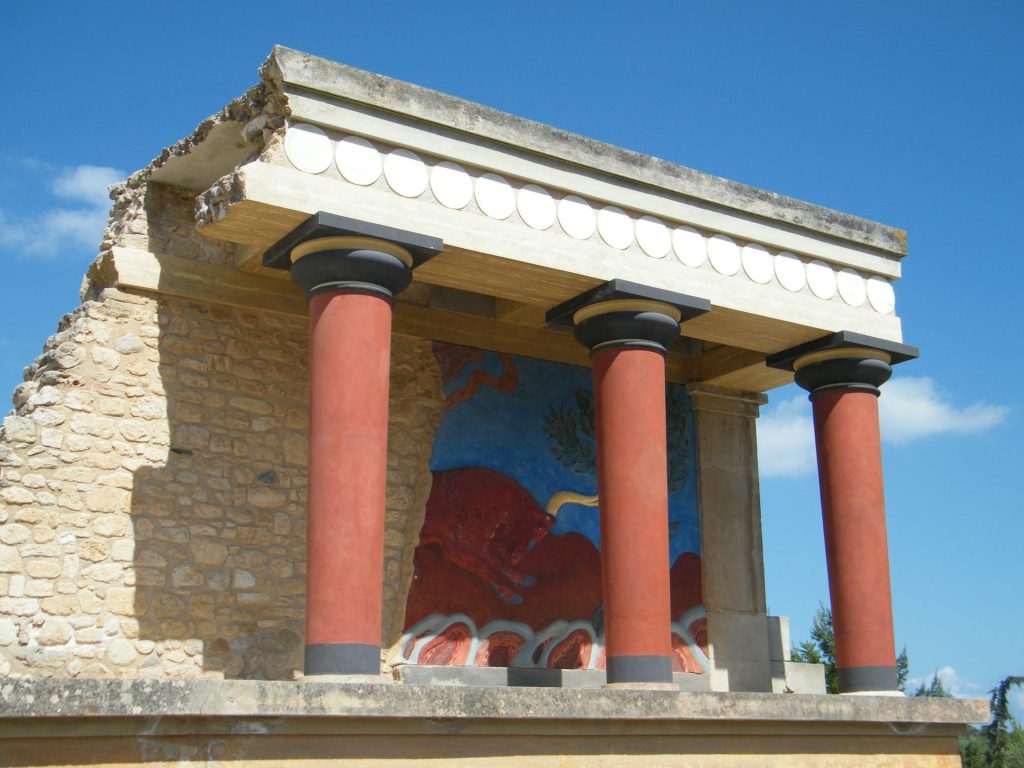
Knossos sits just southeast of Heraklion, surrounded by olive groves and pale earth, and it remains the largest and most significant archaeological sites in Crete. This is not simply a palace but the heart of the Minoan civilisation, built around 1900 BCE, often cited as Europe’s oldest city, this Bronze Age complex dates back to approximately 1900 BC. Walking among the columns and terraces, it is easy to imagine a society thriving thousands of years ago, managing trade, agriculture, ritual, and governance all in one sprawling complex. The Minoans were Europe’s first advanced civilisation, and Knossos stands as the tangible and tactile encyclopedia of how these people lived and ruled.
Walking through the palace, it hits you just how significant this place is. Being here is not just seeing history, it is standing in the heart of a civilisation that shaped Europe itself. Over 1,300 rooms are connected by corridors, staircases, and courtyards. Some spaces were for administration, others for storage, yet each was carefully organised to support a functioning city. Light wells and porticos moderate sunlight and airflow, while drainage channels carry water efficiently across multiple levels. The storage magazines were where the Minoans kept supplies for themselves and for trade. Giant clay jars called pithoi, some nearly two metres tall, were filled with grain, olive oil, and wine, ready to sustain the palace or to be distributed across the Mediterranean.The palace was not a decorative stage but a working, highly organised centre of civic life, remarkable for its time and enduring in its vision. It is here, at the storage magazines, that our guide stops, and in a hushed and reverent voice tells us about the great fire that consumed Knossos around 1350 BCE. The blaze swept through the palace, igniting the vast jars of olive oil and other stored goods, ending the palace’s role as a political and ceremonial centre and marking the decline of Minoan dominance in the Aegean.
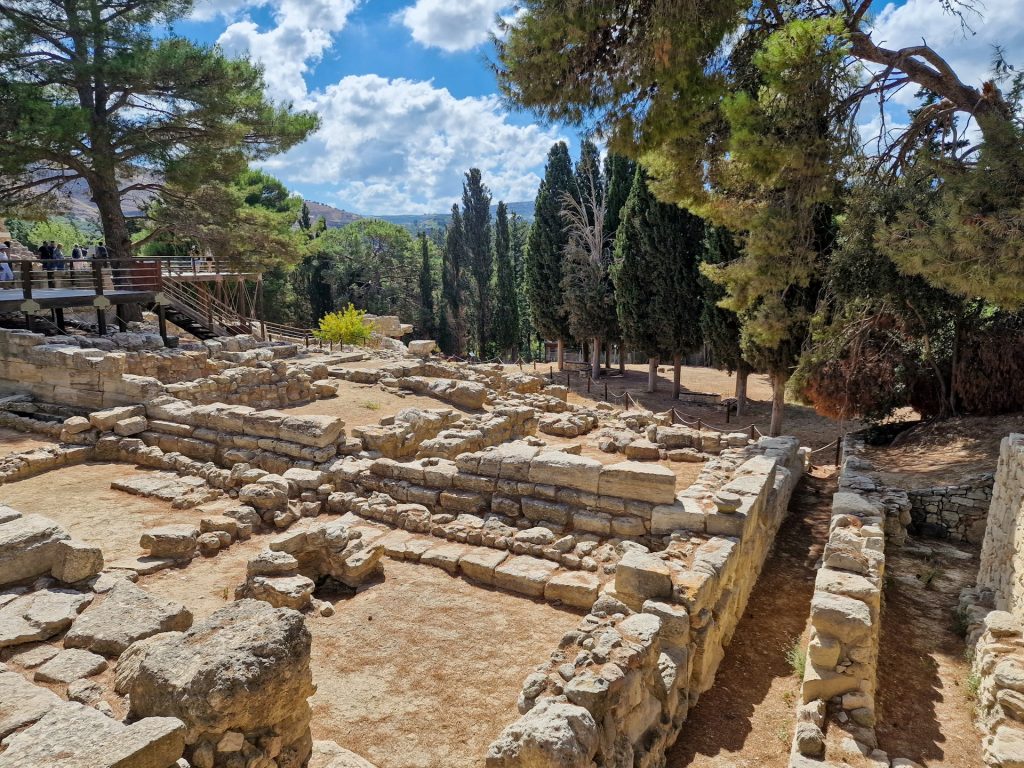
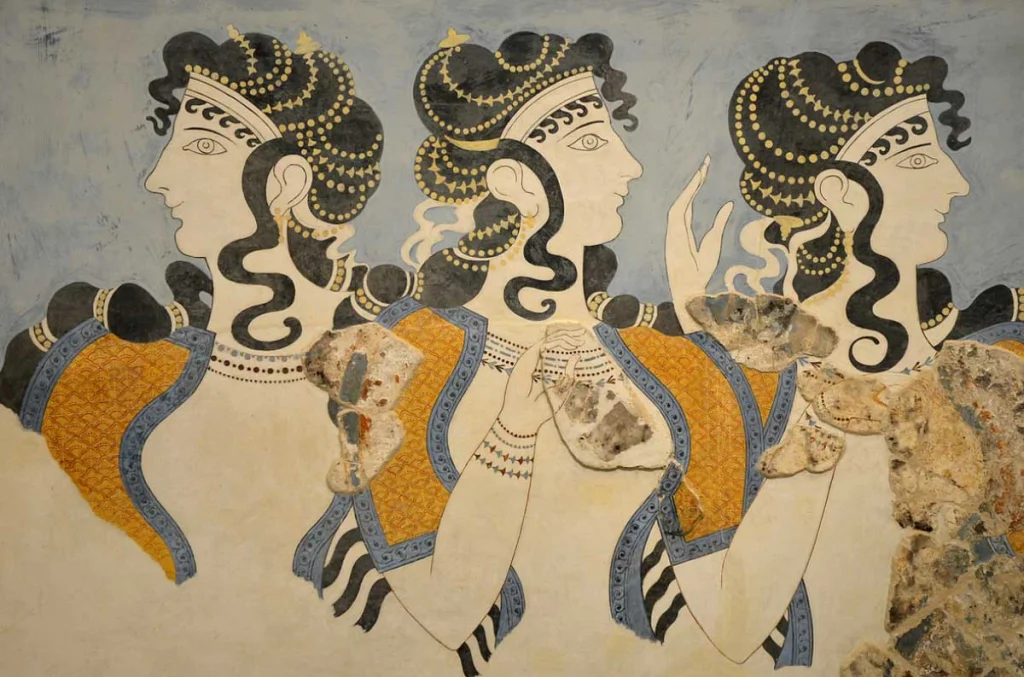
Further along we visit the Throne Room, and see for ourselves a bit of history and Europe’s oldest known throne. Frescoes depict athletic contests, religious ceremonies, and daily life where we’re able to compare life from four millennia in the past to today. Here, the stories of King Minos and the Labyrinth feel real as you walk through the corridors and courtyards, but what lingers with me is how impressive their skill, creativity, and way of organising life truly were. Sir Arthur Evans’ early twentieth-century restoration allows these features to be experienced directly rather than imagined, highlighting the Minoans’ sophisticated use of light, space, and climate.
Accompanied by a Fly Me To The Moon guide, an archaeologist who shares both facts and reflections from years of study, allows for the experience to be appreciated as more than just an instgrammable tourist stop. The time spent there as she shared overstaions and conversation takes on purpose meaning and impact. As we move through the palace we talk with her as she shares her in depth knowledge and eagerly responds to our countless questions. It is in these moments that Knossos becomes more than ruins. It becomes a tangible, civilization that I’ve become enriched through my understanding of it.
First Class Travelling with Fly Me To The Moon | Seamless Exploration Across Crete
When travelling with Fly Me To The Moon, they take away all of the hastles. There is no waiting on a bus schedule at a fixed time or heaven forbid trying to find a taxi (you can forget about Uber). They provide first class luxury vans as transportation with friendly driving waiting for your tour to finish to get you to your next destiantins. No waiting. When you’re ready to go, so are they.
But their luxury vans are not the only way you’ll get around Crete.
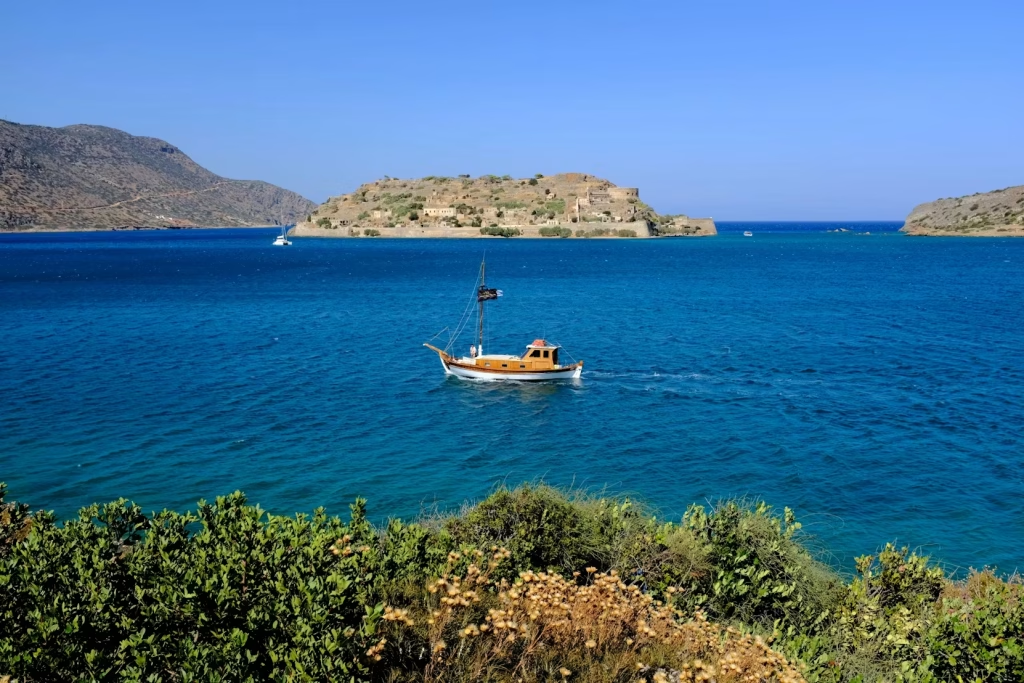
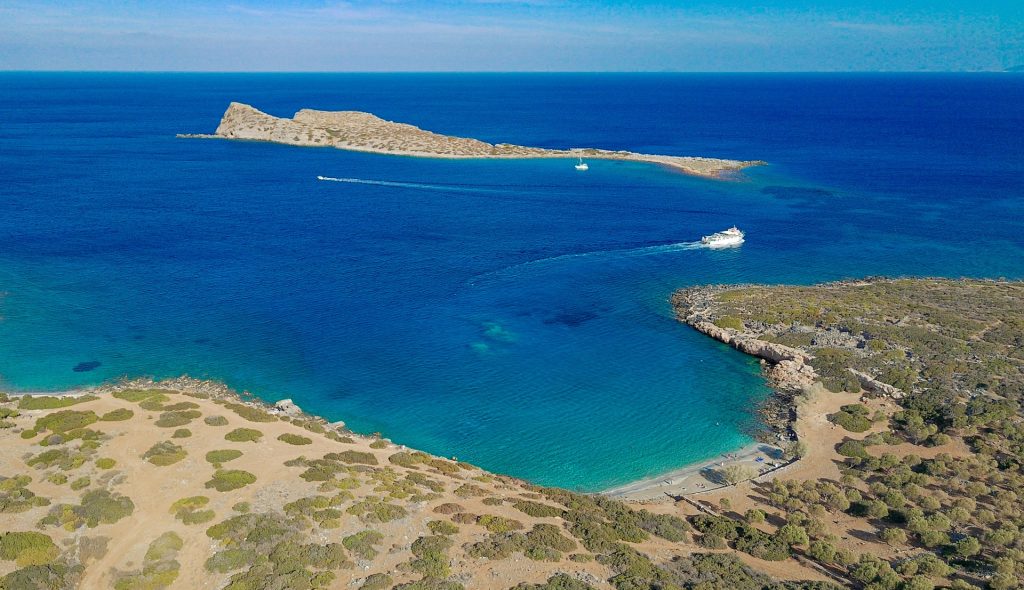
Crete is first and foremost an island. Everything about this place is tied, in some way, to the sea, the light, the food, the pace of the day. Exploring by water is not optional, it is simply how you understand it properly. And the waters here are exactly what you want on a Mediterranean holiday, clear enough to see the seabed without trying, colours sliding from pale turquoise near the shore to a deeper, inky blue as the bay opens up. You spend half your time leaning over the side just looking. For our boating day we skipped the glossy yacht or slick sailboat, the same kind you could hire in Miami or Ibiza. Instead, we chose a traditional wooden kaiki, vessels e hand-crafted from pine or oak and represent a maritime tradition that has survived for centuries. There was plenty of space to stretch out, swim when we felt like it, snorkel, or just lie back and do nothing. Lunch was simple and perfect. Grilled fish, tomatoes and cucumbers heavy with flavour, olives, bread, and Greek pastries the captain’s wife had made that morning. A bottomless glass of chilled Vidiano, the local white that tastes faintly of the surrounding hillsides, was always within reach. It felt like being on a friend’s boat rather than a charter.
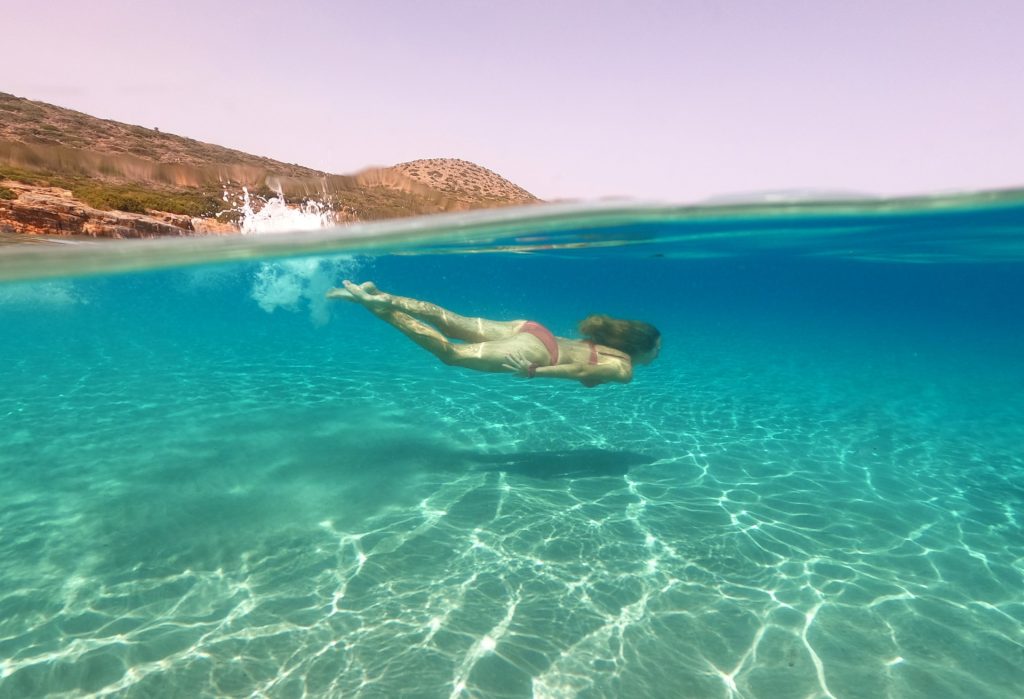
We set off from Elounda and traced our way across Mirabello Bay at an easy pace, stopping wherever the water looked good. Spinalonga came into view with its fortress walls rising straight out of the sea, then small coves and beaches like Kolokytha where we dropped anchor for another swim. The captain pointed out the Cave of Barbarossa and steered us into quiet inlets you would never reach by road. Hours passed without much notice, a mix of swimming, sunbathing, eating, and the occasional nap in the heat. Other boats dotted the bay, some guided tours, some small rentals, but the rhythm stayed relaxed. Seeing this stretch of Crete from the water just makes sense.
Spinalonga Fort | Experiencing Crete’s Venetian Fortress and Historical Leper Colony
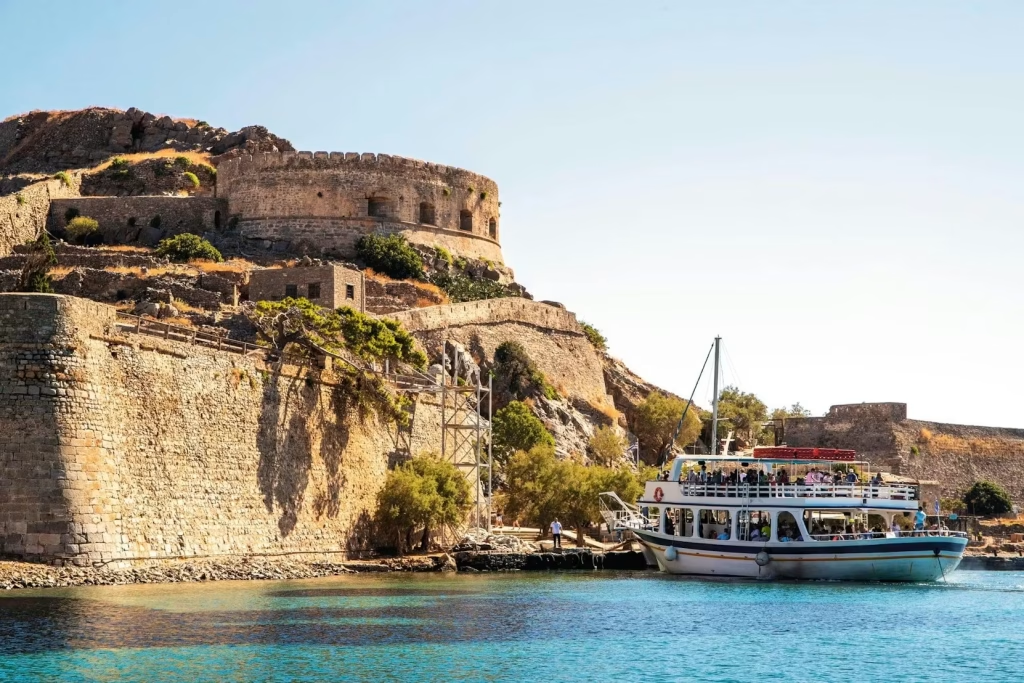
After a half day on the water, salt dried on our skin and towels still warm from the sun, we traded the boat for something more grounded and headed toward Spinalonga for a dose of history. The island sits just off the mainland, close enough to feel within reach, yet distinctly separate. Approaching it by sea makes that distance feel physical. The stone fortifications rise straight out of the water, first built by the Venetians in 1579 to protect the salt pans of Elounda and guard the bay. We were fortunate to be led by a preeminent local historian whose knowledge shaped the visit into something far more meaningful than a casual walk around ruins. Entering through the Gate of Dante, the same tunnel once used by those sent into exile, shifts the mood immediately. What looks picturesque from the boat carries a far heavier story once you step ashore.
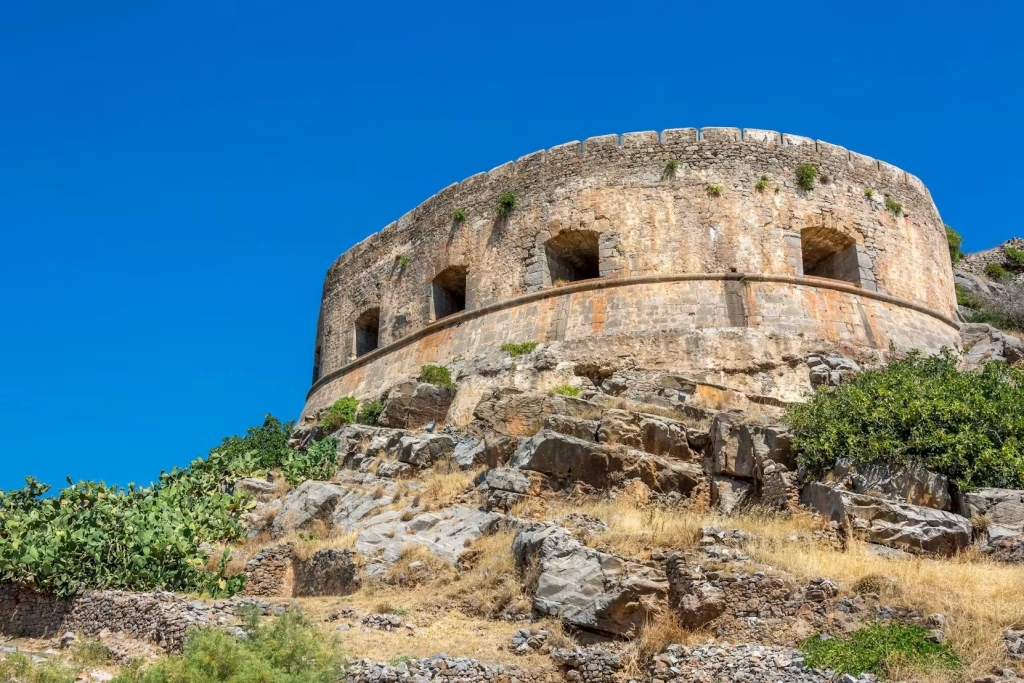
From 1903 to 1957 Spinalonga served as one of Europe’s last leper colonies, a place where people with Hansen’s disease were stripped of citizenship and separated from their families, often permanently. Yet the reality was not simply abandonment. The residents built a functioning town. There were houses, cafés, shops, a church, a school, even the region’s first electrical generator, which brought light here before many villages on Crete had power. They published a newspaper and organised daily life with a quiet practicality that pushed back against the stigma attached to them. Walking the narrow streets now, past crumbling doorways and empty courtyards, you can still trace that structure. Supplies once arrived by boat across the same stretch of water we had just crossed, food, medicine, letters, small links to the outside. Treatment finally improved and the colony closed in 1957, leaving the island not as a relic, but as a record of endurance. Seen after a morning at sea, the journey feels connected, the water not just scenery but the thread that ties Crete’s beauty and its history together.
Agios Nikolaos | Exploring Crete’s Lakeside Town with Rich Culture and Local Life
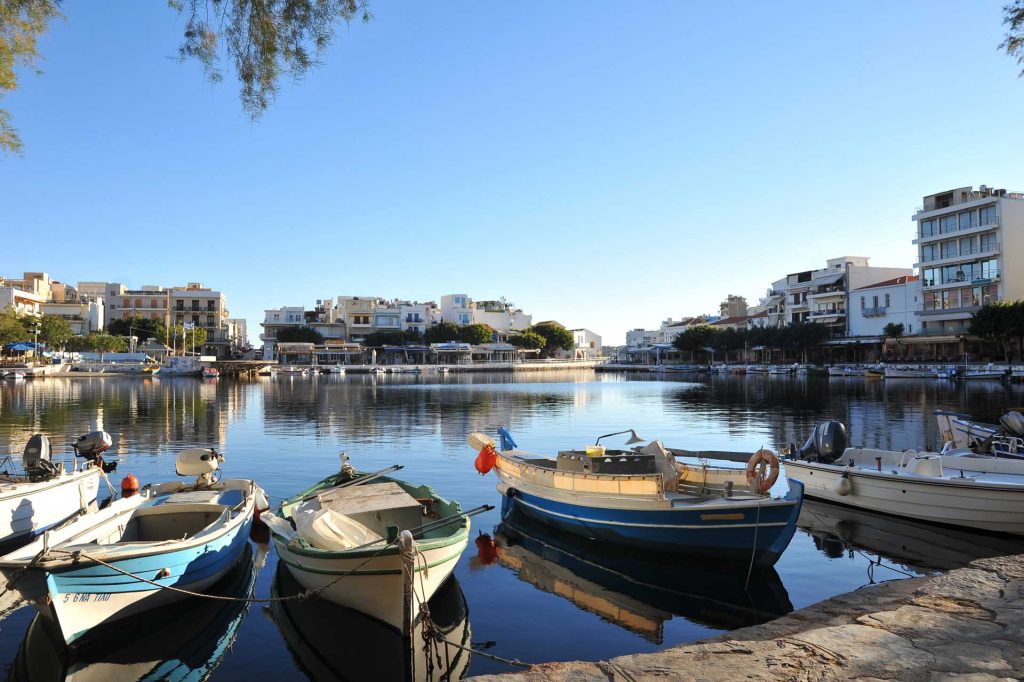
When exploring this part of Crete, Agios Nikolaos is a good option that is centrally located base and at much more chilled out pace compared to the more frantic hubs of Chania or Heraklion. The town is built around Lake Voulismeni, a deep, dark circle of water that locals used to swear was bottomless. It actually drops down about 64 meters, and from its surface, the town seems to rise up around it like a natural, stone amphitheater.
Walking here is a vertical experience, which is a nice break from the flat, predictable grids of most coastal towns. You’ll find the best way to get your bearings is to just start at the water and take the steep stone stairs up toward Agios Charalambos hill. It is a bit of a climb and a great work out after all of the irrestilabe Greek food you’ll eat while there, but the reward is a clear, honest view of how the lagoon tumbles into the sea. You can see the whole scale of the place from up there, framed by neoclassical buildings and modern Cretan homes that are usually buried under thick, heavy layers of bougainvillea.

When you head back down, the main streets like 28th October and Roussou Koundourou are where you really see the town’s character. They are mostly pedestrianized, so you can actually look around without dodging traffic. It is refreshing to see specialized workshops instead of rows of generic tourist shops. You’ll find people working gold and silver into Minoan designs or selling hand-woven textiles that feel like they belong in a home rather than a gift shop. It feels like a place that values its own crafts more than it values a quick sale. The food follows that same logic. The tavernas around the harbor don’t really do the whole theatrical “tourist menu” thing. They just serve what is good from the region.
If you want a base to explore the east while keeping a foot in a real, functioning town, this is where you stay. Agios Nikolaos is a rare find in the Mediterranean because it doesn’t try be a postcard. It is a town built for its people first and its visitors second, which is exactly it is so appealing.
Minos Beach Art Hotel | Luxury Art-Focused Accommodation on Crete’s Mirabello Bay
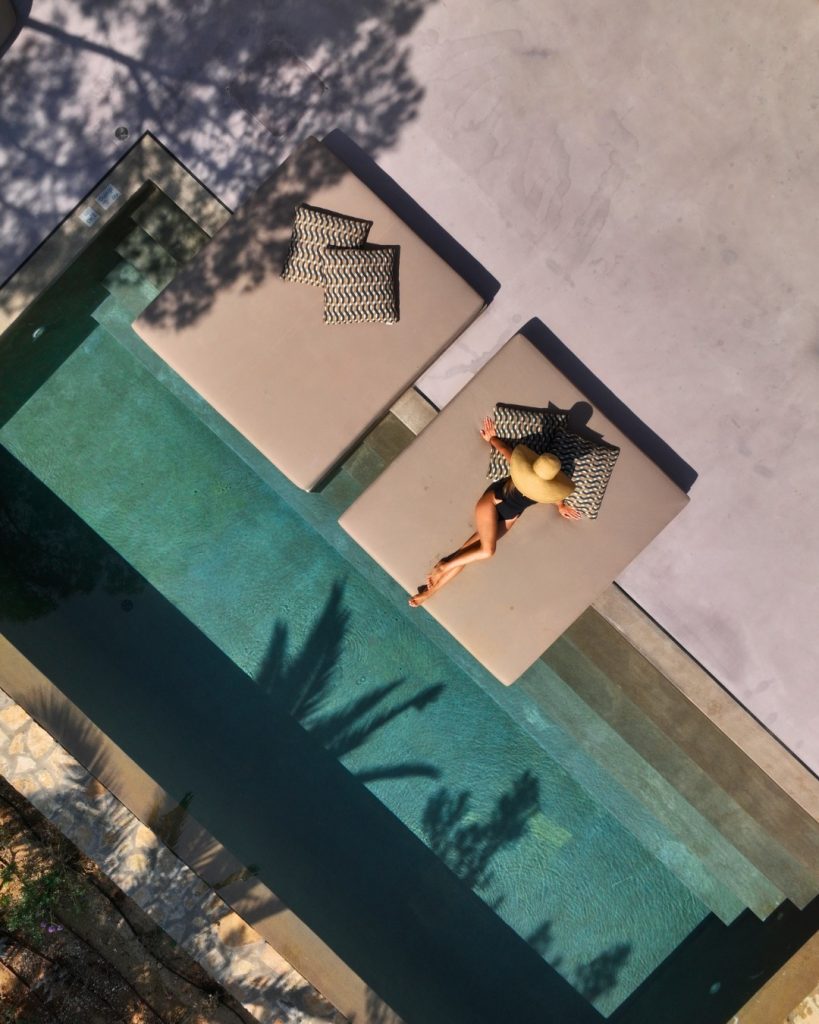
As you explore the eastern reaches of Crete, you will find that the lakeside town of Agios Nikolaos serves as the ultimate base for your journey. While the region is dotted with luxury options, the one hotel that defines the landscape is the Minos Beach Art Hotel. You arrive expecting a resort and instead find something closer to a lived in estate by the sea. Originally opened in 1963 as the island’s first five star resort, it carries a deep legacy of family ownership under the Mamidakis name. Though it is steeped in tradition, the aesthetic is anything but dated. The design is sleek and modern, feeling as though it belongs on the curated pages of Architectural Digest.
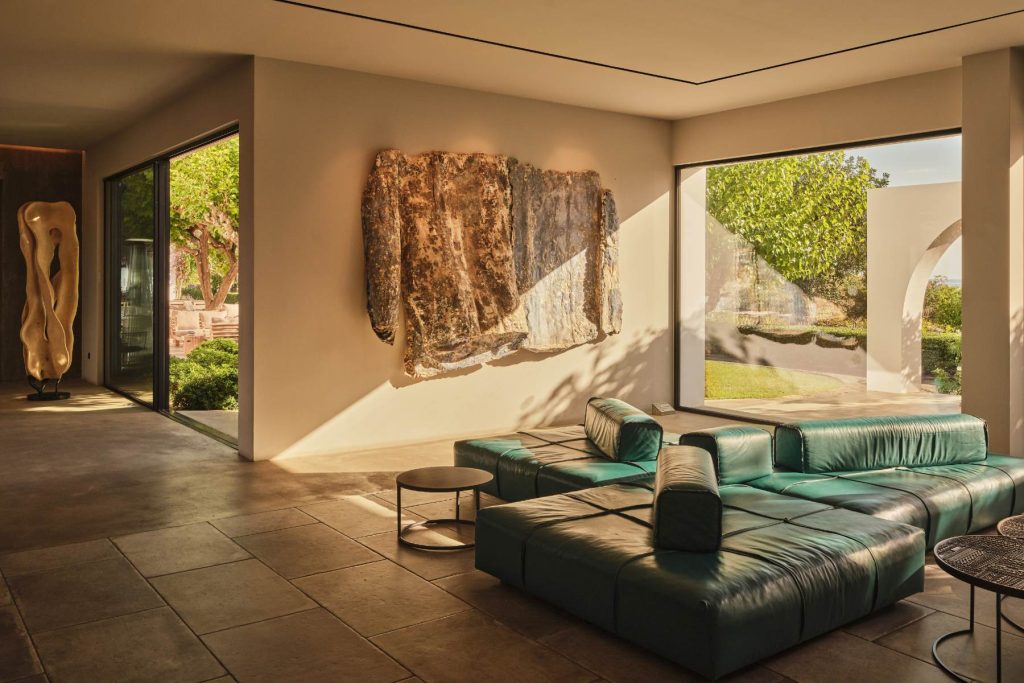
Beyond the hospitality, the hotel acts as a living gallery that merges high art with the Mediterranean sun. You will instantly notice a riot of gorgeous art pieces spread throughout the grounds, a collection managed by the G. & A. Mamidakis Foundation. With over fifty permanent installations and a dedicated artist in residence program, the stay becomes an intellectual journey.
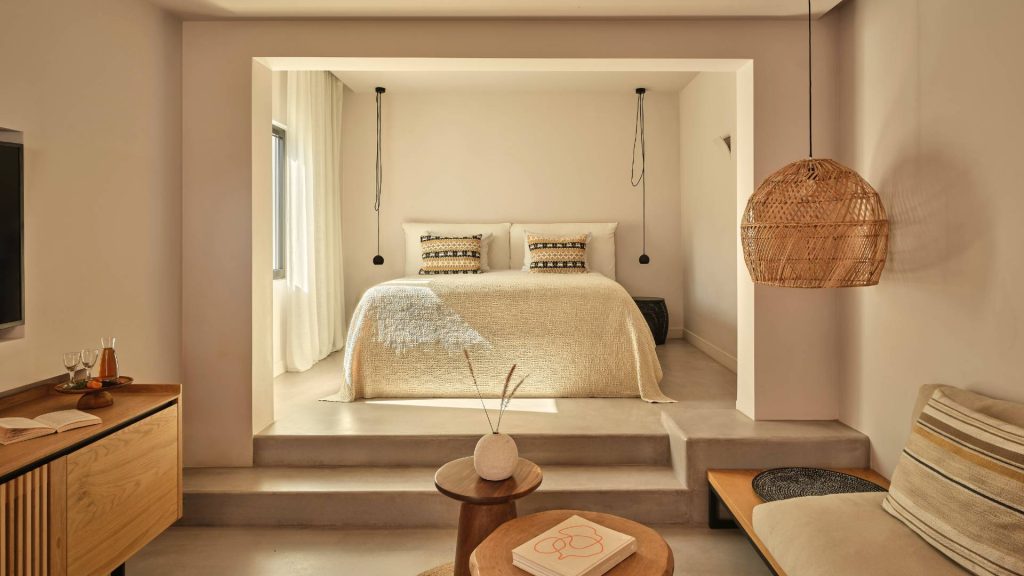
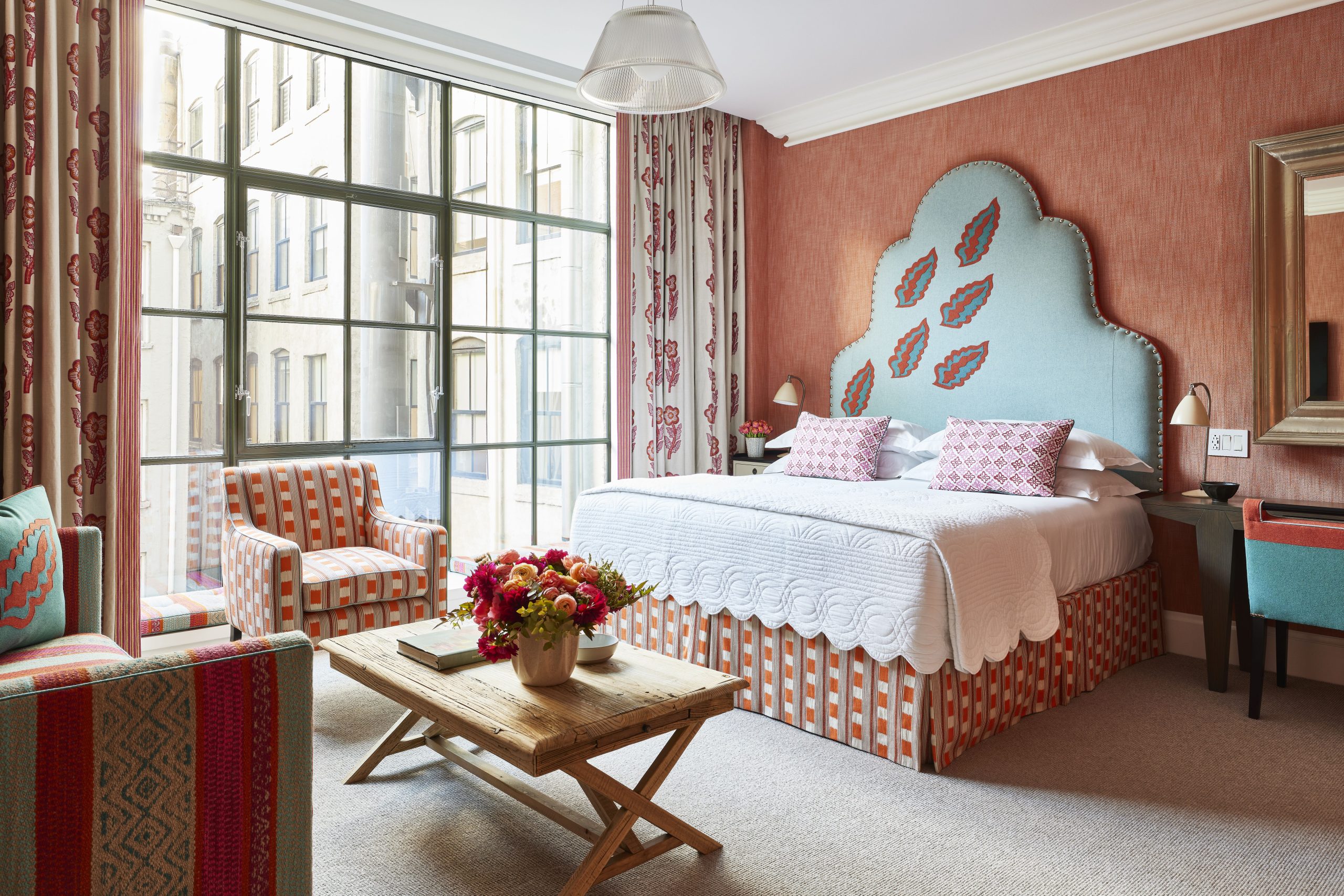
The accommodations at the resort feature calming earth tones and a sleek architectural flow. The upper end suites and villas are particularly stunning, positioned directly on the waterfront with large terraces and private pools that seem to melt into Mirabello Bay.
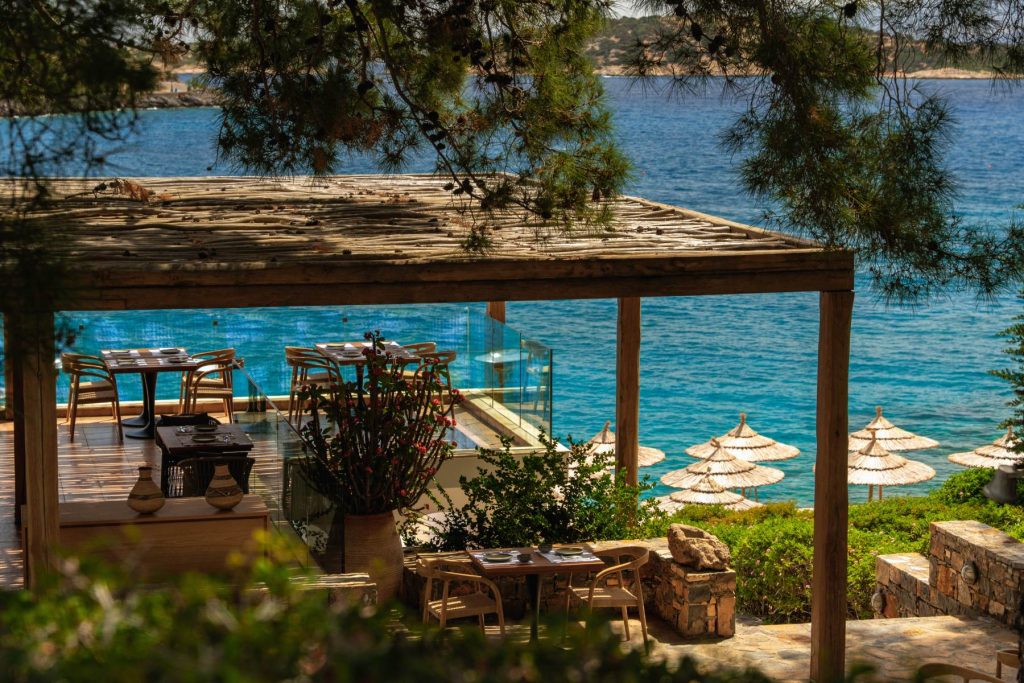
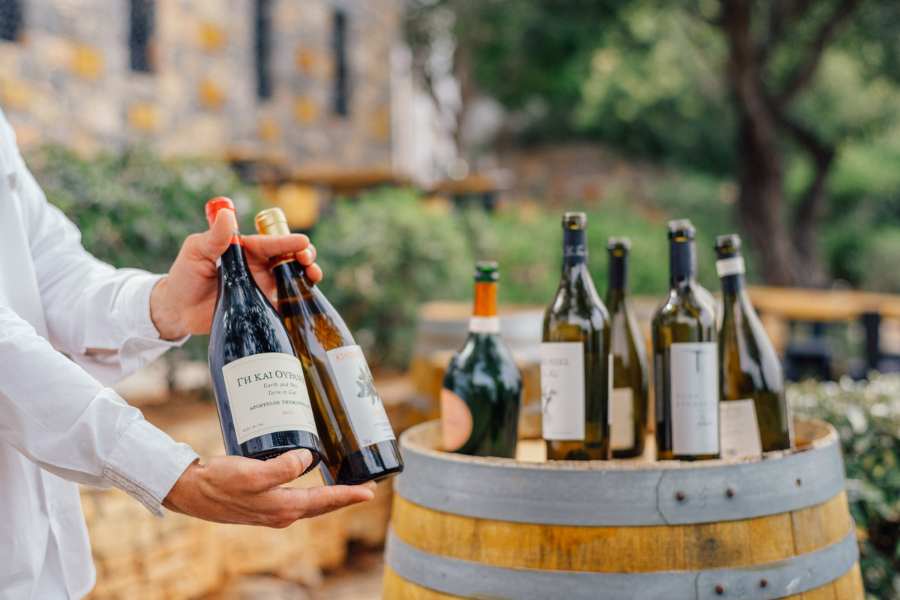
The culinary experience is equally exceptional, culminating at the waterfront La Bouillabaisse Restaurant. A highlight of any stay is a wine tasting with the sommelier or the General Manager. They take the time to explain rare Cretan varieties like Vidiano, Plyto, and Mandilaria. These are unique wines you can often only find on the island, and their crisp, complex profiles are so remarkable that the tasting alone makes the entire trip worthwhile.
On certain nights, the property hosts a traditional Cretan feast that serves as a celebration of the island’s history and culture. The air is thick with the scent of local meats cooked over an open fire, served alongside an abundance of regional wine, encouraging a sense of communal joy among the guests. A talented local musician serenades the gathering during dinner, the notes of the mandolin cutting through the evening air with a haunting, rhythmic beauty.
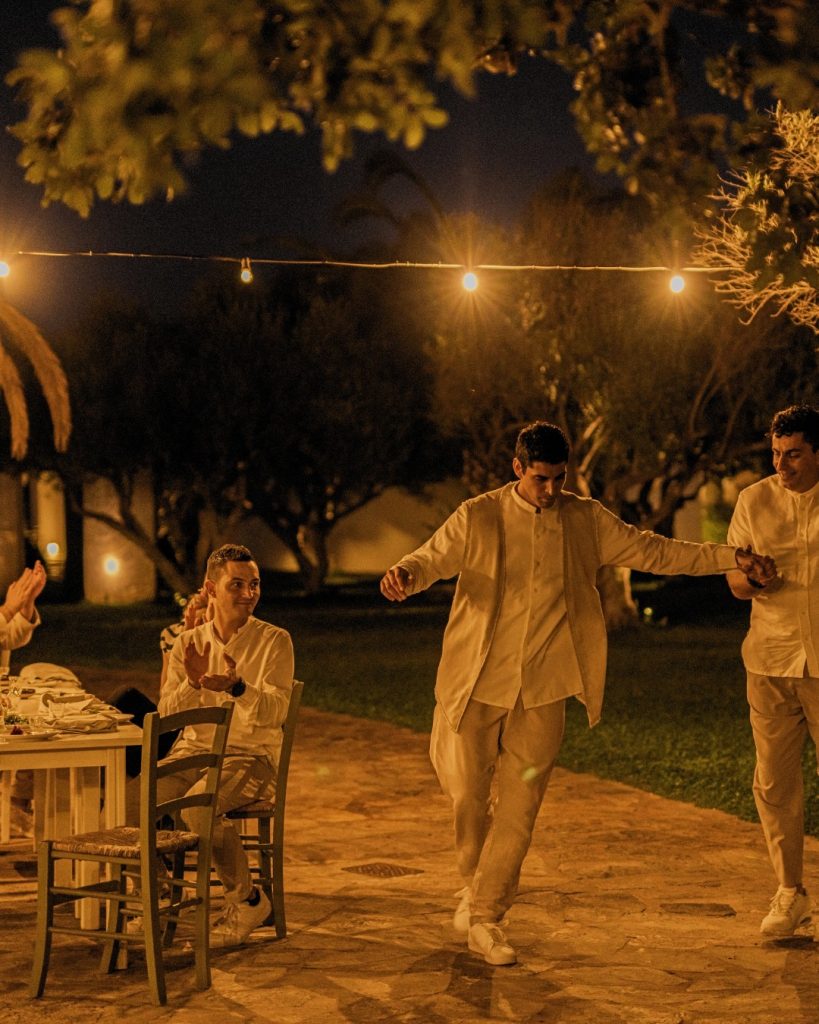
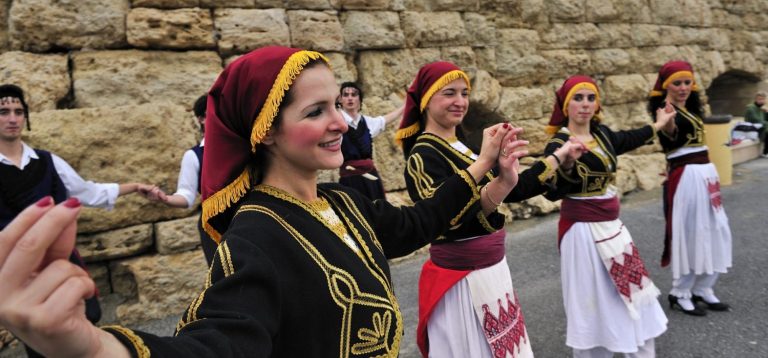
As the night winds down and the bonfire burns, the collective energy and the wine create a spirited atmosphere. It is at this point that the staff begins to dance; they actually cannot help it because they love their traditions so much. Locals returning to the island frequently join in, and they all perform these beautiful dances together. For the people here, these rituals are not merely a display of folklore or a scheduled activity. This is not what they do; it is who they are.
A Deeply Enriching and Enlightening Crete Experience
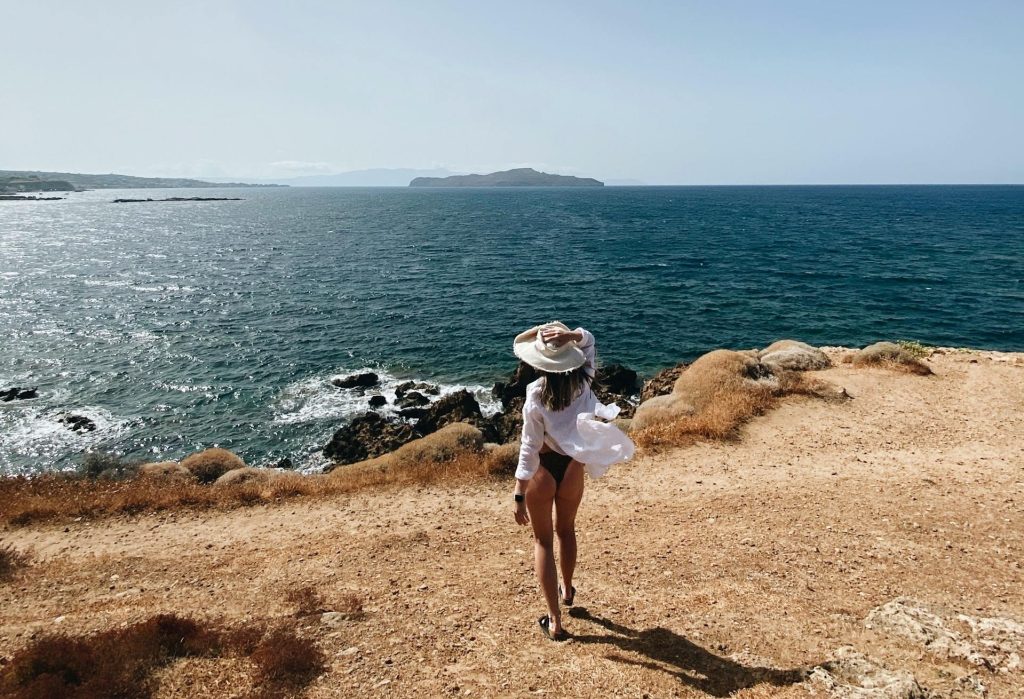
Crete is not a place to be taken lightly as a trivial holiday of sun and sand alone. It is a land of immense importance, rich in history and culture, that deserves, no, that must be appreciated, respected, and held in reverence. Every moment spent there, guided by the careful planning of Fly Me To The Moon Travel in Greece, revealed layers of the island that are easily missed by a cursory visit. Each day unfolded with intention and thoughtfulness, from the timing of our visits to the stories shared by our guides, allowing us to experience Crete deeply and fully. This was a journey that went beyond sightseeing. This journey in Crete impacted me in a way that I did not foresee. I left feeling enriched and enlightened, knowing this part of the world and its story in a meaningful way, a memory and a feeling that will stay with me always.