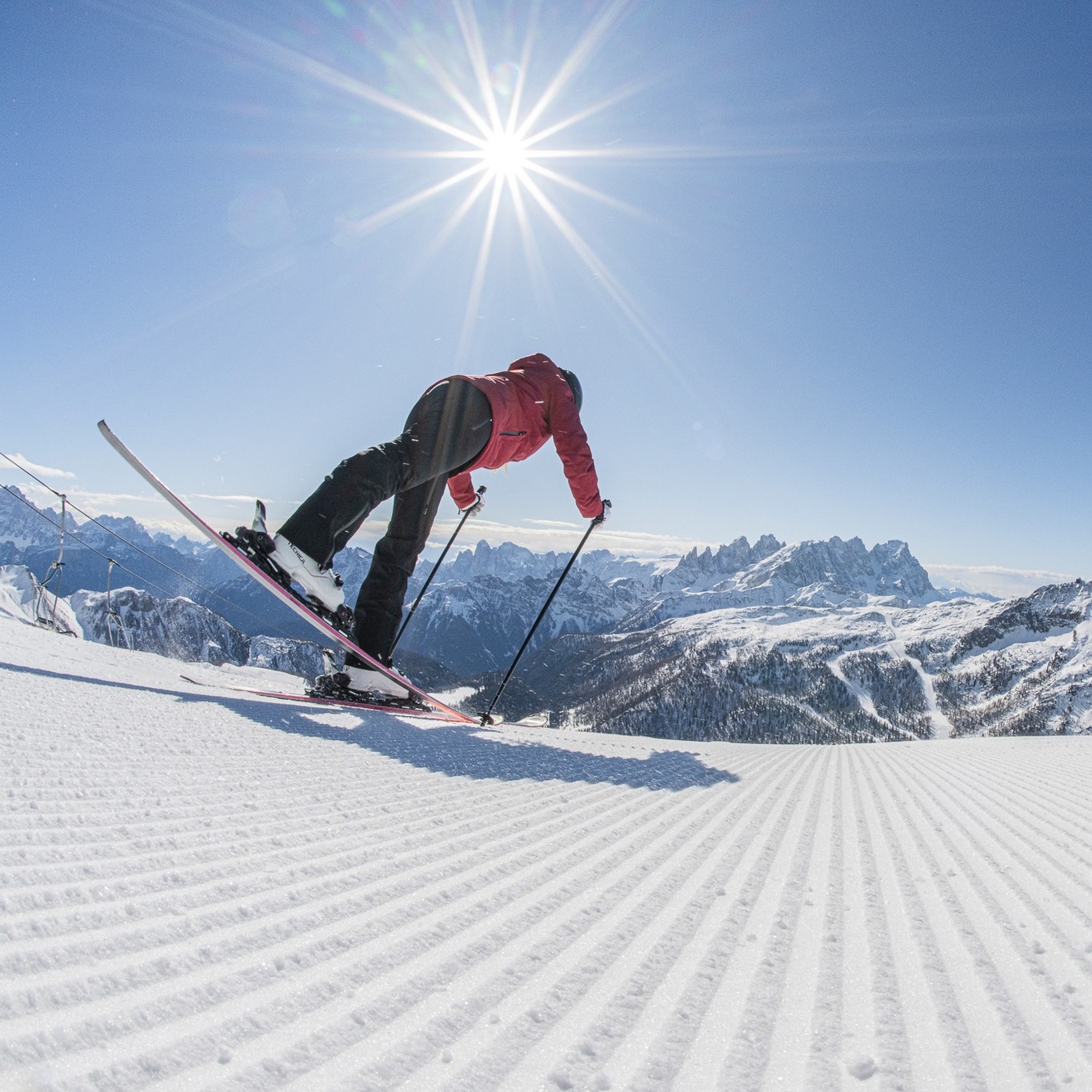
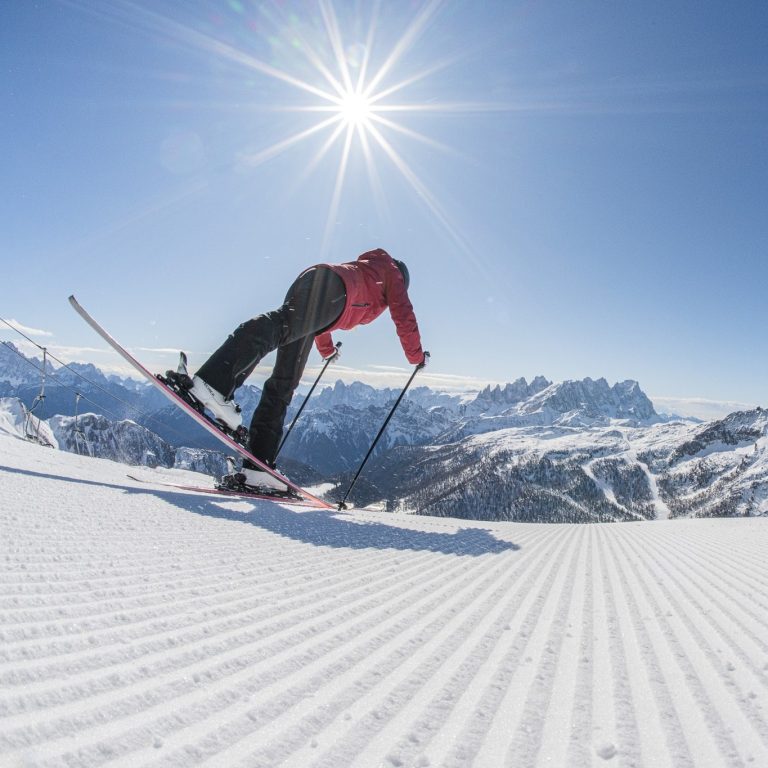
One could argue that all mountains are beautiful. Nature spent roughly 250 million years creating these massive geological markers through shifting tectonic plates and slow erosion. They are all special in their own way, but the Dolomites have something extra. These peaks were not always snow-capped giants. They began as ancient coral reefs in a prehistoric sea, later lifted skyward and hardened into pale limestone, and the rock has a mineral tone that shifts constantly with the light, from chalky grey to peach and rose at dusk. The shapes are abrupt and vertical, as if entire cliffs were lifted straight out of the earth and set down without warning.
For a ski holiday, travellers to the Dolomites often expect classic Italy. Pasta, espresso, maybe a few chairlifts. What they find in South Tyrol is so much more. This corner of northern Italy lives in two or three languages at once. Street signs read in German and Italian. Church towers look closer to Innsbruck than Rome. Lunch might be dumplings and speck followed by strudel, then a glass of Lagrein from the valley floor. It is Alpine life with an Italian accent.
Bolzano, Obereggen and Kronplatz make an ideal trio for a week that balances culture, serious skiing and food that holds its own against any European destination. The distances between them are short, the lift systems are efficient, and the terrain is varied enough to keep both confident carvers and cautious intermediates happy.
HISTORY AND CULTURE
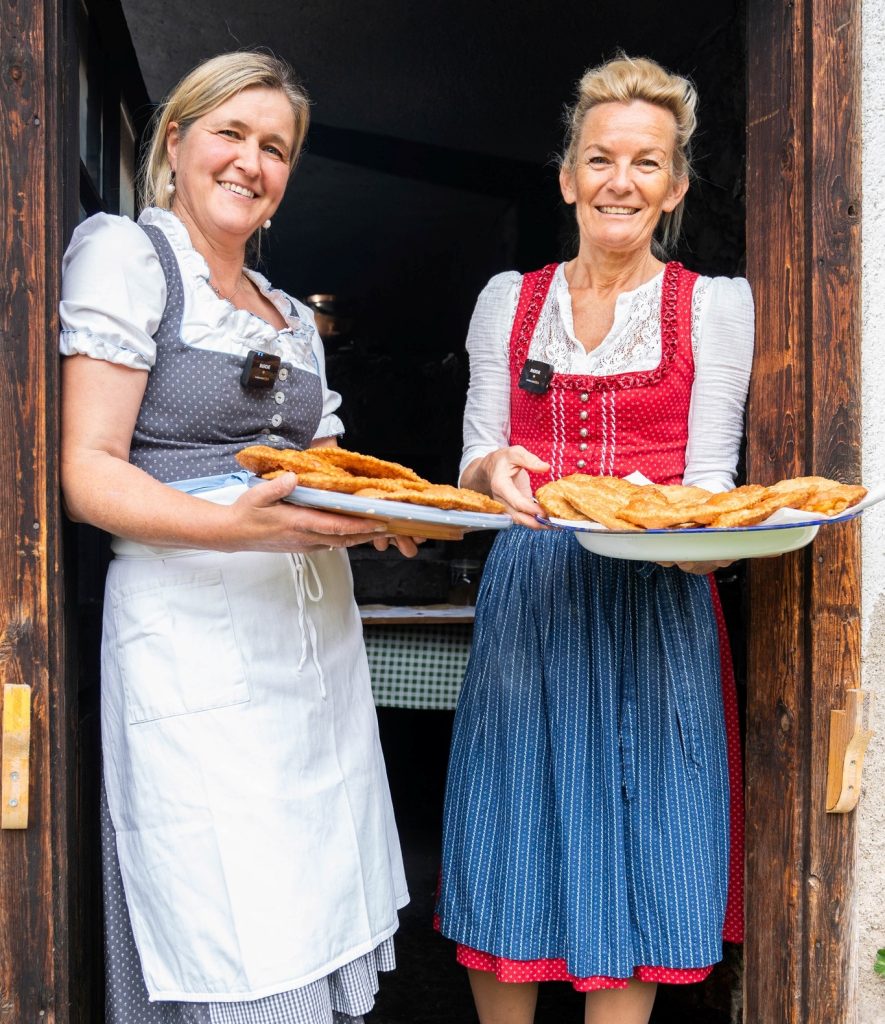
This ancient geology of the Dolomites serves as the backdrop for a culture that is just as layered as the rock itself. The range stretches across more than 6,000 square miles, covering South Tyrol, Trentino, and Belluno. In South Tyrol, daily life reflects both Italian and Austrian influence. You see it in the food, the language, and the architecture. Alpine farms sit below steep cliffs. Churches with onion domes overlook valleys. Modern design hotels stand comfortably beside traditional chalets. You’ll also quickly notice that affluent in the Italian Alps is different from the flashier ski resorts nearby, more grounded and understated, centred on culture, quality, and living well rather than any kind of excessive display of wealth.
South Tyrol only became part of Italy after the First World War. Before that, it was Austro Hungarian. That history still shapes daily life. Surnames, recipes and building styles reflect Central Europe as much as the Mediterranean. Food tells the story best. You will find Schlutzkrapfen, half-moon pasta filled with spinach and ricotta, served with melted butter and chives. There are knödel, bread dumplings enriched with cheese or speck. Cows graze on high meadows through summer, so dairy is taken seriously. Butter tastes fuller, mountain cheese sharper. Wine from the valleys below, such as Gewürztraminer and Lagrein, holds its own against more famous Italian regions. What binds these communities across the Dolomites is the mountain itself. Farming at altitude, wood cutting, cattle herding, ski guiding, and now hospitality. Families often run the same hotels for generations. Guests return year after year. It feels like a long conversation rather than a constant turnover.
BOLZANO: SOUTH TYROL’S CITY CENTER
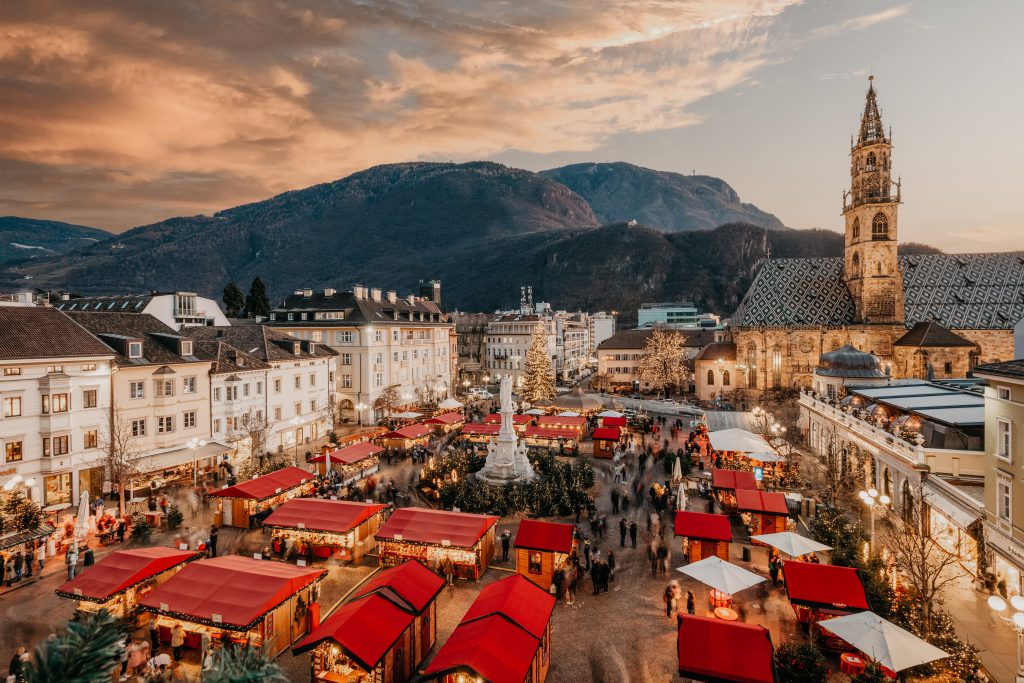
Bolzano is the logical starting point for a ski holiday in the Dolomites itinerary. It is not a purpose built resort. It is a working town with a handsome historic centre, arcaded streets, and the Talvera river running through the heart of the valley. The old town is compact and easy to walk through. Cobbled lanes open into small squares. Bakeries sell rye bread and apple strudel alongside cornetti. Outdoor tables fill quickly when the sun appears, even in winter. Fashion boutiques sit next to family run delicatessens.
The heart of Bolzano beats in its gorgeous old town, a labyrinth of cobblestone streets, charming squares, and elegant arcades. Piazza Walther, the main square, is a vibrant hub, especially during the festive season. The Via dei Portici, the city’s oldest street, invites leisurely strolls past artisan shops, chic boutiques, and inviting cafes. Here, you can discover traditional Loden wool products, intricate wood carvings, and local ceramics, offering a taste of authentic South Tyrolean craftsmanship. The Piazza delle Erbe, a bustling fruit market, provides a sensory feast of local produce and regional delicacies.
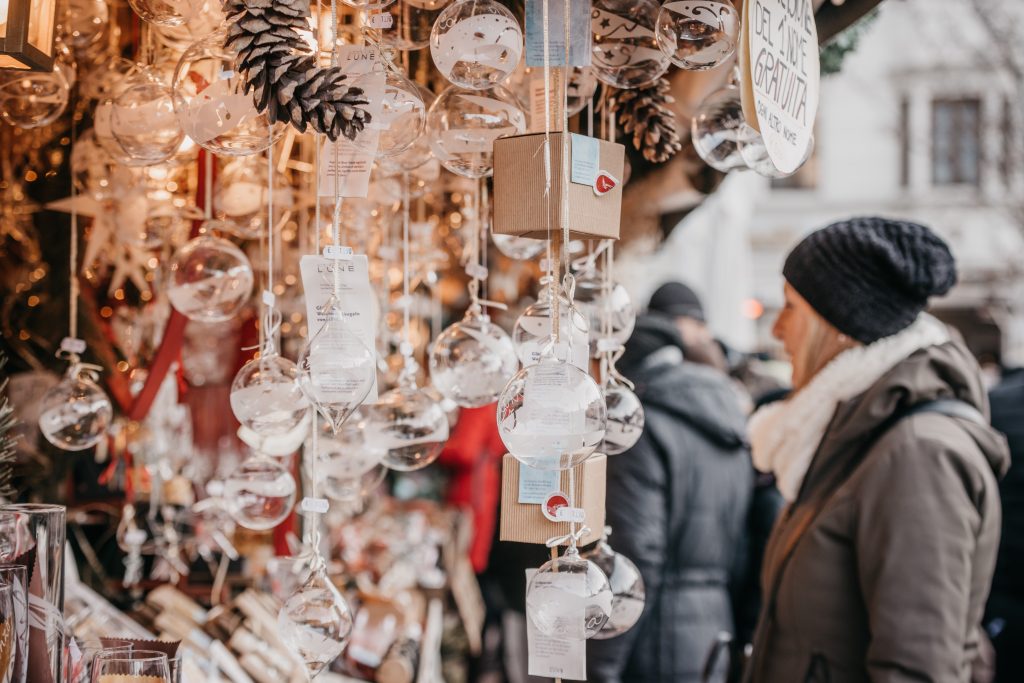
For those visiting in winter, the Bolzano Christmas Market is a non-negotiable stop. Wooden stalls cluster in Piazza Walther and nearby streets, their roofs and eaves lit with bright lights and garlands while the scents of cinnamon, mulled wine and roasted chestnuts drift through the air. At the centre of it all stands a towering Christmas tree, almost 20 metres tall and adorned with more than a thousand lights and ornaments shaped by children in hospital art workshops, giving the display an extra touch of meaning and community spirit.
This is not your standard European market filled with mass-produced plastic trinkets. The city holds a notoriously tight grip on the quality here. To get a license for one of the stalls, every single item sold must be produced or processed within the local South Tyrol region. This strict vetting process means the wooden stalls are filled with legitimate felt work, hand-carved wood from the Val Gardena, and local leather goods that actually last.
From Bolzano, you can reach Obereggen in about twenty-five minutes by car and Kronplatz in just over an hour. Falkensteiner Hotel Bozen WaltherPark has recently opened and offers a stylish place to start your trip with a night in the city before heading to the slopes. The hotel is modern and chic, with comfortable rooms, a lively rooftop bar and quality food. It is just a short walk from Bolzano’s old town, and it makes sense to stay there for the start of your trip before travelling to where you’ll ski during your holiday.
THE DOLOMITES SKI ZONES
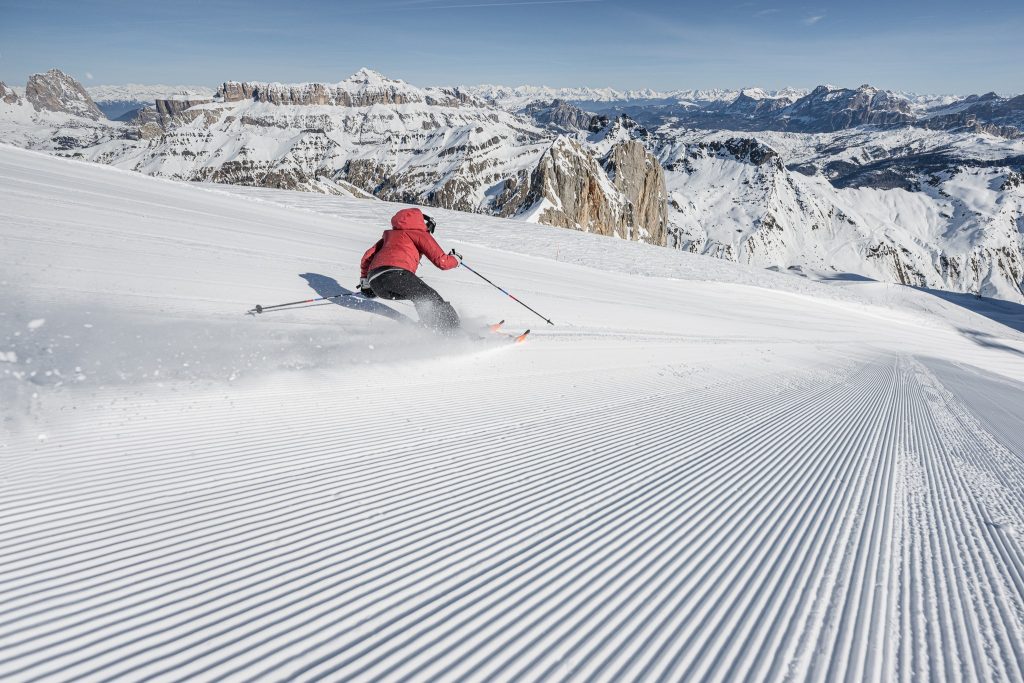
The scale of skiing in the Dolomites is vast. The peaks there are part of the Dolomiti Superski network, a massive network that covers 1,200 kilometres of slopes accessible with a single pass. The efficiency of the infrastructure is a point of local pride, with ultra-modern lifts that whisk you to the summits in record time. You feel the adrenaline hit as you transition from a heated gondola to the perfectly groomed corduroy snow that the Italians obsess over. This is a culture built on technical excellence, where the machinery is as sophisticated as the scenery. While natural snowfall is usually excellent, this region is also the global home of technical snow, and many of the world’s leading snow-making companies are based right here, ensuring that conditions are a constant source of local pride.
ADVENTURE ON THE SLOPES AT OBEREGGEN
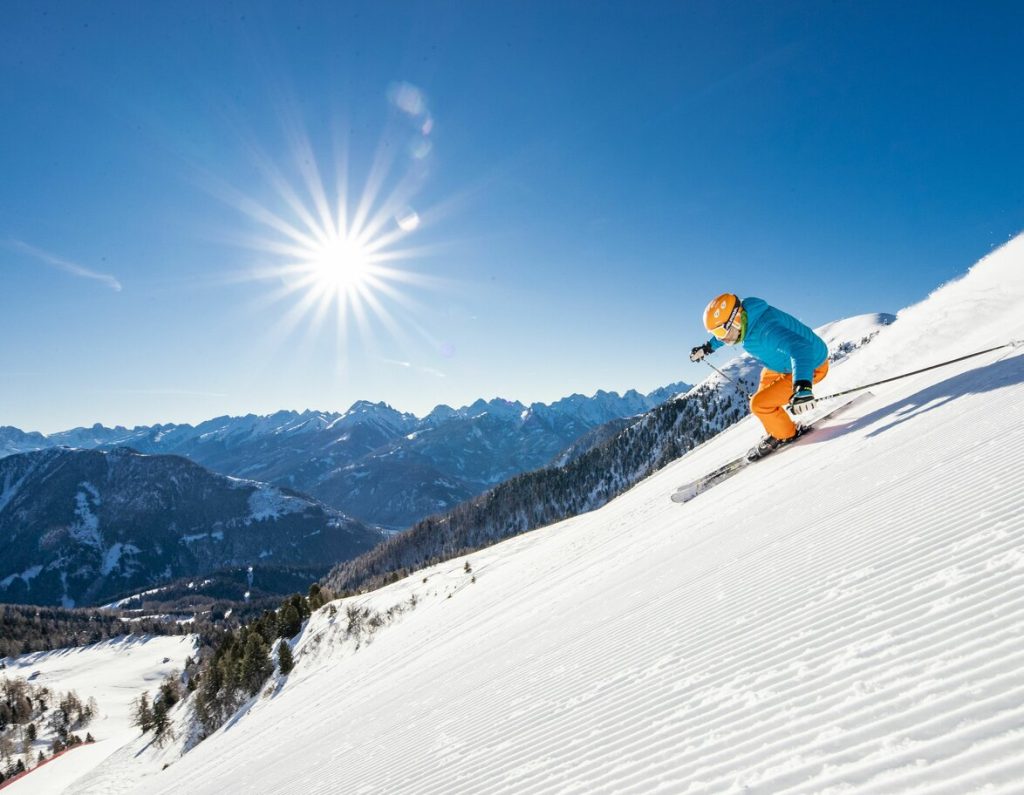
Obereggen, part of the Ski Centre Latemar, is the kind of place where you realise you have made a good choice the moment you click into your skis. The area is compact enough to understand quickly, yet varied enough to keep you engaged all day, with a tight network of lifts that run efficiently and link every sector without long traverses or flat run-outs. Skiers return because the experience is so reliable. The lifts are modern and quick, queues are rare, and you can string runs together without stopping, clocking up serious vertical by lunchtime. There is very little downtime or congestion, just continuous skiing from the first lift to the last.
The elevations range from 1,550 to 2,500 metres, offering a vertical drop that works your legs without feeling punishing and a genuine mix of terrain. The blues are wide and confidence building, ideal for warming up in the morning light, while the reds form the backbone of the mountain, long, rolling cruisers that invite steady carving rather than tentative turns. North-facing slopes protect the snow quality, and the pistes remain uncrowded enough that you can choose your line freely, moving from open bowls to tree lined stretches and back out again with the pale limestone peaks always in view. By the end of the day, you feel it in your legs simply because you have covered so much ground.
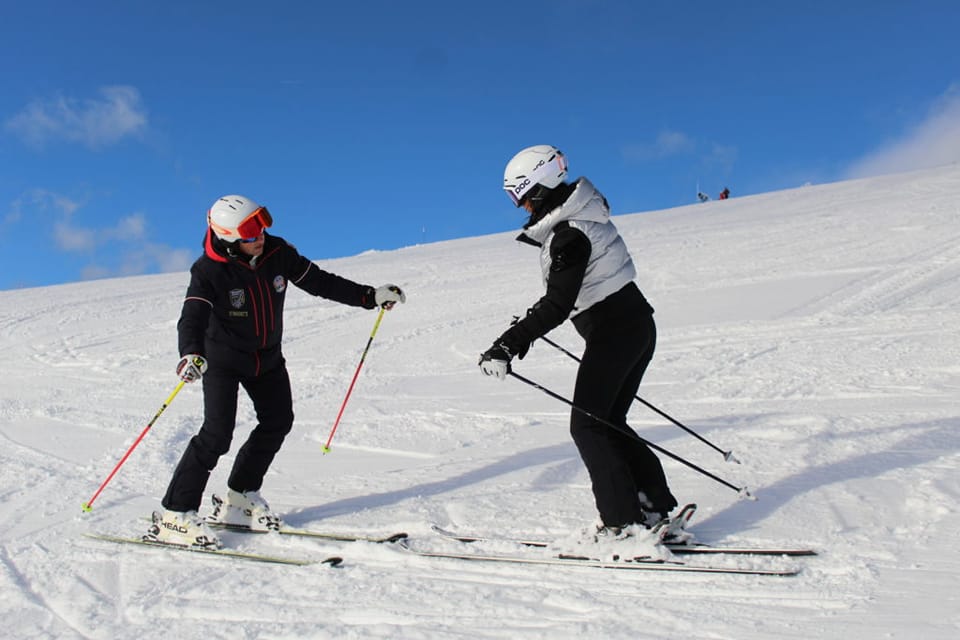
If you are new to the area, it is worth hiring a guide from a reputable school like Ski School Bruneck. Having a professional who knows the nuances of the wind and the sun can change your entire day. They can lead you to the Latemar Sixpack, the six best runs on the massif, which offer some of the most consistent snow in the region.
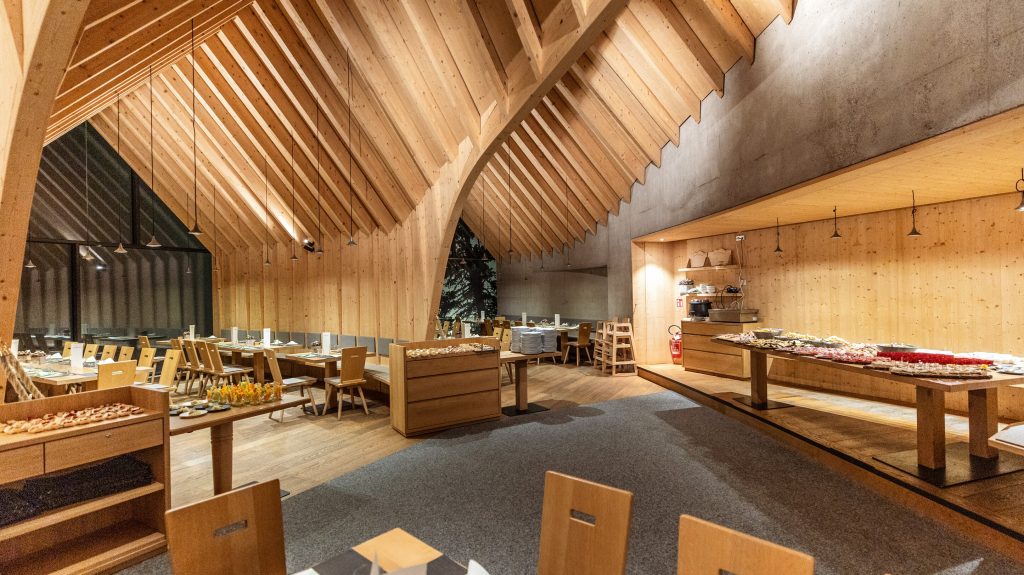
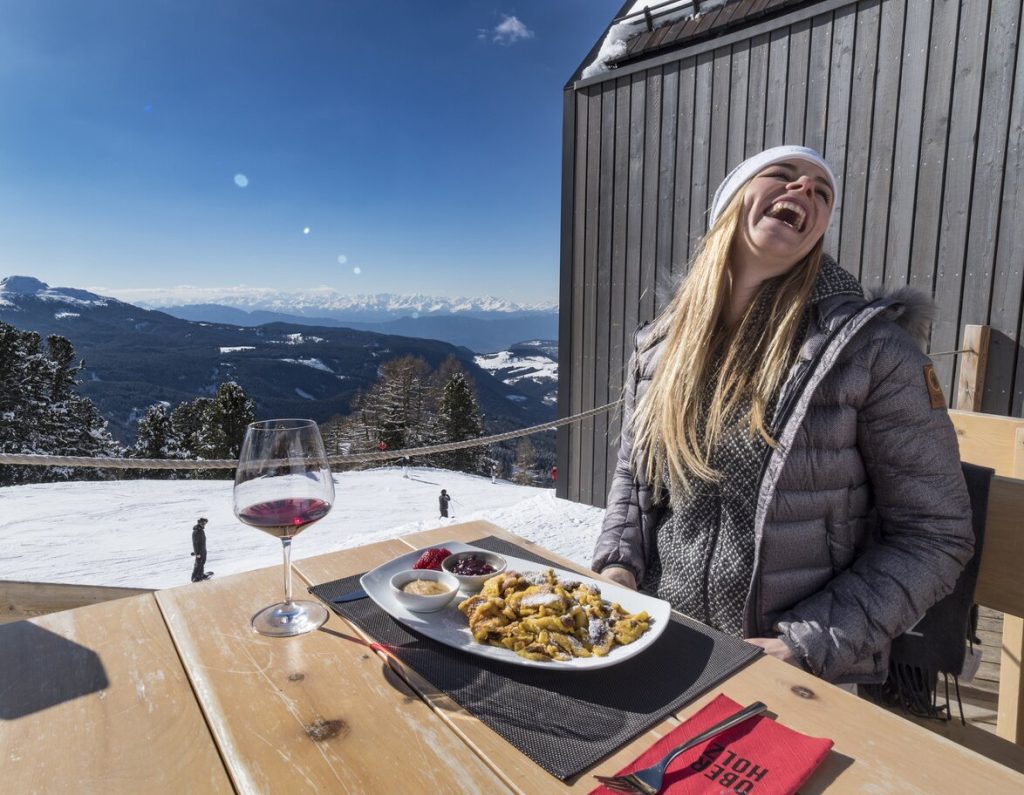
If it were not for the skiing, the food alone would be worth the trip. The Oberholz Mountain Hut is hardly a hut. It is more like a posh villa in the clouds. Outside, the design is sleek and modern with reflective glass and steel. Inside, it is a warm, larch-wood sanctuary. You can dine alfresco on the terrace with a glass of wine, but the interior is where you appreciate the views over the slopes and the mountain ranges just beyond.
SKIING KRONPLATZ: ABOVE THE SEA OF CLOUDS
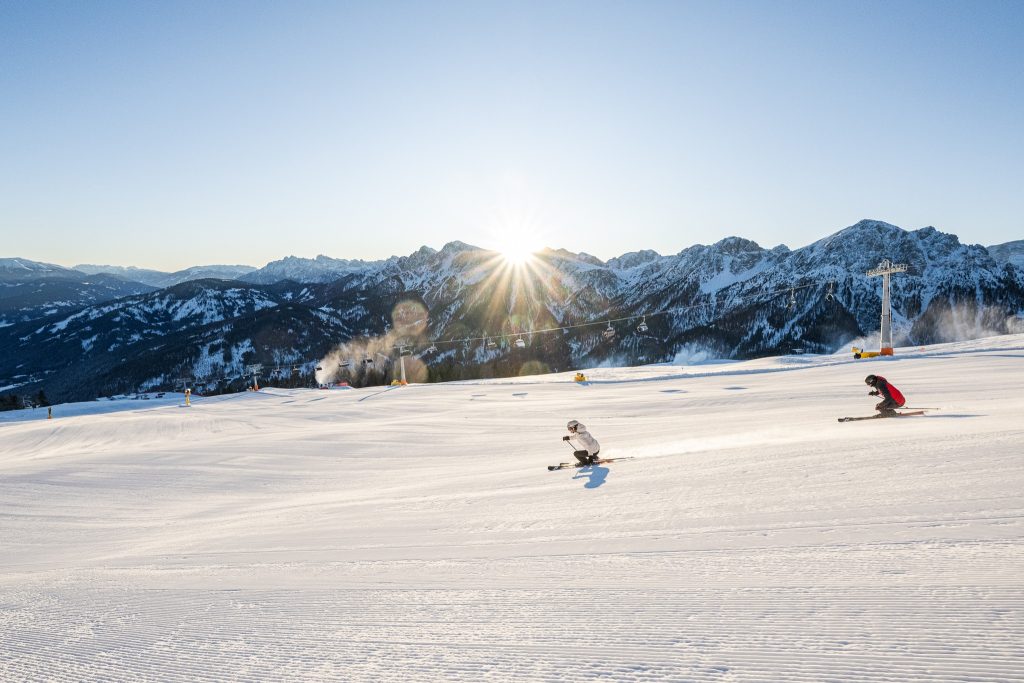
Kronoplatz is without question the crown jewel of the South Tyrol ski experiences. It is a massive, dome-shaped mountain that offers 360-degree views of the Alps and the Dolomites, which often feels like standing on the edge of the world. One of the most remarkable things about Kronplatz is the weather inversion. On some days, the valley below is dark, grey, and overcast where it can feel absolutely bleak in the town of Brunico. However, as your gondola ascends, you break through the cloud layer. It is a rush of adrenaline. One moment you are in the fog, and the next, you are in brilliant, blinding sunshine. The clouds below look like a solid sea of white or a massive frozen lake, with only the highest peaks of the Dolomites piercing through. It is an eerie, sublime sight that makes you feel completely detached from the world below.
The summit of Kronplatz sits at an elevation of 2,275 metres. It functions as a high-altitude town square. Unlike many peaks that feel isolated, the top of this mountain is bustling. It is a wide, flat plateau that serves as the central nervous system for the entire resort. This is where multiple cable cars from different valleys all converge. The first thing you will notice is the Concordia 360° freedom bell. This massive bronze bell is housed in a circular viewing platform that offers a panoramic sweep of the Dolomites to the south and the main Alpine ridge to the north. It is one of the largest bells in the Alps. When it rings at noon, the sound carries across the entire mountain.
At the summit you’ll see skiers and non skiers alike. And it happens to a be a crossroad of culinary offerings and culture. You have everything from quick-service spots for a fast espresso to the refined, glass-walled AlpiNN. On a clear day, the outdoor terraces are packed with people in lounge chairs. They soak up the sun with the jagged limestone peaks as a backdrop. Between the clatter of ski boots, the ringing of the bell, and the constant hum of the gondolas, the top of Kronplatz feels like a cosmopolitan alpine hub.
SKIING KRONPLATZ
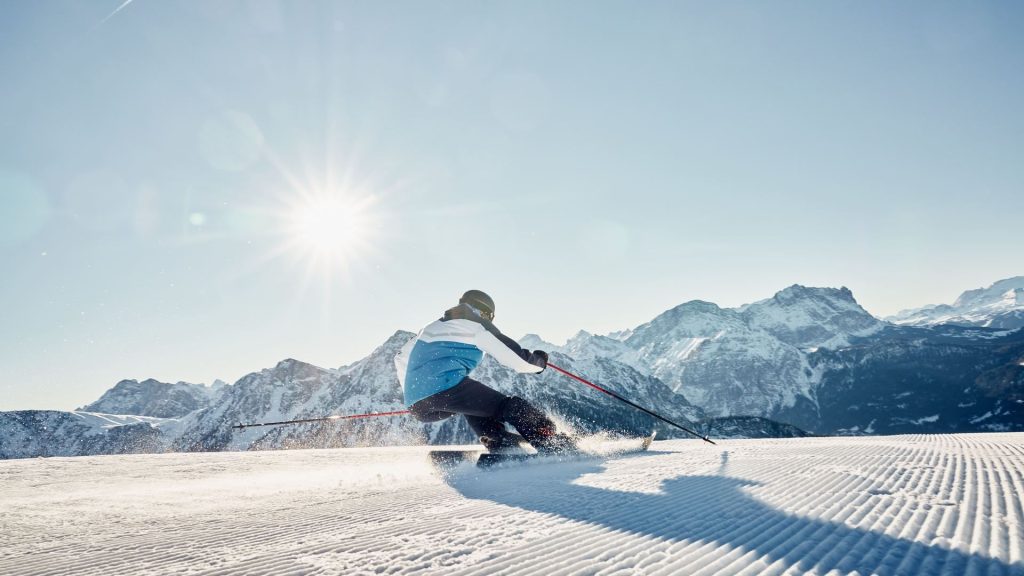
From the Kronplatz summit, a central hub of lifts radiates in every direction, so you spend the day skiing rather than navigating or waiting. The lifts are fast, modern, and rarely crowded, allowing continuous movement across the mountain. North-facing slopes preserve snow quality, keeping the surface firm and smooth well into the afternoon. The runs are uncrowded enough to choose your line freely, moving from open bowls to tree lined sections and wide groomed pistes, all framed by the pale limestone peaks of the Dolomites. Momentum carries from one sector to the next, giving a sense of purpose to every run.
The terrain itself is varied and well balanced. Elevations range from 1,200 to 2,275 metres, creating vertical drops that are substantial without being punishing. Blues are fewer but well placed for warming up or recovery between harder runs, while reds dominate the mountain, long and consistent enough to settle into confident, uninterrupted turns. The blacks are the highlight for advanced skiers, steeper and more direct, often dropping straight down the fall line with occasional tree lines. Among these, the “Black Five” are considered the most challenging runs on Kronplatz, each offering sustained pitch, technical sections, and a true test of skill and stamina. Conquering all five in a single day is a badge of honour, a testament to your prowess on the slopes of this magnificent ski holiday in the Dolomites destination.
MOUNTAIN HIGH MUSEUMS
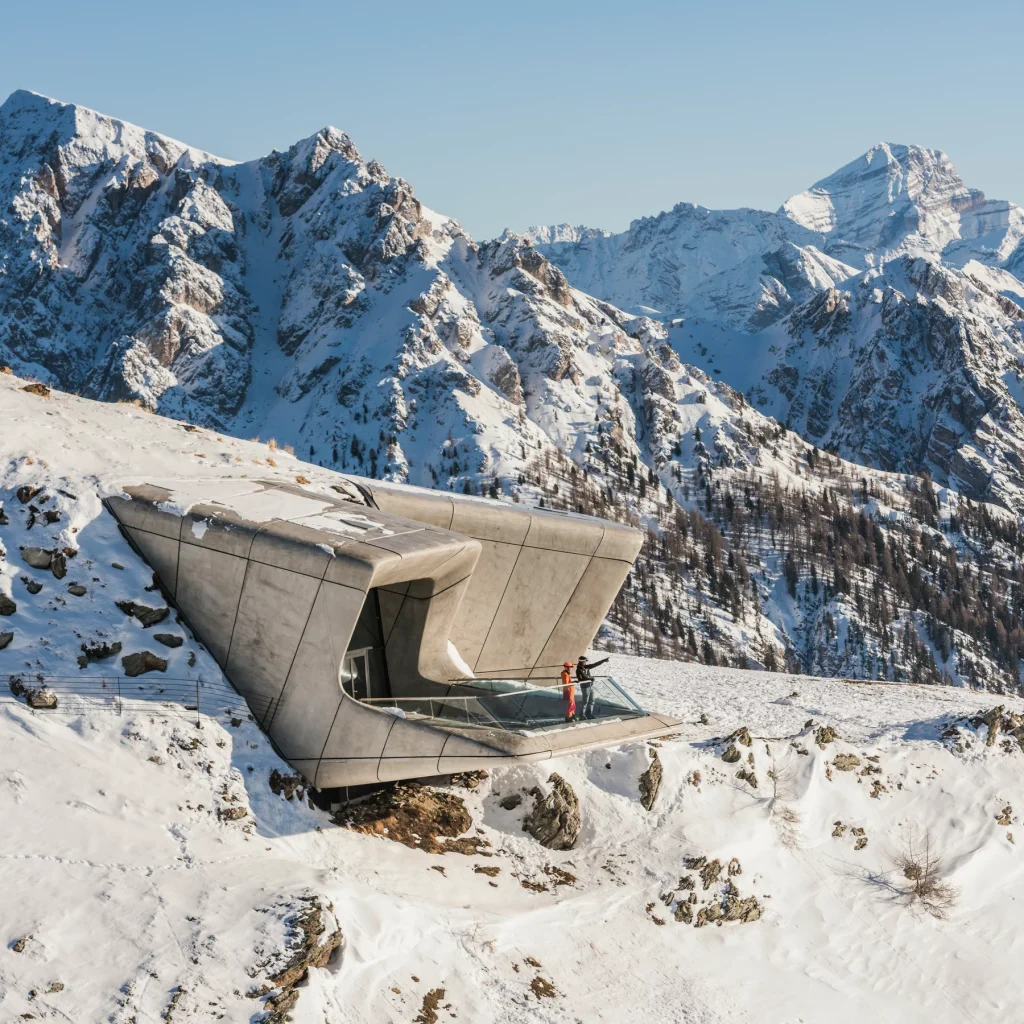
Beyond the exhilarating descents, Kronplatz offers a unique blend of alpine culture and cutting-edge architecture at its summit, perched at 2,275 meters. Here, two extraordinary museums stand as testaments to human ingenuity and a profound connection to the mountains. These are not afterthoughts; they are monuments to the mountains and their impact on man’s history, art, and culture.
In the Dolomites, mountaineers are revered as part of the region’s culture, celebrated for courage, endurance, and a deep connection to the peaks. The MMM Corones, the final chapter of Reinhold Messner’s ambitious museum project, is a fitting tribute to this heritage. Messner, the legendary mountaineer and the first person to climb all fourteen 8000 metre peaks without supplemental oxygen, is celebrated for pushing the limits of human endurance and exploring the spirit of mountains.
Designed by the late Zaha Hadid, the museum is carved directly into the summit of Kronplatz, with only the entrance and three cantilevered concrete viewing platforms visible from the outside. These balconies hang over the abyss, perfectly framing the sheer rock faces that Messner himself climbed. Inside, the galleries descend through the mountain via fluid, raw concrete staircases. The exhibitions cover the history of traditional mountaineering and the discipline of “Big Walls,” referring to enormous vertical rock faces that require days of climbing, specialised gear, and extraordinary mental and physical endurance to conquer the Dolomites. It is only fitting that this testament to mountain climbing sits atop one of the most magnificent mountains in the Dolomites, if not the world.
Lumen: A Celebration of Mountain Photography
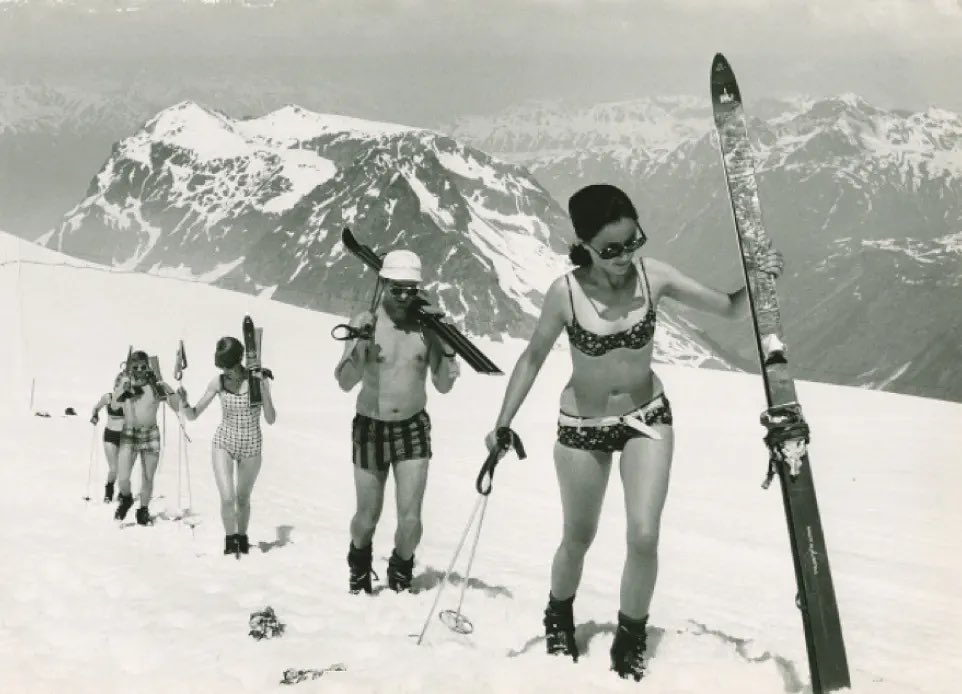
Also on the summit in the former mountain station of the Kronplatz cable car, lies LUMEN, the Museum of Mountain Photography. Spanning 1,800 square metres over four floors, it is a modern, immersive space dedicated to exploring how mountains have been captured and understood through the lens. Visitors move through a visual journey from the earliest black-and-white glass plates to contemporary digital masterpieces, tracing the history of alpine imagery and the evolving ways humans have perceived these peaks. Every room is designed to immerse you in both the scale and the artistry of mountain photography, making the museum an experience as much as an exhibition.
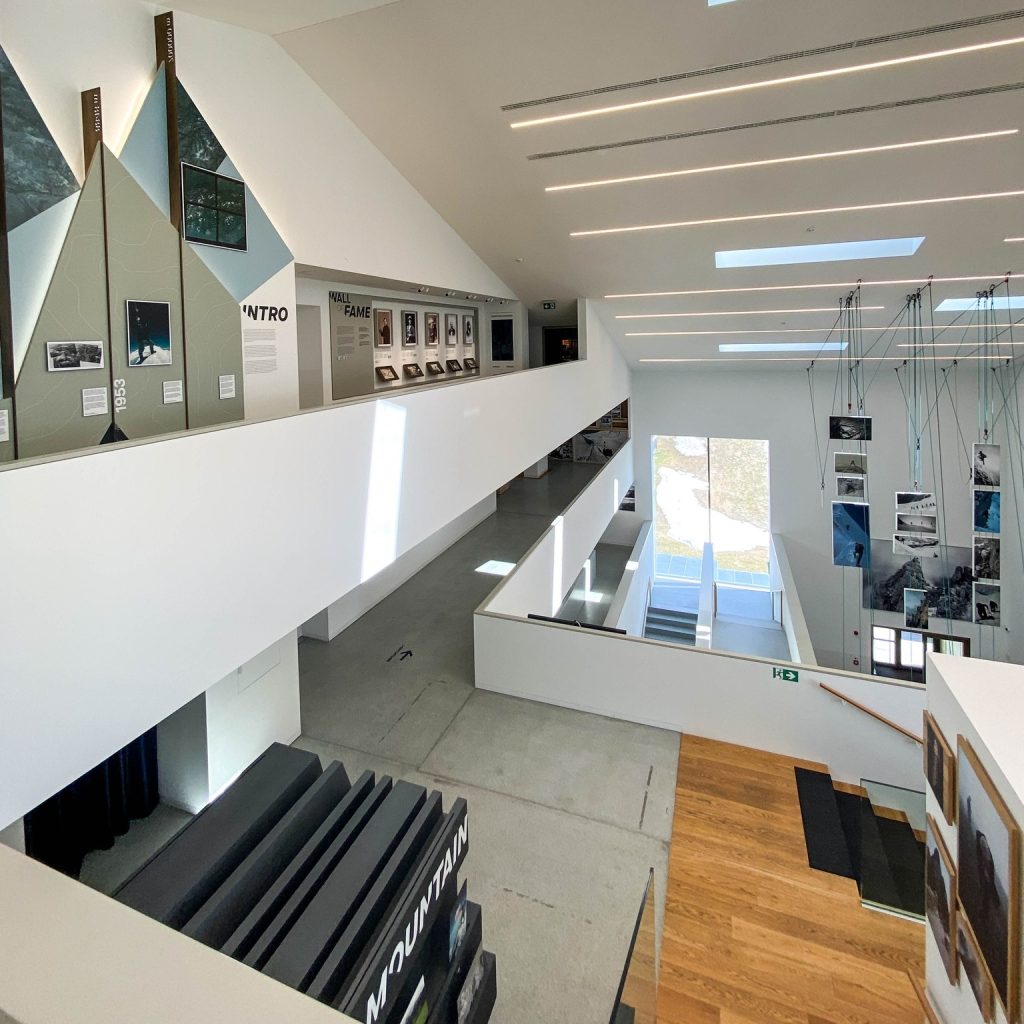
Among its most striking features is the Mirror Room, where walls, floor, and ceiling reflect the surrounding peaks in an infinite loop, creating a kaleidoscopic, almost dreamlike sensation of floating within the mountains themselves. The Shutter Room frames the real landscape outside with a colossal opening and closing shutter, blending the actual mountains with photographic perspective. The Adrenaline Room uses visual perspective to simulate the thrill and motion of mountain sports. Through these installations and the permanent exhibition, Ad Astra, LUMEN makes the peaks tangible and memorable, offering a cultural counterpoint to the physical experience of the Dolomites. Perched at the summit, it allows visitors to see, feel, and understand the mountains from a perspective few other places can provide.
ALPINN: MICHELIN DINING AT THE EDGE OF THE WORLD
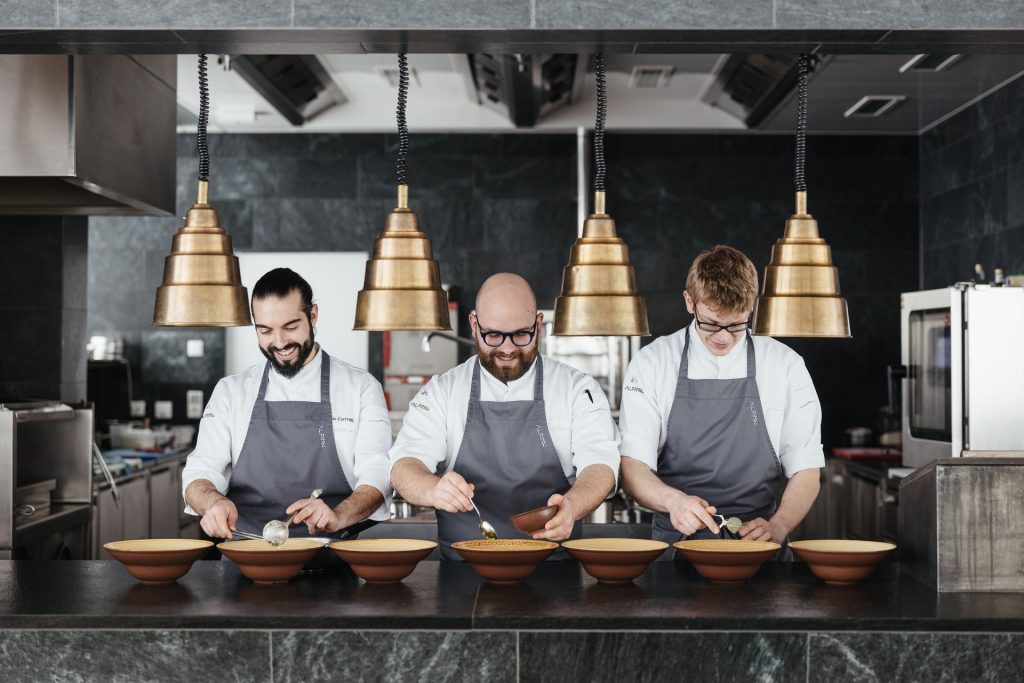
One of the highlights of a ski day in Kronplatz is the AlpiNN. Perched at the summit as well youll find this Michelin-starred restaurant by Norbert Niederkofler, recognised as one of the world’s 50 best restaurants. For the gourmand and well-to-do traveller, it is a highlight of the Dolomites ski experience. The building itself is an architectural statement, suspended on pillars over the mountain edge with floor-to-ceiling windows that provide uninterrupted views of the surrounding peaks. It is a bustling, high-energy room where hikers, skiers, and foodies sit together at long tables, sharing a common appreciation for the landscape that provided the meal. For a ski holiday, it is rare to find a restaurant of this level directly on the mountain, making AlpiNN a destination in its own right.
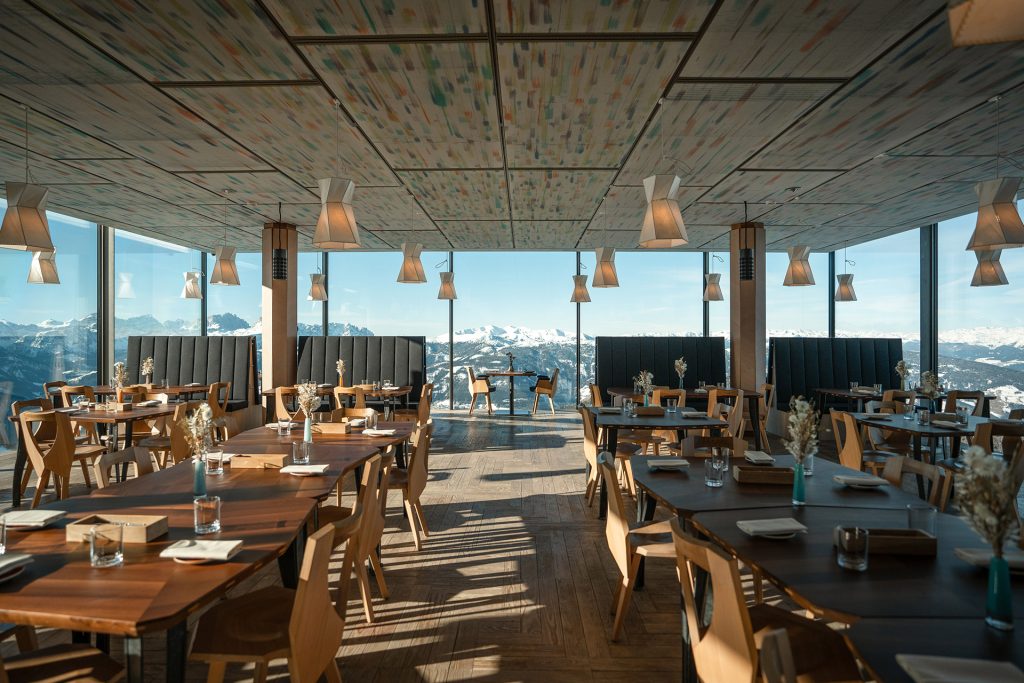
Niederkofler’s ethos is “Cook the Mountain.” This is not PR speak; it is a rigid commitment to sustainability. Niederkofler’s philosophy is simple. Use what the mountains provide and use it well. He does not use olive oil because it does not grow in the mountains. He does not use lemons or any imported citrus. Instead, he uses fermented berries for acidity, local butter for fat, and herbs foraged from the surrounding slopes.
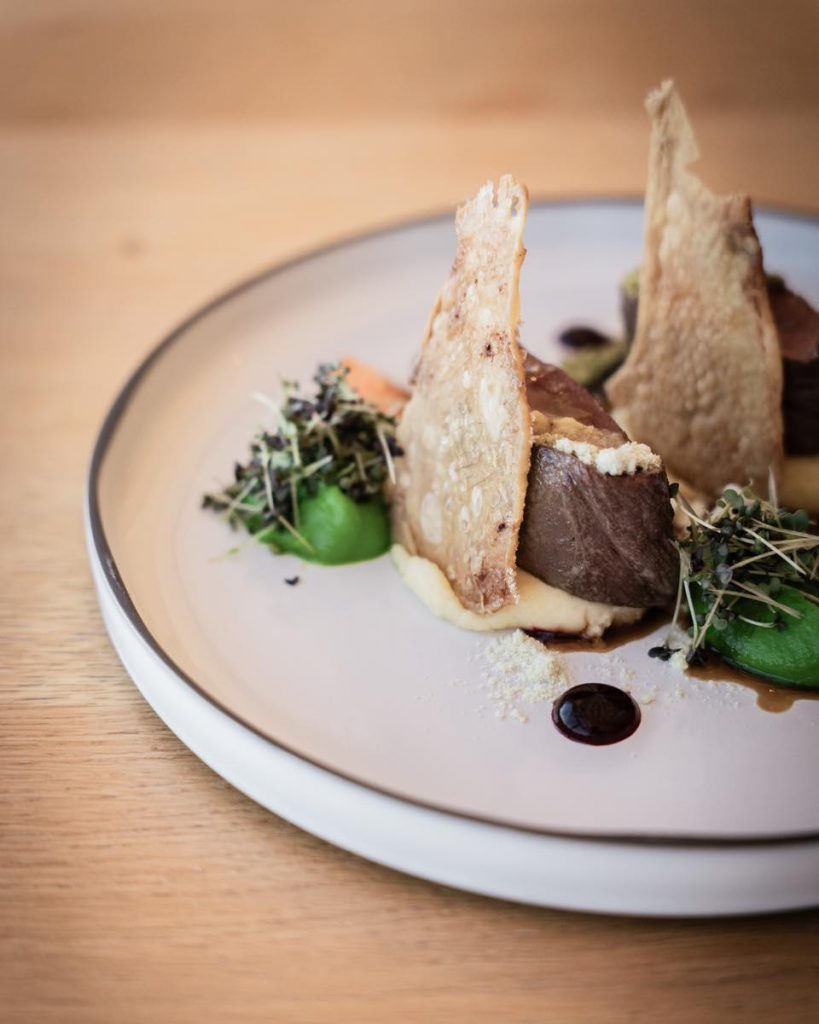
The menu focuses entirely on seasonal, local produce sourced from farmers and small producers in the surrounding valleys. The open kitchen allows you to watch the precision of the team as they turn rustic mountain ingredients into Michelin-level art. Dishes might include char ceviche with green apple and dill, braised beef cheek with polenta and fried onion, or ash-cooked onion with valley cheese gratin and crispy sour allium. AlpiNN exemplifies sustainability, seasonality, and a transparent connection between mountain, producer, and table, making it a uniquely Alpine culinary experience.
HOTEL PETRUS: THE THREE-GENERATION FAMILY LEGACY
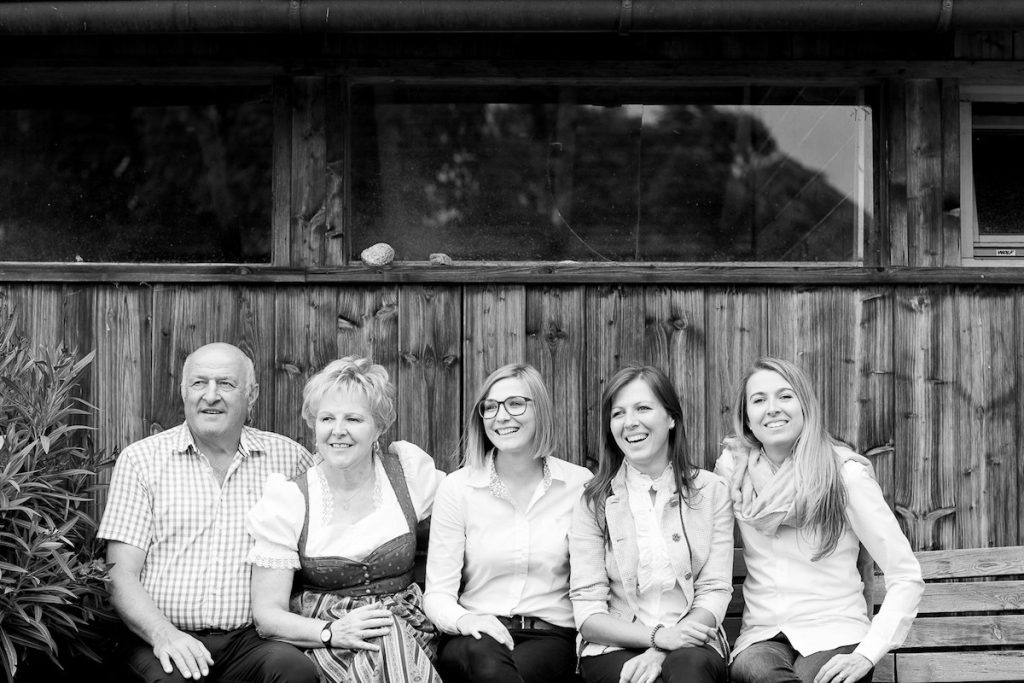
At the base of Kronplatz in the small village of Riscone, you’ll find the Hotel Petrus. It is a family home in the truest sense, run by three generations of the Aichner family. Brigitte, Christina, and Daniela manage the day-to-day operations with fresh energy and a cosmopolitan eye, while their parents, Hans and Gerti, remain the heart of the house. Hans tends the Lechnerhof, the family’s organic garden supplying herbs and vegetables to the kitchen, while Gerti greets guests personally and ensures the atmosphere feels intimate and lived-in. This is their most precious family heirloom, and three generations have invested their lives to provide hospitality to those who ski the mountains or come to visit throughout the seasons.
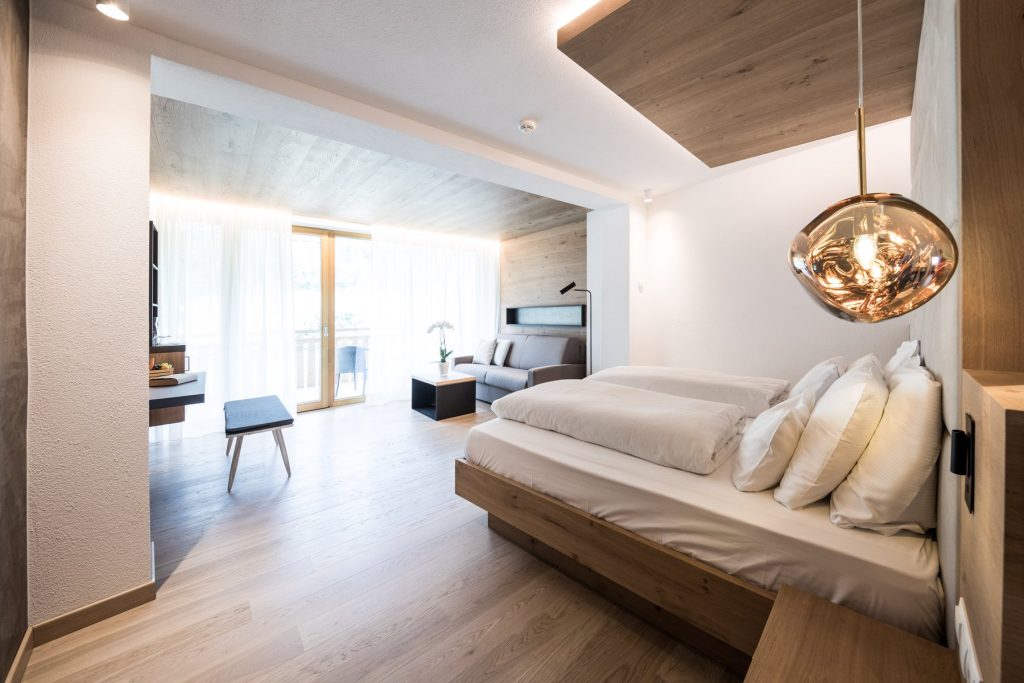
The design and accommodations reflect that same balance of honesty and refinement. This five-star chalet-style hotel is modern and curved, yet built with traditional Alpine materials: pale oak, stone, and soft fabrics. Rooms and suites are generous, with balconies or floor-to-ceiling windows framing the valley and peaks. The Himmelreich Panorama Suite offers a private outdoor jacuzzi and soaking tub, while the Wellness Suite lets guests enjoy a steam bath or whirlpool under the stars.
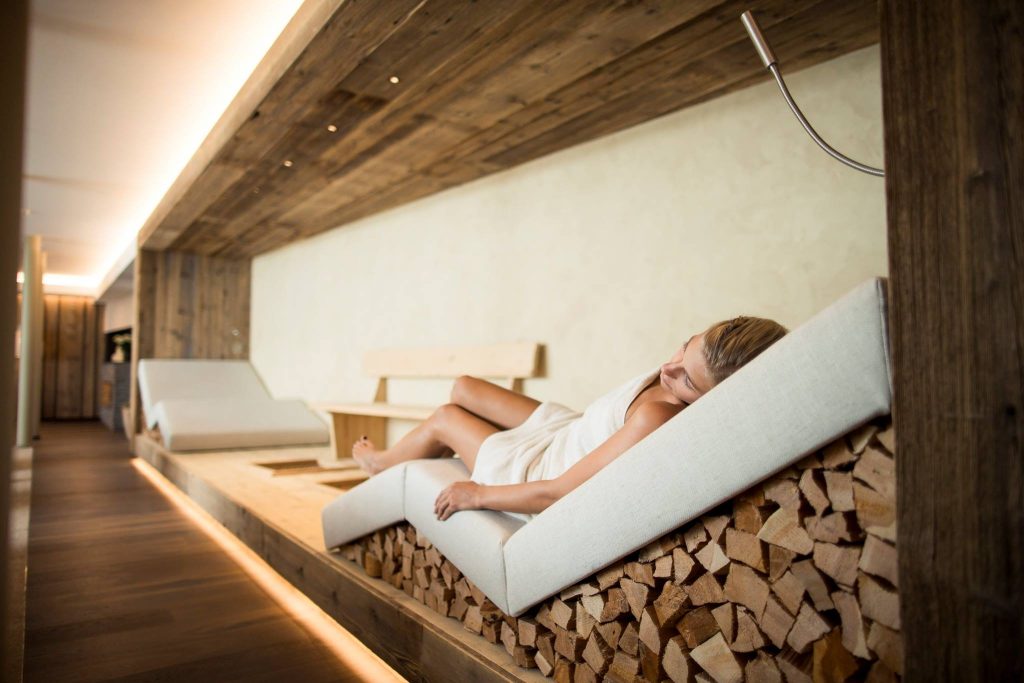
After a day on the slopes, the Dahoame Spa becomes the centre of gravity. Its 25-metre indoor-outdoor pool, heated to 30°C, lets you swim into crisp mountain air as steam rises around you. The spa uses natural elements from the surrounding forests and meadows, with real mountain meadow hay in the Fieno room that fills the space with a calming fragrance and encourages deeper relaxation, Swiss stone pine in the Cirmolo room to ease circulation, and a barefoot forest path that reconnects you to nature. Saunas, steam rooms, herb and wool relaxation rooms complete the suite of restoration and relaxations facilities. Dining mirrors the same ethos: every meal is served at the table, emphasising local and seasonal ingredients, many sourced from the family’s own garden. The evening often concludes with the iconic cheese cart, where Mama Gerti or Brigitte presents rare Alpine cheeses and shares the stories behind them. It is the combination of design, cuisine, and family stewardship that makes Hotel Petrus feel more like a home than a hotel. This is far from a soulless corporate hotel. This is who they are, their source of pride, and you feel it in the details, the service, and the warmth of your stay.
THE DOLOMITE EXPERIENCE
In the Dolomites, the mountains, the people, and the culture leave a lasting impression. Skiing challenges and exhilarates, while local hospitality and cuisine reveal care, tradition, and a deep connection to the land. The slopes to the meals to the spaces you rest in linger long after you hung up your boots back home..