
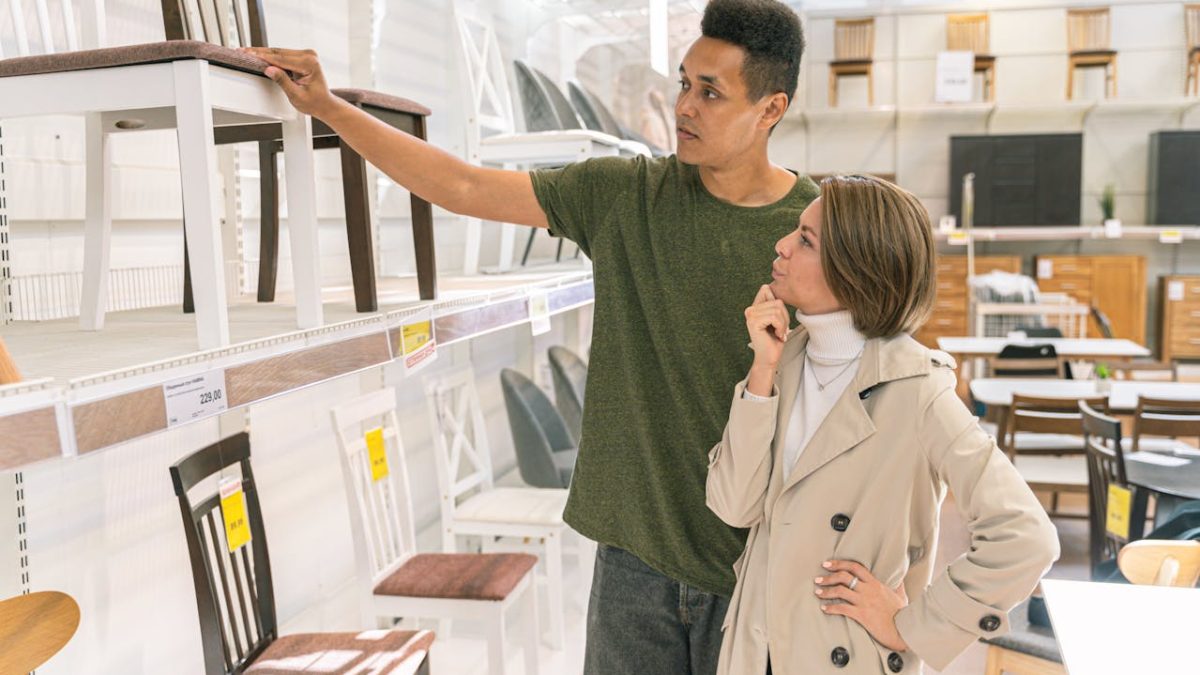
The living room is where a home reveals its character. It is the room that greets guests, absorbs the long evenings, anchors the weekends, and quietly communicates every decision its owner made about what comfort, beauty, and daily life are worth. It is also the room where most people eventually realize they bought the wrong sofa.
Luxury furniture shopping is not about spending more. It is about spending with intention. The pieces that last, that earn their place, and that make a room feel genuinely considered rather than simply filled are always the ones chosen with an understanding of materials, scale, and purpose. Two categories sit at the core of nearly every living room worth caring about: the seating and the media console. Get both right, and the rest of the room tends to follow.
The Sofa as an Investment, Not an Impulse
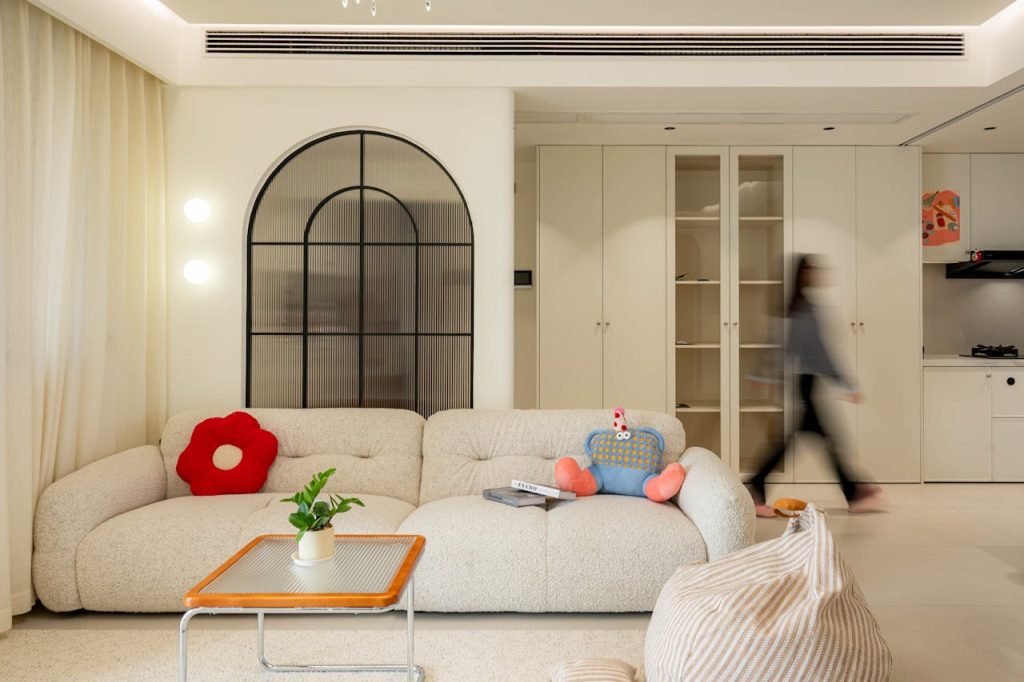
There is a reason the cloud couch has become one of the most discussed pieces in contemporary interior design. The appeal is not purely aesthetic. It is the promise of a sofa that performs on multiple levels at once: generous enough for genuine lounging, refined enough to anchor a designed room, and built with materials that hold up to real life rather than just photography.
Investing in a cloud couch requires the same discipline as any serious furniture purchase does, beginning with materials. The best pieces use fabrics certified to international safety standards, free from harsh chemical finishes, breathable in warm months, and washable in practice rather than just in theory. Hypoallergenic, vegan materials that perform as well as they look represent the newer definition of luxury upholstery: not ostentatious, but genuinely considered.
Modularity is the second question worth asking before committing to any large sectionals. The most elegant cloud couches are not static configurations. The best modular sectional configurations allow a buyer to start with a compact three-piece arrangement and expand outward as the household changes, the room evolves, or a move to a larger space makes an extended layout possible. A sofa that adapts is a sofa worth paying for.
The quiet luxury movement in interior design has reinforced what many seasoned decorators have known for decades: the most beautiful rooms tend to be built around a few exceptional pieces rather than many mediocre ones. A well-chosen sofa in a clean off-white or warm neutral reflects light generously, serves as a backdrop for your own styling choices, and ages with a dignity that trendier pieces cannot sustain. This is precisely the design philosophy JustLuxe has explored in its coverage of luxurious interior design trends: true luxury whispers rather than shouts, and the finest spaces are experienced more in atmosphere than in individual statements.
The Media Console: Function First, Design Always
The television console is the piece most often treated as an afterthought and most frequently regretted when it is. Scale errors, material mismatches, insufficient storage, and a console too narrow for the screen it is meant to support are among the most common complaints from homeowners who prioritized visual appeal at the expense of a more disciplined approach.
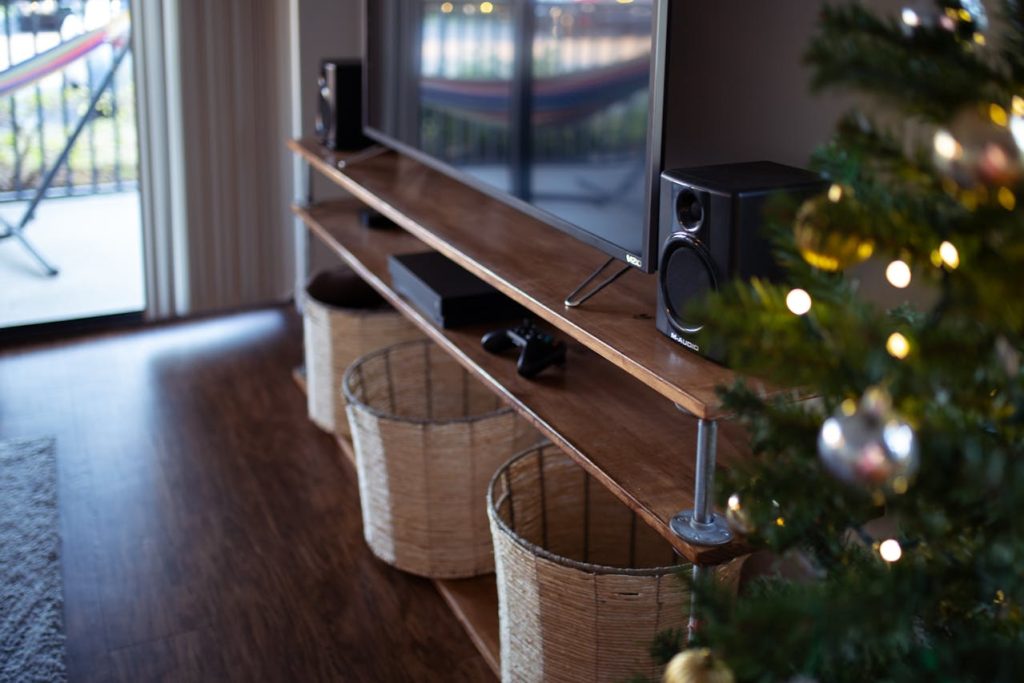
Choosing the right TV stand starts with a rule that is easy to state and easier to ignore: the stand should always be wider than the television. A screen that overhangs its base looks visually unstable and creates genuine safety concerns with larger sets. Beyond width, the storage configuration deserves as much thought as the silhouette. Open shelving suits gaming consoles and decorative objects placed with purpose. Closed cabinetry with barn doors or panel fronts conceals the cables, remotes, and secondary devices that accumulate over time. Drawers handle the smaller accessories that otherwise disappear into couch cushions.
Material choice is where the console either anchors the room or quietly undermines it. The question of solid wood versus composite furniture comes down to how the piece will be used and what the rest of the room asks of it. Solid wood brings natural grain variation, genuine weight and stability, and a durability appropriate for furniture expected to handle daily use across many years. It is the most honest material for a piece that will anchor the focal point of the room. Composite or engineered wood, on the other hand, offers a cleaner, more uniform finish at a lighter weight and often suits spaces with a more streamlined, contemporary identity. Neither answer is wrong, provided the reasoning is deliberate rather than incidental.
Style alignment matters more than most buyers account for upfront. A mid-century media console with tapered legs and warm walnut tones belongs to a very different visual conversation than a white lacquer console with recessed hardware. Both can be beautiful. Neither belongs in a room built around the opposite aesthetic. Matching the console to the flooring tone, wall color, trim finish, and existing furniture before purchasing prevents the kind of dissonance that is obvious to every guest and invisible only to the person who placed the order in haste.
The Mistakes That Cost the Most
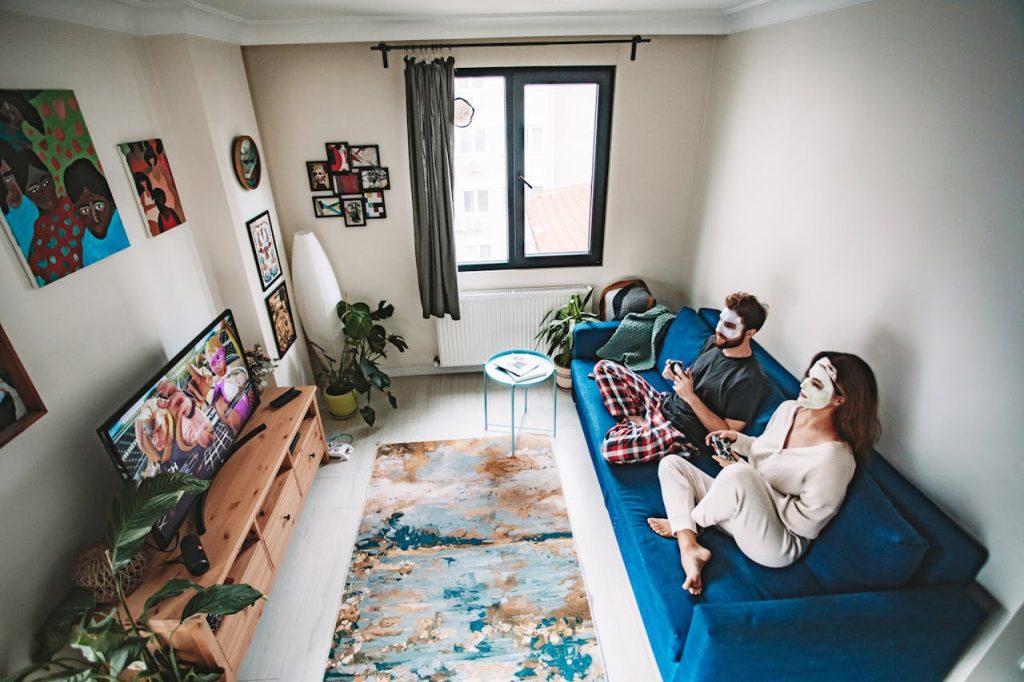
There is a consistent pattern in how furniture purchases go wrong, and it has very little to do with budget. Common furniture buying mistakes almost always trace back to skipping the measuring step, purchasing based on how a piece looks in isolation rather than how it reads in the actual room, and underestimating how quickly electronics and accessories accumulate around a media console. A stand that looks spacious in a product image can feel cramped within a month once a gaming console, streaming device, and auxiliary speakers take up residence.
Weight capacity is the specification most consistently ignored and most consequentially regretted. Larger televisions are heavier than buyers expect, and when secondary equipment is factored in, a console operating near its structural limit is not a long-term solution.
Building the Room With Intention
The living room that works is the one where every piece has been chosen with a clear sense of how it functions, what it is made from, how it will age, and how it speaks to everything around it. The sofa needs to hold up through years of genuine use while remaining beautiful enough to anchor the room. The media console needs to be proportionally right, materially considered, and capable of hiding the practical realities of modern home entertainment without sacrificing the design line.
That distinction is ultimately what separates a purchase from an investment.