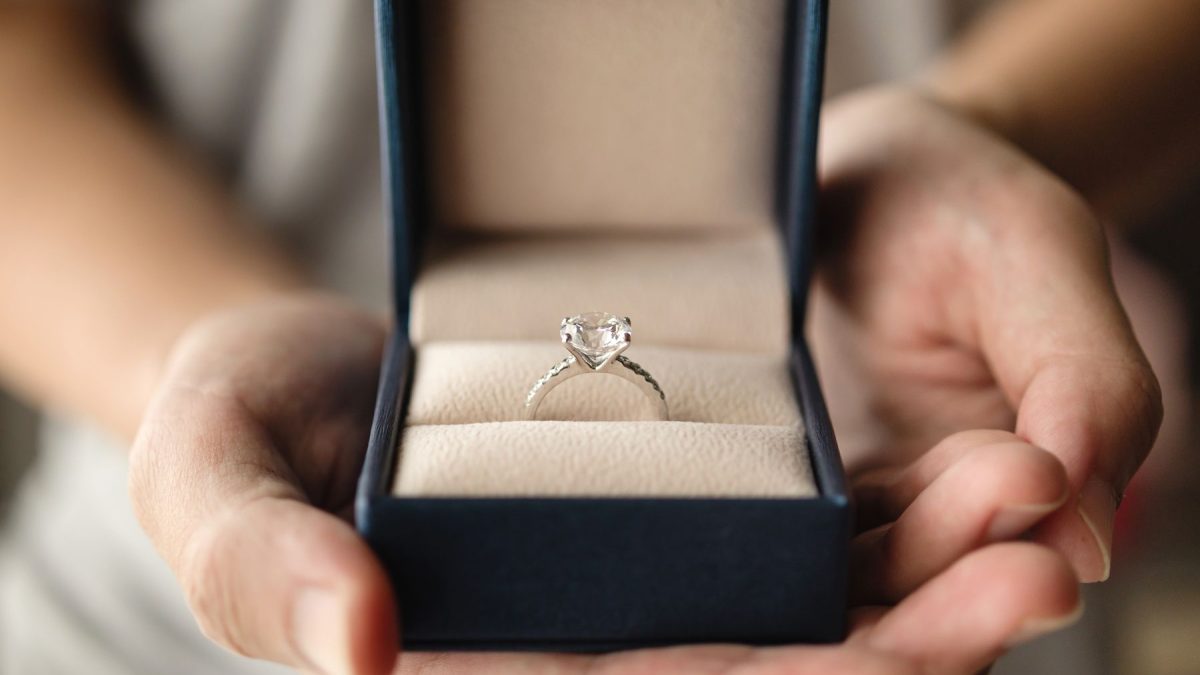
The $3,000 engagement ring budget is more common than the jewelry industry would like you to believe. According to The Knot’s 2026 Real Weddings Study, the median engagement ring spend in the United States sits at approximately $4,600 — but median figures are distorted upward by high-end outliers. A significant share of couples spend less than $3,000, and a meaningful share of those end up with rings that are genuinely beautiful, well-made, and impossible to distinguish from rings that cost three times as much.
This guide is written for buyers who want to spend $3,000 wisely — not apologetically. It covers the specific decisions that have the greatest impact on visual quality within this budget, the configurations that deliver the most stone per dollar, and the places where corners should not be cut regardless of what the price point demands.
One framing note before the specifics: $3,000 is not a compromised budget. It is a budget that requires more deliberate decision-making than $10,000 does. The difference between a stunning $3,000 ring and a mediocre $3,000 ring is entirely a function of where that money is allocated. This guide maps that allocation in detail.
The $3,000 Engagement Ring Landscape in 2026
The lab-grown diamond revolution has fundamentally restructured what $3,000 buys. Understanding the current market before making any specific choices is essential context.
What changed between 2020 and 2026
In 2020, $3,000 could reliably purchase a natural diamond engagement ring with a center stone of approximately 0.50–0.65 carats — respectable but modest. The same $3,000 in 2026 buys a lab-grown diamond center stone of 1.50–2.50 carats in the same quality grades. Lab-grown diamond prices have declined roughly 90% since 2018 and continue to fall at approximately 15–20% per year.
This is not a marginal difference. It is a categorical change in what the budget can produce.
At the same time, the natural diamond market at this price point has compressed. Retailers who once competed on natural diamond pricing have largely shifted their $3,000-and-under inventory toward lab-grown. Finding a compelling natural diamond ring at this budget requires significantly more effort and involves meaningful trade-offs in size, color, or clarity.
The honest budget breakdown
$3,000 is your total number. Before allocating it, account for the following:
- Setting cost: A quality setting runs $300–$800 depending on complexity, metal type, and retailer margin. Simple solitaires sit at the low end; halo, pavé, or three-stone settings at the high end.
- Sales tax: Varies by state, 0–10%. Online retailers often avoid this; local jewelers typically charge it.
- Certification: A GIA or IGI certificate adds $50–$150 to retailer costs, which they pass on. Never buy a significant diamond without certification — this is a non-negotiable floor at any budget.
- Resizing: Budget $50–$100 for potential resizing after purchase.
Working backward from $3,000 with these costs in mind, your realistic center stone budget is approximately $2,000–$2,500.
The Budget Efficiency Framework
We define Budget Efficiency as the ratio of visible quality to dollar spent across a ring purchase. Maximizing Budget Efficiency at $3,000 requires identifying which variables produce visible improvements and which produce improvements that exist only on a grading certificate.
This distinction is the central insight of buying within a budget.
Variables that produce visible improvements (worth spending on)
- Cut grade: The single most impactful variable on appearance. An excellent or ideal cut grade determines how a diamond interacts with light — its brightness, fire, and sparkle. A poorly cut 1.50-carat stone will look duller and smaller than a well-cut 0.90-carat stone. Never compromise on cut to gain carat weight. This is the most common and most costly mistake budget buyers make.
- Carat weight: Within the same cut and shape, larger stones are visually more impactful. This is why the lab-grown decision at $3,000 is so compelling — lab-grown delivers 2–3 times the carat weight at this price point, and carat weight is visible.
- Shape selection: Elongated shapes (oval, marquise, pear) create more finger coverage per carat than round brilliants. A 1.50-carat oval appears larger on the finger than a 1.50-carat round. This is not a quality compromise — it is geometry.
- Setting design: A halo setting can make a 1.00-carat stone appear to be 1.40+ carats. Pavé side stones add visual weight. These design choices have significant impact on perceived size for comparatively modest additional cost.
Variables where you can save without visible impact
- Color grades D–F vs. G–H: In white gold or platinum settings, G and H color diamonds appear colorless to the naked eye in virtually all lighting. Upgrading from H to D typically costs 20–40% more for an invisible visual difference. At $3,000, this spending is rarely justified.
- Clarity grades above VS2: Eye-clean stones exist throughout the VS1, VS2, and frequently SI1 ranges. Paying for VVS or FL clarity at this budget is paying for an attribute visible only under 10x magnification.
- Brand premium: A GIA or IGI-certified diamond is the same product across retailers — the certificate is the guarantee. Comparison shopping across vendors is essential at this budget and regularly saves $400–$800.
Lab-Grown vs. Natural at $3,000: A Direct Answer
At this budget, the recommendation is unambiguous for most buyers: lab-grown diamonds deliver more ring per dollar by a substantial margin. However, the recommendation comes with important conditions.
What lab-grown delivers at $3,000
With a $2,000–$2,500 center stone budget and a lab-grown diamond, you can realistically expect:
| Shape | Achievable carat weight | Color / Clarity | Cut grade |
| Round brilliant | 1.50–2.00 ct | G–H / VS2 | Excellent |
| Oval | 1.75–2.50 ct | G–H / VS2 | Excellent |
| Cushion | 1.75–2.25 ct | G–H / VS2–SI1 | Excellent |
| Emerald | 1.50–2.00 ct | G–H / VS1 | Excellent |
| Marquise | 2.00–2.75 ct | G–H / VS2 | Excellent |
| Pear | 1.75–2.50 ct | G–H / VS2 | Excellent |
Ranges reflect variation across retailers. IGI certification assumed.
These are not modest stones. A 2.00-carat oval lab-grown diamond in a simple solitaire setting is a visually striking ring by any standard. Ten years ago, this configuration would have cost $20,000+.
What natural delivers at $3,000
With the same center stone budget on a natural diamond:
| Shape | Achievable carat weight | Color / Clarity | Cut grade |
| Round brilliant | 0.70–0.90 ct | G–H / SI1–SI2 | Very Good |
| Oval | 0.80–1.00 ct | G–H / SI1 | Very Good |
| Cushion | 0.80–1.00 ct | G–H / SI1 | Very Good |
| Emerald | 0.70–0.85 ct | G–H / VS2 | Excellent |
| Marquise | 0.90–1.10 ct | G–H / SI1 | Very Good |
Natural diamond pricing is variable. These represent realistic finds with diligent comparison shopping.
When natural makes sense even at $3,000
Three scenarios genuinely favor natural diamonds at this budget:
Heirloom intent is primary. If the ring is intended to be passed down through generations and geological origin is part of its meaning, lab-grown’s resale trajectory and declining replacement value make natural the better long-term choice — even at smaller carat weight.
Your partner specifically wants a natural diamond. This is not an irrational preference. A 0.85-carat natural diamond given with full transparency is a better gift than a 2.00-carat lab-grown diamond presented to someone who wanted a natural stone.
You are drawn to vintage and antique cuts. Old Mine cut and Old European cut diamonds are inherently natural stones. At $3,000, you can find compelling antique-cut natural diamonds in the 0.70–1.00-carat range with remarkable character — inclusions that tell a history, facet patterns that produce a distinctive candlelit glow, and proportions that no modern cut replicates.
Shape Strategy: Maximizing Visual Impact
Shape selection has a disproportionate impact on how large a ring appears on the finger — often more than carat weight alone.
Why elongated shapes win on a budget
Surface area varies significantly by shape at the same carat weight. An oval cut has approximately 10–15% more visible surface area than a round brilliant of the same carat weight due to its geometry. A marquise has roughly 15–25% more. Elongated shapes also draw the eye along their length, making the finger appear more slender and the stone appear larger than its actual dimensions suggest.
| Shape | Surface area vs. round (same carat) | Price premium/discount vs. round |
| Round brilliant | Baseline | Baseline (most expensive per carat) |
| Oval | +10–15% | –10 to –20% |
| Cushion | –5% | –15 to –25% |
| Emerald | –5 to +5% (length dependent) | –20 to –30% |
| Marquise | +15–25% | –15 to –25% |
| Pear | +10–20% | –15 to –20% |
| Radiant | –5% | –15 to –25% |
Surface area comparisons assume standard proportions for each shape.
At $3,000, shapes priced below round brilliant deliver a double efficiency advantage: more carat weight per dollar spent, and more visible surface area per carat. Marquise and oval represent the strongest combined argument for budget buyers.
The round brilliant counterargument
The round brilliant cut is optimized for light performance above all other shapes. Its symmetrical 57-facet arrangement produces maximum brightness and fire — the spectral burst of color that makes a diamond uniquely beautiful as a material. For buyers who prioritize brilliance over size, a slightly smaller round brilliant in ideal cut outperforms a larger fancy shape in real-world light conditions.
This is not a reason to avoid fancy shapes. It is a reason to understand that the choice involves a genuine trade-off: visual size versus light performance. That is a values question, not a math problem.
Setting Choices That Maximize Perceived Size
The center stone is one part of the visual equation. The setting — its architecture and design — significantly affects how large the overall ring appears.
Halo settings: the most effective size multiplier
A halo setting surrounds the center stone with a ring of small diamonds. A well-designed halo effectively increases the apparent diameter of the center stone by 0.25–0.50 carats visually. A 1.00-carat center stone in a halo reads as 1.35–1.50 carats to an untrained eye.
At $3,000, a halo setting typically costs $400–$700 more than a comparable solitaire — a meaningful investment of the budget but a high-efficiency one for buyers whose priority is visual impact.
Hidden halos (set beneath the center stone rather than around it) are a major 2026 trend. They offer a subtler version of the same size enhancement with a more contemporary profile — the stone appears to float, and the halo is visible only from certain angles.
Pavé bands: adding visual weight at low cost
Pavé setting lines small diamonds along the band in a continuous sparkle pattern. A simple pavé solitaire — pavé band, single center stone, no halo — is an efficient configuration. The band diamonds are inexpensive, and the combined effect reads as a significantly more elaborate ring than the price suggests.
Prong count: a detail worth choosing deliberately
Four-prong settings expose more of the center stone, making it appear larger. Six-prong settings provide more security and a slightly more classic aesthetic but cover more of the stone’s surface. At $3,000 with lab-grown diamonds, where stone size is already a significant advantage, a four-prong setting maximizes visual exposure.
Bezel settings — where a thin metal rim wraps the entire stone — produce a clean, modern look and protect the stone well. They minimize apparent size by surrounding the stone with metal, making them better choices for elongated shapes (where the rim emphasizes length) than for rounds.
Metal Choice: Impact on Budget and Appearance
White gold vs. platinum
- 14K white gold is the practical choice for most $3,000 buyers. It requires rhodium re-plating every 1–2 years (a $50–$100 service) but maintains its appearance when maintained. It frees budget for center stone quality.
- Platinum is denser, more durable, and hypoallergenic. It requires no re-plating. A platinum setting costs 30–50% more than 14K white gold — typically $400–$600 additional at this budget tier. Worth it only if durability or hypoallergenic properties are a priority.
- 18K white gold sits between the two in cost and softness. Its greater gold content makes it slightly less durable than 14K.
Yellow gold: the 2026 efficiency advantage
Yellow gold does not require rhodium plating, reducing long-term maintenance costs. More relevantly, yellow gold settings pair well with warmer-color-grade center stones (I–J range for lab-grown, J–K for natural) without visible mismatch — the warm metal tone masks slight yellowish tints in the diamond. This can free $200–$400 of budget for carat weight instead.
Yellow gold in chunky, sculptural band designs is also one of the dominant engagement ring trends of 2026, making it simultaneously the budget-smart and stylistically current choice.
Rose gold
Rose gold (typically 14K with copper alloy) is the most durable of the three white/warm metals due to its copper content. Like yellow gold, it pairs well with warmer color grades. It does not require re-plating. Still popular in 2026 though past its 2018–2022 peak trend moment.
7. Five Specific Ring Configurations Under $3,000
The following represent high-efficiency configurations within the $3,000 total budget. Prices reflect Q1 2026 retail averages at online certified retailers.
Configuration 1: The Maximalist Lab-Grown
2.00-carat oval lab-grown / G / VS2 / Excellent cut / 14K white gold 4-prong solitaire
- Center stone: $1,200–$1,600
- Setting: $350–$500
- Total: ~$1,600–$2,100
A 2-carat oval is genuinely striking. The remaining budget can fund a pavé band upgrade, wedding band, or savings. This configuration most clearly demonstrates what lab-grown enables at $3,000.
Configuration 2: The Balanced Lab-Grown
1.50-carat round brilliant lab-grown / G / VS1 / Ideal cut / 14K white gold hidden halo pavé
- Center stone: $900–$1,200
- Setting: $600–$900
- Total: ~$1,500–$2,100
Ideal cut maximizes light performance. The hidden halo adds visual interest without overt glamour. VS1 clarity is near-flawless. This configuration prioritizes balance across all quality variables — a strong all-around choice.
Configuration 3: The Elongated Statement
2.25-carat marquise lab-grown / H / VS2 / Excellent cut / 14K yellow gold 4-prong solitaire
- Center stone: $1,000–$1,400
- Setting: $300–$500
- Total: ~$1,300–$1,900
Marquise cuts offer the greatest finger coverage of any shape and a dramatically elongating effect. Yellow gold complements the H-color stone. At 2.25 carats with marquise proportions, this ring has extraordinary visual presence for well under $3,000.
Configuration 4: The Vintage Natural
0.85-carat Old Mine cut natural diamond / I / SI1 / 14K yellow gold antique-style setting with milgrain detail
- Center stone: $1,400–$1,900
- Setting (vintage-inspired): $500–$800
- Certification (GIA or independent appraiser): $100–$150
- Total: ~$2,000–$2,850
Old Mine cut diamonds are inherently unique — their soft, pillowy facet structure produces a distinctly romantic light performance unlike any modern cut. This configuration prioritizes character and geological history over size. It is the right choice for buyers who find the narrative of a natural stone genuinely meaningful.
Configuration 5: The Modern Minimalist
1.20-carat emerald cut lab-grown / G / VS1 / Excellent cut / platinum thin bezel solitaire
- Center stone: $700–$1,000
- Setting (platinum): $700–$1,000
- Total: ~$1,400–$2,000
The emerald cut’s step facets produce a distinctive hall-of-mirrors light effect. VS1 clarity matters here — emerald cuts reveal inclusions more readily than brilliant cuts. The platinum bezel protects the stone’s vulnerable corners while giving the ring an architectural, sculptural profile. This is the anti-statement ring: quiet confidence rather than visual size.
Where to Shop
At $3,000, retailer selection significantly affects what you get. Price differentials for identical certified stones across retailers can reach 20–40%.
- James Allen: Extensive lab-grown inventory with 360-degree video for every stone. One of the most competitive price points in the market. 30-day return policy. Strong customer service reputation.
- Brilliant Earth: Strong ethical sourcing documentation for natural stones; broad lab-grown selection. Slightly higher pricing than James Allen but more in-store consultation locations and more design options.
- Clean Origin: Lab-grown only. Among the most competitive pricing specifically for lab-grown center stones. Straightforward shopping experience.
- With Clarity: Offers a home try-on program with replica rings. Useful for buyers uncertain about shape or setting style before committing.
- Blue Nile: Long-established with broad inventory. Competitive on natural diamonds; lab-grown selection has expanded significantly.
- Local estate and antique dealers: The best source for Old Mine cut and vintage natural diamonds at realistic prices. Worth visiting if Configuration 4 is your target.
What $3,000 Does Not Reliably Buy (Honest Limitations)
- A large natural diamond with excellent cut quality. At 1.50 carats and above in natural with excellent cut and G/VS2 grades, you are well above $3,000. Buyers who prioritize natural origin and size need a larger budget or meaningful quality compromises.
- Rare fancy-colored natural diamonds. Natural yellow, pink, and blue diamonds of any meaningful size are thousands of dollars per carat. Not accessible at this price point.
- A platinum setting with a significant center stone. Platinum’s premium typically forces a choice between premium metal and premium stone at $3,000. Most buyers choose the stone.
- Designer brand rings at full retail. Tiffany, Cartier, and comparable luxury brands charge significant brand premiums. A Tiffany solitaire with a modest natural stone easily exceeds $3,000. Independent retailers and online vendors are the realistic landscape at this budget.
Frequently Asked Questions
Is $3,000 enough for a good engagement ring in 2026?
Yes — particularly with lab-grown diamonds, where $3,000 delivers a ring that would have cost $12,000–$20,000 a decade ago. With natural diamonds, $3,000 buys a modest but beautiful ring. The definition of “good” depends on your priorities.
Can I actually get a 2-carat engagement ring under $3,000?
Yes. A 2.00-carat round brilliant or 2.25-carat oval lab-grown in G/VS2 with excellent cut regularly falls between $1,200–$1,800 as a center stone alone, leaving ample budget for a quality setting. This is now a standard configuration for lab-grown buyers in 2026.
What is the best shape for maximizing size on this budget?
Marquise and oval cuts provide the most finger coverage per carat and are priced below round brilliant per carat — a double efficiency advantage. Both are strong choices for buyers whose priority is visual size.
Is it worth buying a ring without certification at $3,000?
No. At any price point, buying a diamond without a GIA or IGI certificate is a meaningful risk. The certificate is independent verification of the quality grades you are paying for. If a vendor offers an uncertified stone at a steep discount, treat that as a warning, not an opportunity.
How do I know if an SI1 stone is eye-clean?
Ask the retailer for 360-degree video (standard at major online retailers) and zoom into the table of the stone. If you cannot see dark spots or clouds at 20x zoom, it is almost certainly eye-clean. For in-person purchases, examine the stone under normal indoor lighting without magnification — if you see nothing, it is eye-clean for practical purposes.
Can I upgrade the center stone later if I start at $3,000?
Yes. Many retailers offer upgrade programs — you return the original stone and apply its value toward a larger stone. Brilliant Earth and James Allen both offer versions of this. This is a practical strategy: start with a beautiful ring at budget, upgrade the center stone later when finances allow.
Will a halo setting look dated in ten years?
Halo settings have been popular for over two decades and are a category, not a trend. Simple, thin halos with clean lines have stronger longevity than ornate double-halos or heavily vintage-inspired designs. If timelessness is the priority, a thin halo with minimal ornamentation is the safest choice.
The Bottom Line
The $3,000 engagement ring in 2026 is not a budget ring. With careful decision-making — particularly around lab-grown stones, shape selection, and cut quality — it is a ring that delivers genuine visual quality and meaningful presence.
The three decisions that matter most: prioritize excellent cut above all other variables, consider lab-grown seriously unless origin is a deliberate priority, and use shape and setting design strategically to maximize visual impact.
The ring you find at $3,000 with this framework is not a compromise. It is a choice made well.