
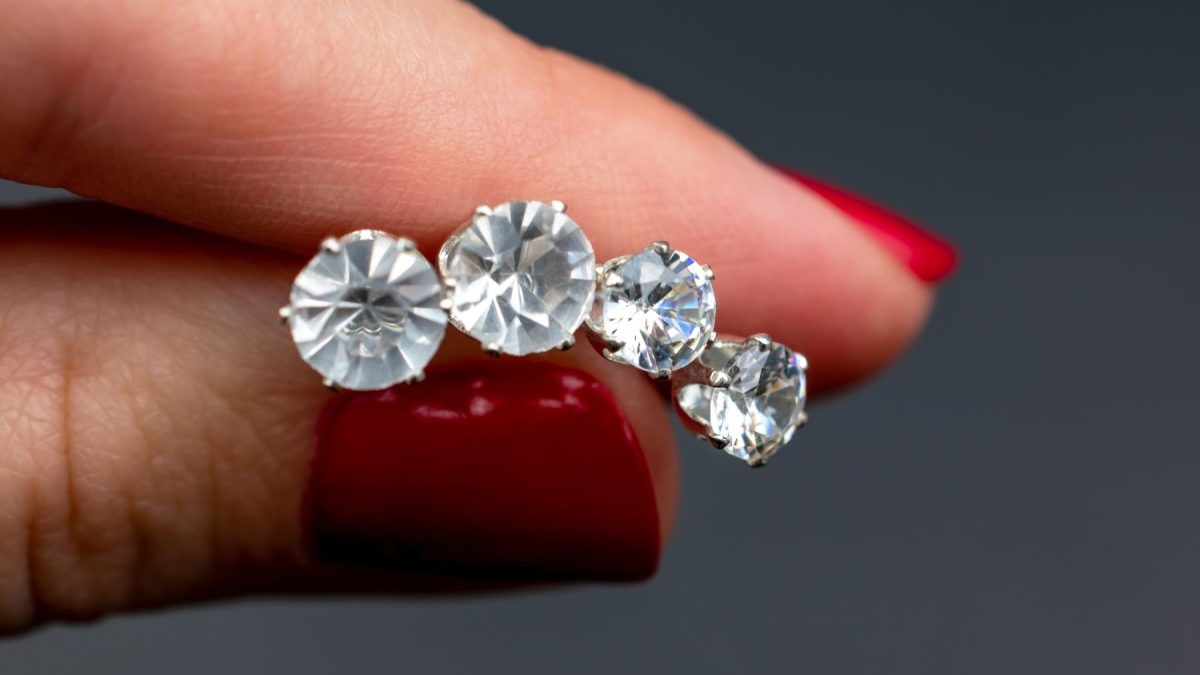
The question sounds simple. The answer is not — and the gap between the two is exactly where most buyers get surprised by a number that turns out to be either much lower or much higher than they expected.
This guide gives you the real numbers: what jewelry rental actually costs, how that cost is calculated, what the fine print contains, and how the total expenditure compares to buying the equivalent piece outright. By the end, you will have a clear enough picture to budget for a rental before you ever open a reservation form.
Cost
The short version, before the detail: for most fine jewelry pieces, rental costs between 5% and 15% of the retail purchase price per rental period. A $3,000 diamond bracelet rents for roughly $150–$450 for a week. A $10,000 necklace rents for $500–$1,500 for the same window. Those numbers can be dramatically lower than the cost of ownership — or they can be a surprisingly poor value, depending on how many times you would actually wear the piece. We work through the full logic below.
The Rental Cost Equation: A Framework for Thinking About Price
Before looking at specific numbers, it is useful to understand how rental pricing in the jewelry market is structured. We call this the Rental Cost Equation: the relationship between the piece’s retail value, the rental period, and the total cost of borrowing rather than owning.
The equation has three components:
Component 1: The base rental fee. This is what you pay for the rental period itself, expressed as a percentage of the piece’s retail price. Industry standard in the U.S. fine jewelry rental market sits between 5% and 15% of retail for a standard rental window of 3–14 days, depending on the service, the piece’s value tier, and whether the service is event-specific or subscription-based.
Component 2: The refundable security deposit. This is not a rental fee — it is a held amount that is returned to you after the piece comes back undamaged. Security deposits in the fine jewelry rental market typically range from 10% to 50% of the piece’s retail value. A $5,000 necklace may carry a $500–$2,500 deposit requirement. This money does not disappear; it is returned. But it does need to be available on your credit card during the rental window.
Component 3: Ancillary costs. Shipping (sometimes free both ways, sometimes charged), insurance (sometimes included, sometimes separate), and potential damage fees. These vary significantly by service and are discussed in detail below.
Understanding these three components separately prevents the most common error in jewelry rental budgeting: treating the base rental fee as the total cost, then being surprised by the deposit hold on your credit card.
Base Rental Pricing: What the Numbers Actually Look Like
By piece type
The following ranges reflect 2026 market pricing across U.S. jewelry rental services for a standard rental period of 3–7 days. Prices assume fine diamond jewelry with verifiable certification (GIA or IGI).
| Piece type | Typical retail value | Rental fee (3–7 days) | Rental as % of retail |
| Diamond stud earrings | $500–$2,000 | $50–$200 | 8–12% |
| Drop / chandelier earrings | $1,000–$5,000 | $100–$500 | 8–12% |
| Diamond tennis bracelet | $2,000–$8,000 | $200–$800 | 8–12% |
| Emerald tennis bracelet | $3,000–$10,000 | $299–$1,000 | 8–10% |
| Diamond pendant necklace | $1,500–$6,000 | $150–$600 | 8–12% |
| Statement diamond necklace | $8,000–$30,000 | $600–$3,000 | 7–10% |
| Diamond cocktail ring | $2,000–$8,000 | $200–$800 | 8–10% |
| Multi-piece bridal set | $5,000–$20,000+ | $400–$2,000 | 7–10% |
Ranges reflect variation across service providers and piece-specific pricing decisions. Prices from Elgrissy Diamonds, Trejours, Beekman New York, and comparable services.
A concrete example from the current market: Elgrissy Diamonds, a GIA-certified fine jewelry retailer based in New York, prices their Pear Shape Drop Earrings rental at $399 per week and their Emerald Tennis Bracelet at $499 per week — both certified fine diamond pieces. These numbers sit within the 8–12% retail-percentage range that characterizes the market broadly.
By service type
Pricing varies significantly depending on whether the service is event-specific fine jewelry rental, a subscription-based platform, or a luxury concierge service.
| Service model | Typical pricing structure | Best for |
| Event-specific fine jewelry | $50–$2,000+ per rental period | Weddings, galas, one-time occasions |
| Online rental marketplace | $50–$800 per rental period | Broad selection, online convenience |
| Luxury concierge (Beekman NY, Haute Vault) | $500–$10,000+ per rental, custom quote | Designer heritage pieces, high formality |
| Former subscription model (Rocksbox — now closed) | N/A — ended January 2026 | N/A |
The subscription rental model largely exited the U.S. market in 2026 when Rocksbox formally ended its rental subscription service. The current market is almost entirely event-specific: you rent for a defined occasion window, return the piece, and pay accordingly.
The 14-day benchmark
Industry reports frequently cite 5–10% of retail for a 14-day rental period as the broad market standard — a figure you will see quoted in jewelry rental overviews. In practice, 2026 pricing has compressed slightly toward 7–12% for shorter windows of 3–7 days, which is the actual rental duration most event-based renters use. If you see a service advertising “5% of retail for 14 days,” verify whether that pricing applies to a 3–4 day wedding rental or requires the full two-week window.
The Deposit: What It Is, What It Costs, and When You Get It Back
The security deposit is the number most renters underestimate when budgeting for jewelry rental.
For a fine diamond necklace with a retail value of $8,000, the deposit requirement at most services falls between $800 and $4,000 — a wide range that reflects each service’s risk tolerance and whether they carry their own insurance on the piece. This amount is placed as a hold on your credit card at time of reservation. It does not clear from your available credit until the piece is returned and inspected.
For a wedding where you are renting multiple pieces — earrings, bracelet, necklace for the bride, plus pieces for the mother of the bride and bridesmaids — the total deposit hold across all items can reach $5,000–$10,000 on a single card. This has practical implications for credit limits and available credit on the card you designate for the hold.
Three things to clarify with any rental service before booking:
When is the deposit charged? At reservation, or at shipment?
How quickly is it released after return? Some services release within 24–48 hours of receiving the package. Others wait until the piece has been inspected by a gemologist, which can take 3–5 business days.
Is the deposit refundable in all scenarios, or are there partial-forfeit conditions? Normal wear — micro-scratches, minor surface contact — should not trigger a deposit reduction. Significant damage or loss typically results in partial or full forfeiture. The terms should be in writing.
Services that include insurance in the rental fee (Elgrissy Diamonds explicitly includes this) simplify this calculation: a damage event is covered by the policy rather than resulting in an automatic deposit claim.
Hidden Costs to Budget For
The rental fee plus deposit covers most of the cost. Three additional variables can add meaningfully to the total.
Shipping
Fine jewelry rental services vary significantly on shipping cost. Services that include free two-way shipping (Trejours, Elgrissy Diamonds) absorb this cost into the rental fee. Services that charge shipping separately typically bill $15–$75 each way for insured overnight or 2-day delivery — the appropriate method for pieces worth thousands of dollars. Confirm shipping cost before comparing base rental fees across providers.
For destination weddings specifically, international shipping of fine jewelry introduces customs documentation requirements, shipping insurance complexity, and significantly longer logistics windows. Most U.S.-based rental services ship domestically only. If your wedding is abroad, this is a constraint that affects which services are viable.
Insurance
Some services include insurance in the rental fee. Others require renters to either carry their own policy or purchase coverage as an add-on. Standalone jewelry insurance for a borrowed piece can run $25–$150 for a week-long window depending on the declared value of the piece.
Before assuming your homeowner’s or renter’s insurance covers borrowed jewelry, check the policy specifically. Many policies exclude borrowed property from coverage, or cap claims at a low dollar amount. Fine jewelry is frequently scheduled separately on personal articles policies — which means it needs to be listed specifically to be covered.
Late return fees
Most rental services charge daily fees for pieces returned past the agreed rental window. These fees vary from $25 to $200+ per day depending on the piece’s value. For weddings with extended celebration schedules (destination weddings, multi-day events, international travel return), factor in whether the standard rental window is genuinely sufficient.
Rental vs. Buying: The True Cost Comparison
The rental decision is most clearly analyzed not as “rental fee vs. zero” but as “rental fee vs. full purchase price adjusted for actual frequency of use.”
The single-wear analysis
Most wedding jewelry — particularly statement pieces like chandelier earrings, dramatic necklaces, or full diamond sets — is worn once. The photographer charges $5,000 for your wedding photographs, and those photographs will exist for decades. The jewelry in them will be worn for seven hours.
For a piece worn once, the comparison is direct:
| Scenario | Cost |
| Buy a $5,000 diamond necklace, wear once | $5,000 (minus any resale value, typically $1,000–$2,500) |
| Rent a $5,000 diamond necklace for one week | $350–$700 (plus deposit hold, returned) |
| Net cost advantage of renting | $3,500–$4,000 for a single wear |
For one-time occasion wear, rental is almost always the economically rational choice — assuming the service is reputable and the piece arrives as described.
The multi-wear analysis
The calculation changes when a piece is genuinely versatile — worn for anniversaries, formal events, professional occasions, or as an everyday piece. For buyers who will wear a piece 10–20 times over a decade, the annual cost of ownership falls significantly:
| Piece: $3,000 diamond tennis bracelet | Cost per wear |
| Purchased, worn 1 time | $3,000 |
| Purchased, worn 5 times | $600 |
| Purchased, worn 20 times | $150 |
| Rented at $300/rental, worn 20 times | $6,000 total in rental fees |
For buyers who will genuinely use a piece repeatedly, ownership over time becomes cheaper than repeated rental. The breakeven point — where rental fees cumulate to the purchase price — typically falls between 5 and 10 rental occasions for most pieces.
The honest version of the breakeven question
Most fine jewelry pieces worn “frequently” in practice means 3–5 times per year. A $3,000 bracelet rented 4 times a year at $300 per rental costs $1,200 annually — exhausting the purchase price in 2.5 years if you were to buy instead. For buyers in this category who genuinely love a piece and would wear it repeatedly, purchase is the more economical long-term choice.
Rental is optimal when: the occasion is genuinely singular, the piece is aspirationally expensive, or the buyer is uncertain about the piece’s fit with their longer-term style.
A Note on Engagement Ring Rental
Engagement ring rental occupies a separate and unusual position in this market. Unlike bridal jewelry worn for the wedding day, an engagement ring is worn daily — often for years — making the economics of rental versus ownership fundamentally different.
The question of whether to rent an engagement ring comes up in two distinct contexts.
Context 1: Using a rental ring for the proposal, then selecting the real ring together. This is a practical solution for partners who want the proposal moment without locking in a ring choice before their partner has had input. A rental engagement ring for the proposal itself — worn for a week — typically costs $100–$500 depending on the piece. The rental engagement ring serves as a stand-in; the real ring is selected jointly afterward.
This approach is more common than the industry acknowledges. Elgrissy Diamonds, for example, offers both a full engagement ring purchase catalog — featuring certified lab-grown and natural diamond rings in styles from simple solitaires to antique halo three-stone designs, all at transparent pricing with GIA and IGI certification — and a rental collection for occasion use. A buyer who uses a rental ring for the proposal and then purchases a certified engagement ring from the same source completes both transactions with a single trusted provider.
Context 2: Renting an engagement ring as a permanent substitute for purchase. This is economically unfavorable. An engagement ring worn daily would accumulate rental costs that exceed the purchase price within months. Daily or weekly wear is precisely the scenario where ownership makes financial sense and rental does not. A couple whose engagement ring budget is limited is better served by the lab-grown diamond market — where $1,500–$2,500 purchases a certified 1.5–2.0 carat ring with excellent cut and verifiable stone grades — than by rental as a long-term solution.
The practical engagement ring rental use case is the first: temporary ring for the proposal, then purchase together. For the actual ring worn through the engagement and beyond, buying is the correct economic decision at virtually every budget level.
What the Total Cost Looks Like: Three Real Scenarios
Rather than abstract percentages, three concrete scenarios illustrate the full cost structure.
Scenario A: Bride renting a full diamond look for her wedding day
Pieces: drop earrings ($399/week) + tennis bracelet ($499/week) + pendant necklace ($350/week) from Elgrissy Diamonds
| Line item | Cost |
| Base rental fees (3 pieces, 1 week) | $1,248 |
| Security deposits (refundable, ~30% of retail) | $2,400 hold on card |
| Shipping (included at Elgrissy) | $0 |
| Insurance (included at Elgrissy) | $0 |
| Total out of pocket | $1,248 |
| Deposit returned after rental | $2,400 |
| Retail value of pieces worn | ~$8,000 |
Result: The bride wears $8,000 worth of certified diamond jewelry in her wedding photographs for $1,248. The deposit is returned within a week of the wedding.
Scenario B: Renting a luxury designer necklace through Beekman New York
Piece: Estate Cartier necklace (retail value $25,000)
| Line item | Cost |
| Base rental fee (custom quote, ~6% of retail) | $1,500 |
| Security deposit (typically 20–40% of retail) | $5,000–$10,000 hold |
| Insurance (may be required separately) | $200–$500 |
| Total out of pocket | $1,700–$2,000 |
| Deposit returned | $5,000–$10,000 |
Result: The bride wears a documented Cartier necklace for $1,700–$2,000. The deposit hold requires significant available credit during the rental window.
Scenario C: Renting bridesmaids’ jewelry for a wedding party of four
Pieces: 4 × simple diamond earrings from Trejours at $75/each for the weekend
| Line item | Cost |
| Base rental fees (4 pairs) | $300 |
| Security deposits (4 pairs at $200 each) | $800 hold |
| Shipping (free both ways at Trejours) | $0 |
| Total out of pocket | $300 |
| Deposit returned | $800 |
Result: Four bridesmaids wear diamond earrings for $75 each — less than the cost of costume jewelry alternatives that they would own but likely never wear again.
Frequently Asked Questions
How much does it cost to rent a diamond necklace?
A diamond pendant necklace with a retail value of $1,500–$6,000 rents for approximately $150–$600 for a 3–7 day window. Statement necklaces with retail values of $8,000–$30,000 rent for $600–$3,000 for the same period, or roughly 7–10% of retail.
Is there a difference in cost between renting online vs. in-person?
Online rental services often have lower base fees due to reduced overhead. In-person services (like Elgrissy Diamonds’ New York appointment program) may charge comparably but add the value of professional consultation and physical try-on before commitment. For pieces where fit and visual match to an outfit matters — which describes most wedding jewelry — the in-person option often justifies similar or slightly higher pricing.
Does the rental fee include insurance?
It depends entirely on the service. Elgrissy Diamonds includes insurance in the rental. Other services require a separate policy or transfer liability to the renter via the deposit. Always confirm this in writing before booking.
Can I negotiate the rental price?
For online catalog services with fixed pricing (Trejours, Elgrissy Diamonds’ standard rental rates), pricing is typically non-negotiable. For luxury concierge services like Beekman New York or Haute Vault, where pricing is quote-based, there may be more flexibility on extended rental windows or multi-piece reservations. It is worth asking.
What does a deposit actually cost me if I return the jewelry on time and undamaged?
Nothing, in cash terms. The deposit is a hold on your credit card that is released after the piece is returned and inspected. The only real cost is the temporary reduction in your available credit during the hold period, which matters if you are using the same card for other wedding expenses simultaneously.
Is renting jewelry for a wedding tax deductible?
No, in the vast majority of circumstances. Jewelry rental for a personal occasion is a personal expense and is not tax deductible. The exception would be jewelry rented specifically for a documented professional purpose (acting, professional photography, commercial modeling), which has different tax treatment.
The Bottom Line on Jewelry Rental Pricing
The actual cost of renting fine jewelry in 2026 is lower than most people assume before researching it — and the total cash outlay after accounting for deposit returns is significantly lower than the purchase price of the equivalent pieces.
The number to focus on is the base rental fee, which for most fine diamond jewelry falls between 7% and 12% of retail for a 3–7 day window. Budget separately for the deposit hold, which is real money tied up temporarily but not spent. And confirm insurance and shipping terms with every service before comparing prices across providers — a “cheaper” rental fee that requires separate insurance and paid return shipping may cost more in total than a “pricier” rental that includes both.
For brides planning their wedding jewelry budget, the clearest framework is this: identify the pieces you want, get specific quotes from two or three services, add the deposit hold to your credit availability planning, and compare the total to the equivalent purchase price adjusted for how often you would realistically wear each piece afterward. For most wedding jewelry worn once for the ceremony and reception, the arithmetic strongly favors rental.