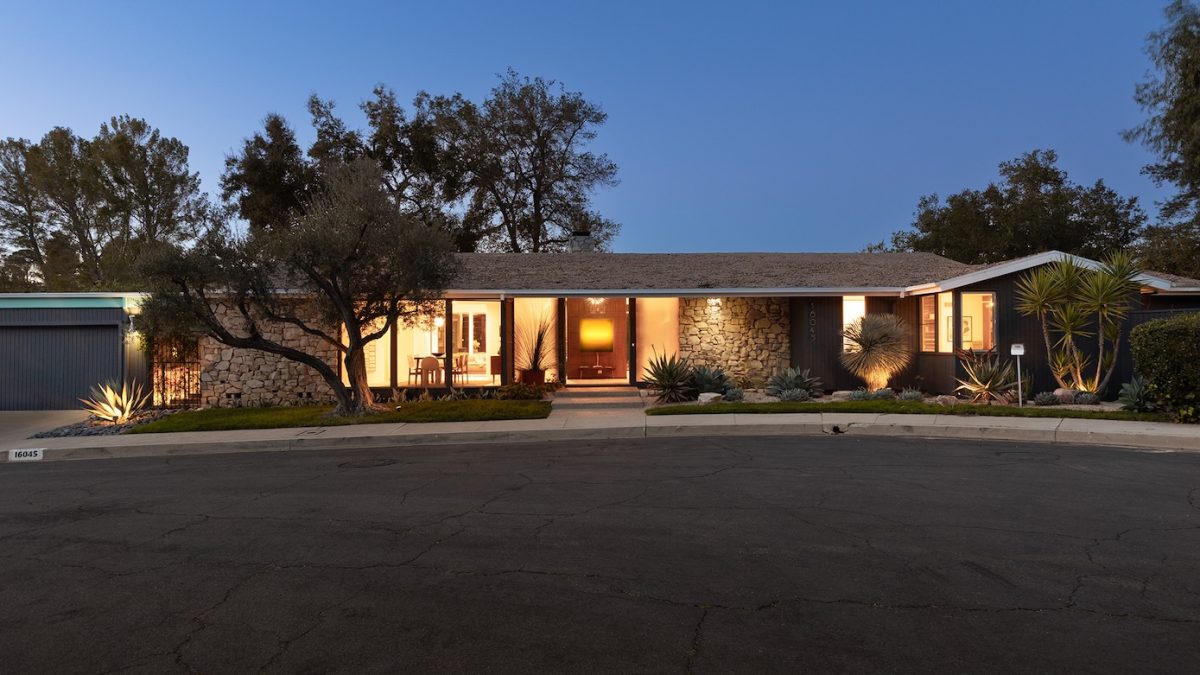
There is a particular kind of house that the market rarely produces and almost never preserves. Not the kind that gets flipped and refinished and photographed for a listing cycle, but the kind that has been lived in — genuinely, continuously, and by people who understood what they had. The William Stephenson residence at 16045 Royal Mount Drive in Encino’s Royal Oaks is that house. Designed in 1964 by an architect who came up through Frank Lloyd Wright’s Taliesin fellowship, owned by a single family since the year it was completed, and never once touched without genuine consideration, this is a home whose rarity has nothing to do with square footage and everything to do with what sixty years of careful stewardship actually looks like.
Stephenson’s credentials speak for themselves to anyone who knows Los Angeles architecture. His portfolio includes the Pacific Palisades home commissioned by Ronald and Nancy Reagan — work that signals both his standing and his sensibility: architecture that serves life without announcing itself at every turn, that earns its place in the landscape rather than imposing upon it. That philosophy is present at every scale of this Encino residence, from the siting on a quiet Royal Oaks cul-de-sac to the warmth of the materials to the way the living spaces give way to the outdoors with the kind of unhurried ease that Southern California architecture, at its very best, has always intended.
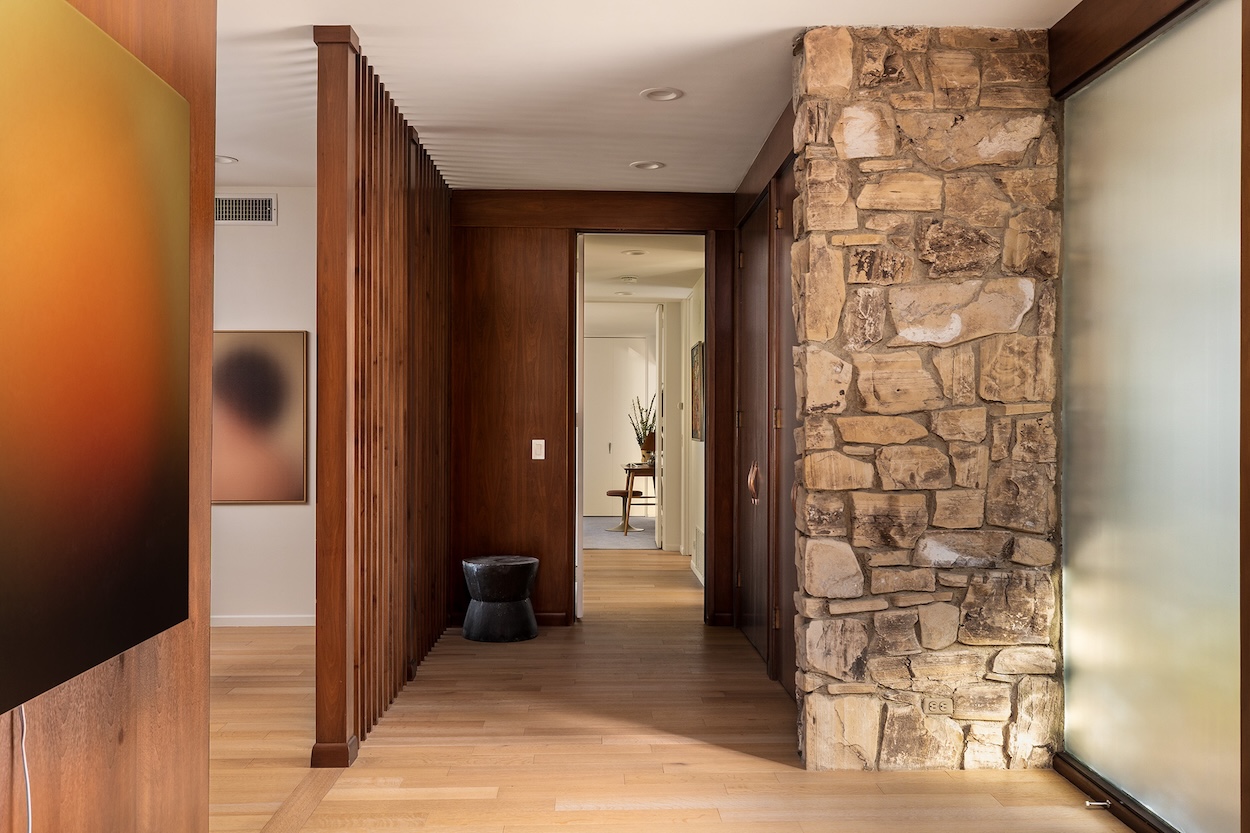
The home announces its intentions from the moment you step inside. The entryway is anchored in warm walnut-toned wood paneling — rich without being heavy — that sets a tone carried throughout in built-in cabinetry and millwork that could only have been designed and installed in the early 1960s, when craftsmen still built things to last generations. There is a cohesion to these elements that no renovation could replicate and no catalog could supply. They were made for this house, for this architect’s vision, and for a mode of California living that has since become nearly impossible to find in original condition.
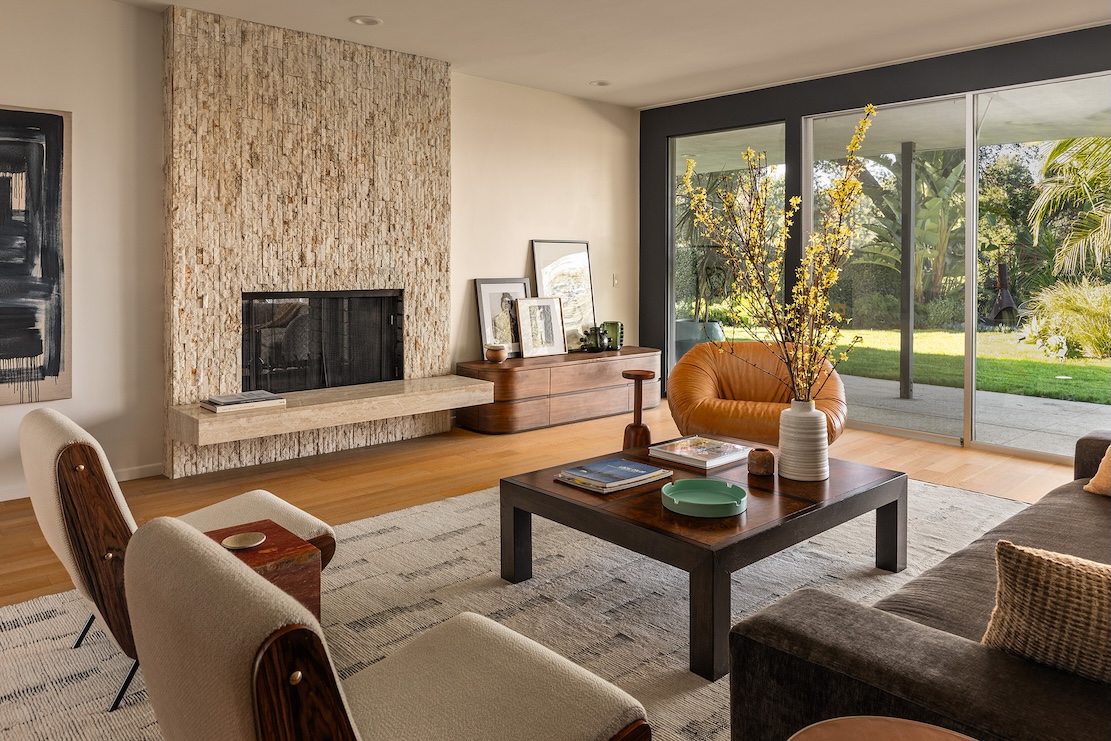
The details reveal themselves slowly and reward the kind of attention that most homes no longer ask for. A cedar-lined closet in the hall — fragrant and intact, built expressly for the lady of the house — speaks volumes about how this home was conceived and how it has been lived in: deliberately, graciously, and with a certain style that belongs entirely to another era. An original wet bar, fully functional and preserved in the manner that once defined a particular and much-lamented mode of California entertaining, is the kind of feature that stops you in a way that no amount of new construction ever could. These things exist here because they were never replaced. And they were never replaced because they never needed to be.
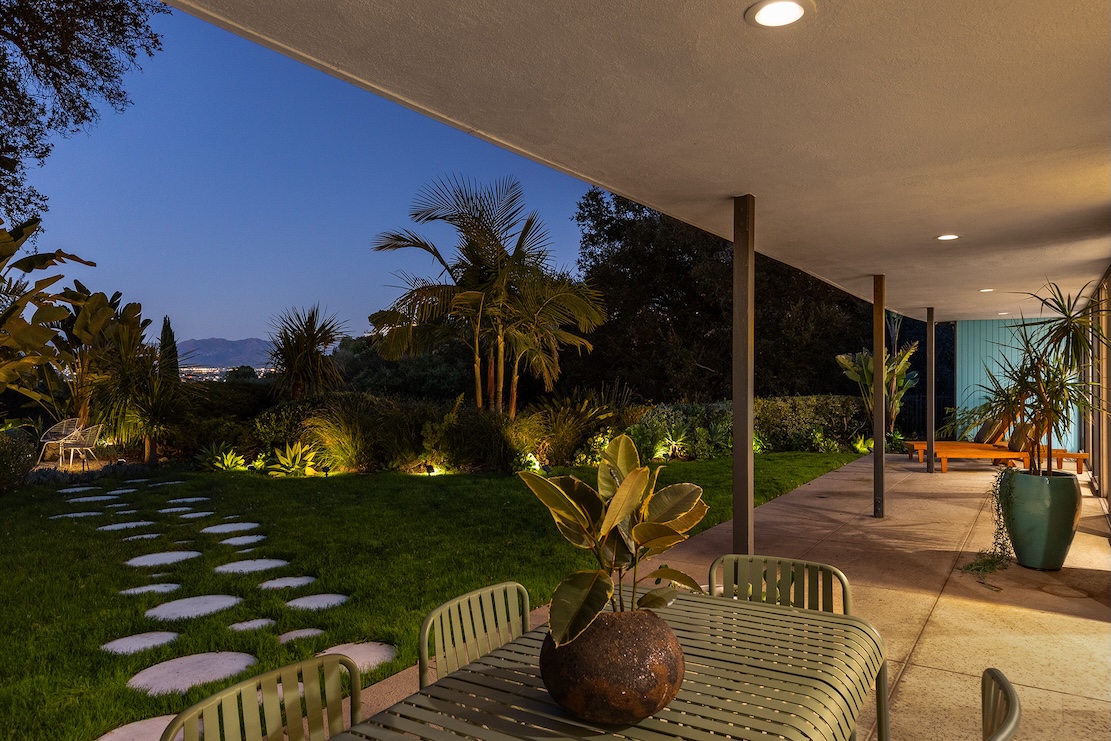
Four bedrooms, four bathrooms, and generous glazing that draws the hillside inside complete a floor plan that gives the home its livability without compromising its architectural integrity. The residence is elevated enough for layered views and genuine privacy, and close enough to the city that neither has to be sacrificed for the other — a balance that the best hillside architecture always seeks and rarely achieves so completely. Utilities run underground throughout, a quiet distinction that keeps the sight lines clean and the neighborhood’s character intact in a way that speaks, again, to the care applied here at every level.
What sixty years of single-family ownership actually means, in practice, is something that is genuinely difficult to quantify. Updates were introduced carefully and for the right reasons — comfort, longevity, structural integrity — without ever compromising the original architectural intent. The house has been preserved because it was loved. Not curated for a sale, not repositioned for a market, not optimized for someone else’s taste. The decisions made here were made by people who lived with the consequences, and the result is a home that reads as exactly what it is: whole, coherent, and entirely itself.
The next owner of this house will understand what they are inheriting. A William Stephenson original in Royal Oaks, held by one family since 1964, with its provenance intact and its character undiluted, is not the kind of offering that arrives with any regularity — or, in most cases, at all. What it asks in return is not restoration or reinvention, but continued stewardship: an appreciation for what was built here, and a commitment to carrying it forward with the same care that has defined this home for six decades. For the right buyer, that is not a condition. It is the whole point.
Listed at $2,895,000 by William Baker of The Agency.