
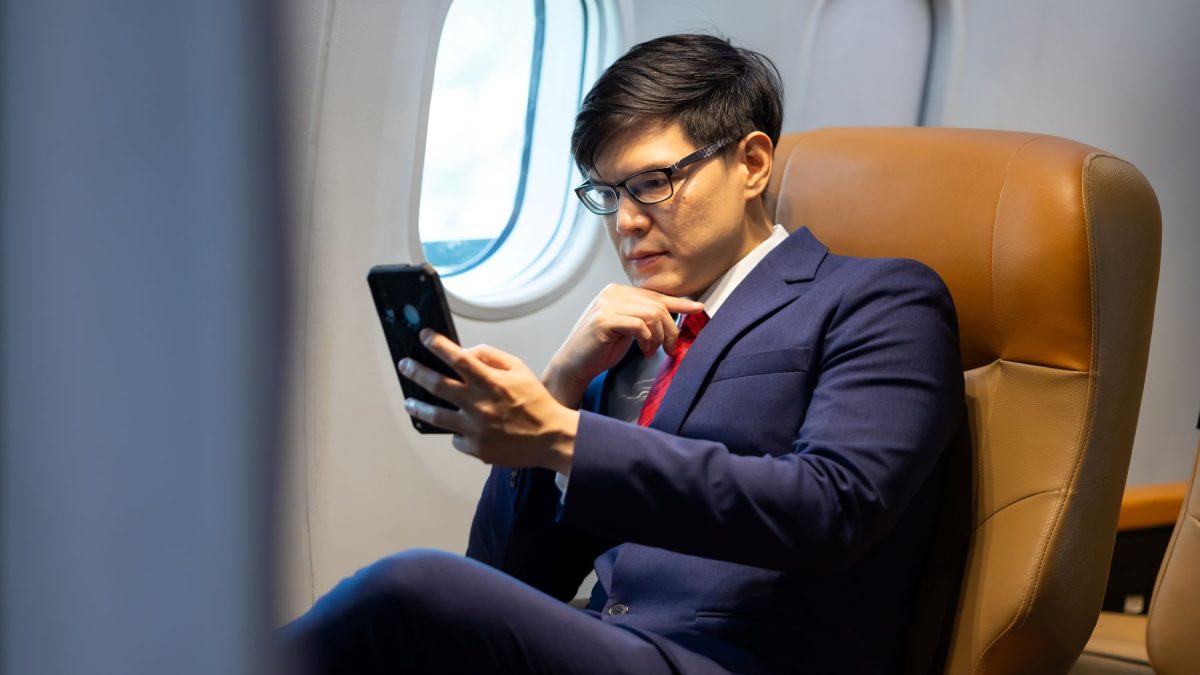
A transatlantic itinerary with three back-to-back client meetings is one of the more demanding tests of modern executive travel. You step off a red-eye into a city five or six hours ahead of your body, sit down across from a stranger holding a contract, and have to perform. The bag at your feet is part of that performance.
Pack it well and the trip narrows to a single coherent experience.
Pack it poorly and it becomes a sequence of small frictions that compound across every meeting.
A journey across the Atlantic for work is rarely just a flight. Research on international business travelers describes a familiar cluster of physical and psychological stressors that follow the cabin door closing: disrupted sleep, condensed schedules, and pressure to present polished work on minimal recovery time (source).
Surveys of frequent travelers consistently show that 55 percent and higher associate this rhythm with stress and burnout (source). The bag cannot fix that, but it can remove a category of friction from the experience.
The case for a single, structured carry-on
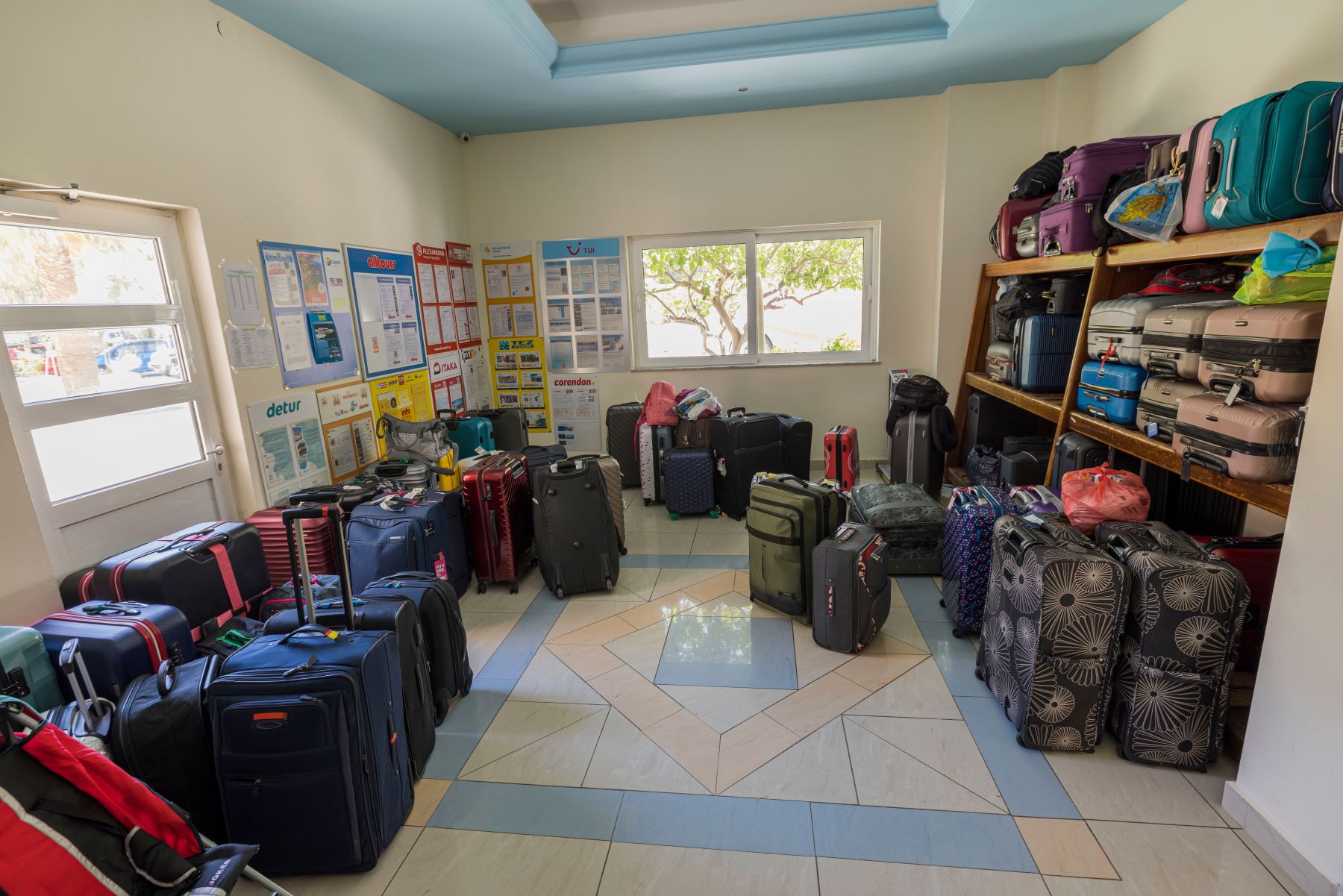
Three meetings in three cities, or three meetings in one city across three intense days, share the same logistical truth: any luggage you cannot personally control is a liability. Lost checked luggage means a borrowed shirt in front of a client. A wheeled case that does not meet the overhead requirement at LHR or CDG means a forced gate-check on the return leg. The professional answer is a structured, certified carry-on that meets the strictest European cabin allowance and carries every meeting-critical item.
Structured matters here. A slumped duffel will compress your jacket in flight; a rigid wheeled spinner will not flex around a tight bin. A leather weekender with internal stiffening and a flat base sits between those extremes, holding a suit in shape while still flexing into an overhead compartment.
Choosing the carry-on
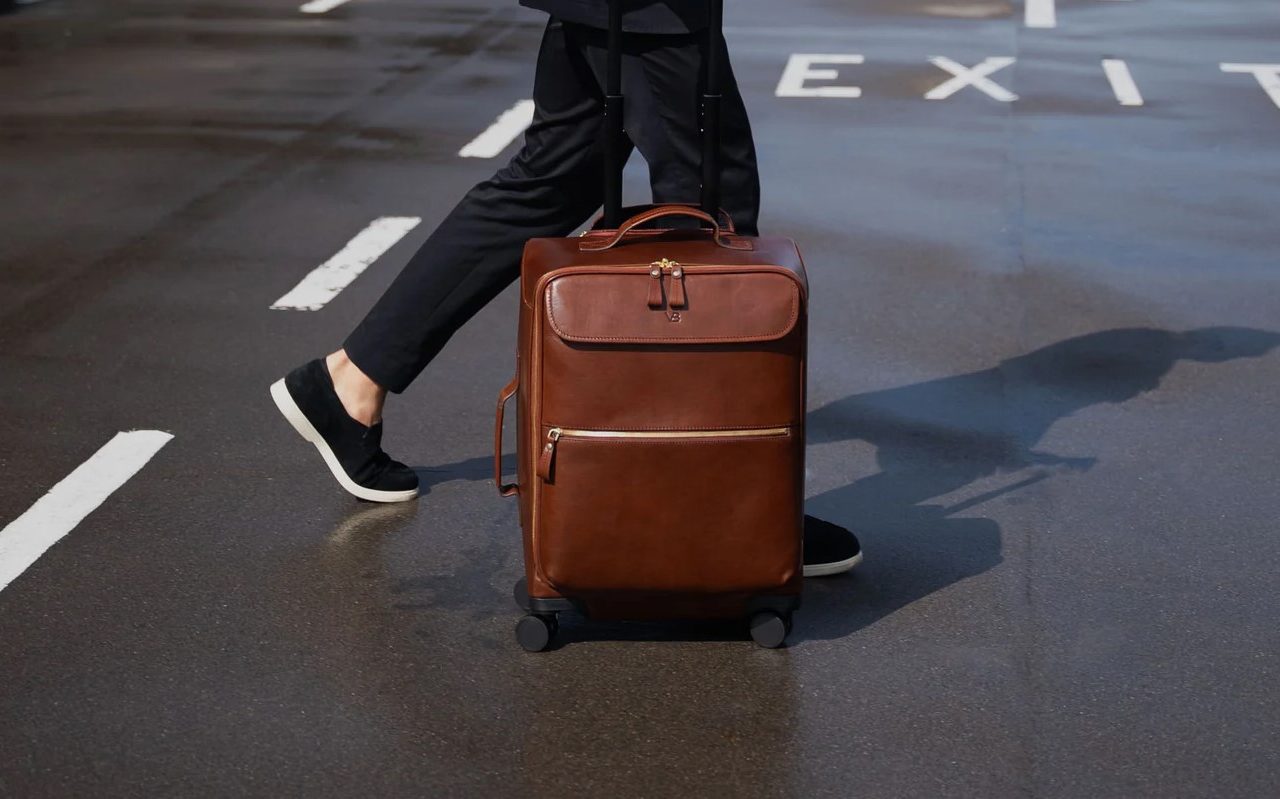
The carry-on is the most important purchase decision in a transatlantic professional kit, and the criteria are narrower than the broader luggage market suggests. You need a single bag that walks into a marble-floored hotel lobby without apologizing, holds a suit without it collapsing, and survives the friction of a serious annual flying load.
A structured leather weekender, made in Florentine family workshops where the craft has been refined across generations, fills that exact role. For a working frame of reference on what those criteria look like in practice, Von Baer’s Business Travel Luggage guide walks through the full set of considerations for executives who fly internationally. A few cues are worth lifting out for anyone shopping at this level.
Specify a full-grain Italian hide carrying Cuoio Superiore certification rather than a coated or split-leather alternative; the certification verifies vegetable tanning, traceable hide sourcing, and adherence to four independent quality criteria. Look for protective metal feet at the base, reinforced top handles, and a removable shoulder strap; those are the details that survive marble lobby floors and last-minute sprints between gates. Solid brass on the zip pulls and feet, rather than plated zinc, signals a piece built to outlast the leather around it. Discreet blind embossing of your initials, applied by hand and offered complimentary on every Von Baer piece, finishes the bag without ever shouting a logo.
The packing list, organized by recovery
A productive arrival starts on the plane. Travel research shows eastbound flights require roughly one full day of adjustment per hour of time zone shift, with westbound recovery slightly faster (source). Advancing your sleep schedule by an hour or two in the days before an eastbound departure measurably reduces the worst of the disruption (source). The bag should support that strategy, not fight it.
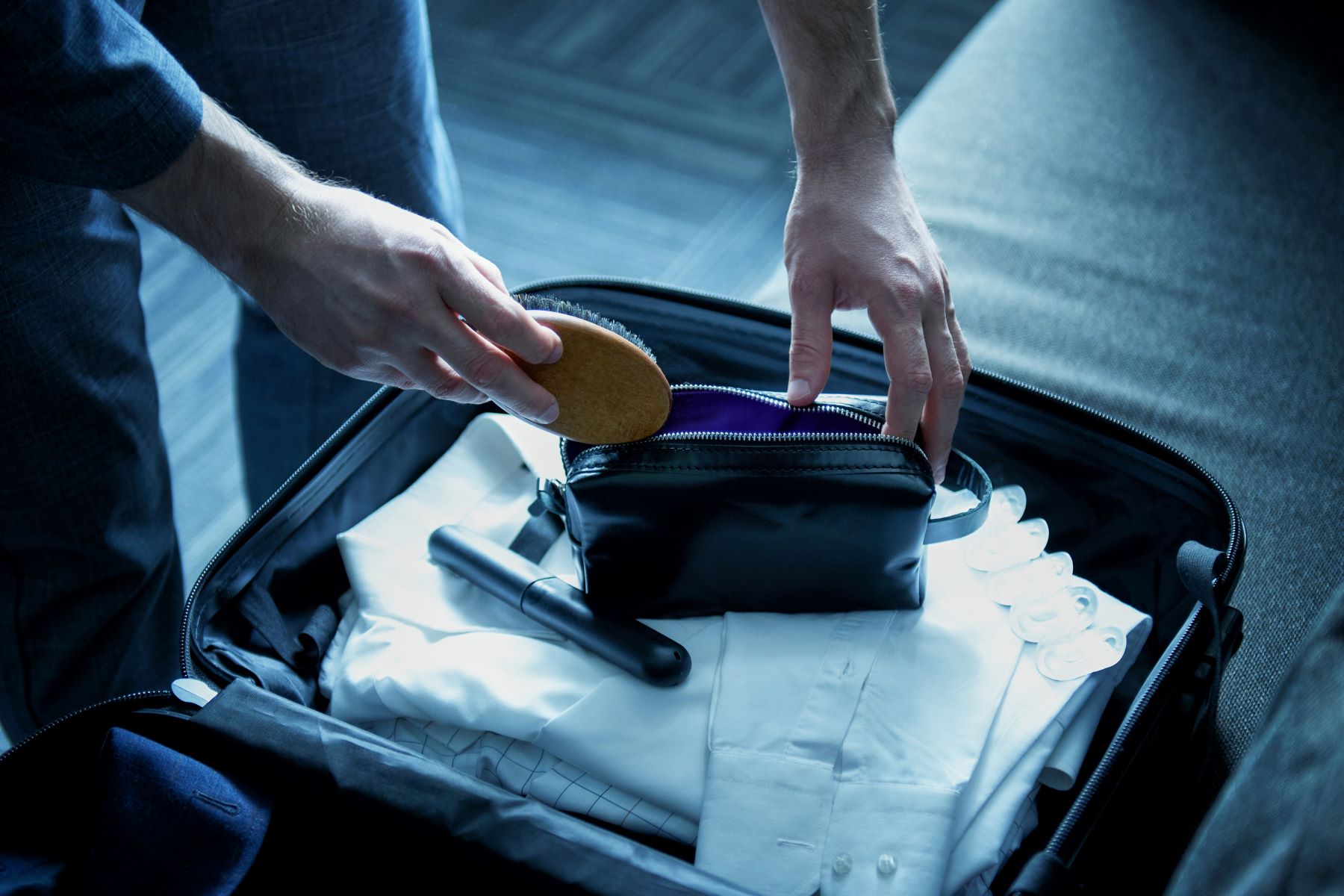
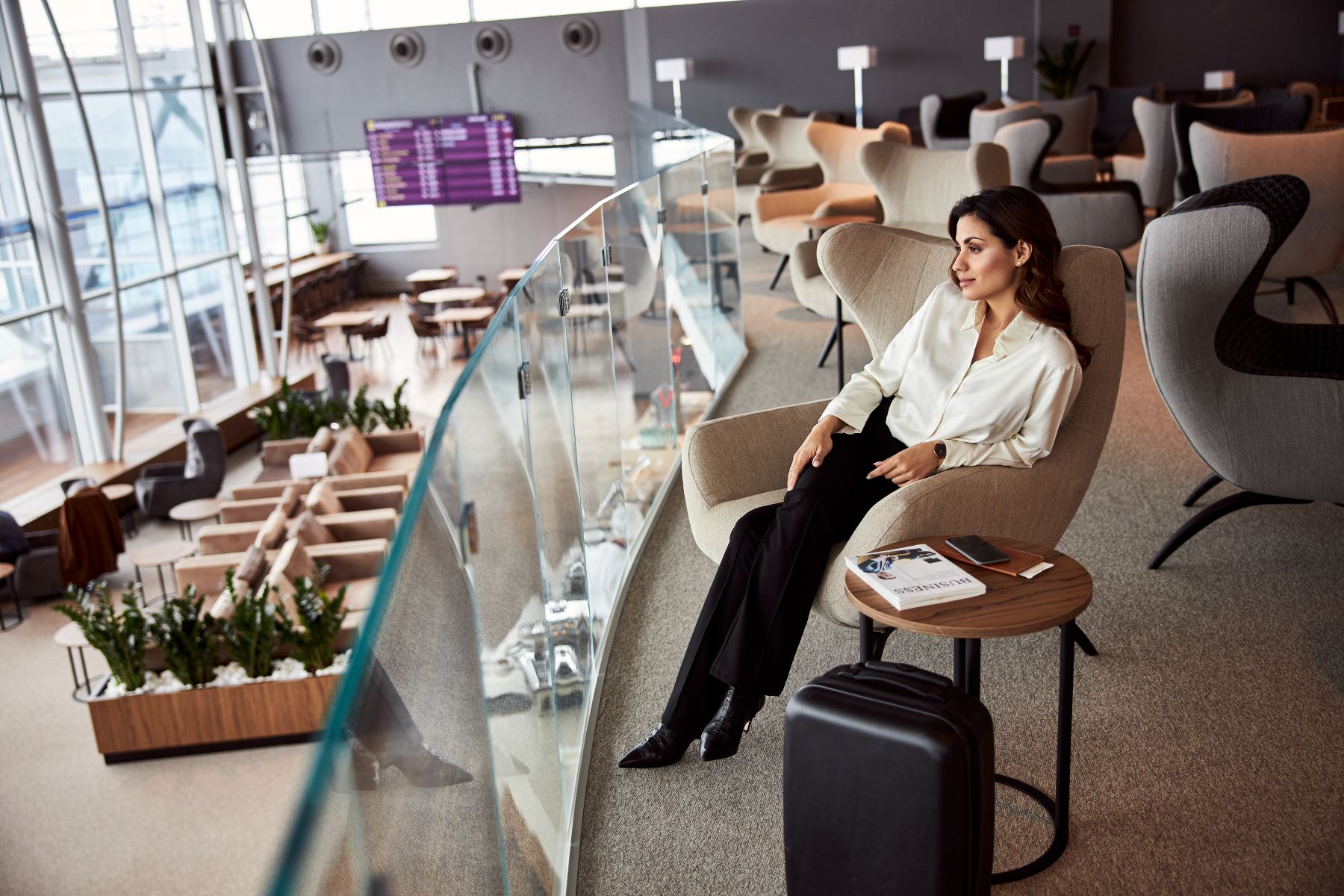
Top, accessible compartment: noise-cancelling headphones, a refillable bottle, eye mask, melatonin, charging cables, passport and boarding pass in a slim leather sleeve. These are the items that move you toward useful in-flight sleep, the single largest variable in how you present on the ground.
Main compartment: one suit in a garment-fold roll laid across the base, two crisp shirts in tissue, two pairs of merino socks, a single tie if relevant. Plus a quick-change polished cotton shirt for the first morning meeting if your flight lands tight. Toiletries pre-decanted into TSA-compliant bottles, all sat inside a flat leather pouch so nothing rolls or leaks.
Laptop sleeve: a 14- or 15-inch padded compartment keeps your device protected without a separate work bag. The best weekenders include this; the lesser ones force you to carry two bags through customs.
What the seasoned travelers actually do
The countermeasures international business travelers report relying on most are predictable: tactical pre-flight sleep shifts, hydration discipline, and a refusal to over-pack (source). The systemic point underneath those tactics is that recovery time is the scarcest resource on a multi-meeting trip (source). Every minute spent at a baggage carousel, every wardrobe improvisation forced by a creased shirt, every wheeled case fight on a Parisian cobblestone is a tax on the meetings you came to do.
The right carry-on does not glamorize that work. It quietly removes the friction so the version of you who walks into the conference room is the version your client wanted to meet.