
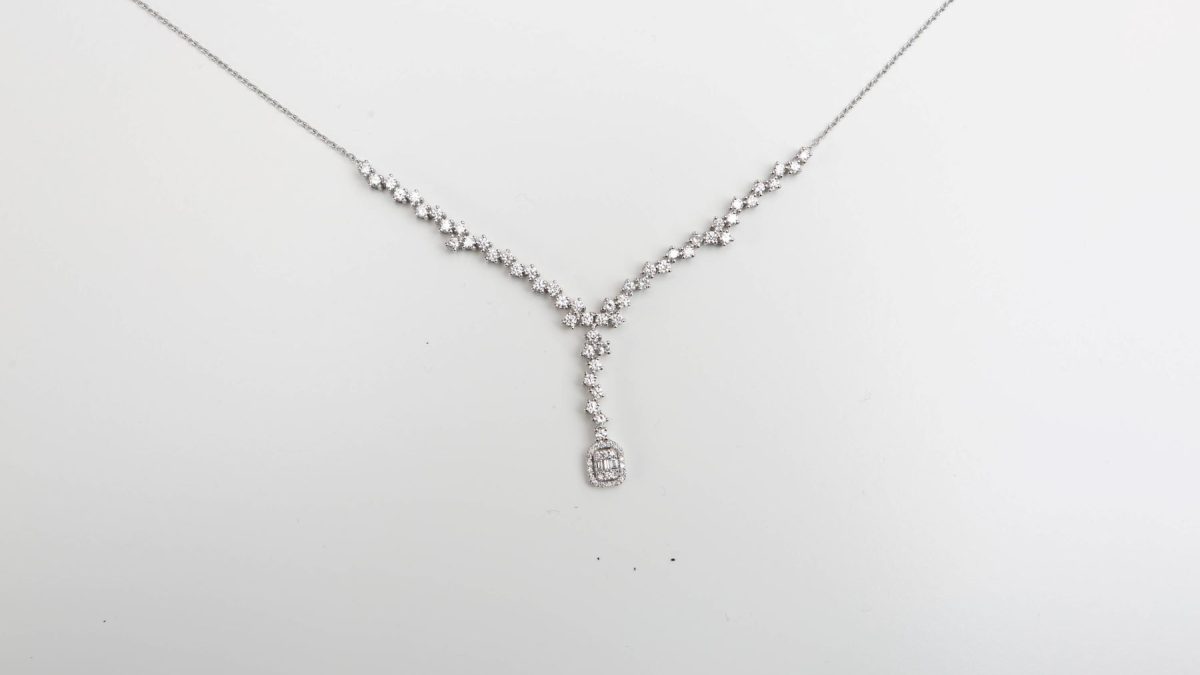
There is something about a diamond necklace that no other piece of jewellery quite replicates.
It sits close to the skin. It catches light when you move. It does not try too hard, and yet it is always noticed.
Unlike a bold cocktail ring or an oversized cuff, a diamond necklace earns its place quietly. It works on a Tuesday morning and a Saturday night. It pairs with almost anything.
And when chosen well, it becomes the one piece you forget to take off because it simply belongs there.
But finding that piece takes a little more thought than most people expect.
Why a Diamond Necklace Is Worth Taking Seriously
Fine jewellery holds meaning in a way that most other luxury purchases simply do not.
A handbag dates. A shoe silhouette shifts. A diamond necklace, worn and loved, only becomes more personal over time.
Part of that is the material itself. Diamonds are built to last. The settings, when made properly, hold firm through daily wear. The chains, when constructed well, rarely fail.
This is not disposable luxury. It is the opposite.
There is also a practical case that often gets lost in the romance of it all. Think about cost-per-wear on something you reach for constantly. Suddenly, what felt expensive at purchase starts to look like one of the smarter decisions in your wardrobe.
What You Are Actually Buying
Walk into most jewellery conversations and the talk immediately jumps to the four Cs. Cut, clarity, colour, carat. All relevant. But with necklaces, the stone is only part of the story.
Cut matters most for how a pendant performs in real life. A well-cut diamond catches light brilliantly even at a distance. Round brilliant cuts are the most universally flattering. Oval and pear shapes do something elegant to the neckline, lengthening it in a way that feels almost architectural.
Settings are where personal taste comes in. A prong setting maximises light and gives the diamond full visibility. A bezel wraps the stone in metal for a cleaner, more modern look. More elaborate designs, clusters, halos, suspended stones, push the pendant into genuine art object territory.
The chain is where buyers most often shortchange themselves. A beautiful stone deserves an equally considered chain. Cable and box constructions are classics for good reason. They sit flat, they hold up, and they do not compete with the pendant.
Chain length shapes the whole look too. Something sitting at the collarbone reads differently from something falling just below it.
And the clasp. Often ignored, always important. A lobster clasp is the most secure for everyday wear. It should be made from the same metal as the chain, not an afterthought.
Design-Led Jewellery Is a Different Category Entirely
There is a difference between a diamond necklace that is expensive and one that is exceptional.
Price does not always tell you which is which.
What separates the two is design intention. The proportions. The weight of the metal in the hand. The way a pendant moves rather than just hangs. The finish on surfaces no one but the maker will ever see.
These details are not accidents. They are the result of someone treating jewellery as a genuine design discipline.
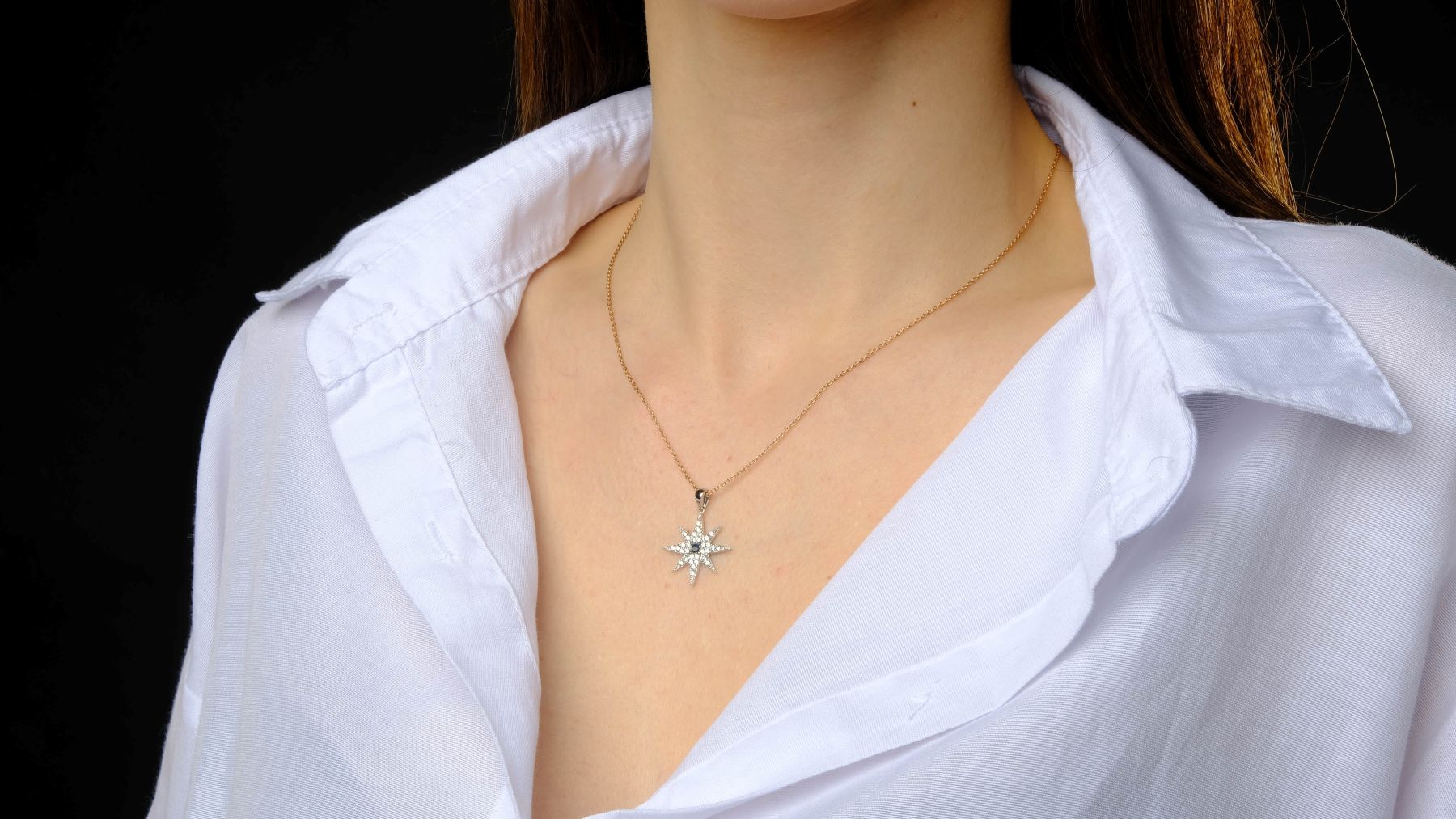
This is what draws people toward makers who think seriously about the wearer. The ENEA Studio diamond necklaces collection reflects exactly this kind of thinking. The structures feel considered. The stones and settings work together rather than one simply housing the other. Nothing about the pieces feels like a default choice.
For someone who wants a necklace that stays relevant across many chapters of life, that intentionality is the thing worth paying for.
When you hold jewellery made this way, you sense it before you can name it. The weight feels right. The movement feels deliberate. It wears well rather than just photographing well.
Styling It Without Overthinking
The fear that a diamond necklace will spend most of its life in a box is one of the most common hesitations in fine jewellery.
It is also one of the most unnecessary.
The solution is to buy for your real life, not the idealised version of it.
For everyday wear, a slim chain with a small, well-cut solitaire is almost impossible to get wrong. It adds quiet polish without effort. It does not compete with anything you are already wearing.
For more considered occasions, a pendant with greater presence steps up naturally. More stone, a more intricate setting, a multi-diamond design. None of these require a completely different wardrobe to support them.
Layering is worth learning. A solitaire at one length, a plain chain slightly longer. That combination creates dimension without noise. Keep the metals consistent. Vary the chain styles rather than mixing pendant designs. The restraint is what makes it look intentional.
Metal tone matters more than people expect. White gold and platinum lean cooler and contemporary. Yellow gold carries warmth and timeless ease. Rose gold sits between them, softer and often more forgiving across a range of skin tones and wardrobe colours.
Keeping It in Good Condition
A well-made diamond necklace should outlast you. That is not an exaggeration.
But it does require a baseline of care that is easy to skip once the novelty of a new purchase settles.
The single most protective habit is simple. Put your necklace on last. After perfume, after moisturiser, after anything that could cloud the stone or affect the metal over time. Three seconds of habit, years of difference.
Store it separately from other pieces. Diamonds scratch. Not just softer stones, but metals too. A pouch or a divided jewellery box is not excessive. It is just practical for something this valuable.
Once a year, have it professionally cleaned and checked. A jeweller will catch a loose setting before it becomes a lost stone. They will also restore a brilliance that home cleaning cannot quite replicate.
In between, warm water with a drop of mild soap and a soft brush does the job. Rinse well, dry gently, and let it air completely before putting it away.
On Giving One as a Gift
Few gifts land the way a fine diamond necklace does, and few are as consistently well received.
A necklace is personal without being presumptuous. It says something meaningful without requiring the recipient to decode it.
When buying for someone else, the most useful question is simply: what does this person actually wear? A minimal dresser will treasure a solitaire on a fine chain. Someone who layers and experiments will love something with more sculptural detail.
When genuinely uncertain, simpler is almost always the safer and ultimately more wearable choice.
Presentation matters too. A beautiful box, a brief note about the design or the stone. These details transform a gift from an object into a memory.
The Real Question
At the end of all of this, the question is not about carat weight or chain construction.
It is about whether you have found something worth keeping.
The best diamond necklaces are not always the most expensive. They are the ones that feel right against the skin. The ones that seem to belong to you before you have even decided to buy them.
The ones you are still reaching for, without thinking, years from now.
That is worth being patient for. In fine jewellery, patience almost always leads somewhere better.