
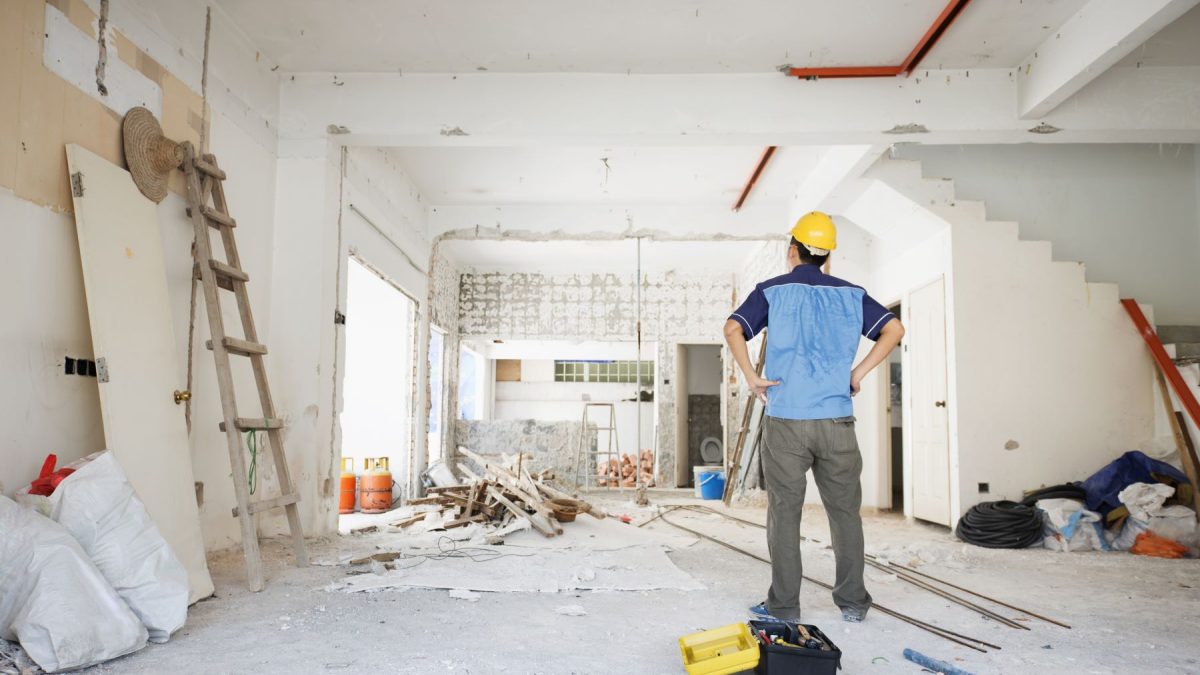
Your home is more than a place to live. Treated correctly, it becomes one of the most reliable wealth-building tools you will ever own.
Most people think of home improvements as expenses. A new roof, a remodeled kitchen, a fresh coat of paint on the fence — these feel like money going out the door. But that framing misses something important. When you make the right upgrades at the right time, you are not spending money. You are moving it. You are converting cash into embedded value that sits inside your property, appreciating alongside the broader market and multiplying your overall financial position over time.
Wealth built through property is often slow and invisible. That is precisely what makes it powerful. The improvements you make today do not just raise your home’s asking price — they reshape how lenders see you, how buyers compete for your home, and how much financial leverage you can access years down the line. Understanding that relationship, between effort and compounding value, is the key to using your property as a genuine wealth vehicle.
Why Strategic Matters More Than Expensive
There is a common misconception that the bigger the renovation, the bigger the return. That is not how it works. A $100,000 addition might add $60,000 in value. A $15,000 kitchen refresh might add $25,000. The gap between what you spend and what the market rewards you for is called recoup rate, and it varies dramatically depending on the type of project, the local market, and the condition of surrounding homes.
Strategic improvements are those that close the gap between your home’s current condition and the ceiling set by your neighborhood. Buyers will not pay above what comparable homes in the area command. But they will absolutely discount your property if yours falls visibly short of that standard. The goal, then, is not to build the most luxurious home on the block. It is to build the best version of your home, one that meets or slightly exceeds neighborhood expectations in the areas buyers care about most.
The improvements that compound in value are almost never the flashiest ones. They are the ones that solve real problems buyers notice.
The Projects That Actually Move the Needle
Kitchens and Bathrooms
Buyers make emotional decisions about homes, and kitchens and bathrooms carry the most emotional weight. A dated kitchen with worn countertops and poor lighting sends a signal — this home needs work — even if everything structural is perfectly sound. Minor kitchen remodels consistently outperform major overhauls in terms of value recouped. New cabinet fronts, updated hardware, better lighting, and a fresh backsplash can completely transform the perception of a space for a fraction of the cost of a full gut renovation.
Bathrooms follow a similar logic. Clean, modern, and functional is the target. Buyers do not need spa-level finishes. They need to feel confident that the space is move-in ready. Grout, fixtures, vanities, and lighting go a long way.
Curb Appeal and First Impressions
You cannot underestimate the power of what buyers see before they even walk through the door. Landscaping, exterior paint, the front door, the driveway — these elements form the first impression that colors everything else. Studies consistently show that strong curb appeal can increase a home’s perceived value by five to ten percent before a single room is toured. These projects are also among the least expensive relative to the value they generate.
5–10%
Value lift from curb appeal
70–80%
Avg. recoup on minor kitchen remodel
~60%
Recoup rate on full primary suite addition
Energy Efficiency Upgrades
Insulation, windows, HVAC systems, and smart home technology have moved from nice-to-have to market expectation in many regions. Energy-efficient homes cost less to operate, and buyers increasingly factor utility costs into their purchasing decisions. Beyond the direct value impact, efficiency upgrades often qualify for tax credits, effectively lowering your net cost while the value improvement to your property remains unchanged.
Home Equity: Your Built-In Financial Resource
As your property value rises through strategic improvements, something else rises with it: your home equity. Equity is the portion of your home’s value that you actually own — the gap between what the property is worth and what you still owe on it. It is one of the most underutilized forms of personal wealth, sitting dormant in millions of households while owners look elsewhere for capital.
Here is where the compounding logic becomes especially useful. When you improve your home, you build equity faster than the market alone would do it for you. And equity is not just a number on a balance sheet — it is accessible capital. Many homeowners choose to apply for home equity loan financing to fund the next round of improvements, creating a deliberate cycle where each renovation unlocks the capital for the next, and every upgrade adds more value than the last. Used responsibly, this cycle can significantly accelerate the pace at which your property builds your overall net worth.
Equity grows two ways simultaneously: through market appreciation and through active improvements. When you combine both levers, the compounding effect accelerates well beyond what passive ownership alone would produce.
The important caveat is discipline. Borrowing against your equity works when the capital goes back into the asset. Taking equity out to fund lifestyle expenses erodes the very foundation that made your home valuable in the first place. The distinction between using equity as a tool and using it as a crutch is the difference between building wealth and slowly dismantling it.
Sequencing Your Improvements for Maximum Impact
Order matters. Renovating the master bath while the roof leaks is a category error. Before any cosmetic improvement, the structural and mechanical fundamentals of the home must be sound. Buyers and appraisers will discount a beautiful kitchen in a house with an aging electrical panel or a compromised foundation. Lenders see it the same way.
Once the foundation is solid, the sequencing question becomes one of priorities and market timing. In a competitive seller’s market, surface-level cosmetic improvements often generate the best near-term return because buyers are less selective and more willing to overlook minor deficiencies. In a slower market, buyers have more negotiating power and will use every visible deficiency as leverage. In that environment, addressing the functional shortcomings first — roof, HVAC, windows — tends to produce better outcomes than pure cosmetic work.
It also pays to think about your timeline. If you plan to sell within two years, focus on high-visibility, quick-return projects. If you are a long-term holder, a broader improvement strategy makes sense — one where you systematically raise the quality of the property over time, letting market appreciation do much of the work while your improvements accelerate it.
Knowing When to Stop
Over-improving is a real risk. If your home already sits at the top of its neighborhood’s value range, additional upgrades may add comfort but not market value. The market ceiling of your street sets a hard cap on what buyers will pay, regardless of how exceptional your finishes are. Recognizing that ceiling — and respecting it — is part of what separates strategic improvement from expensive renovation for its own sake.
A useful benchmark is the principle of conformity. In real estate, value is partly determined by similarity to surrounding properties. Deviating too far upward creates a property that feels out of place, one that buyers who can afford it might find in a better neighborhood, and buyers in your neighborhood simply cannot afford. Stay within a range that makes your home the best, not the outlier.
Conclusion
Property wealth is not built passively or by accident. It is constructed deliberately, improvement by improvement, decision by decision, over years and sometimes decades. The homeowners who come out ahead are rarely the ones who spent the most. They are the ones who spent strategically — understanding the relationship between investment and return, between equity and access, between the current condition of their home and the ceiling the market will reward.
Your home is already working for you. The question is whether you are working with it. Start with a clear view of where your property stands relative to its potential, build a sequenced plan that prioritizes value, and let each improvement lay the foundation for the next. That is how wealth compounds from the inside out.