Women’s Health Week is observed May 10-16th, making it a great time to look at an important issue that most women are not aware of, yet it is greatly impacting their health and longevity. When it comes down to it, protein intake and muscle mass are two closely related issues that all women need to be on top of, especially those who are over the age of 35. Without keeping it in mind, many women could be setting themselves up to become weaker and lose their mobility and ultimately their independence.
“Building and maintaining muscle mass is an issue that should be on every woman’s mind,” said Jennifer Scherer, registered dietitian nutritionist, medical exercise specialist, certified personal trainer, master-level Pilates instructor, and owner of Fredericksburg Fitness Studio. “We know today that we need to maintain muscle in order to be mobile, stronger, and have a healthier and better quality of life as we age.”
Millions of women are not paying attention to their protein intake or making an effort to maintain muscle mass. These two issues are crucial as they age, making it essential that they become a priority as soon as possible. Ideally, it is a great idea to start focusing on it when in the 20’s, but it is never too late to get started focusing on getting enough protein and building and maintaining muscle.
In a study published in the journal RSC Advances in 2025, researchers stated that consuming adequate protein in our diet is crucial for optimal health and bodily function. They also encourage consumers to choose foods that are higher in protein levels for various health benefits, and point out that proteins ultimately help to support various biological functions and are vital for maintaining a strong immune system. Their report also advises that a lack of protein can result in a slower metabolism and a loss of muscle mass, strength, and balance.
The lack of awareness about protein consumption is only half of the problem. The other half is building and maintaining muscle as women age. It’s a silent muscle loss problem that could easily be combated with strength training only three days per week for 20 minutes each time. Taking the issue on doesn’t have to be really time-consuming or intense. Small efforts consistently done will pay off over time and lead to healthier results.
Many women wake up in their 70s to find that they are weak and don’t have the balance and strength that they once did. The problem, however, is that is an issue that started decades before. According to the U.S. Department of Health & Human Services, sarcopenia is the gradual loss of muscle mass and strength that can occur with aging, especially in those who are not physically active. They report that sarcopenia typically begins around age 30, when the body begins losing around 3-5% of its muscle mass per decade, which ends up being around 4 to 6 pounds of muscle per decade. By the time women realize that this is happening, decades have gone by, and it becomes difficult to carry groceries, get up off the floor, and climb stairs.
The good news is that this is an issue that, if addressed, can be avoided and reversed. One is never too old to build muscle mass through consistent resistance training and adequate protein intake. Here are some tips all women should keep in mind regarding this issue so they can maintain their health, quality of life, and longevity:
- Resistance training and protein consumption go together. Doing the training without the protein intake isn’t going to be enough, because the protein is essential for building muscle. Commit to doing both in order to achieve the desired results.
- Pay attention to the amount of protein being consumed each day, or focus on each meal. According to the Harvard Medical School, a modest amount to aim for is .36 grams of protein per pound. For example, a 140-pound woman who is not physically active would aim to get 53 grams of protein per day. The same woman trying to build muscle and becoming physically active would need to increase the protein amount per day, roughly doubling the amount consumed.
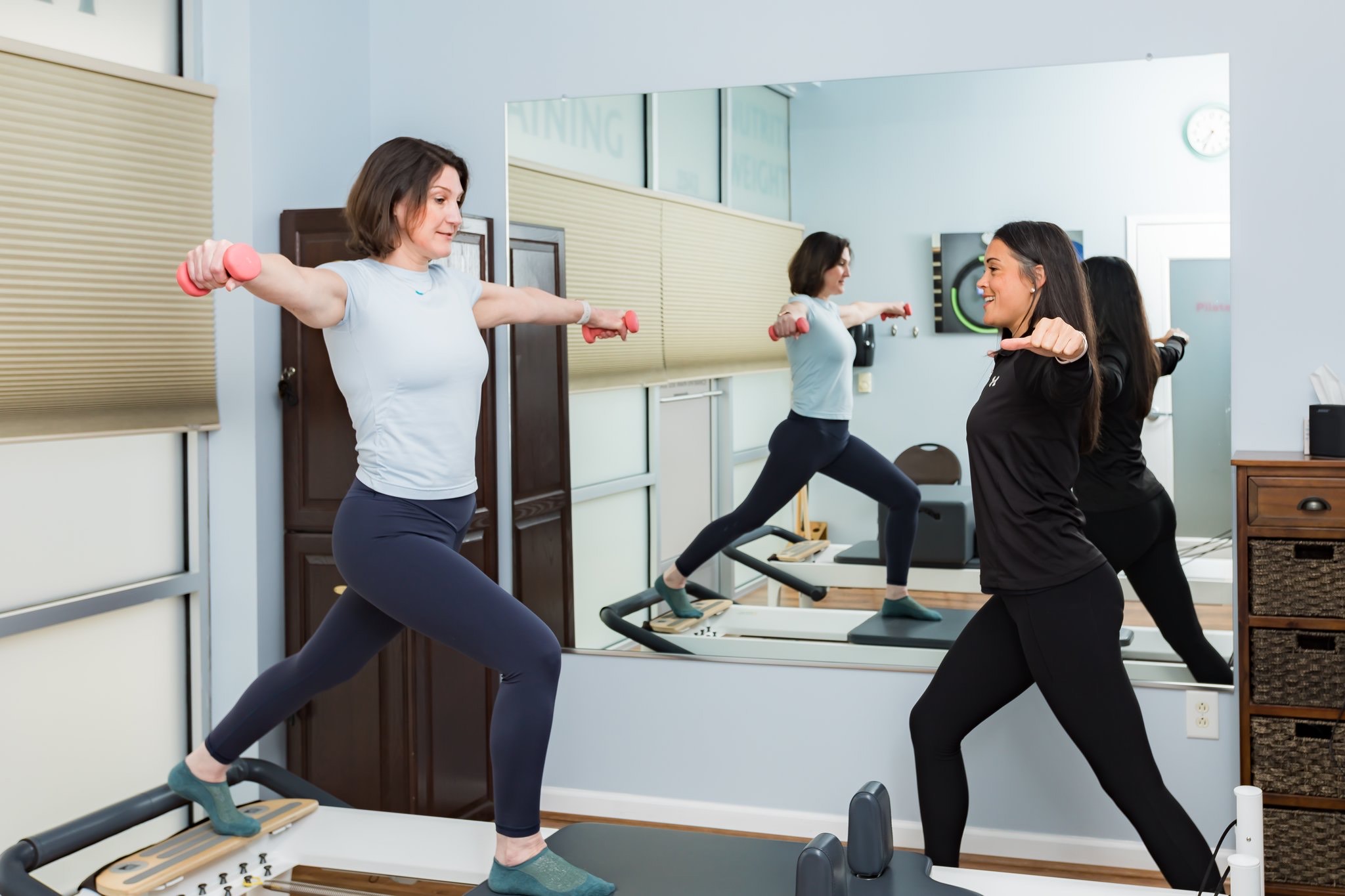
- Don’t shy away from strength training, assuming it has to be many hours at an intense rate. Engaging in resistance training just three days per week for 20 minutes per day is enough to help build and maintain muscle mass. Strength training, which is different than aerobic or cardio activities, is done with free weights, or weight bearing exercises such as Pilates, push-ups, squats, and yoga.
- To get more protein into the diet, be sure to include some with each meal or snack. Also, eat the protein first, so that it is consumed before getting filled up. Look for easy swaps that can be made, such as swapping out breakfast cereal for eggs or Greek yogurt, and swapping cookies and chips for nuts.
- Getting in resistance training can be as easy as doing it at home by getting some free weights, or getting support and guidance by joining a program such as those offered by the Fredericksburg Fitness Studio. The key is to be consistent with the training so that over time, the results add up.
“As we age, it is imperative that we stay strong,” added Scherer. “We help people do this routinely, and it makes a huge difference in their lives. No matter what age you are, now is the best time to get started on this mission of getting enough protein and building and maintaining muscle mass.”
At Fredericksburg Fitness Studio, clients work with a registered dietitian nutritionist and experienced movement professionals to develop personalized, realistic plans. Services are offered both in person and virtually and include comprehensive assessments of medical history, nutrition habits, movement patterns, and lifestyle factors. They provide virtual nutrition therapy, medical nutrition therapy, and tailored meal planning through EatLove Pro—delivering scalable support with built-in accountability at every level.
The boutique studio also offers semi-private and private training focused on Pilates, strength training, mobility, fall prevention, and medical exercise. With two Fredericksburg locations, the studio provides a highly personalized environment, luxury amenities, and expert instruction across reformer, chair, tower, CoreAlign, and master-level Pilates equipment. Fredericksburg Fitness Studio is proud to be a Medicare provider.
In addition, Jennifer Scherer and her husband, Jeff Smith, co-host the Fitness & Finance Radio podcast, which explores the intersection of physical wellness and financial planning for retirement, highlighting how long-term health impacts long-term financial security.To learn more about Fredericksburg Fitness Studio, visit https://www.fburgfitness.com. To listen to Fitness & Finance Radio, visit https://fitnessfinancepro.com.