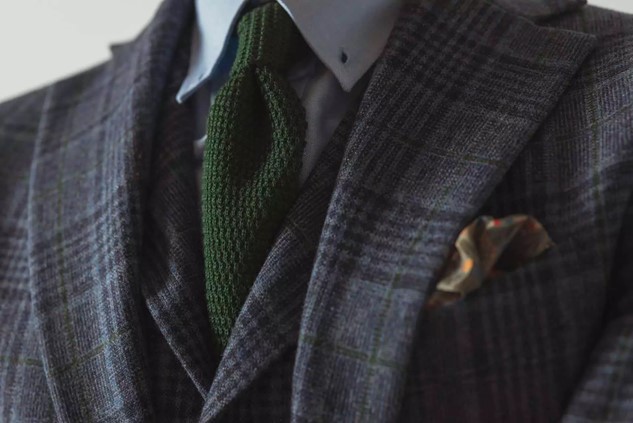
In the 1950s and 1960s, the campus dress codes of America’s most prestigious universities were built around a small number of cloth archetypes. Oxford cloth button-downs. Madras. Seersucker in summer. And – in the colder months, for lectures, for the library, for the kind of quiet authority that came from wearing something well-made – Harris Tweed.
The cloth that weavers in the Outer Hebrides of Scotland had been producing for centuries, on hand-operated looms without electricity, in their own homes, somehow became the defining material of East Coast collegiate style. It is one of the more unlikely stories in the history of clothing. It is also entirely logical, when you understand what Harris Tweed actually is.
A CLOTH BUILT TO LAST
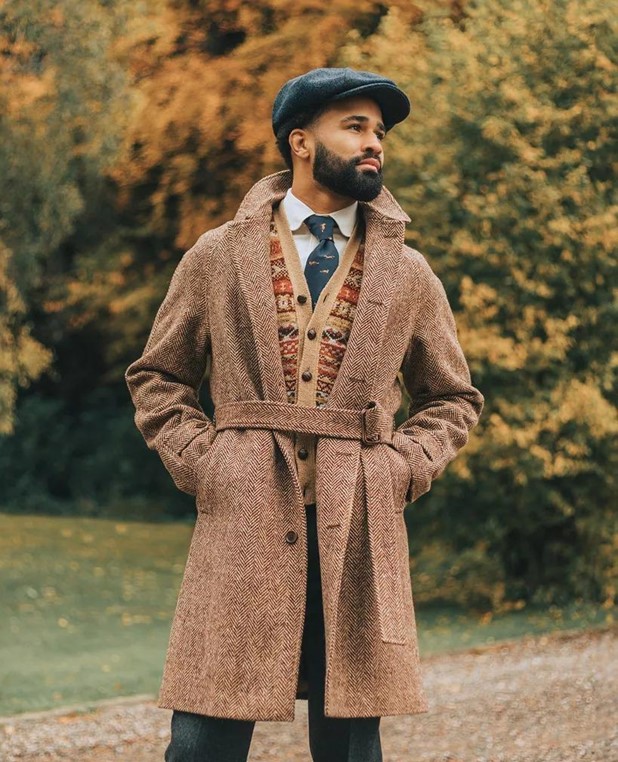
Harris Tweed is produced under the only Act of Parliament in the world that protects a cloth. The Harris Tweed Act of 1993 stipulates that every authentic piece must be handwoven in the Outer Hebrides from pure virgin wool – and an independent assessor must approve and stamp the famous orb trademark before the cloth leaves the islands. There are no shortcuts. There is no factory alternative.
The cloth is heavy – typically 470 to 500 grammes per running metre – and dense, woven from Cheviot and Blackface wool that retains its natural lanolin because the Act restricts chemical processing. The result is a cloth that sheds water, resists wear, and improves over years of use. In a world of seven-day fashion cycles, it is an outlier.
It was precisely these qualities that drew the American market to Harris Tweed in the mid-twentieth century. Brooks Brothers adopted it. J Press built collections around it. It became the cloth of the well-dressed professor, the weekend alumni, the man who understood that what he wore should demonstrate his judgement rather than announce his expenditure.
THE BRANDS THAT STILL CARRY IT
That influence did not disappear. Mark Hogarth, Creative Director of Harris Tweed Hebrides, the premier mill for the cloth, is direct about the American connection: “In the US, generationally there’s still an interest in Harris Tweed, with anecdotes and classic pieces being passed through the years. It’s all tied in with the Ivy style, where Harris Tweed was one of the core uniform pieces of 1950s and 60s collegiate style.”
The brands that shaped that era still take design direction from Harris Tweed. Ralph Lauren, Brooks Brothers, J Press, Todd Snyder – each continues to work within a tradition that the Hebridean weavers have sustained for centuries. Nike has produced limited-edition trainers using Harris Tweed. Chanel traces a direct line back to Coco Chanel’s 1920s adoption of the Duke of Westminster’s tweed, which she made a staple of Parisian style.
THE GENERATIONAL GARMENT
There is something about Harris Tweed that passes. Not metaphorically – literally. Because it is produced without synthetic shortcuts and resists the degradation that undoes lesser cloths, Harris Tweed garments survive decades of use and remain wearable. Pieces from the 1960s are still in circulation. Pieces bought today will outlast most of what is currently described as quality clothing.
Hogarth describes this as the inter-generational ethic – and it runs particularly deep in the American market, where stories of Harris Tweed jackets handed down through families are common. The cloth connects wearers not only across geography but across time.
Walker Slater in Edinburgh has worked with Harris Tweed Hebrides for over thirty years. The same cloth that shaped Ivy League dress codes in the 1950s arrives at our Edinburgh studio every season – and is cut into garments that carry that same unhurried authority into contemporary wardrobes. The context changes. The cloth does not.
For those in the US looking to build a relationship with Harris Tweed, Walker Slater ships worldwide. Browse our Harris Tweed Jacket Collection at Walker Slater.