Drinking wine is always an adventure, with every nuance of flavor adding its own element of surprise. Those “surprises” can be tasty… and some can be, shall we say, disappointing? When choosing your next bottle, don’t go into the purchasing process blind. You can learn a lot from a label beyond whether or not the packaging looks cool. Take a good look the next time you’re thinking about buying a bottle for some hints about what kind of wine you’ll find inside. Use these tips to decipher your next wine bottle label to embark on a delicious adventure for your palate!

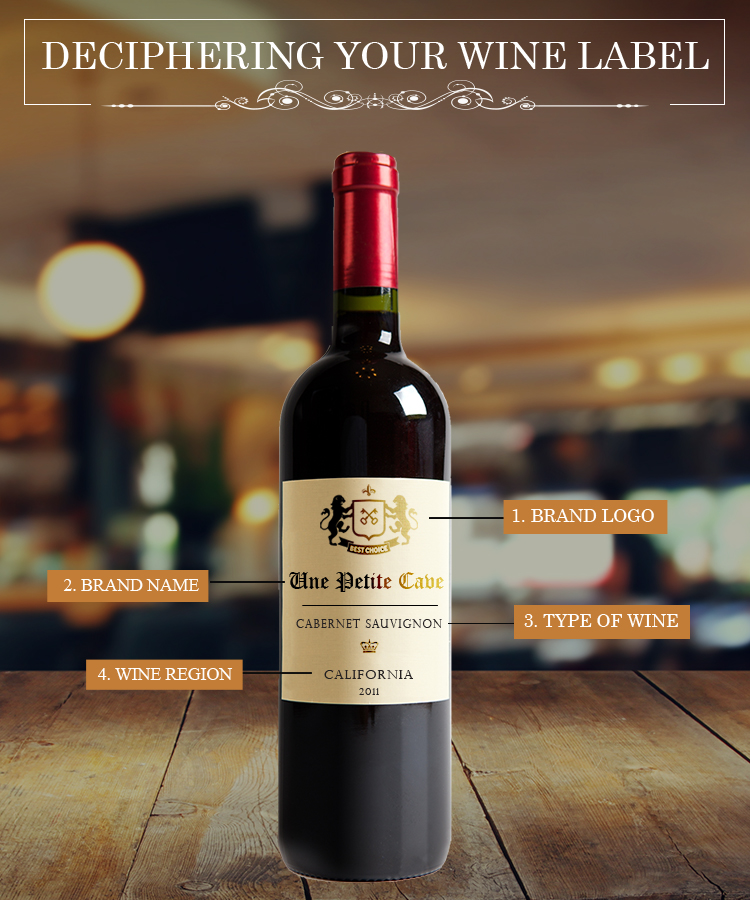
- Brand Logo: While you may be tempted to write the logo off as a simple image on the label, a logo can be exceptionally meaningful to consumers. A logo typically conveys the vibe of the winery—is it a younger, more risk-taking type of winery, or one that prides itself on long-standing winemaking traditions? Paying attention to these kind of details while checking out the bottles on the shelves will definitely help you make more informed choices when it comes to your wine.
- Brand Name: What’s in a name? A lot, actually. Just like the logo, the name of a wine can tell you a lot about where it comes from and what it tastes like. A family name or a name that indicates a specific region will give you a good idea of where the wine is coming from. Big brand names are also good to note because if you love one kind of wine, it’s a consistent brand that you can always go back to!
- Type of Wine: Contrary to popular belief, there is more to wine than just white or red. Knowing what kind of wines you like and what to search for on a label is important. If you enjoy a fuller bodied and more savory wine, then a Cabernet Sauvignon or a dry Chardonnay might be for you. For those that prefer the lighter side of things, Pinot Noirs and Rieslings are generally more sweet and fruity. The best way to know what wines you like is to try them.
- Wine Region: The most well-known wine regions in the world (France, Italy, California, etc.) are also typically places that are known for a hospitably climate. Because the grapes used for wine need a specific climate to produce the rich flavors for wine, where your wine comes from can indicate details about the flavor. For example, many wines from California tend to be higher in alcohol content and acidity than many French wines, due to the cooler temperatures and types of soil found in the growing regions.
Other Terms You Might Find:
- Reserve: Though it sounds particularly fancy, this word on a bottle simply indicates that a wine has been aged for an extra stint of time at the winery prior to being released.
- Estate-bottled: This statement tends to be rare, but should definitely be noted if seen on a bottle. This means that the winery listed on the label owns all of the grapes that went into the bottle, in addition to being the place where the wine was crushed, fermented, finished, aged, and bottled.
- ABV: This stands for “alcohol by volume”, and indicates the level of alcohol content in your wine. It should be noted that most table wine has an alcohol content of less than 14%.
- Contains Sulfites: This phrase will typically only be seen on wine produced in the United States, as it is the only country that requires it to be indicated on a wine label. “Sulfites” is a shortened term for sulfur dioxide, a natural preservative that is used in the wine industry due to its antioxidant and antibacterial properties.