
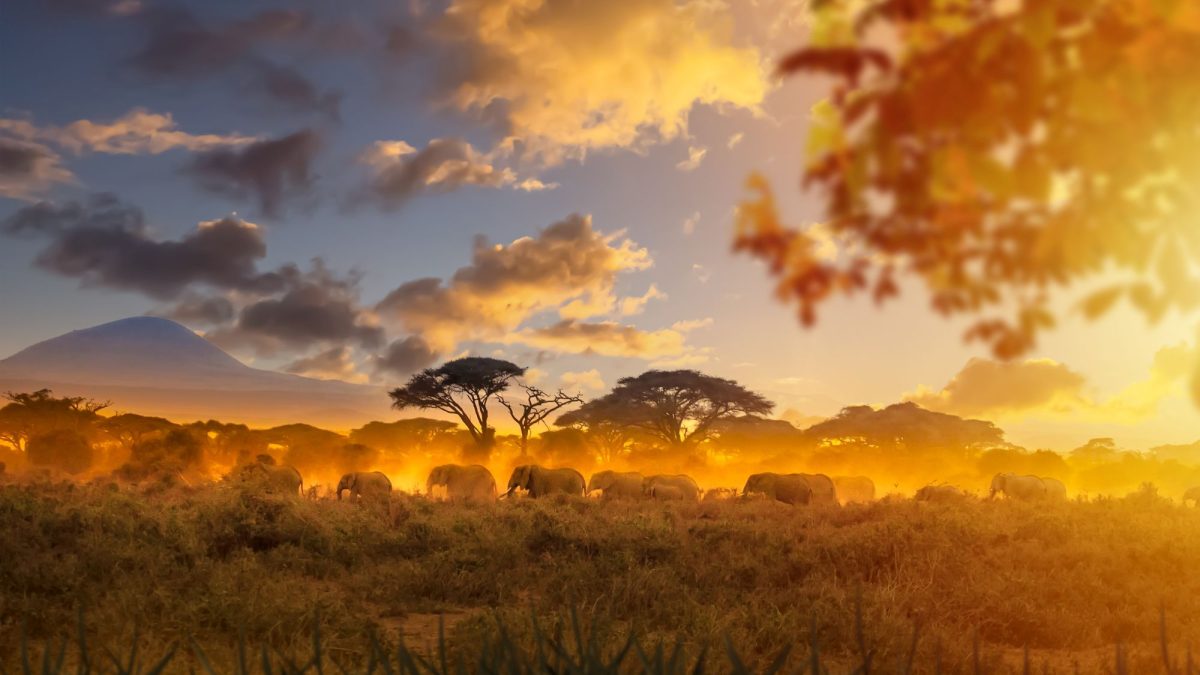
A safari to Tanzania’s Serengeti National Park is one of those unforgettable experiences on the wish-list of every traveller.
And for those lucky enough to experience a safari, its effects are profound. “No-one can return from the Serengeti unchanged”, said American conservationist George Schaller, “for tawny lions will forever prowl our memory and great herds throng our imagination.”
But for all the ink that’s been spilled in praise of Tanzania’s most beguiling destination, the Serengeti is just one element of a tourism sector that’s driving the East African nation’s prodigious economic growth and providing a stable and long-term source of prosperity.
The Serengeti itself has received significant investment in recent years: just last month, the Marriott’s Autograph Collection opened its first safari property in Tanzania with the launch of the Mapito Safari Camp.
Consisting of fifteen tented suites, the Camp is a clear sign of the bullish sentiment towards Tanzania’s tourism sector shared by international investors. But it’s also brought economic opportunities to the local area: the Camp employs a 90% Tanzanian workforce, and was designed by the Arusha-based Dunia Designs, a demonstration of the strength of Tanzania’s professional sectors.
Tanzania’s safari industry will always remain a key component of Tanzania’s tourism offering. Its continuing appeal to international visitors was noted by the World Travel Awards 2025 in December in Bahrain, where Tanzania was recognized as the World’s Leading Safari Destination, among a number of other accolades.
Beyond the Serengeti, Zanzibar, the jewel of the Indian Ocean, is enjoying significant government-backed investment on the back of a record year of international visitors. A $263 million dollar project to upgrade Pemba airport, located on Zanzibar’s neighbouring island, will enable direct international flights and unlock the region’s pristine beaches and cultural heritage for a new generation of visitors.
The government’s confidence in Zanzibar is being followed by the global hospitality industry. The luxury Hilton hotel chain has announced its re-entry into the Tanzanian market with Canopy by Hilton Zanzibar The Burj, a boutique lifestyle hotel expected to be opened in 2027.
At the heart of this expansion is a government, led by President Samia Suluhu Hassan, that understands the transformative potential of the tourism sector for Tanzania’s young and dynamic population.
By simultaneously providing well-paid, professional jobs and stimulating investment in critical national infrastructure, tourism is unlocking the vast potential of East Africa’s most dynamic economy.
The recent restoration of the Tazara Tanzania-Zambia railway was a significant milestone, not just serving as a vital transportation and trade link with Tanzania’s neighbour, but also as a key route for travellers venturing into the attractions of the nation’s interior, such as the Selous Game Reserve and Mikumi National Park.
Likewise, the continuing major investment in Tanzania’s 2,500-kilometer Standard Gauge Railway (SGR) is connecting Dar es Salaam with the capital, Dodoma, and onwards to major tourism hubs in the north and west of the country.
Tourism brings significant financial benefits to the nation too. Tanzania’s tourism sector is already the highest foreign exchange earner, ahead of gold. In 2024, tourism accounted for approximately one quarter of Tanzania’s foreign exchange earnings and around 17% of its gross domestic product.
Tanzania is on the cusp of a virtuous cycle: burgeoning tourism attracts more international guests, who underpin growing foreign exchange earnings. Off the back of this, Tanzania’s robust financial position stimulates further government and foreign investment in the tourism industry and, therefore, even more visitors.
And with AFCON 2027 already on the horizon, Tanzania has the opportunity to showcase its unforgettable tourism offering to international visitors. Co-hosted with Kenya and Uganda, Tanzania will enjoy the spotlight of world football for the weeks the tournament is hosted – the ideal opportunity to showcase prodigious recent investment in the tourism sector.
Tanzania’s astonishing natural beauty has long charmed writers, travellers and conservationists from around the globe. But now, it’s also driving sustainable, long-term economic growth that will unlock the potential of the nation’s young and dynamic population.