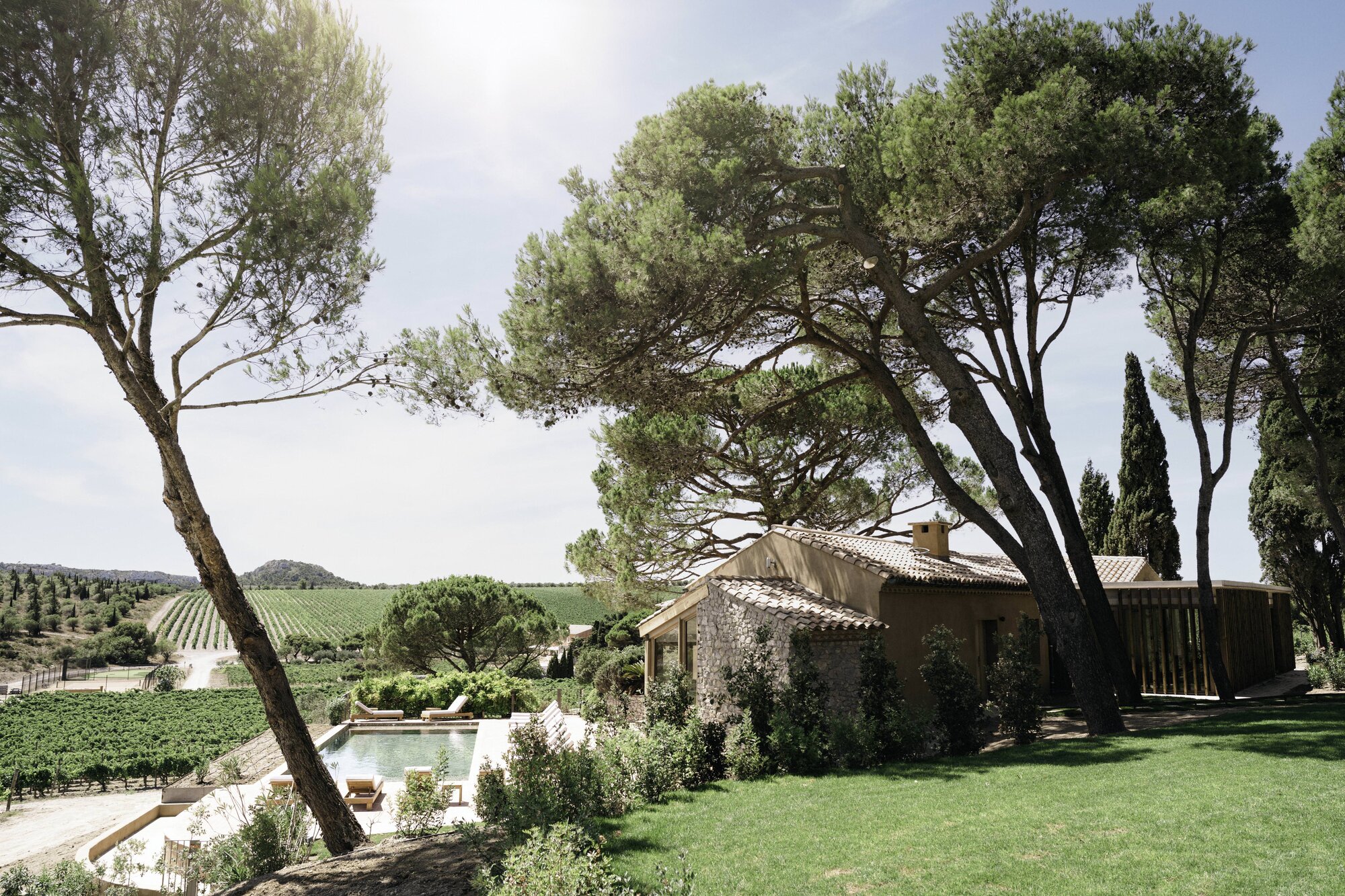
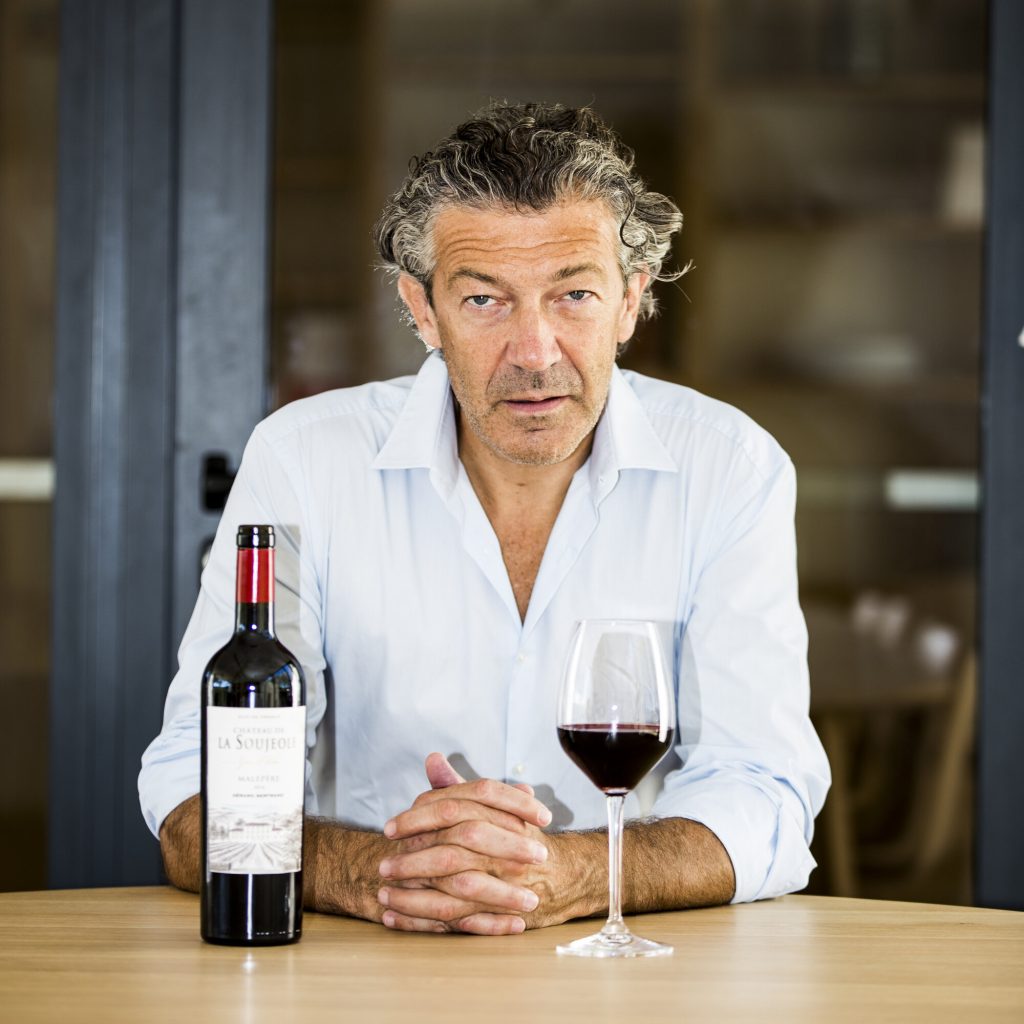
There are invitations one accepts politely—and then there are those that simply cannot be refused. Mine came from Gérard Bertrand, the charismatic wine visionary whose name is synonymous with the art of living in the South of France. His invitation: to experience his wine estate near the Spanish border. The journey, however, would prove just as intoxicating as the destination.
Rather than endure a labyrinth of train transfers from Nice, we chose the freedom of the open road—a decision that transformed a simple transfer into an elegant, meandering adventure through some of southern France’s most captivating hidden corners
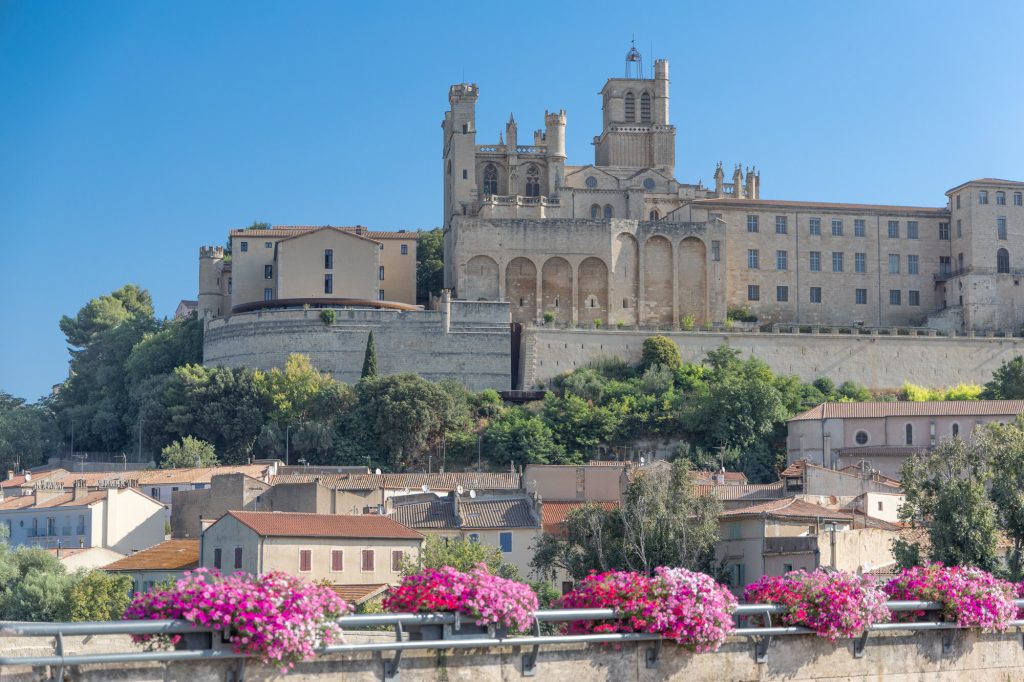
BÉZIERS: A NIGHT BEHIND BARS—BY DESIGN
Our first unexpected stop was in Béziers, one of France’s oldest towns, where history rises dramatically from a hilltop overlooking the Orb River.
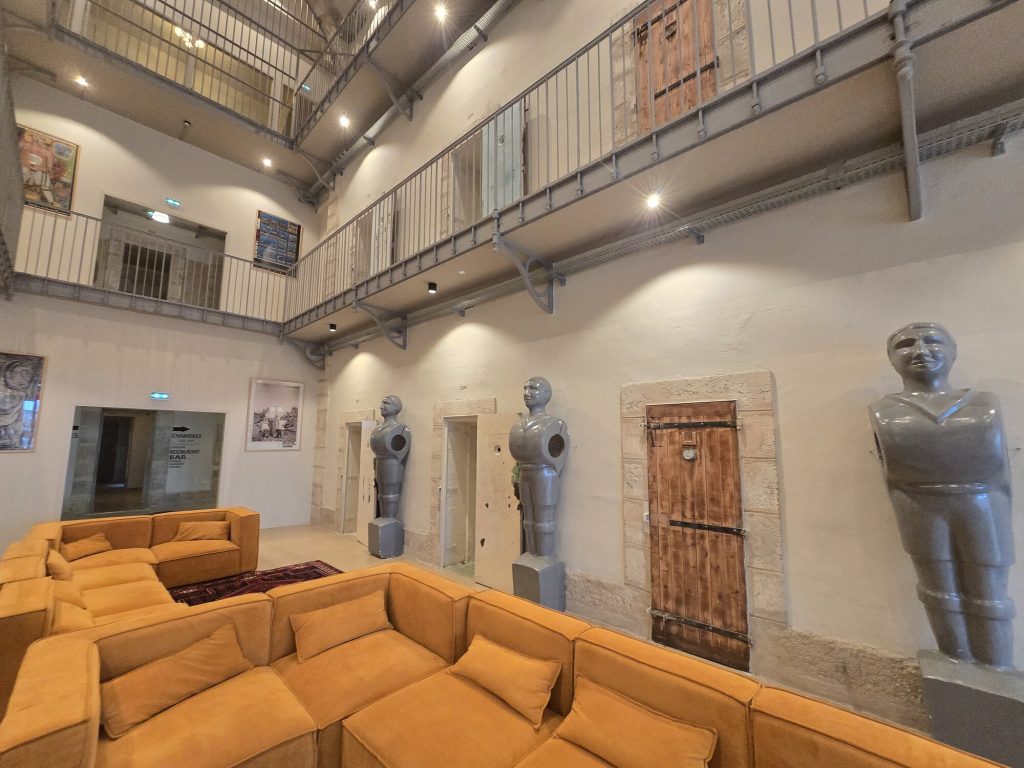
At its summit, we discovered the intriguingly reimagined Hôtel La Prison—a former penitentiary turned design-forward boutique hotel. Adjacent to the commanding Saint-Nazaire Cathedral, the setting felt almost poetic: a place once defined by confinement now offering sweeping panoramic views and artistic liberation.
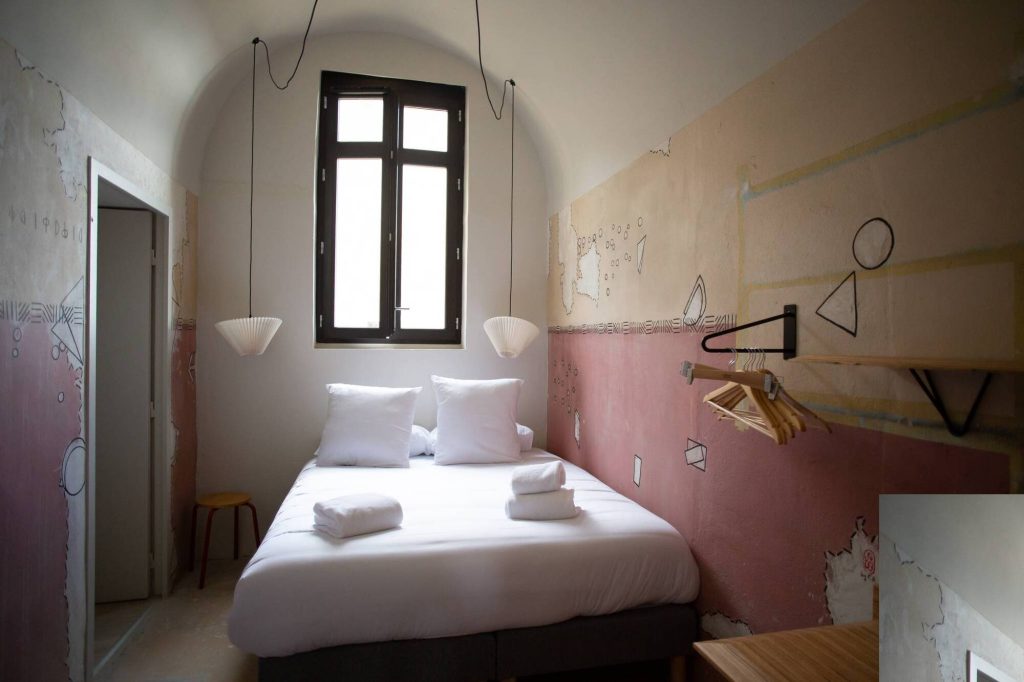
Inside, the aesthetic is unapologetically contemporary, with bold art installations juxtaposed against preserved architectural elements. Former prison cells have been transformed into minimalist guest rooms—though in our case, we opted for a slightly more spacious accommodation. A minor oversight—no air conditioning in the thick-walled structure—was charmingly remedied with oversized fans, lending the experience an air of rustic authenticity.
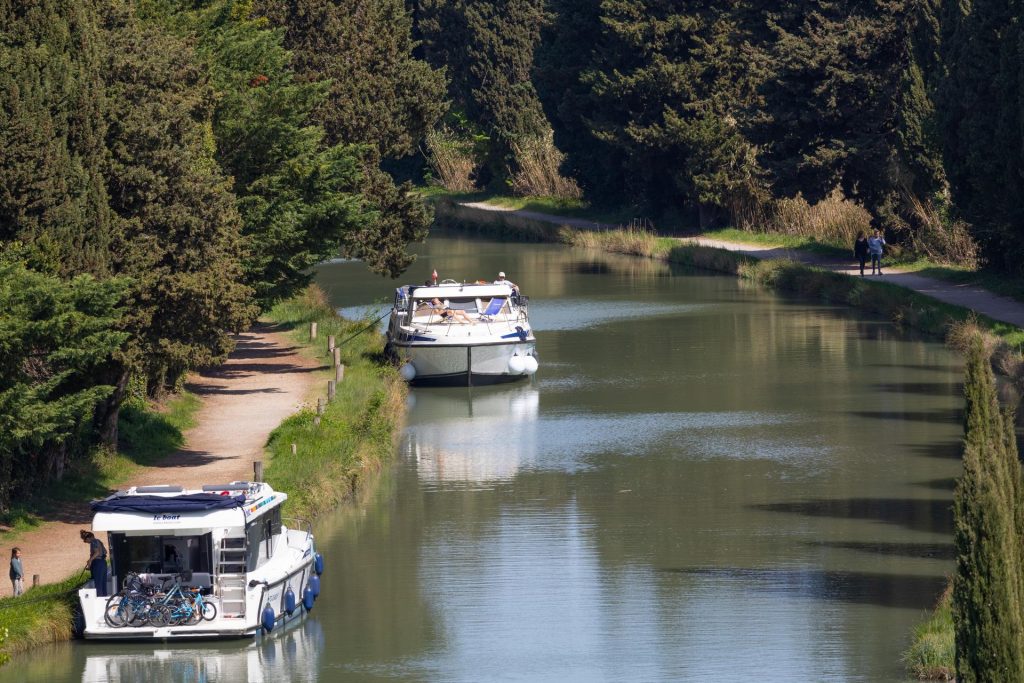
Beyond the hotel, Béziers reveals itself as a cultural jewel. The UNESCO-listed Canal du Midi winds gracefully through the town, while its lively summer celebration, Feria de Béziers, pulses with music, tradition, bullfighting and Mediterranean energy. And for the sporty travelers, a 20km bicycle path leads to the Orphellieres nature reserve at the mouth of the Orb.
NARBONNE: WINE, ART, AND SENSORIAL INDULGENCE
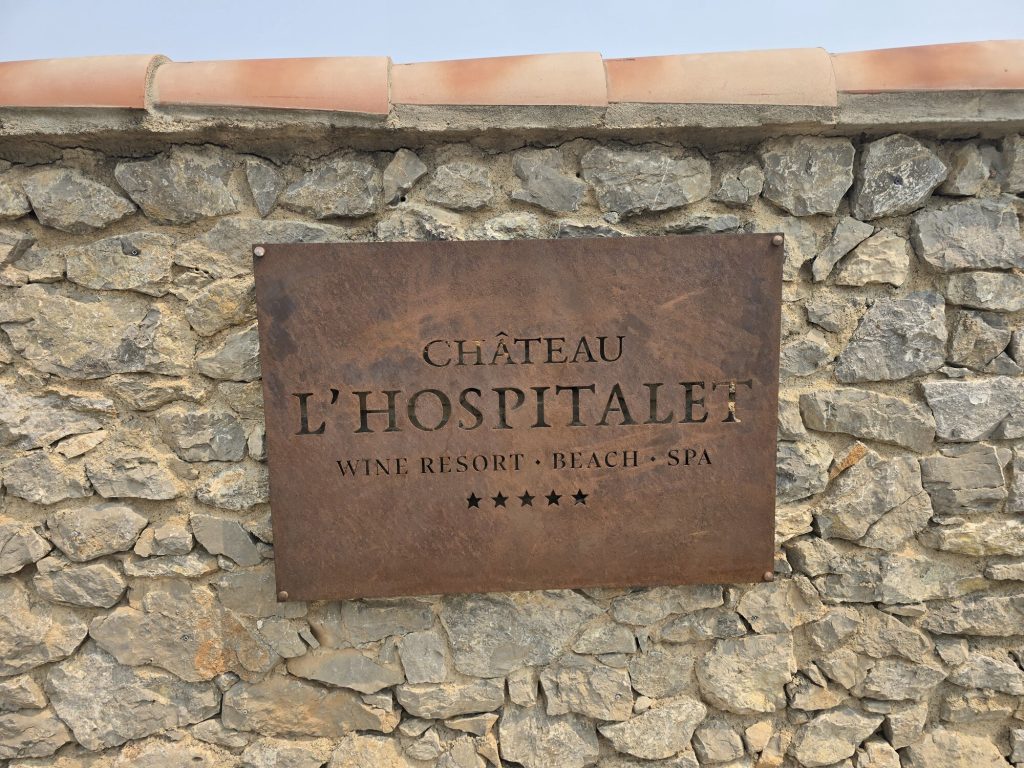
From Béziers, we continued to the heart of La Clape Natural Park, arriving at the stunning 5-star Château l’Hospitalet Wine Resort, Beach & Spa.
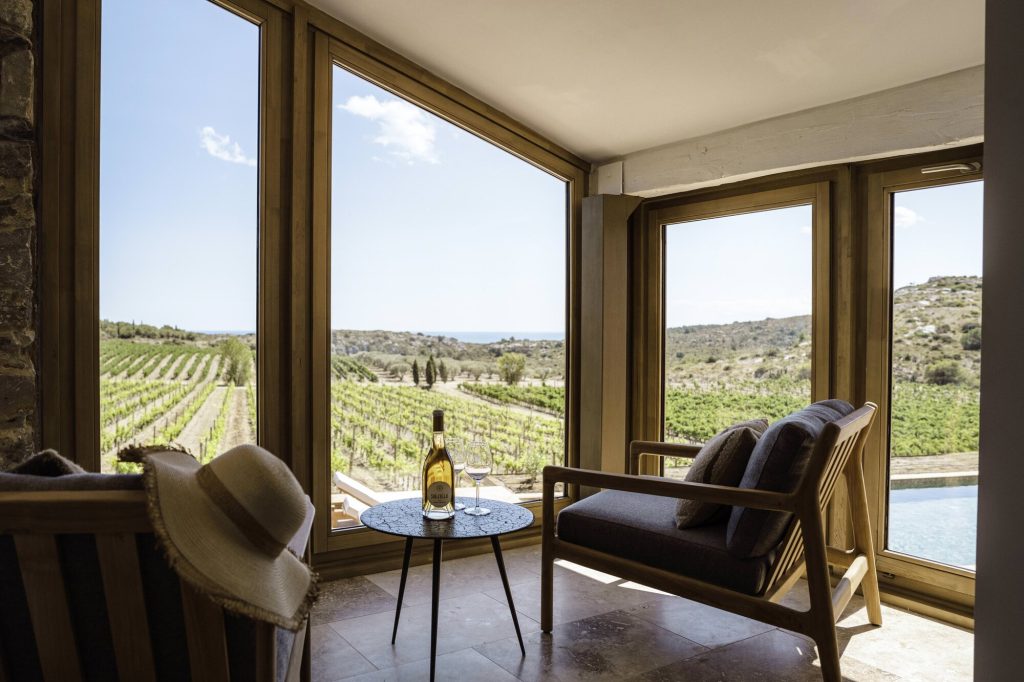
This is not merely a resort—it is an immersive universe curated by Gérard Bertrand himself, where wine, gastronomy, art, and music converge in perfect harmony.
My duplex suite overlooked sun-drenched vineyards and a serene pool, while a curated selection of the estate’s wines awaited in-room—an elegant prelude to what was to come.
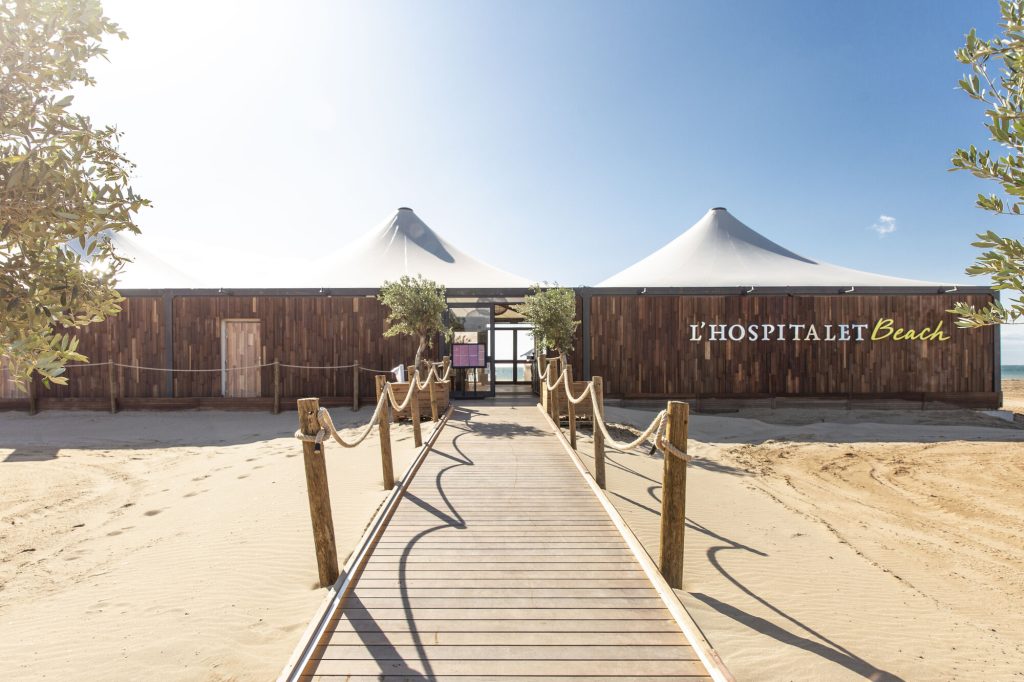
Dinner that evening I was hosted by Bertrand at his beach club, where the Mediterranean shimmered just beyond our table. Over glasses of his celebrated cuvées—including Gerard Bertrand Aigles Imperial and the exceptional Clos du Temple rosé—we explored the fascinating origins of sparkling wine, tracing its roots to the monks of Limoux long before Champagne’s global acclaim.
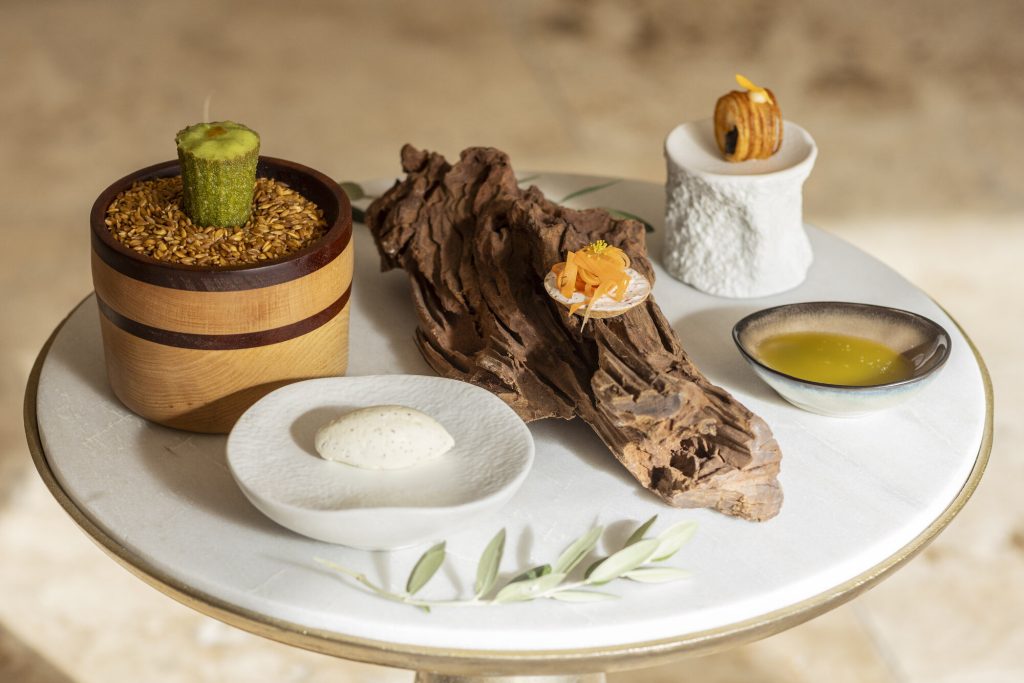
The culinary experience unfolded as a celebration of terroir: freshly caught Mediterranean scampi, vibrant biodynamic produce, and dishes that honored both land and sea. By the third bottle, conversation flowed as effortlessly as the wine. For an even greater extraterrestrial Michelin starred solar system meal, L’Art de Vivre is the spot not to miss.
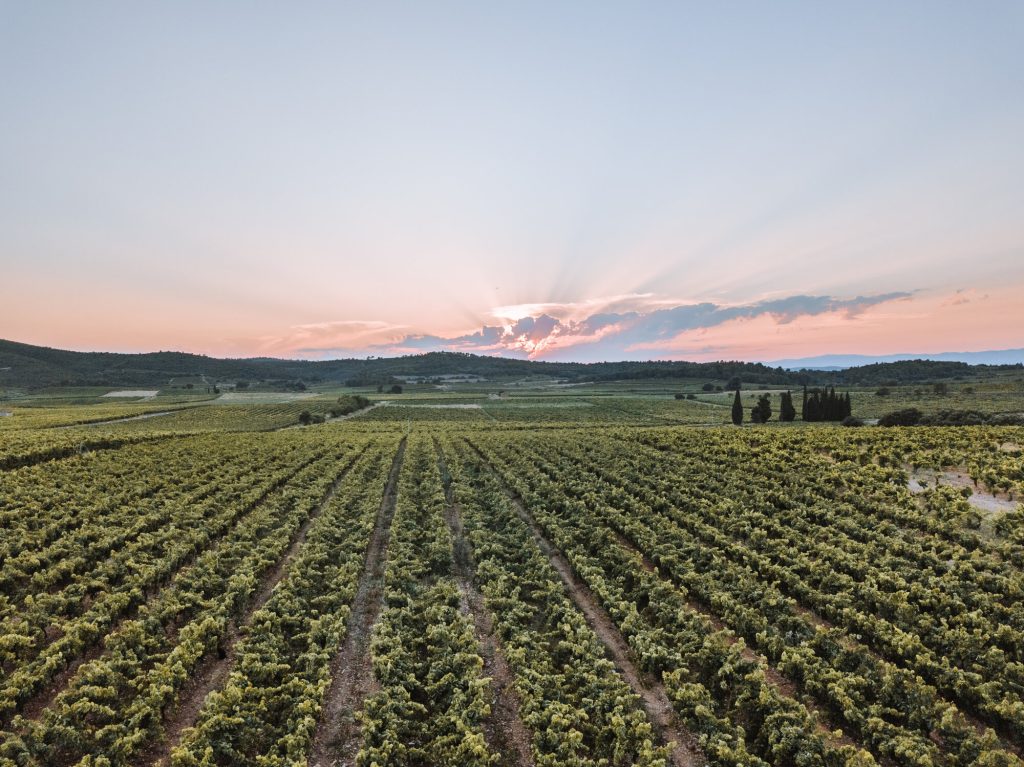
The following day revealed the estate’s deeper layers: a spa offering vinotherapy treatments, contemporary art installations scattered across the grounds, and the sacred Clos du Temple vineyard—where wines age in striking pyramid-shaped vessels. A grand piano sits quietly within, awaiting impromptu performances beneath the Languedoc sky.
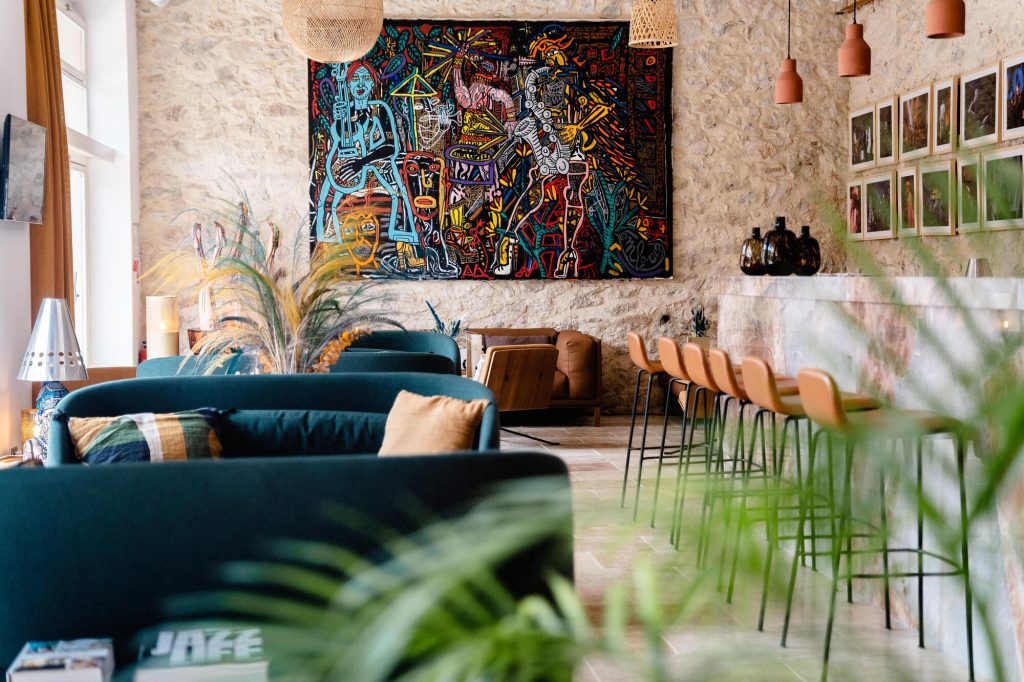
Each summer, the resort hosts Jazz à l’Hospitalet, an intimate yet world-class celebration of music and artistry beneath the stars—an event as coveted as it is unforgettable. Before leaving this wine indulgent resort experience, a stop at the Gerard Bertrand wine shop is in order to stock up on “liquid souvenirs”.
SABRAN: THE ELEGANCE OF SIMPLICITY
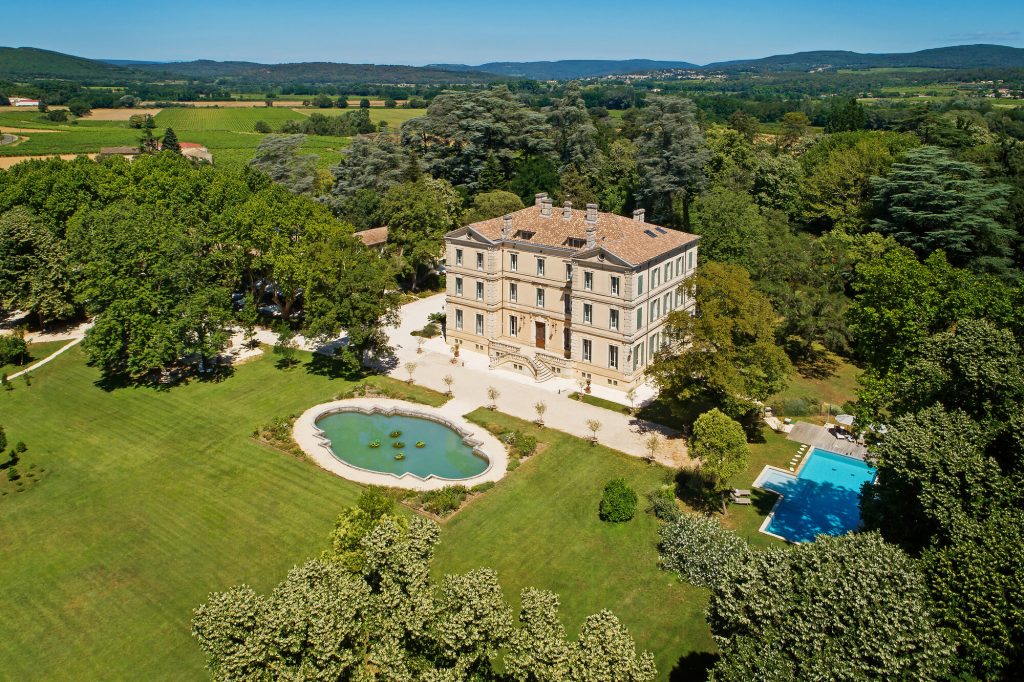
Further north, in the tranquil village of Sabran, awaits the refined serenity of Château de Montcaud.
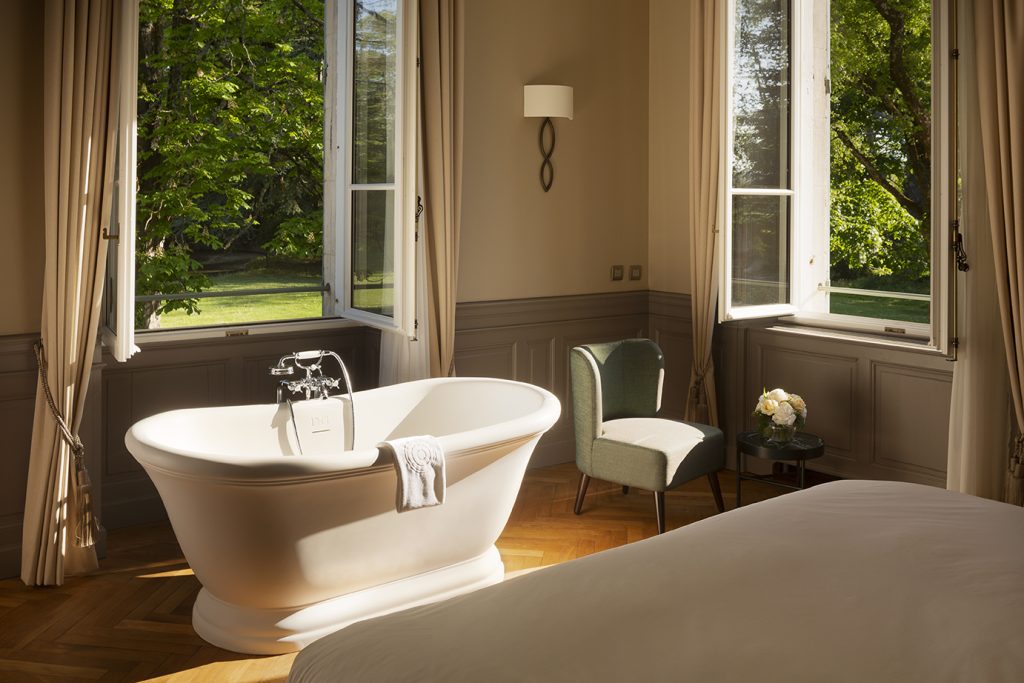
Originally built in 1848 by silk merchant Alexandre Eugène Collain, this stately residence has been transformed into a boutique hotel that embodies le luxe de la simplicité. Its 29 rooms blend understated elegance with historical charm—silk accents nodding to its heritage, while soft natural tones invite rest and reflection.
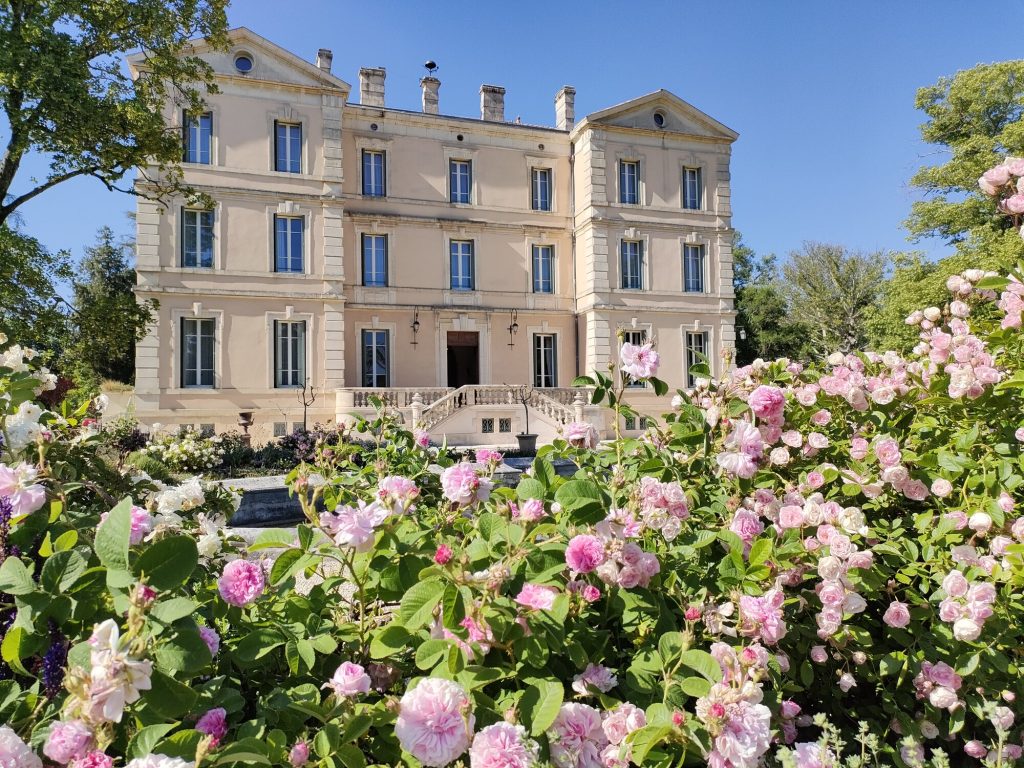
The estate itself is a sensory experience: lavender and honeysuckle scent the air, while manicured gardens, rose-lined paths, and ancient trees create a timeless Provençal tableau. Days unfold slowly here—perhaps with a soak in a clawfoot tub overlooking the grounds, or a leisurely stroll through the property’s expansive parkland.
In total the property is surrounded by five hectares/12 acres of gardens and park lands with a forest and meadows, 140 varieties of trees, an historic grotto, over 40 rose varieties, walking paths, jogging trails plus a swimming pool, grass tennis court, pétanque courts, badminton, croquet, ping pong as well as plenty of spaces to relax under trees and just read, doze off or practice yoga.
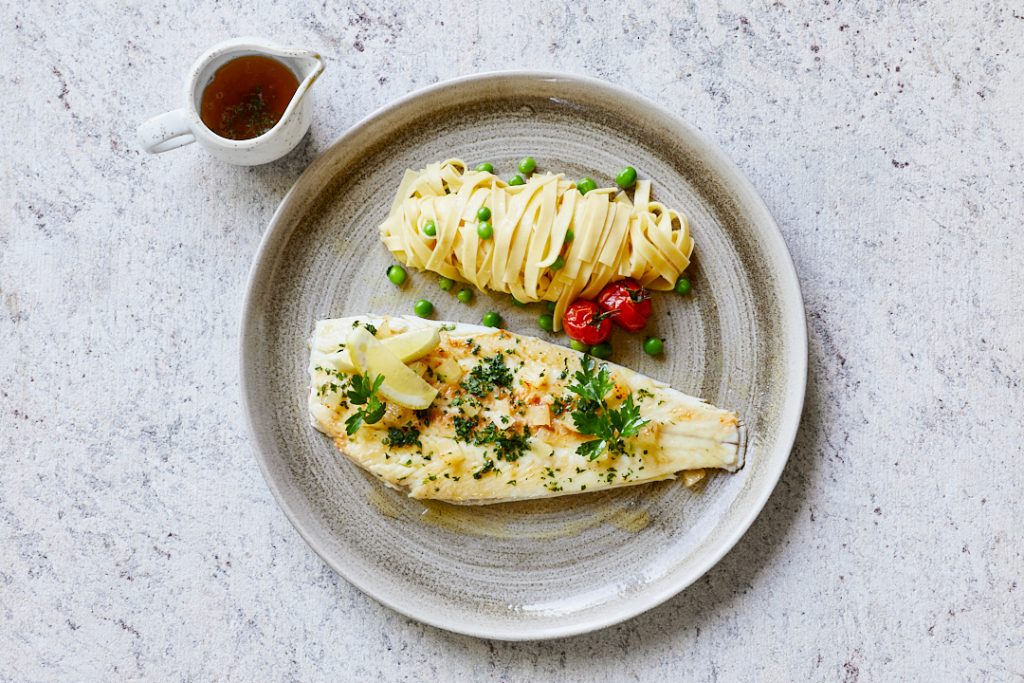
Dining is equally exceptional attracting foodies. At the Michelin-starred Le Cèdre de Montcaud, Chef Matthieu Hervé crafts an evolving tasting menu that feels both deeply rooted in tradition and refreshingly modern. Bistro de Montcaud meals exemplify “the luxury of simplicity” while Chez Eugene food truck feeds the hungry and thirsty poolside. Sunday brunch is a family affair where live music competes with the sounds of cicadas under the shade of chestnut trees. Romance is also served year-round, especially for Valentine’s Day, destination weddings and honeymoons.
Chateau de Montcaud is conveniently situated between three world-famous regions, Provence, Ardeche and Camargue in the Ceze valley. Exploration by helicopter or cycling is available for the adventurous sightseers or wine tastings and shopping the local markets for those that want to stay grounded while soaking up the local flavors.
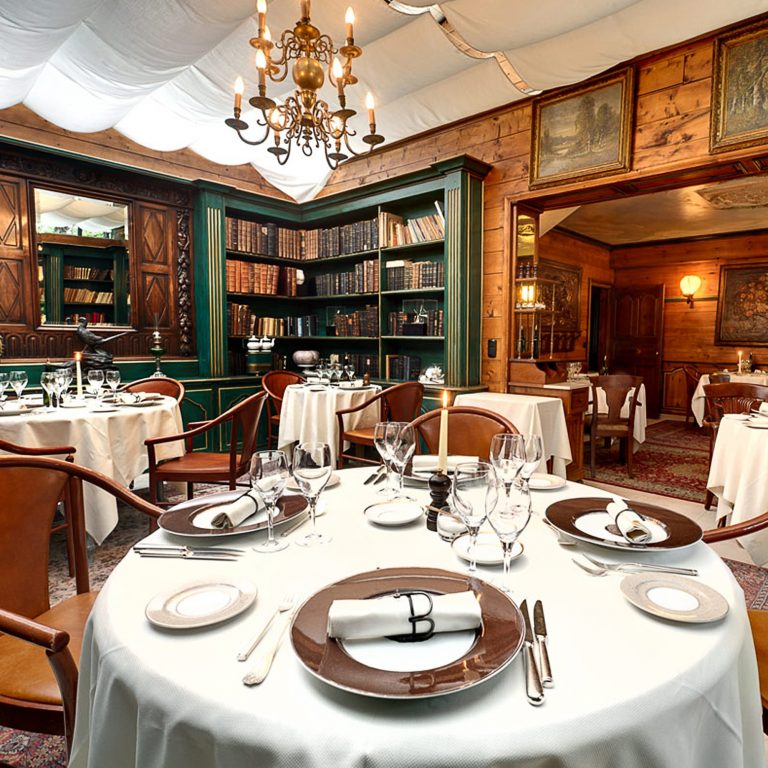
LORGUES: A TRUFFLE TEMPLE
An impromptu detour led us to the medieval town of Lorgues, home to the legendary Chez Bruno.
Set within a whimsical countryside estate, this Michelin-starred institution has earned its reputation as a pilgrimage site for truffle aficionados. Known as the “Emperor of the Truffle,” Bruno has elevated this prized ingredient into an art form since 1983.
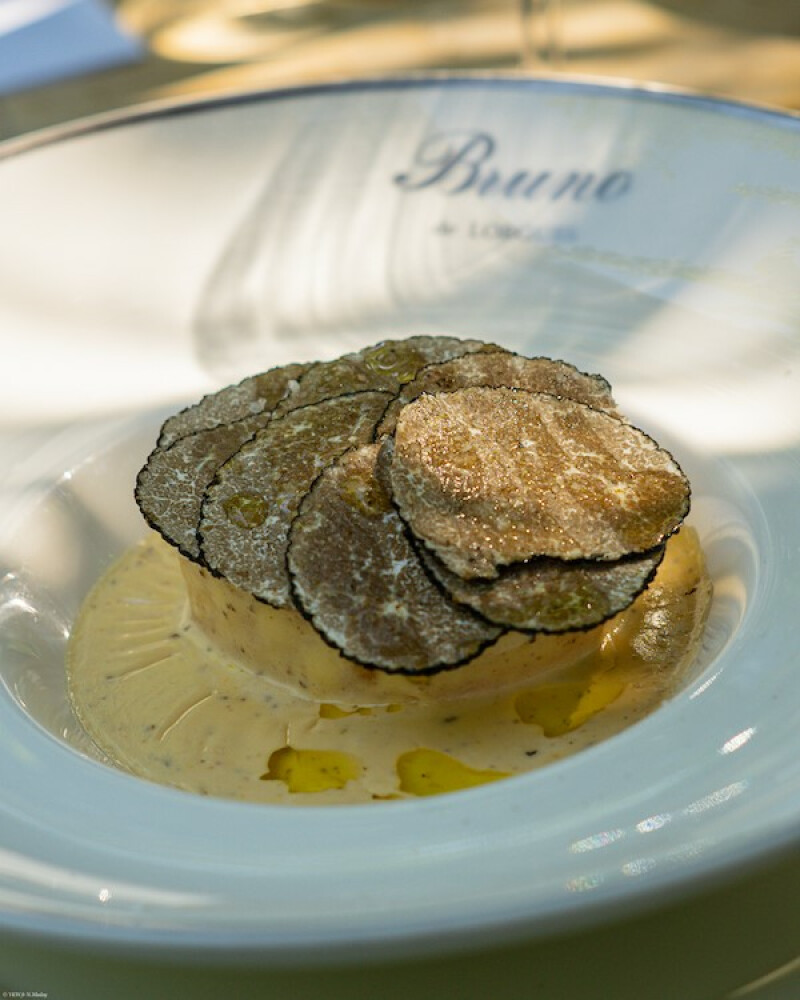
Even for those less enamored with truffles, the experience is enchanting—complete with impeccable service, theatrical presentation, and a setting that feels lifted from a Provençal dream.
For those requiring a sleepover after their truffle-induced meal, Chez Bruno has thirteen accommodations alongside their vineyards and swimming pools.
FOX-AMPHOUX: A PRIVATE PROVENCAL PARADISE
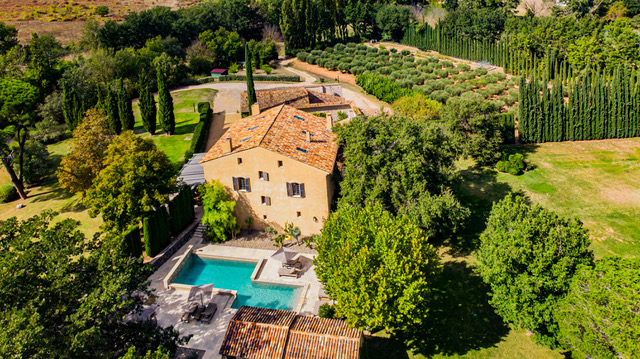
The journey concluded in the serene hills of Fox-Amphoux, where we toured the extraordinary Bastide de Bouche in the Haut-Var region. It is just 20 minutes from the village of Aups and the Verdon Regional Natural Park and not far from Brad Pitt’s Miraval vineyard and gastronomic tourism at an assortment of Michelin starred restaurants.
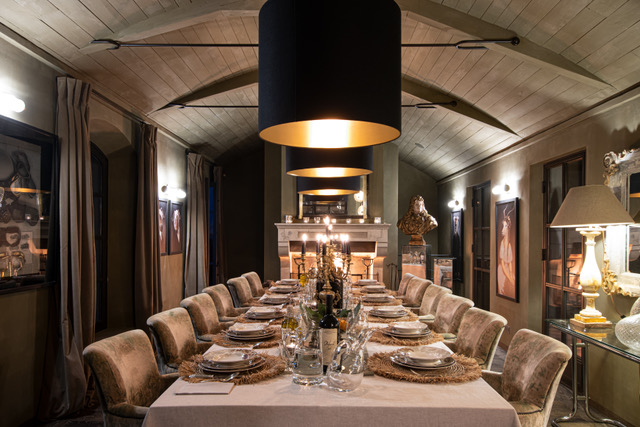
Set across twelve hectares filled with five hundred olive groves, over a thousand truffle oaks, and wild meadows, this private estate offers the ultimate in secluded luxury. With its helipad, swimming pool, tennis and pétanque courts, clay pigeon shooting ranges, cinema room, and expansive suites, it is a special personal sanctuary—ideal for those seeking complete privacy just thirteen minutes from Saint-Tropez and 30 from Monaco by helicopter. Visitors are welcome to call this secret hideaway their home for extended stays or forever for the right price.
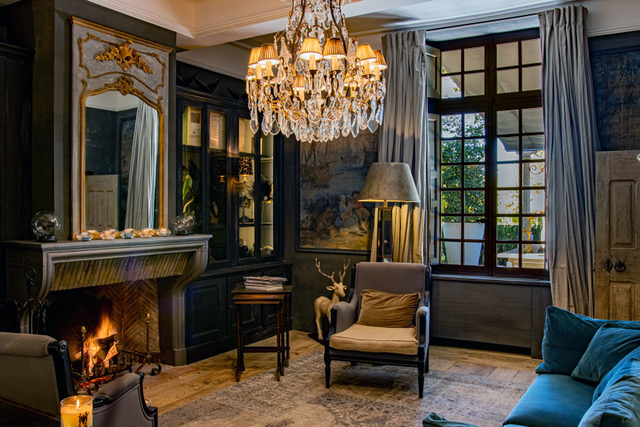
Our hosts who lovingly restored Bastide de Bouche with their masterful design skills, welcomed us with effortless French charm—champagne in hand—before presenting an alfresco lunch as artful as it was delicious. It was a fitting finale: intimate, authentic, and deeply memorable.
THE ART OF LOSING THE MAP
The South of France will always draw travelers to its celebrated icons. Yet beyond the well-trodden paths lies a richer narrative—one defined by quiet villages, visionary winemakers, truffle connoisseurs and hidden estates where luxury is not imposed but discovered slowly.
To travel this way is to embrace spontaneity, to savor the unexpected, and to uncover a more intimate, authentic version of Provence and Languedoc.
And perhaps that is the true luxury of it all.