

Things To Do
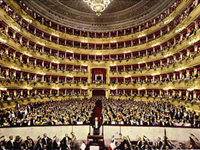
Inside the opera house is also a museum dedicated to the history of the building and the various performers who have taken the stage, as well as the display of many paintings and sculptures.
La Scala
Teatro alla Scala is Milan's world-renowned opera house. Built in 1778, Europe's greatest operas and ballets have performed here, and it is currently the home of La Scala Theatre Chorus, Ballet, and Orchestra companies.Inside the opera house is also a museum dedicated to the history of the building and the various performers who have taken the stage, as well as the display of many paintings and sculptures.